

On-page SEO and Off-page SEO – which is the ultimate "weapon" to help your website break through on Google? If On-page SEO is the "inner strength" that determines website quality, then Off-page SEO is the "external force" that helps your brand reach further. But how do you optimize without wasting time while still achieving high rankings? In this article, Markdao will help you break down every aspect, clarify the differences, and reveal the most powerful optimization techniques to dominate search results.
What are On-page and Off-page SEO?
In the world of SEO, the two concepts of On-page SEO and Off-page SEO are like two sides of the same coin – both are essential and inseparable if you want your website to rank high on Google. However, they operate differently and have different optimization goals.

What is On-page SEO?
On-page SEO (also known as on-site SEO) is a set of techniques optimized directly on the website to improve user experience and increase visibility on search engines. These are factors you can control 100%, and they have a major impact on overall SEO performance.
Key elements of On-page SEO:
- Content optimization: High-quality content that includes relevant keywords, is engaging, and provides real value.
- URL structure: Concise, clear, and containing primary keywords.
- Title Tag & Meta Description: Attract readers and help Google understand your page content.
- Headings (H1, H2, H3...): Organize content logically to improve SEO performance.
- Image Optimization: Use ALT tags and compress images to increase page loading speed.
- User Experience (UX/UI): Ensure the website is easy to navigate, user-friendly, and fast-loading.
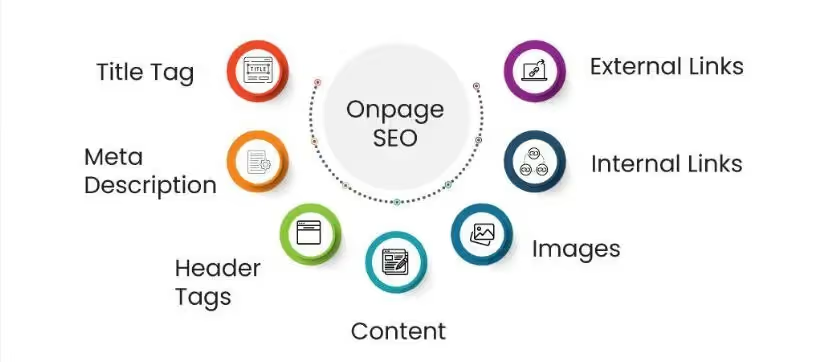
A practical example of On-Page SEO: Suppose you have an article about "How to lose weight effectively." If you use a compelling title like “10 Ways to Lose Weight Fast and Safely – Expert Secrets”, optimize keywords within the content, add illustrative images, include internal links, and ensure fast loading speeds, your article will have a much higher chance of ranking on Google.
What is Off-Page SEO?
If On-Page SEO is about building a solid house from the inside, then Off-Page SEO is the process of expanding your network and boosting the reputation of that house across the internet. Simply put, Off-Page SEO is a collection of techniques performed outside your website to increase its authority and improve search engine rankings.
Key elements of Off-Page SEO:
- Building quality backlinks: Links from other websites pointing to yours.
- Social Signals: Shares, comments, and interactions on social media (Facebook, Twitter, LinkedIn, etc.).
- PR & Influencer Marketing: Mentions in reputable news outlets, blogs, or by influencers.
- Local SEO: Optimizing Google My Business and receiving positive customer reviews.
A real-world example of Off-page SEO: You write an in-depth article on “Marketing Trends 2025” and it gets shared by major publications like Cafebiz or Vietcetera. Backlinks from these authoritative sites boost your website’s credibility, which in turn helps Google rank you higher.
On-page SEO vs. Off-page SEO – Should you combine them or choose just one?
On-page SEO builds a solid foundation, while Off-page SEO boosts your competitive edge. An effective SEO strategy requires both; even if your website has excellent content, it will struggle to rank high on Google without reach and connectivity.
In the next section, we will explore the detailed differences between On-page and Off-page SEO, as well as how to apply each technique optimally!
Differences between On-page and Off-page SEO
On-page and Off-page SEO both play vital roles in an overall SEO strategy, but they take completely different approaches. While On-page SEO focuses on optimizing internal website elements to improve user experience and content relevance, Off-page SEO targets external factors to increase website authority and gain recognition from the online community.

Below is a detailed comparison table between these two methods:
A real-world example of the difference between On-page and Off-page SEO
Case 1: On-page SEO optimization: You have a sports shoe website and want to rank for the keyword “best running shoes”. To optimize On-page SEO, you would:
- Write a detailed guide on how to choose running shoes, ensuring the keyword “best running shoes” appears naturally.
- Use high-quality images with descriptive ALT tags.
- Create engaging headlines such as “Top 10 Best Running Shoes of 2025 – A Detailed Review”.
- Improve page load speed so users don't have to wait long.
- Build internal links to related articles like “How to Properly Care for Your Sports Shoes.”
Case 2: Off-page SEO Optimization: Even if your website is well-optimized for On-page SEO, you still need Off-page SEO to build authority. You can:
- Collaborate with a popular sports blogger to write a review and include a backlink to your site.
- Get featured in an article on a reputable sports magazine.
- Share your articles in Facebook groups and forums dedicated to running to increase organic traffic.
- Encourage customers to leave positive reviews on Google My Business to boost credibility.
Should you focus on On-page SEO or Off-page SEO?
The answer is both are important. On-page SEO helps you build a solid website with content optimized for search engines, while Off-page SEO helps you expand your reach and increase your authority across the internet.
9 Effective On-page SEO Techniques
On-page SEO is the foundation for achieving high search engine rankings. To optimize effectively, you need to focus on content, user experience, and technical factors. Below are key techniques to significantly improve your On-page SEO.
1. Content Optimization
Quality content is the most important factor in On-page SEO. Google always prioritizes websites that provide real value to users.
.avif)
- Write useful, unique, and in-depth content: Avoid copying content from other sites. Content should provide fresh, detailed, and easy-to-understand information.
- Keyword Optimization:
- Place the main keyword in the title, H1 tag, introduction, and conclusion.
- Use secondary keywords and synonyms to avoid keyword stuffing.
- Distribute keywords naturally, without forcing them.
- Use readable formatting:
- Break content into short paragraphs (2-3 sentences per paragraph).
- Use subheadings (H2, H3, H4) to organize content.
- Add bullet points to improve scannability.
- Update content regularly: Old content should be refreshed periodically to maintain its value and accuracy.
2. Title Tag and Meta Description Optimization
Titles and descriptions are crucial factors in attracting users from search engine results pages (SERPs).
- Title Tag:
- Should include the main keyword, ideally at the beginning of the title.
- Length of 50-60 characters to avoid being truncated on Google.
- Engaging and compelling for users to click. For example: “On-Page SEO Guide: 10 Techniques to Boost Your Website Ranking Quickly”
- Meta Description:
- Length of 120-160 characters, including the keyword naturally.
- Write compelling copy that encourages users to click.
- Avoid duplicating content from the page.
3. Optimize SEO-friendly URLs
URLs play a crucial role in helping Google and users understand page content.

- URLs should be concise, easy to read, and contain the main keyword.
- Avoid using special characters, random numbers, or overly long URL strings.
- Use hyphens “-” to separate words in the URL instead of underscores “_” or no spaces.
Example:
Recommended: https://example.com/toi-uu-seo-onpage
Not recommended: https://example.com/p=1234?seo-onpage
4. Optimize images and ALT tags
Images make content more engaging, but if not optimized, they can negatively impact page load speed.
- Use descriptive filenames for images: Instead of image123.jpg, use ky-thuat-seo-onpage.jpg.
- Optimize image file size: Use image compression tools like TinyPNG or ShortPixel to reduce file size while maintaining high quality.
- Add ALT tags: Google cannot "see" images, so ALT tags are necessary to describe the image content.
Example:
Recommended: alt="Onpage SEO techniques to improve website ranking"
Don't: alt="image123"
5. Internal Linking Optimization
Internal links help Google understand your website structure and increase the time users spend on your pages.
.avif)
- Link to related articles: Guide readers to other useful content on your website.
- Use natural anchor text: Avoid generic phrases like "click here"; use relevant keywords instead.
- Don't spam too many links on a single page, to avoid diluting your content.
6. Page Speed Optimization
Page loading speed directly impacts user experience and your Google rankings.
- Use Google PageSpeed Insights to check your page load speed.
- Reduce image and video file sizes before uploading.
- Enable Gzip compression to reduce file sizes on your website.
- Use a CDN (Content Delivery Network) to optimize content delivery.
- Limit the use of too many plugins or heavy scripts.
7. Mobile-Friendly Optimization
Since most users now access the web via mobile devices, your website must display perfectly on all screens.
- Use responsive design so your website automatically adjusts to any screen size.
- Check mobile visibility using the Google Mobile-Friendly Test.
- Avoid using fonts that are too small, and ensure there is enough spacing between buttons for easy interaction.
8. Use structured data (Schema Markup)
Schema helps Google better understand your website content and display richer search results.
- Use Schema Markup for articles, product reviews, events, company information, and more.
- You can test and generate Schema using the Google Structured Data Testing Tool.
.avif)
For example: If you have a product review, applying Schema can allow search results to display star ratings, pricing, and stock availability, which helps increase your click-through rate (CTR).
9. Optimize User Experience (UX)
Google prioritizes websites that provide a great user experience.
- High Time on Page: Engaging content with easy-to-read formatting.
- Low Bounce Rate: Avoid thin content and ensure good navigation through internal linking.
- Clear Call to Action (CTA): Sign-up, purchase, and download buttons should be prominently placed.
On-page SEO optimization not only makes your website Google-friendly but also enhances user experience and improves conversion rates. By optimizing your content, speed, images, internal links, and user experience, you will build a solid foundation for your website to achieve high and sustainable rankings on Google.
4 Effective Off-page SEO Optimization Techniques
Off-page SEO is a crucial part of an overall SEO strategy, helping to boost your website's authority and search engine rankings through external factors. Below are the most effective off-page SEO optimization techniques.
1. Quality Link Building
Backlinks are the most critical factor in Off-page SEO, helping to increase website credibility and improve rankings on Google.
.avif)
- Prioritize backlinks from reputable websites: Major news sites, industry forums, and websites with high Domain Authority (DA) provide greater SEO value.
- Build natural backlinks: Avoid spamming backlinks; instead, create high-quality content that other sites will naturally cite.
- Use Guest Posting: Writing articles for reputable blogs in your niche helps increase traffic and generate quality backlinks.
- Diversify backlink sources: Combine backlinks from blogs, social media, forums, news sites, and professional documentation pages.
- Monitor and remove toxic backlinks: Use tools like Google Search Console to detect and disavow harmful links.
2. Brand optimization and online presence
Beyond backlinks, a consistent brand presence across other platforms also enhances credibility and supports SEO.
- Build your brand on social media: Google values websites with high engagement and shares on Facebook, Twitter, LinkedIn, YouTube, and more.
- Publish content on industry forums: Participate in discussions and share knowledge on forums like Quora, Reddit, and other SEO or industry-related communities.
- Optimize Google My Business (GMB): For businesses, a complete GMB profile increases visibility on Google Maps and local search results.
- PR in reputable news outlets and blogs: Appearing in reviews, interviews, or features in the press helps boost brand awareness and website authority.
3. Content Marketing strategy to drive traffic
Quality content is not only crucial for On-page SEO but also serves as the foundation for effective Off-page SEO.
- Create viral-worthy content: Infographics, videos, in-depth research, and detailed how-to guides are often easily shared and cited.
- Use Content Repurposing: Convert articles into various formats (videos, podcasts, infographics) to reach more channels.
- Share content on popular platforms: Publish articles on Medium, LinkedIn Articles, SlideShare, and YouTube to expand your reach.
- Participate in roundup posts: Being featured in expert roundup posts helps build authority and earn high-quality backlinks.
4. Social signals and user reviews
Google is increasingly focusing on real user signals to evaluate website quality.
- Actively encourage customer reviews: Reviews on Google, Facebook, and Trustpilot help improve business credibility.
- Encourage social media sharing: Content with high engagement and shares increases the chances of earning natural backlinks.
- Optimize on Q&A and review sitesAppearing on Quora and Stack Exchange helps drive traffic and build industry authority.
Off-page SEO is a critical factor in boosting your website's credibility and improving its Google rankings. By combining backlink building, brand optimization, high-quality content development, and social signals, you can achieve sustainable rankings and reach more customers.
Markdao - Combining On-page & Off-page SEO for maximum results
At Markdao, we don't just focus on one aspect of SEO; we implement a comprehensive strategy that tightly integrates On-page and Off-page SEO to ensure your website achieves and maintains high rankings.

Optimize from within with On-page SEO
On-page SEO is the core foundation that helps your website perform effectively, providing the best user experience while making it easy for Google to rank you highly. Markdao provides:
- In-depth keyword research, ensuring content aligns with the actual search intent of your customers.
- Content optimization, creating content that is not only SEO-friendly but also engaging, capturing readers' interest and keeping them on your site longer.
- Page speed improvement, ensuring your website runs smoothly on all devices, especially mobile.
- Logical website structure development, making it easier for Google to crawl your site and providing a smoother experience for users.
- Image and metadata optimization, increasing your visibility in search results and helping Google better understand your website's content.
Expand your influence with Off-page SEO
Beyond internal optimization, Markdao implements structured Off-page SEO strategies to enhance your website's authority and drive sustainable traffic growth. Key activities include:
- Building a high-quality backlink profile from reputable websites to increase your site's credibility and improve its Google rankings.
- Implement a smart Content Marketing strategy to create engaging content with high viral potential across social media platforms and industry blogs.
- Boost social signals to increase website mentions across online platforms, thereby strengthening your brand's authority.
- Build business profiles on platforms like Google My Business, LinkedIn, and Medium to help your website reach customers through diverse channels.
Integrating On-page and Off-page SEO – The Secret to Success at Markdao
The Markdao difference lies in the perfect synergy between On-page and Off-page SEO within a comprehensive strategy. We don't just ensure your website has high-quality content and technical optimization; we also guarantee your brand is widely recognized across the internet, increasing your chances of appearing on the first page of Google.
- High-quality content combined with a natural link-building strategy drives traffic growth without triggering Google's spam filters.
- Improve user experience while expanding your brand presence across social media and news outlets, making it easy for customers to find you everywhere.
- Monitor and analyze comprehensive SEO data, continuously adjusting strategies for maximum effectiveness to ensure your website maintains its Google rankings.
SEO is not a one-off task but a long-term strategy that requires a tight integration of On-page and Off-page efforts. At Markdao, we provide comprehensive SEO solutions that help businesses not only boost search rankings but also build a solid brand reputation in the eyes of their customers.
Conclusion
On-page SEO is the foundation, and Off-page SEO is the catalyst—only by seamlessly combining both can a website break through and maintain sustainable rankings. Markdao doesn't just optimize for SEO; we create a holistic strategy that helps businesses conquer Google and leave a lasting impression on customers. Don't just chase algorithms—let Markdao help you build a solid, enduring digital brand!