

In an ever-changing business environment, analyzing and grasping macroeconomic factors is key to building effective strategies. The PEST model (Political, Economic, Social, Technological) is a powerful tool that helps businesses comprehensively assess the external environment, identify opportunities and challenges, and optimize their strategies. So, what is the PEST model and how can it be applied to business strategy analysis? Let Markdao explore this in detail in the article below.
What is the PEST model?
The PEST model is a vital strategic analysis tool that helps businesses evaluate their external environment, providing a clearer understanding of the factors influencing their operations and growth. This model focuses on four key pillars: Political, Economic, Social , and Technological. Applying PEST helps businesses identify opportunities and challenges, allowing them to adjust their business strategies to align with the macroeconomic environment.
P (Political)
Political factors in PEST model covers government policies, regulations, and stability. These factors can significantly impact the business environment, such as:
- Tax policy: Tax increases or decreases directly affect operating costs and product pricing.
- Legal regulations: Labor laws, environmental regulations, or import restrictions can create either barriers or opportunities.
- Political stability: A country with a stable political environment is more attractive for investment than high-risk regions.
PEST model example: When analyzing the automotive industry, a company might consider emission regulations or policy incentives for electric vehicles in different countries.
E (Economic) - Economy
Economic factors focus on financial and macroeconomic variables that affect businesses, such as:
- Inflation rate: High inflation can reduce customer purchasing power.
- Interest rates: These impact borrowing costs and consumer spending.
- Exchange rates: These are critical for import-export businesses.
- Economic growth: This helps determine the overall health of the market.
PEST model example: An export company can be heavily impacted if exchange rates shift unfavorably.
S (Social) - Social
Social factors in the PEST model reflect how people and culture influence markets and consumer behavior. Key factors include:
- Changes in consumer behavior: The surge in online shopping trends in the post-COVID-19 era.
- Demographics: Population structure, such as age and income, which influences market segmentation.
- Cultural values and lifestyle: The trend toward using eco-friendly or natural-origin products.
PEST model example: Fashion companies may need to adjust product designs to suit the preferences of different customer groups in various regions.
T (Technological) - Technological
Technological factors focus on developments and innovations that can significantly impact an industry. Key factors include:
- Digital transformation: Increasing productivity and improving customer service.
- New technology: Such as artificial intelligence (AI), blockchain, or the Internet of Things (IoT) to create a competitive advantage.
- Technology costs: Businesses need to weigh the investment costs against the benefits gained from technology.
PEST model examples: In the retail industry, the adoption of technologies such as cashless payments and augmented reality (AR) has transformed how consumers shop.
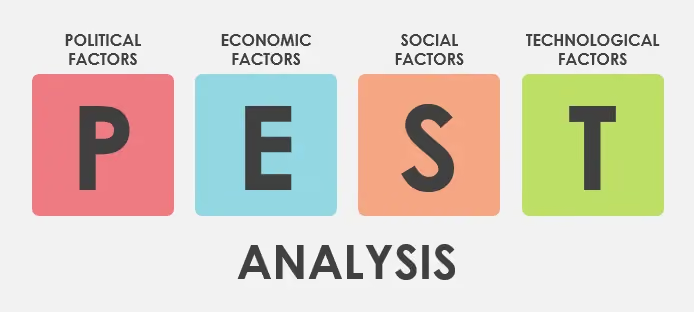
Examples of applying the PEST model
The PEST model is an effective tool for macro-environmental analysis, helping businesses make informed strategic decisions. Below is an example of the PEST model in the analysis of the technology sector in Vietnam, illustrating clearly how to apply this model to guide business strategy.
Case study: Applying the PEST model at a Vietnamese enterprise
Company VNG Corporation - one of Vietnam's leading technology firms, has leveraged the PEST framework to guide its business strategy:
- Political: Capitalizing on government incentives, VNG invests heavily in digital transformation and products that support e-government initiatives.
- Economic: VNG is expanding into international markets to reduce reliance on the domestic market and mitigate risks from inflation and economic volatility.
- Social: Focusing on developing products that meet online entertainment needs, such as Zalo and Zing MP3, to effectively serve user trends.
- TechnologicalVNG invests heavily in research and development (R&D) for new technologies such as cloud computing and artificial intelligence to maintain its competitive edge.

Applying the PEST model in business strategy analysis
The PEST model is not only a tool to help businesses analyze the external environment, but it also supports the development of effective business strategies. Below are specific applications of PEST in business strategy analysis.
Understanding the external business environment
PEST allows businesses to evaluate factors related to political, economic, social and technological. This analysis helps businesses clearly understand:
- The influence of government policies: New regulations can create favorable conditions or pose challenges for the industry.
- Impact of economic factors: Changes in interest rates or inflation affect production costs and selling prices.
- Changes in social culture: Emerging consumer trends or customer behaviors.
- Disruptive technology: Creating opportunities for innovation or threatening existing business models.
Applications in marketing strategy development
PEST model helps businesses capture their target market and consumer trends through:
- Market analysis: Understanding the social and technological factors that influence customer demand.
- Crafting relevant marketing messages: Integrating local culture and modern social values.
- Predicting change: Developing products or services that meet emerging trends.
Identifying opportunities and challenges
The PEST model helps businesses identify:
- Opportunities: Leveraging factors such as tax incentives, technological advancements, or shifts in consumer behavior to develop new products.
- Challenges: Facing risks such as political instability, rising interest rates, or strict environmental regulations.

Predict future impact factors
PEST model helps businesses forecast trends and prepare for changes in the business environment. Some key applications include:
- Identify long-term trends: For example, digital transformation or green policies.
- Optimize resources: Adjust strategies to respond quickly to changes in the external environment.
Risk management
The PEST model is a powerful tool for identifying and mitigating risks from the macro environment. Specific steps include:
- Analyze political risks: Political stability in foreign markets.
- Predict economic crises: Inflation or economic recession that could impact sales.
- Mitigate technological risks: Integrate new solutions to maintain a competitive advantage.
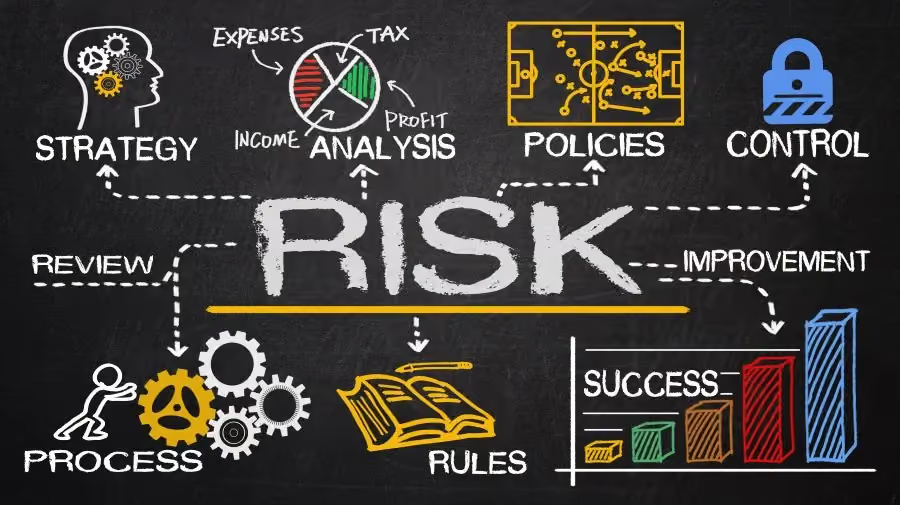
PEST provides a useful analytical tool for optimizing business strategy. Applying the PEST model will help businesses more clearly identify opportunities and risks, thereby building business strategies that are aligned with the external environment.
4 benefits of using the PEST model in strategic analysis
1. Identifying key macro-environmental factors
The PEST model provides an overview of Political, Economic, Social, and Technological factors, helping businesses:
- Identify potential opportunities: Opportunities arising from favorable policies, new technological developments, or shifting consumer trends.
- Identify risks: Risks stemming from political instability, economic fluctuations, or changes in social culture.
2. Improving forecasting and decision-making capabilities
Through PEST analysis, businesses can forecast trends in the business environment, thereby making informed decisions:
- Enhance planning capabilities: Anticipate impactful factors such as economic downturns or new trade policies.
- Strategic decision-making: Selecting markets for expansion or product development based on macro-environmental analysis.
3. Strengthening the ability to respond quickly to environmental changes
The business environment is constantly changing, and the PEST model helps businesses:
- Adapt quickly: Identify market fluctuations or regulatory changes to adjust strategies accordingly.
- Optimize resources: Direct investments toward areas with growth potential.
4. Helping businesses develop sustainable long-term strategies
The PEST model supports businesses in building sustainable strategies based on a deep understanding of macro-environmental factors:
- Building long-term plans: Capitalizing on opportunities from future social or technological trends.
- Developing appropriate strategies: Ensuring business strategies are not only effective in the short term but also sustainable in the long run.
By identifying macro-environmental factors, improving predictive capabilities, responding quickly to changes, and developing long-term strategies, this model becomes an essential tool for ensuring business success and sustainability in an increasingly competitive business environment.
Conclusion
The PEST model is not just an analytical tool but a compass that helps businesses understand the big picture of the business environment. From identifying macro-environmental factors to building sustainable strategies, this model helps businesses anticipate trends and adapt to changes. Whether you are a large or small business, applying the PEST model to strategic analysis will provide a competitive advantage and increase the likelihood of long-term success.