


Customers no longer just type a keyword and open results one by one. They can ask ChatGPT, AI Overviews, or AI Mode a complete question: “Which agency is suitable for redesigning a B2B website, has SEO expertise, and understands the lead generation journey?”
GEO (Generative Engine Optimization) helps websites be discovered, accurately understood, and selected as sources by AI tools like ChatGPT Search, AI Overviews, and AI Mode. GEO does not replace SEO; rather, it expands the objective from crawling, indexing, and ranking to being cited, generating traffic, and supporting conversions.
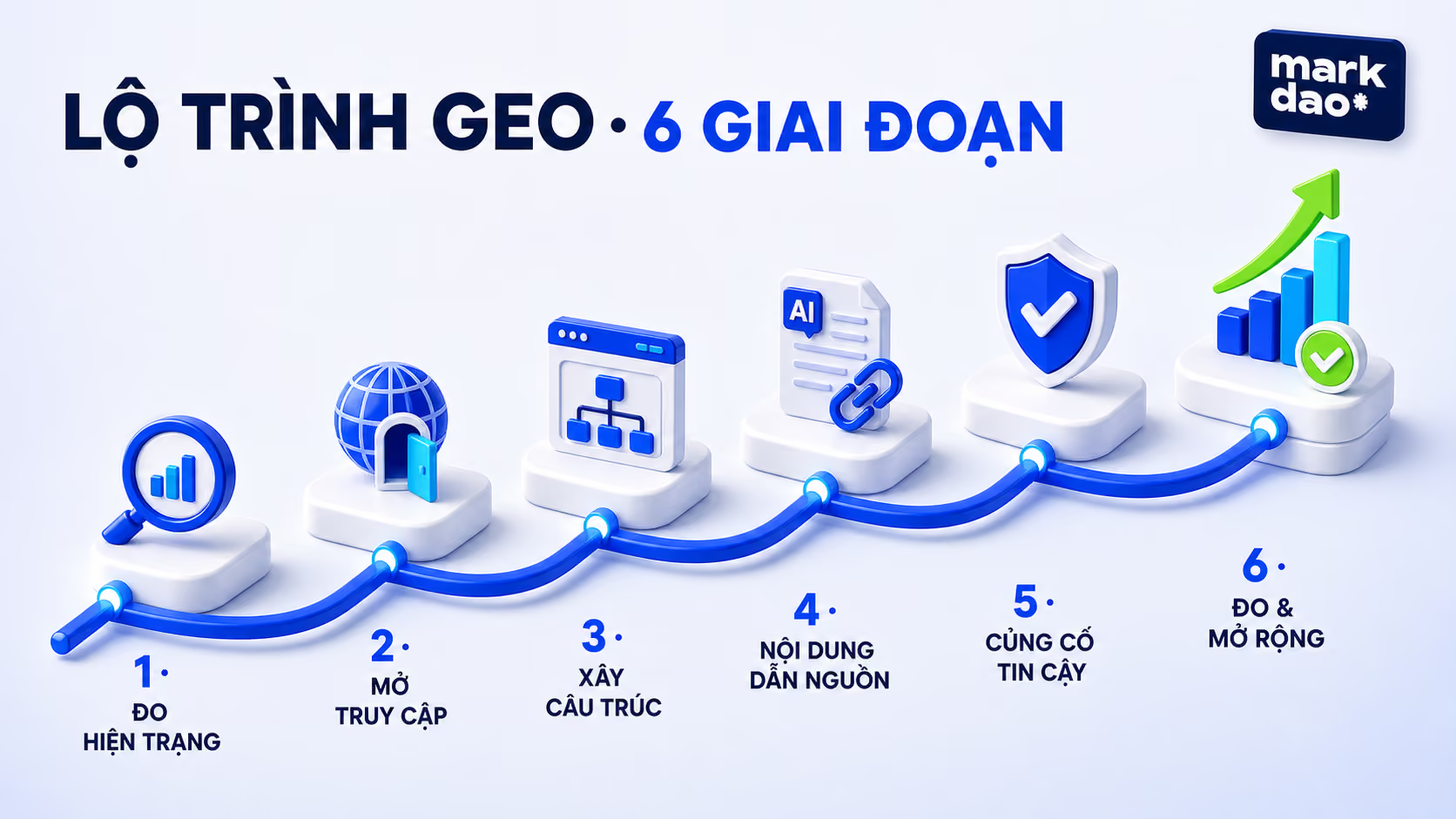
To implement GEO, a website goes through six stages. First, identify high-value questions, landing pages, conversion goals, and baseline metrics. Second, manage access, indexing, and bot readability. Third, organize website architecture, topic clusters, internal links, and brand entities. Fourth, build content that provides direct answers, evidence, and accountability. Fifth, strengthen credibility through business profiles, author authority, and case studies. Sixth, measure AI Visibility, referral sources, conversions, and lead quality to adjust or scale.
In this scenario, the competition happens before the user even visits the website. AI systems search for sources, synthesize answers, and provide only a few supporting links. If brand information is fragmented, content lacks evidence, or the bot cannot access the site, the website may not even be considered as a source.
GEO solves this problem. However, GEO is not a plugin, a new type of schema, or a few lines of code in robots.txt. It is a process of guiding a website through six stages of maturity: assessing the current state, enabling accessibility, organizing structure, building citeable content, reinforcing credibility, and creating a growth loop.
What is GEO? How does Generative Engine Optimization work?
To answer what GEO is, let’s start with its full name: Generative Engine Optimization. It can be understood as the process of making a website easily discoverable, accurately understood, and utilized as a source by AI-powered search systems when relevant to a user's query.
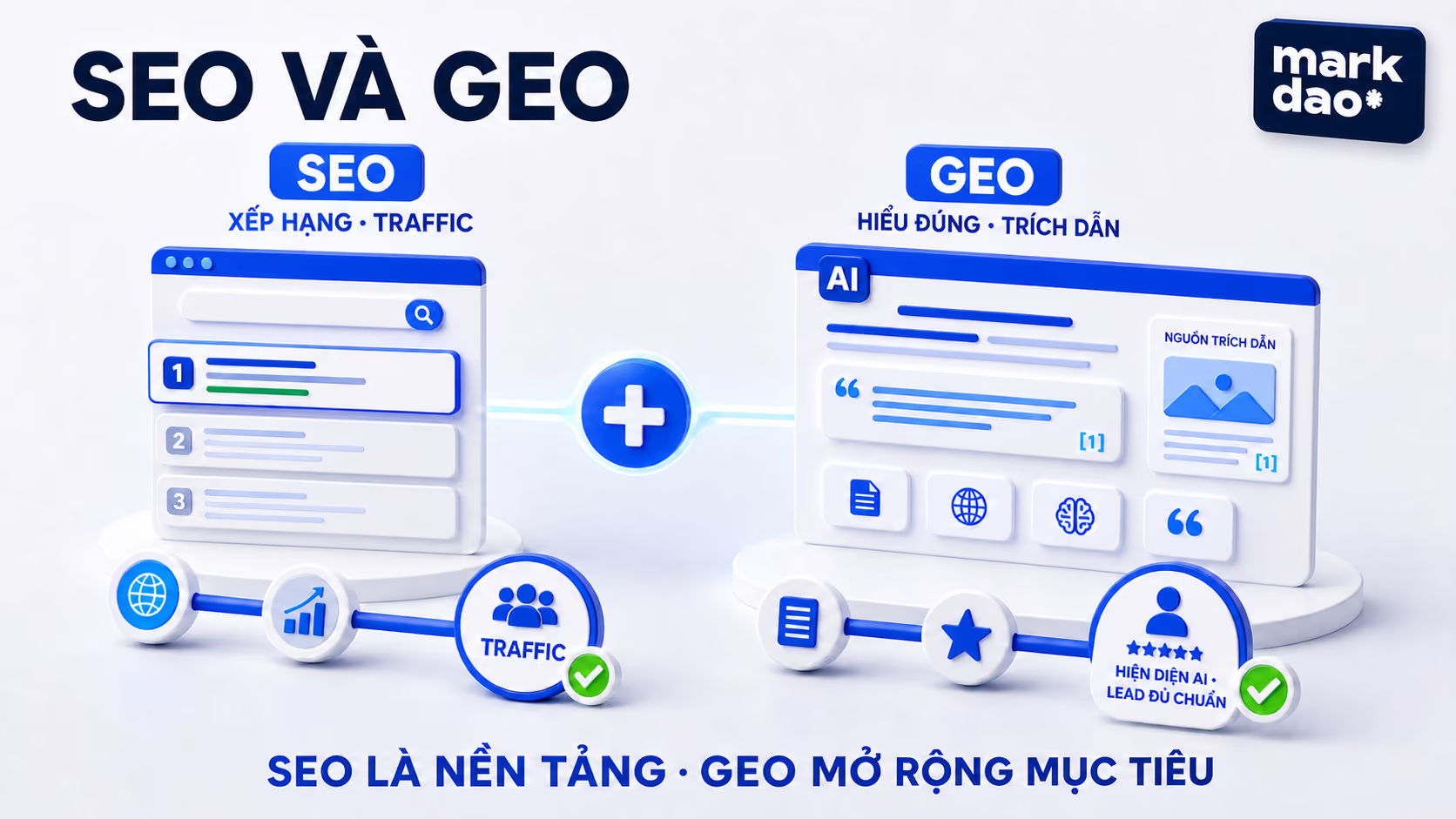
How are SEO and GEO different?
SEO focuses on helping pages get crawled, indexed, ranked, and generate traffic from search engines. GEO uses that same foundation but expands the goal to include the brand being accurately understood, mentioned, or cited in AI-synthesized answers.
SEO and GEO are not two separate systems. Google has stated that fundamental SEO practices remain the basis for appearing in AI Overviews and AI Mode. Therefore, businesses must fix crawling, structure, content, and credibility before looking for AI-specific tips.
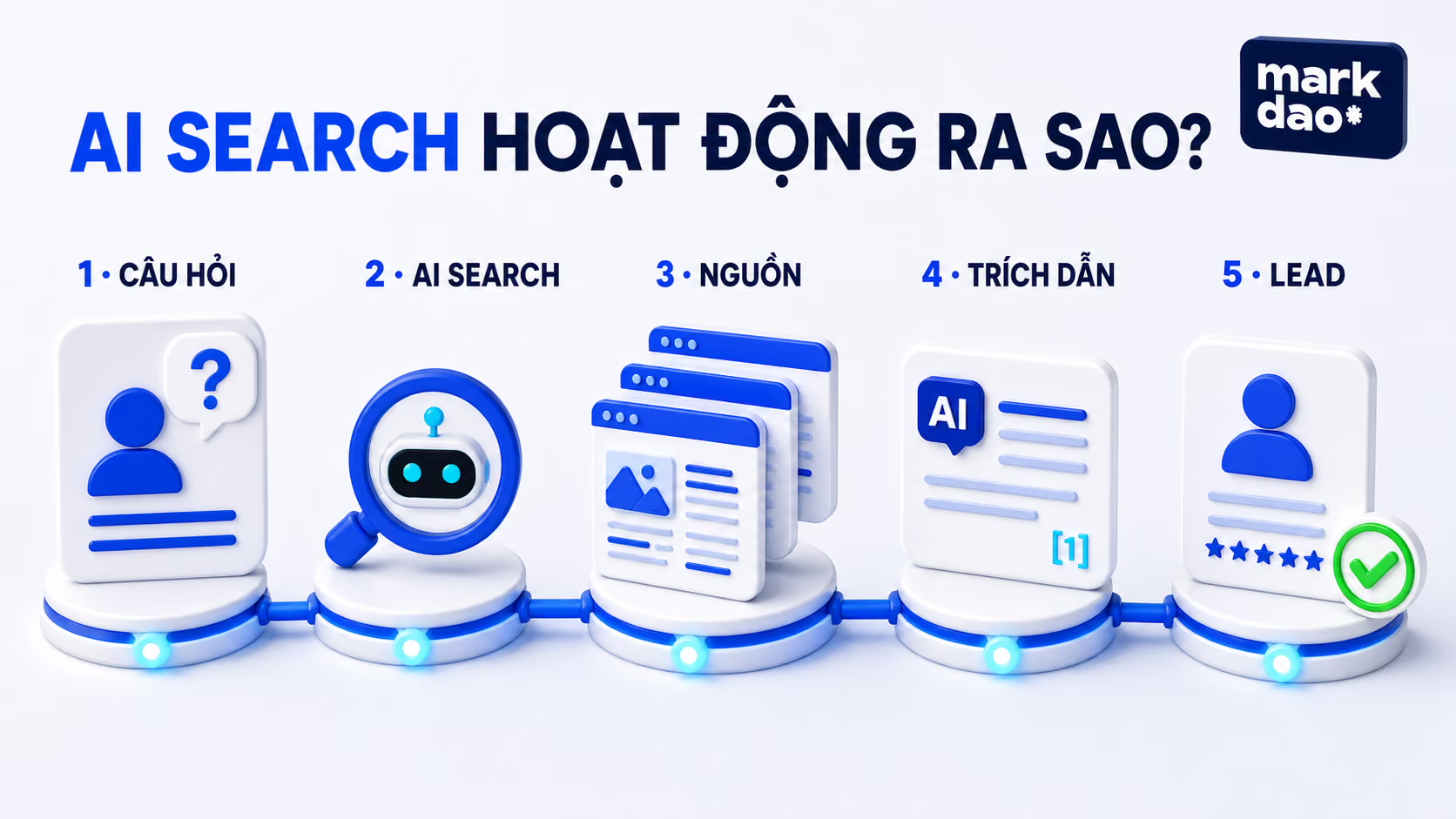
What is AI Search and where can a website appear?
What is AI Search? It is a search experience where the system uses AI models to understand questions, find multiple sources, synthesize answers, and provide supporting links. ChatGPT Search, Google AI Overviews, and AI Mode are common examples.
A website can appear as a cited source, a supporting link, a navigational result, or a page opened by users for verification and action. Each platform has its own way of selecting sources, so the practical goal is to build a website that is qualified to be found and worthy of being used as a source.
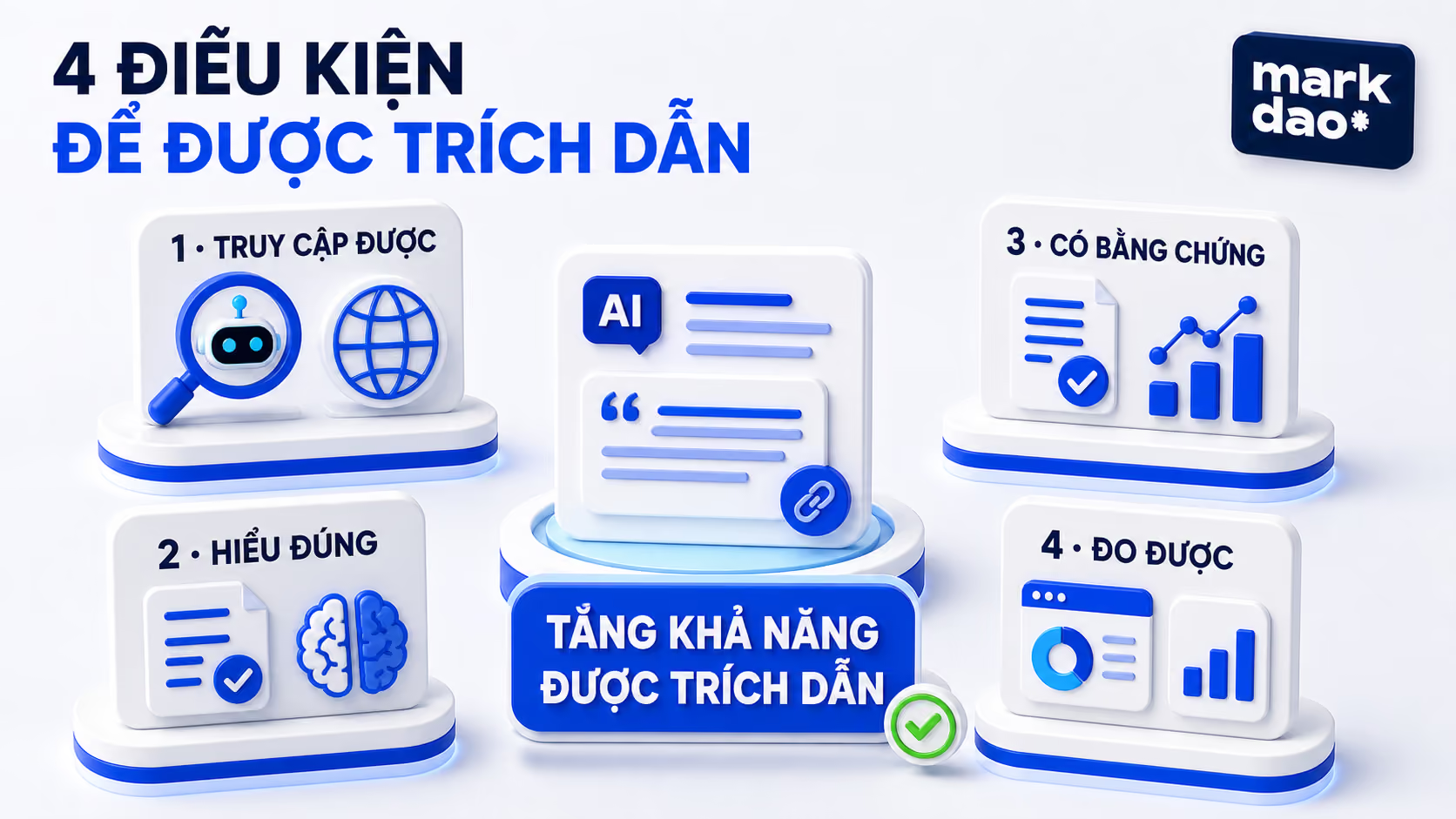
How to get your website cited by ChatGPT: four necessary conditions
Getting your website cited by ChatGPT doesn't start with signing up for a spot or installing a plugin. OpenAI recommends allowing OAI-SearchBot if you want to appear in ChatGPT Search, but no platform can guarantee a page will be selected. Your website needs to meet four conditions simultaneously:
- The bot can access the page.
- The system can understand what the page is about and who it belongs to.
- The content answers questions accurately, provides evidence, and is trustworthy.
- The website can measure referral sources, user behavior, and conversions to drive continuous improvement.
What does a website need before doing GEO?
A website doesn't need to be perfect to get started. However, it must at least have the following eight foundations:
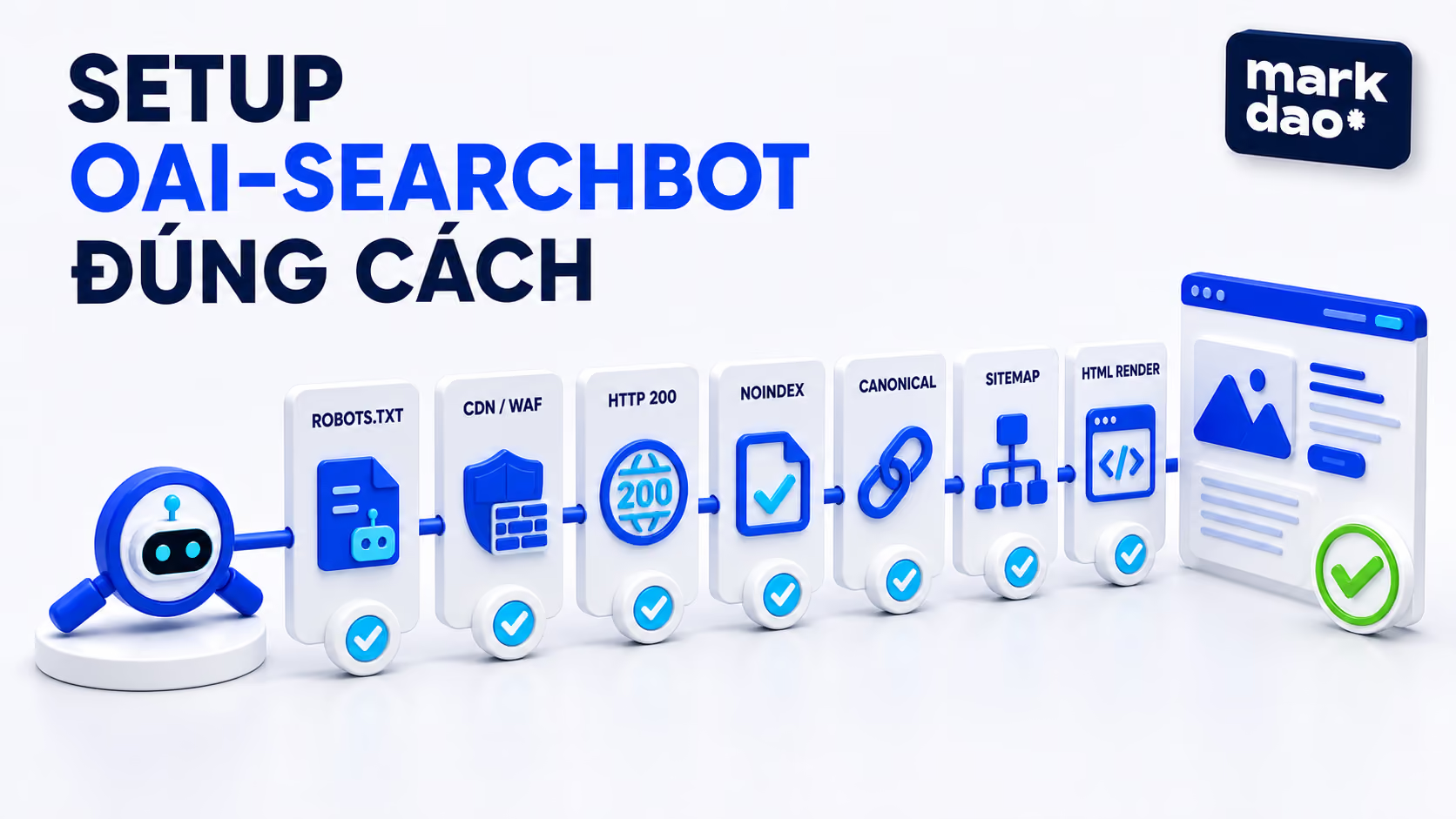
- Important pages are publicly accessible, return an HTTP 200 status code, and are not unintentionally tagged with noindex.
- Googlebot and OAI-SearchBot are not blocked by robots.txt, CDNs, firewalls, or security layers.
- Each piece of important content has a canonical URL and is included in the sitemap when indexing is required.
- Main content exists as HTML text, rather than being embedded solely in images, videos, or inaccessible JavaScript components.
- The website structure clearly communicates who the brand is, what services it provides, who it serves, and what evidence it offers.
- Pages are connected via internal links that follow the user journey of discovery, comparison, verification, and action.
- Search Console, analytics tools, and primary conversion tracking are already installed.
- The team has designated individuals responsible for technical aspects, content, subject matter expertise, and measurement.

If any of the first four foundations are missing, fix the technical issues before expanding content. If any of the last four are missing, the website may be crawled, but it will remain difficult to understand, hard to trust, and challenging to prove its business impact.
6-stage GEO setup roadmap for websites
Stage 1: Define goals and establish a baseline
Identify high-value business queries, target landing pages, and current metrics before making changes.
Stage 2: Enable access and indexability
Configure robots.txt, CDN, HTTP status, noindex, canonical tags, sitemaps, and content rendering.
Stage 3: Build website structure and brand entities
Organize service pages, expertise pages, author profiles, case studies, topic clusters, internal links, and structured data.
Stage 4: Create content that serves as a source
Turn customer questions into relevant pages, provide direct answers, include original evidence, and establish an editorial process.
Stage 5: Strengthen off-site credibility and consistency
Clarify content ownership, business profiles, case studies, citations, and brand signals.
Stage 6: Measure AI visibility, test, and scale
Track citations, referral sources, and leads, test hypotheses, and integrate high-performing content into a growth loop.
Avoid assigning a fixed number of weeks to each stage. A website should only move to the next stage once it meets the completion criteria. A small website may move quickly, while a multilingual site or one using complex JavaScript will require more time for testing and debugging.
Stage 1: Define goals and establish a baseline
Stage objectives
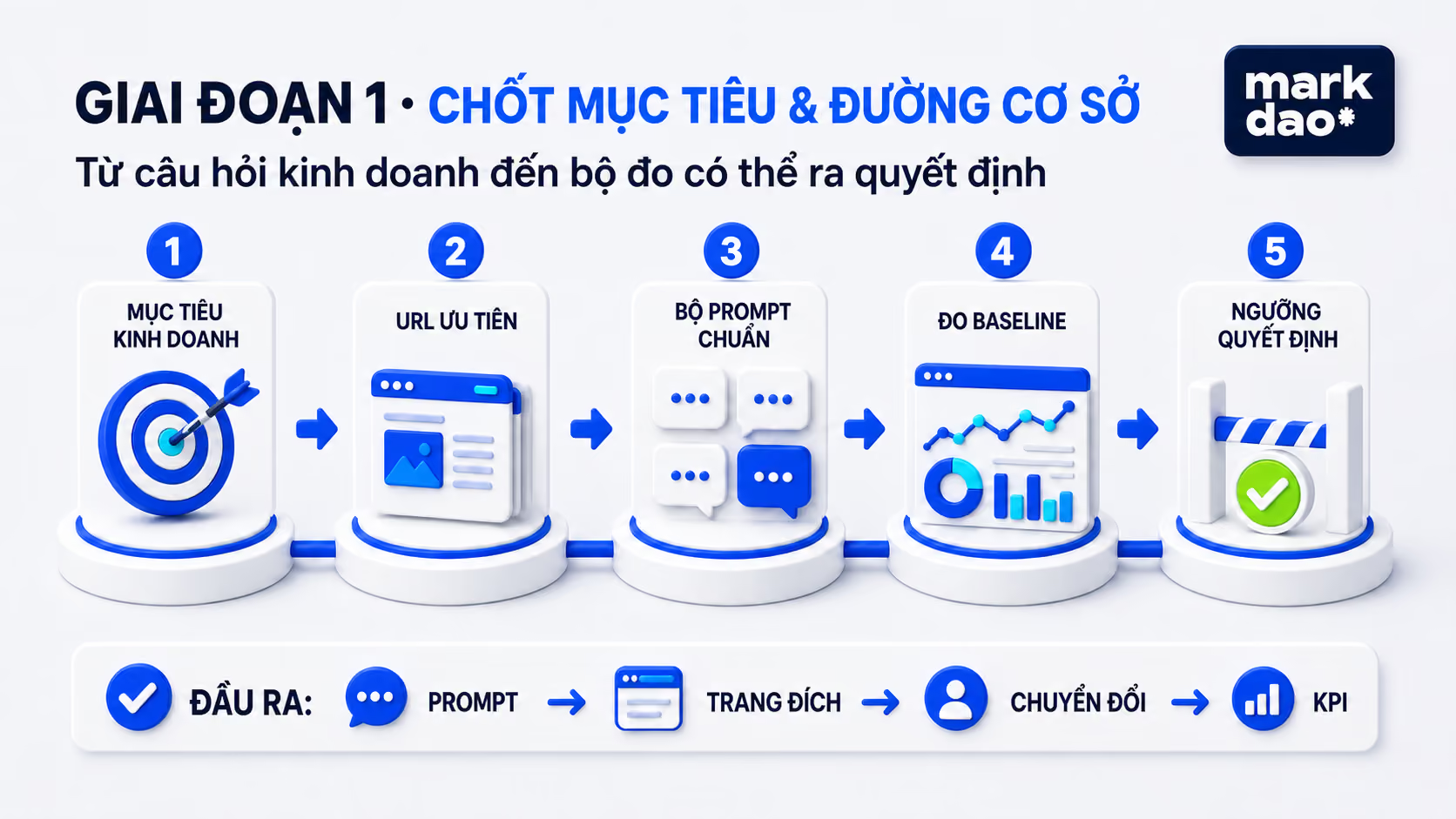
The team must answer three questions: in what scenarios do we want to be found, which pages should users be directed to, and what business results need to be measured?
Skipping this step makes it easy to get distracted by random prompts or celebrate a single brand mention without knowing if it actually leads to customers.
Required website and data assets
- A list of high-value business pages: services, solutions, industry pages, case studies, pricing, or contact pages.
- A list of primary conversions: form submissions, appointment bookings, phone calls, document downloads, or quote requests.
- Access to Search Console, analytics tools, tag managers, and the CMS.
- Sales team insights regarding common questions, objections, and vendor selection criteria.
- A centralized repository for prompts, test results, cited URLs, and change logs.
Step-by-step setup guide
- Select one primary business goal for the first cycle. For B2B websites, the goal should be the number of qualified leads or sales opportunities supported by organic search and AI-driven referrals, rather than total brand mentions.
- Compile a list of the 20 to 50 most important URLs. Each URL must have a clear purpose: capturing demand, explaining solutions, demonstrating expertise, or driving conversions.
- Gather questions from sales calls, emails, inquiry forms, internal site search, and Search Console. Keep the customer's original phrasing before converting them into SEO keywords.
- Group questions by the customer journey: problem awareness, solution seeking, option comparison, vendor validation, and decision-making.
- Select a standard prompt set. Each prompt should specify the market, language, target audience, and business objective.
- Establish a baseline. Record whether the brand is mentioned, which URLs are cited, competitor sources, and whether the answers accurately reflect the business.
- Map each prompt to a target landing page. If no suitable page exists, mark it as a content gap rather than forcing an existing page to answer every question.
Prompt-to-landing-page mapping template
- Definition prompts: lead to guide articles or pillar pages.
- Comparison prompts: lead to selection criteria pages, comparison pages, or analysis articles.
- Vendor search prompts: lead to service pages, industry-specific pages, or capability profiles.
- Evidence-based prompts: lead to case studies, research, benchmarks, or methodology pages.
- Action-oriented prompts: leading to quote request, consultation, or contact pages.
Stakeholders and coordination
- The Growth or Marketing Lead defines the objectives and North-Star metrics.
- The SEO Lead builds the prompt set and URL map.
- Sales provides real customer questions and evaluation criteria.
- The Data Analyst confirms conversions and baseline metrics.
Required deliverables
- A standard prompt set categorized by intent.
- A prioritized list of URLs and the role of each page.
- Baseline metrics for mentions, citations, referrals, and conversions.
- A list of technical or content gaps that need to be addressed.
Definition of done
Phase 1 is complete when every key prompt has a designated landing page, every landing page has a conversion goal, and the team knows which metrics will determine whether to continue, adjust, or stop a change.
Phase 2: Access and indexability
Phase objectives
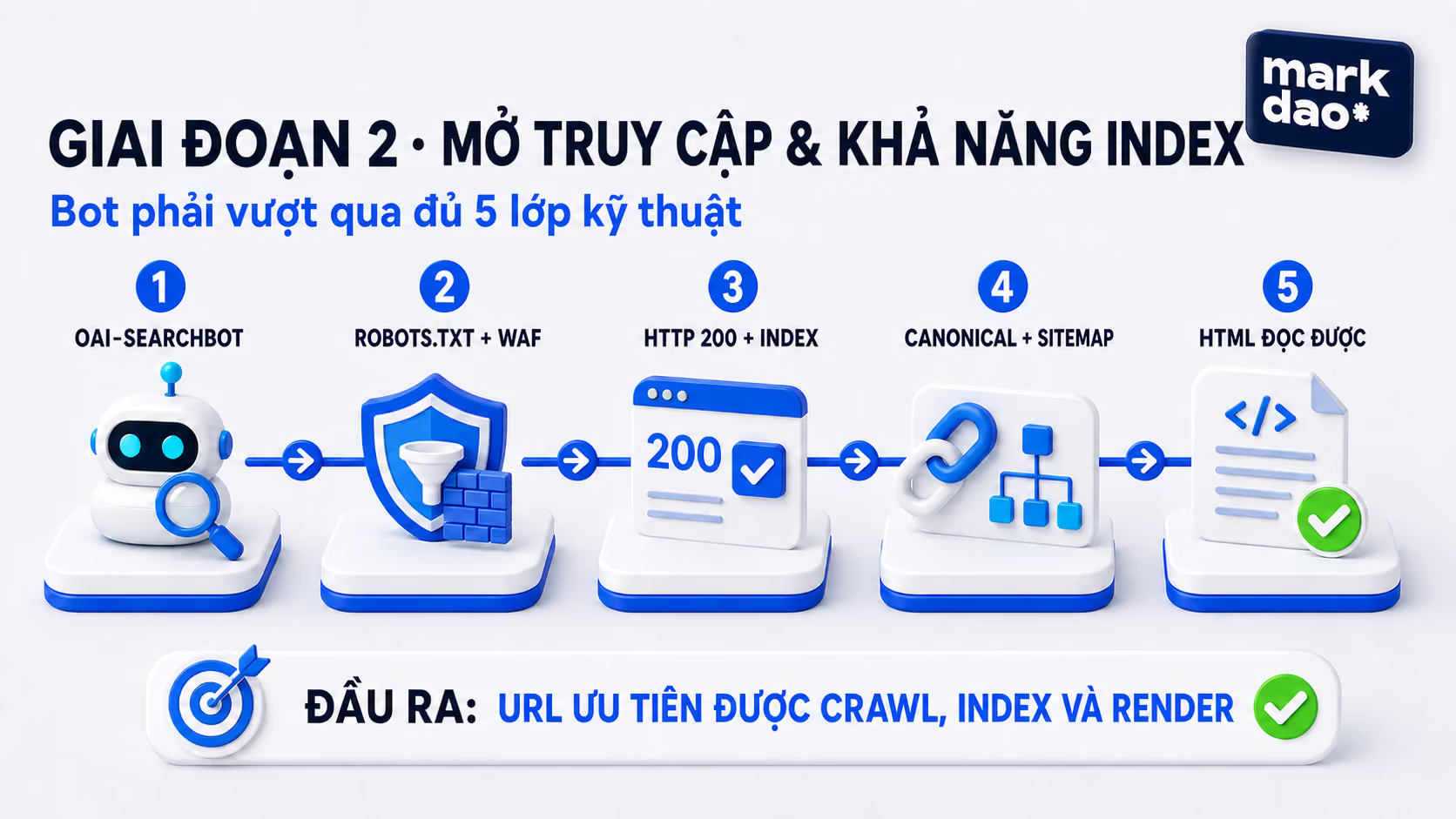
Ensure search bots can access, load, read, and identify the canonical version of key pages.
According to Google, a page must at minimum not block Googlebot, return an HTTP 200 status, and contain indexable content. For ChatGPT Search, OpenAI uses OAI-SearchBot for search activities and allows businesses to manage this bot independently of GPTBot.
Website audit requirements
- robots.txt in the root directory.
- Bot rules in CDN, WAF, firewall, and anti-bot systems.
- HTTP status of important URLs.
- Meta robots and X-Robots-Tag.
- Canonical, redirects, and URL variants.
- Sitemap XML.
- JavaScript content rendering capability.
- Content behind login, paywalls, or geo-blocking.
How to set up your website for ChatGPT Search using OAI-SearchBot
If a business wants its content to appear in ChatGPT Search but does not want it used for model training, the robots.txt file can separate these two decisions as follows:
User-agent: OAI-SearchBot
Allow: /
User-agent: GPTBot
Disallow: /
This is an example policy, not a configuration suitable for every website. Legal teams and content owners should determine the scope of access. If you only want to open specific directories, replace the site-wide rules with specific paths.
OpenAI also recommends allowing access requests from their published IP ranges. If your website uses Cloudflare or a WAF, developers need to check both the robots.txt file and security rules. Allowing the user-agent while blocking all IPs at the CDN layer will still prevent the bot from accessing the site. Do not copy a static IP list into internal documentation and leave it there; instead, reference OpenAI's official IP file in your maintenance procedures.
Step-by-step setup
- Download the robots.txt file from your production environment and check the rules applied to Googlebot, OAI-SearchBot, GPTBot, and wildcards.
- Check rules in your CDN, WAF, and security plugins. Look for rules that block bots, restrict countries, limit request rates, or require JavaScript challenges.
- Use server or CDN logs to confirm whether bot requests are receiving content or are being met with 403, 429, or challenge responses.
- Check each priority URL. URLs must return a 200 status code, avoid excessive redirects, and not have unintended noindex tags.
- Verify canonical tags. Pages that need to be indexed should point to themselves or the correct representative version. Do not canonicalize a service page to the homepage simply because the content is short.
- Check your sitemap. Only include canonical URLs that return a 200 status code and that you want to appear in search results.
- Submit your sitemap in Search Console. Use the URL Inspection tool for priority URLs to see if Google has crawled them and which canonical version it has selected.
- Check rendered content. Titles, service descriptions, testimonials, and important internal links must be present in the HTML received by the bot.
- Check meta robots, data-nosnippet, and X-Robots-Tag. A page that allows crawling can still be blocked from indexing or have its snippets restricted.
- Document all technical changes, affected URLs, and rollback procedures before a full-scale deployment.
Common errors and how to fix them
- Allowed in robots.txt but blocked by WAF: adjust security layer rules and check logs after deployment.
- Sitemap contains redirects or noindex URLs: remove faulty URLs and keep only canonical versions that return a 200 status.
- Page has an unintended canonical tag pointing to another URL: fix the canonical template in the CMS.
- Main content only appears after user interaction: include core content in the initial HTML load or use an appropriate rendering solution.
- Staging site is indexed: protect staging with authentication and index controls; do not rely on robots.txt to secure sensitive content.
- Production site remains noindexed after launch: add a noindex check to the release checklist.
Responsibilities and coordination
- The Technical SEO lead creates the list of errors and testing criteria.
- Developers fix page templates, HTTP status codes, canonical tags, rendering capabilities, and sitemaps.
- DevOps or infrastructure administrators handle CDN, WAF, and logs.
- Content owners finalize policies for OAI-SearchBot and GPTBot.
Required deliverables
- robots.txt approved according to company policy.
- List of priority URLs with status, indexability, canonical, and sitemap status.
- Evidence from URL Inspection or logs showing correct bot access.
- List of remaining errors, their impact levels, and assigned owners.
Definition of done
Phase 2 is complete when all priority URLs return a 200 status code, are not unintentionally blocked, have correct canonical tags, display readable main content, have a clean sitemap, and the security system does not block authorized bots.
Phase 3: Building website structure and brand entities
Phase objectives
Help readers and search engines understand which organization the website belongs to, what the organization does, which pages are the primary sources for specific topics, and how pages relate to one another.
A website with hundreds of articles but no clear service pages, author pages, case studies, or internal links will create fragmented signals. GEO requires a structure where every page has a specific purpose.
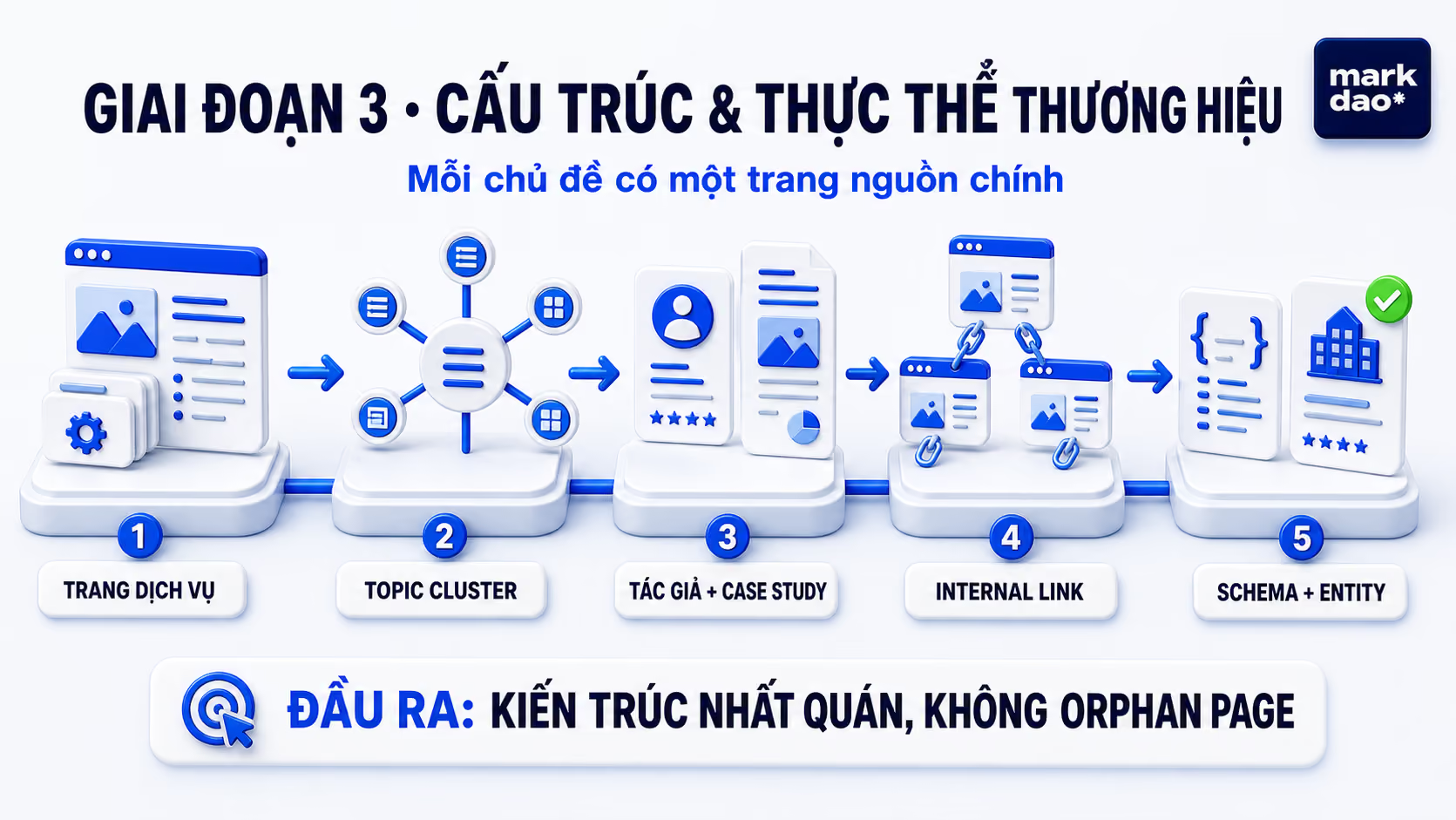
Essential structural elements for the website
- A homepage that clearly describes the business and the target customer segments.
- An about page that explains capabilities, methodology, and organizational information.
- Service or solution pages for each distinct commercial need.
- Industry-specific pages when solutions and evidence differ significantly.
- Author or expert pages for content requiring professional expertise.
- Case studies that include context, methodology, results, and limitations.
- Pillar pages and supporting articles organized by topic clusters.
- Contact or action pages with consistent information.
How to set up information architecture
- Export all existing URLs and categorize them by role: brand, commercial, informational, evidence, support, or obsolete.
- Merge pages with overlapping intent. Do not create a separate URL for every keyword variation if readers expect the same answer.
- Select primary source pages for each service, topic, and entity. Supporting articles must link back to the primary source page using descriptive anchor text.
- Create a user journey from informational articles to commercial pages, from commercial pages to case studies, and from case studies to CTAs.
- Add breadcrumbs when the structure has multiple levels. Breadcrumb labels must accurately reflect the website's taxonomy.
- Check for orphan pages. Every page that needs to be discovered must have at least one logical internal link from an already crawled page.
- Standardize navigation. Prioritize user tasks in the menu rather than listing your entire keyword inventory.
- Establish rules for URLs, canonical tags, and redirects to prevent future updates from creating duplicate variations.
Set up brand entities
- Finalize a concise, consistent description: who the brand is, what it provides, who it serves, and in which market.
- Synchronize the name, logo, URL, address, and contact channels across the homepage, about page, footer, and business profiles.
- Create author pages featuring real names, roles, relevant experience, and a list of articles.
- Include bylines for content requiring expertise. If the content is reviewed by an expert, clearly state their role in the review process.
- Link authors, case studies, services, and related topics to demonstrate real-world relationships.
- Use Organization structured data on the homepage or relevant about page. Include applicable attributes such as name, URL, logo, contactPoint, and sameAs when that information is verified.
- Use Article and Breadcrumb structured data for the appropriate page types, provided they meet the guidelines.
Google recommends JSON-LD for its ease of implementation and maintenance, but structured data must reflect the content visible to users. There is no specific “GEO schema” for AI Search. Structured data helps with page understanding and eligibility for certain rich results, but it does not guarantee citations.
Set up content and experience at the template level
- Use only one H1 that accurately describes the page's purpose.
- Use H2 and H3 tags to organize questions logically; do not use headings simply to increase font size.
- Ensure important content is provided as HTML text.
- Include alt text for images that convey information.
- Use descriptive anchor text for links that clearly indicates the destination page.
- Ensure forms have clear labels, error messages, and submission status indicators.
- Ensure buttons, menus, and interactive elements have accessible names.
- Main content is not obscured by popups or decorative elements.
OpenAI states that the ChatGPT Agent in Atlas can rely on ARIA labels and roles to understand interactive components. Therefore, accessibility should be viewed as a foundational requirement for both users and AI agents, not just an optional add-on.
Roles and coordination
- The SEO strategist finalizes the taxonomy, sitemap, and internal linking structure.
- The UX or information architect designs the navigation and user journey.
- The developer implements page templates, breadcrumbs, schema, and accessibility features.
- The brand manager finalizes entity descriptions and ensures consistent messaging.
Required deliverables
- An architectural sitemap illustrating the role of each page group.
- An internal link map based on the decision-making journey.
- Template rules for headings, schema, canonical tags, and CTAs.
- An entity profile including Organization, author, services, and proof points.
Completion criteria
Phase 3 is complete when every key service and topic has a primary source page, there are no orphan pages within priority groups, brand information is consistent, and schema accurately reflects the displayed content.
If your current website does not support this structure at the CMS or template level, you should consider Markdao's professional website design services to address architecture, user experience, content, and SEO foundations simultaneously.
Phase 4: Building source-ready content
Phase objectives
Create content that accurately answers questions, is easily verifiable, and provides unique value that a generic summary cannot replace.
Google calls this approach non-commodity content. Content needs to offer unique perspectives, experiences, data, or real-world evidence rather than simply paraphrasing what is already available on the internet.
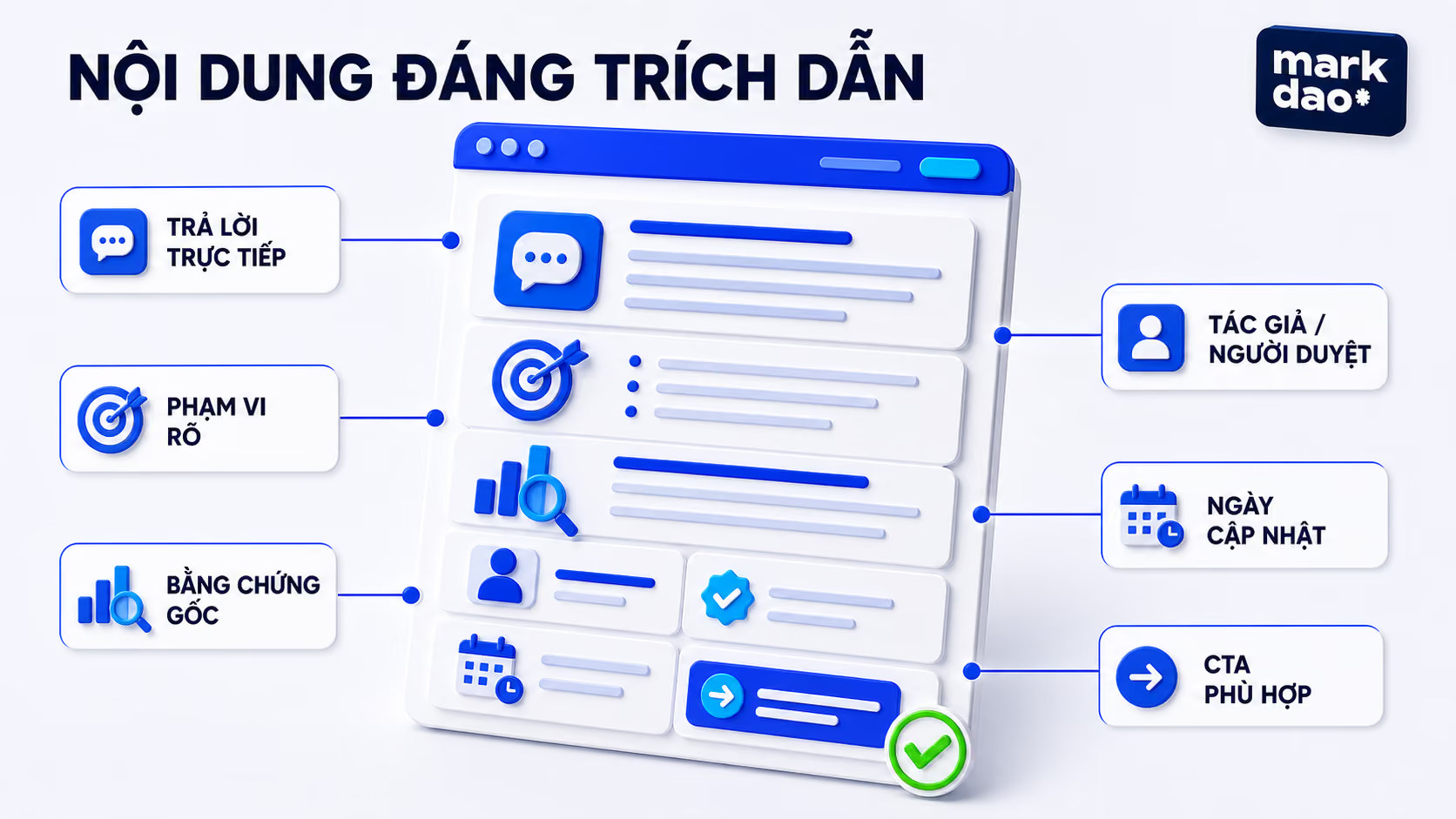
Choose the right page type for the right intent
- "What is" questions require an explanatory article or a pillar page.
- "Which to choose" questions require a criteria framework, comparison, or decision guide.
- "Who provides" questions require a service page, industry-specific page, or a list with clear criteria.
- "Does it work" questions require a case study, benchmark, or measurement methodology.
- "How much does it cost" questions require a pricing page, scope, or estimation method, and should not be redirected to a general definition article.
A page with the wrong intent will struggle to satisfy readers, even if it is well-optimized for keywords. Before writing, determine whether the user wants to understand, compare, verify, or take action.
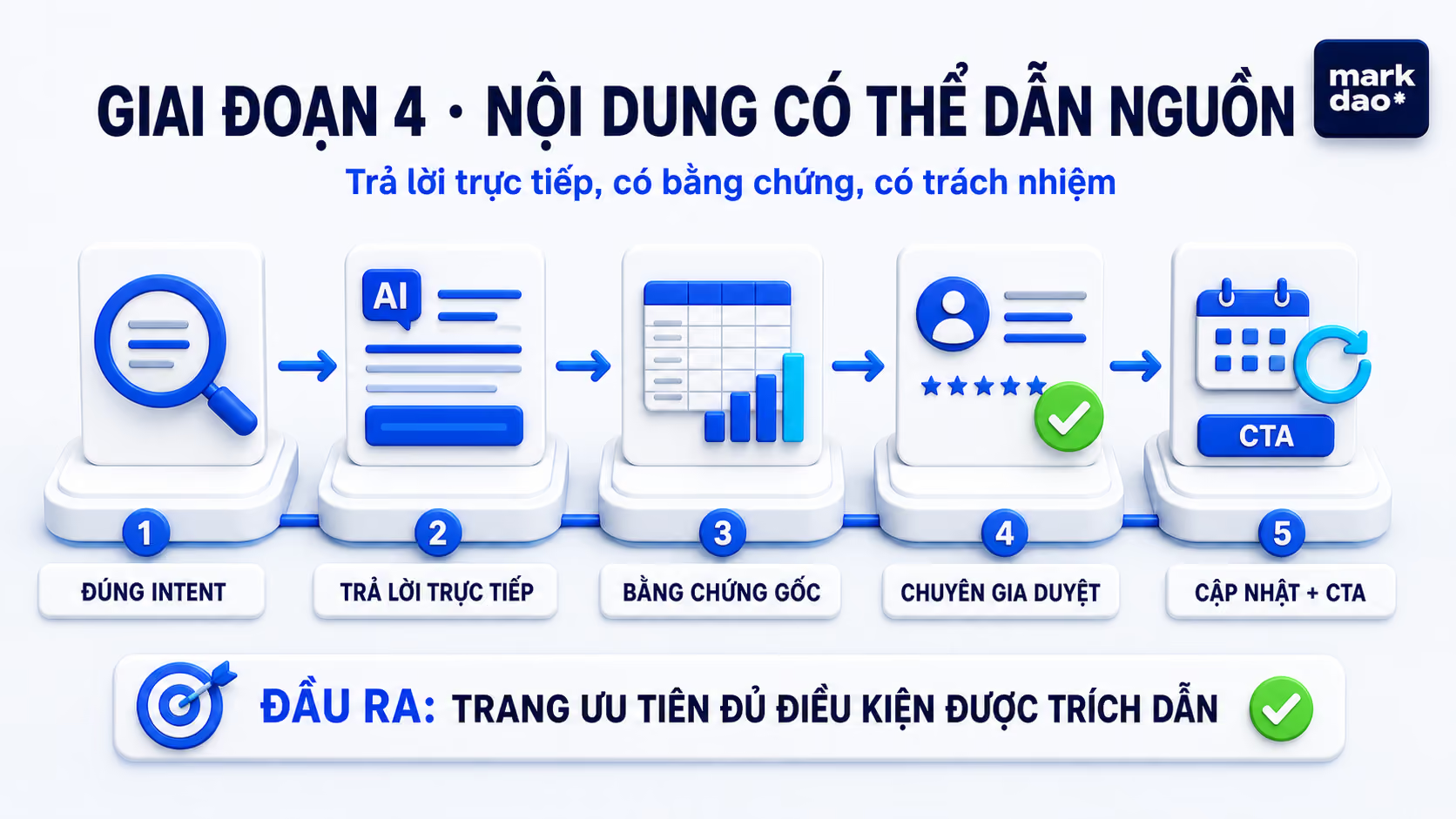
Structuring content to be easily cited as a source
- State the question or problem as a clear heading.
- Provide a direct answer in the first two to four sentences.
- State conditions, exceptions, or the scope of application.
- Provide evidence: data, official sources, case studies, process photos, or expert opinions.
- Explain how to apply it step-by-step.
- Lead to the next supporting page or an appropriate CTA.
These are editorial recommendations, not technical requirements from Google. Google has also clarified that there is no need to break content into tiny blocks for AI to understand. Prioritize a structure that helps readers grasp the main points quickly and dive deeper when needed.
Content template for service pages
- The problem and the target audience.
- Business results to expect, along with the necessary conditions.
- Scope of work and exclusions.
- Implementation process.
- Evidence or relevant case studies.
- How to measure results.
- FAQs and common objections.
- CTA and next steps.
Content template for case studies
- Business context and initial problem.
- Baseline metrics or indicators.
- Constraints and considered options.
- Specific team interventions.
- Measured results and observation period, if applicable.
- Inconclusive factors or limitations of the case.
- Applicable lessons for similar situations.
- Related service page and CTA.
Content template for professional articles
- Short answer to the main query.
- Definitions and scope.
- How it works or underlying causes.
- Deployment process.
- Real-world examples.
- Common mistakes.
- Checklist.
- Author, reviewer, and sources.
- Internal links to pillar pages, services, and case studies.
How to create original evidence
- After each project, interview the implementers and the client about the context, decisions, changes, and results.
- Save before-and-after photos, diagrams, change logs, behavioral data, or test versions that are cleared for publication.
- Standardize methodology reporting: sample size, data sources, scope, and limitations.
- Separate facts from opinions. Facts must be supported by sources or data; opinions must be clearly identified as expert analysis.
- Update articles when processes, products, policies, or data change. Do not change the "updated" label if there are no substantive content changes.
Content production process
- The SEO lead provides a content brief including search intent, landing page, sub-questions, internal links, and CTAs.
- The expert provides arguments, evidence, and limitations.
- The content writer transforms the raw material into a clear, structured response.
- The editor checks for clarity, redundancy, and brand voice.
- The expert reviews facts and conclusions.
- The SEO lead or developer checks headings, metadata, schema, canonical tags, and indexability.
- The data analyst checks CTAs and conversion tracking before publication.
Roles and collaboration
- The SEO lead owns the search intent, content brief, and internal linking.
- The subject matter expert owns the facts, evidence, and scope of conclusions.
- The content lead owns the structure, tone of voice, and consistency.
- The developer or publisher owns the page templates, metadata, and schema.
Required deliverables
- A prompt map for page types and content briefs.
- Three to five priority pages fully upgraded.
- An evidence library containing cases, data, images, and sources.
- A publishing checklist for future articles.
Definition of done
Phase 4 is complete when each priority page satisfies the search intent, includes at least one verifiable piece of evidence, clearly identifies the author or responsible party, and guides the reader to the next step.
Phase 5: Strengthening off-site credibility and consistency
Phase objective
Bridge the gap between what the website claims and information verifiable through business profiles, experts, clients, and relevant sources.
This phase is not about buying mentions or mass-creating profiles. Google warns that seeking unnatural mentions is not a helpful strategy. The goal is to make factual information about the business consistent and easy to cross-reference.
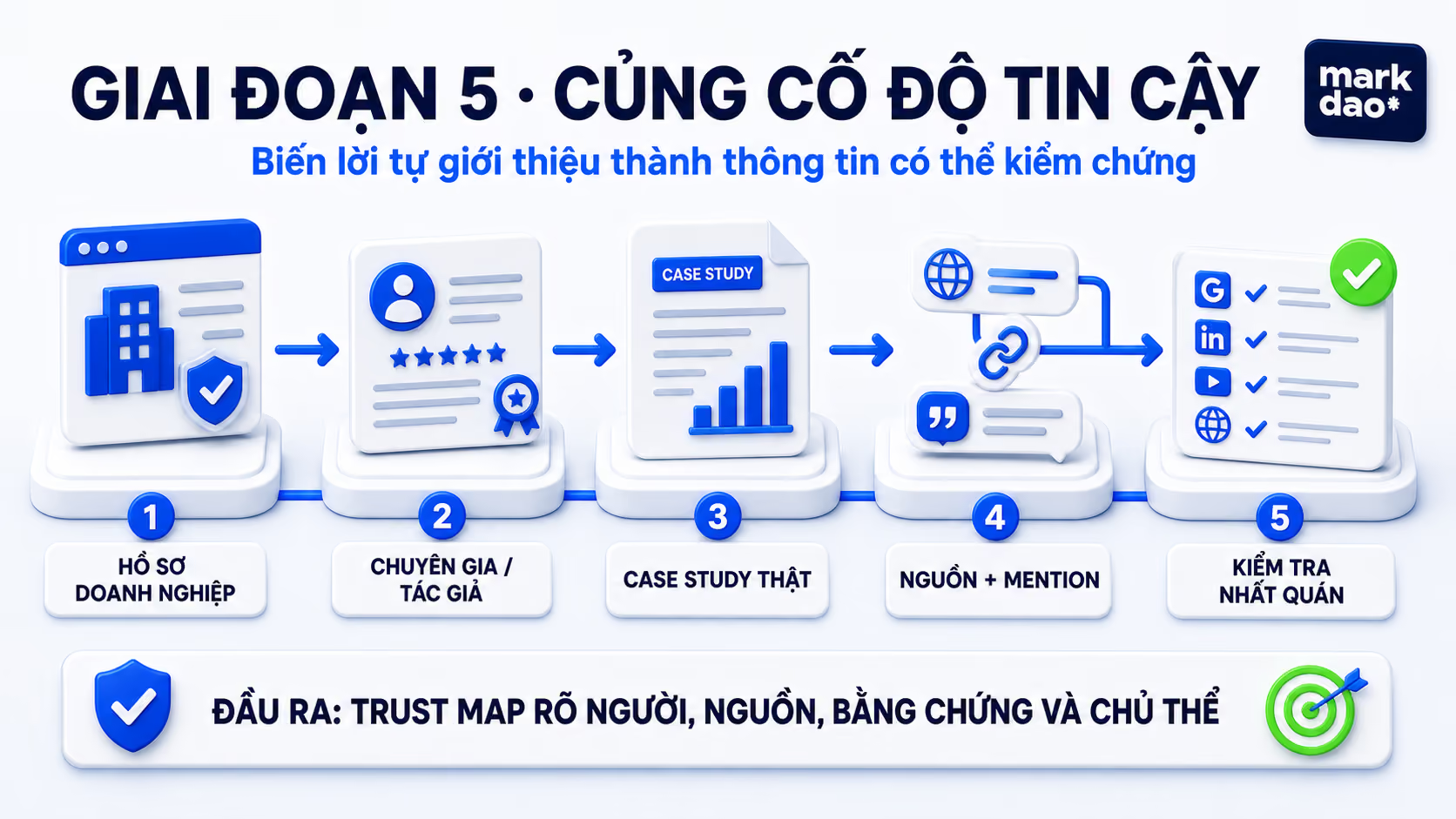
Required website and off-site assets
- Updated About and Contact pages.
- Author or expert profiles.
- Client-approved case studies.
- Business profiles on platforms relevant to the market.
- Professional channels such as the company's LinkedIn page and the designated lead.
- Guidelines for citing sources, fact-checking, and managing legacy content.
Step-by-step setup guide
- Verify brand name, description, logo, address, phone number, and website across all primary profiles. Correct any inconsistencies that impact brand identity.
- Select subject matter experts to represent each topic. Each expert should have a profile, defined role, relevant experience, and associated articles.
- Transform case studies into referenceable assets. Focus on context, methodology, and results rather than just showcasing visuals.
- Publish expert insights on LinkedIn and link back to the original documentation on the website for readers seeking data, processes, or full case studies.
- Build relationships with the press, communities, and relevant partners. Only pitch content that offers genuinely useful data or unique perspectives.
- Monitor inaccurate brand descriptions in search results and AI responses. Identify the source of the error and correct the primary source first.
- Establish a claim approval process. Every statistic, commitment, and bold claim must be supported by sources, conditions, or evidence.
The evidence and growth loop
- Projects generate data and insights.
- The team converts data into case studies and expert content.
- Content helps the brand get discovered and generates leads.
- Qualified leads turn into new projects.
- New projects create even stronger evidence.
This is how the content loop and sales loop work in tandem. Content does more than just drive traffic; every successful project strengthens your portfolio of evidence, which in turn helps the business attract higher-value inquiries.
The lead and coordination process
- The brand lead manages brand information and messaging guidelines.
- PR or partnerships build relationships with relevant referral sources.
- Experts and leaders provide insights.
- The content team transforms these insights into structured assets.
- Legal or authorized personnel review sensitive data.
Required deliverables
- Consistent brand profile across key channels.
- A list of experts, topics, and proprietary content.
- A library of case studies and verifiable sources.
- A process for claim approval and correcting misinformation.
Completion criteria
Phase 5 is complete when critical business information can be cross-referenced, authors and experts have clear profiles, case studies demonstrate real evidence, and distribution activities lead back to the source rather than creating isolated mentions.
Phase 6: Measuring AI Visibility, testing, and scaling
Phase objectives
Transform GEO into a growth system with hypotheses, metrics, decision thresholds, and learning loops.
GEO should not be evaluated based on a single screenshot or one ChatGPT query. Answers can vary based on context, market, user session, and timing. Businesses need a consistent testing methodology.
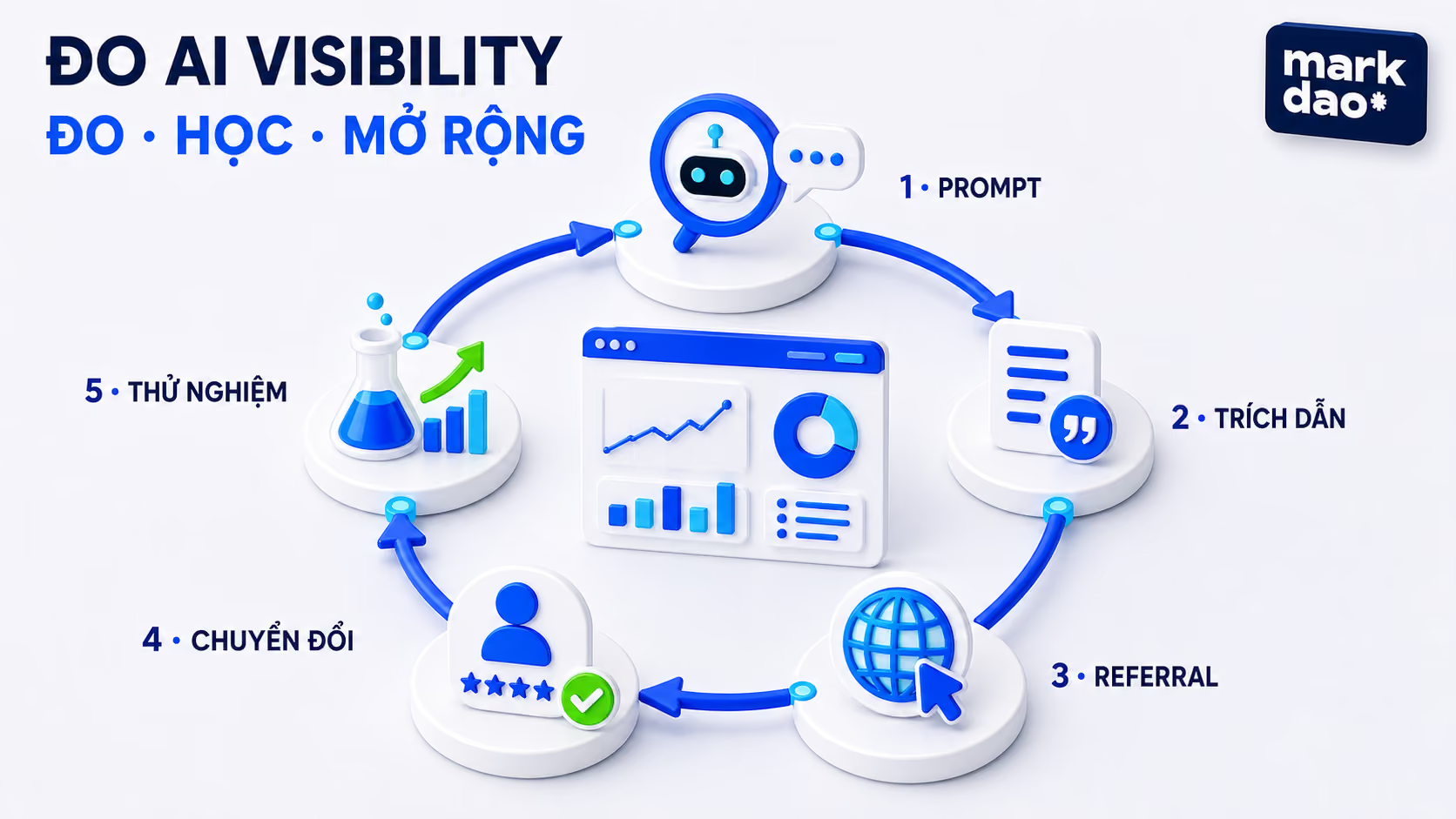
Setting up measurement in analytics
- Verify that key conversions are working: valid forms, bookings, calls, document downloads, or quote requests.
- Create landing page reports for sessions originating from AI sources observed in the data.
- For ChatGPT, track session source or the utm_source=chatgpt.com parameter. OpenAI indicates that referrals from ChatGPT Search include this parameter.
- Create a custom channel group for “AI Assistants” if your analytics tool allows it. Only include sources confirmed in your data; do not assume every platform will consistently send a referrer.
- Connect sessions with conversions and lead quality. If the sales cycle is long, sync input sources to your CRM to track opportunities and revenue.
- Check Search Console. If your account has a dedicated Generative AI report, track impressions, pages, countries, and devices. If not, continue using general Search data, landing pages, and conversions.
- Create annotations for every change to robots, templates, content, schema, or internal links to avoid misinterpreting the cause of performance shifts.
Key metrics to track
- Brand mention rate: the number of prompts mentioning your brand divided by the total number of prompts tested.
- Owned URL citation rate: the number of prompts resulting in a citation of your website URL divided by the total number of prompts tested.
- Landing page accuracy rate: the number of citations leading to the intended page divided by the total number of owned URL citations.
- AI referral sessions: the number of sessions originating from identified AI sources.
- AI conversion rate: the number of conversions divided by AI referral sessions.
- AI-qualified leads: the number of leads from AI sources that meet your sales team's criteria.
- Assisted sales opportunities: the number of opportunities that interacted with organic search or AI content during their journey.
For B2B websites, your North Star metric should be AI-assisted qualified leads or influenced sales opportunities, depending on your attribution capabilities. Mentions and citations are leading indicators, not final outcomes.
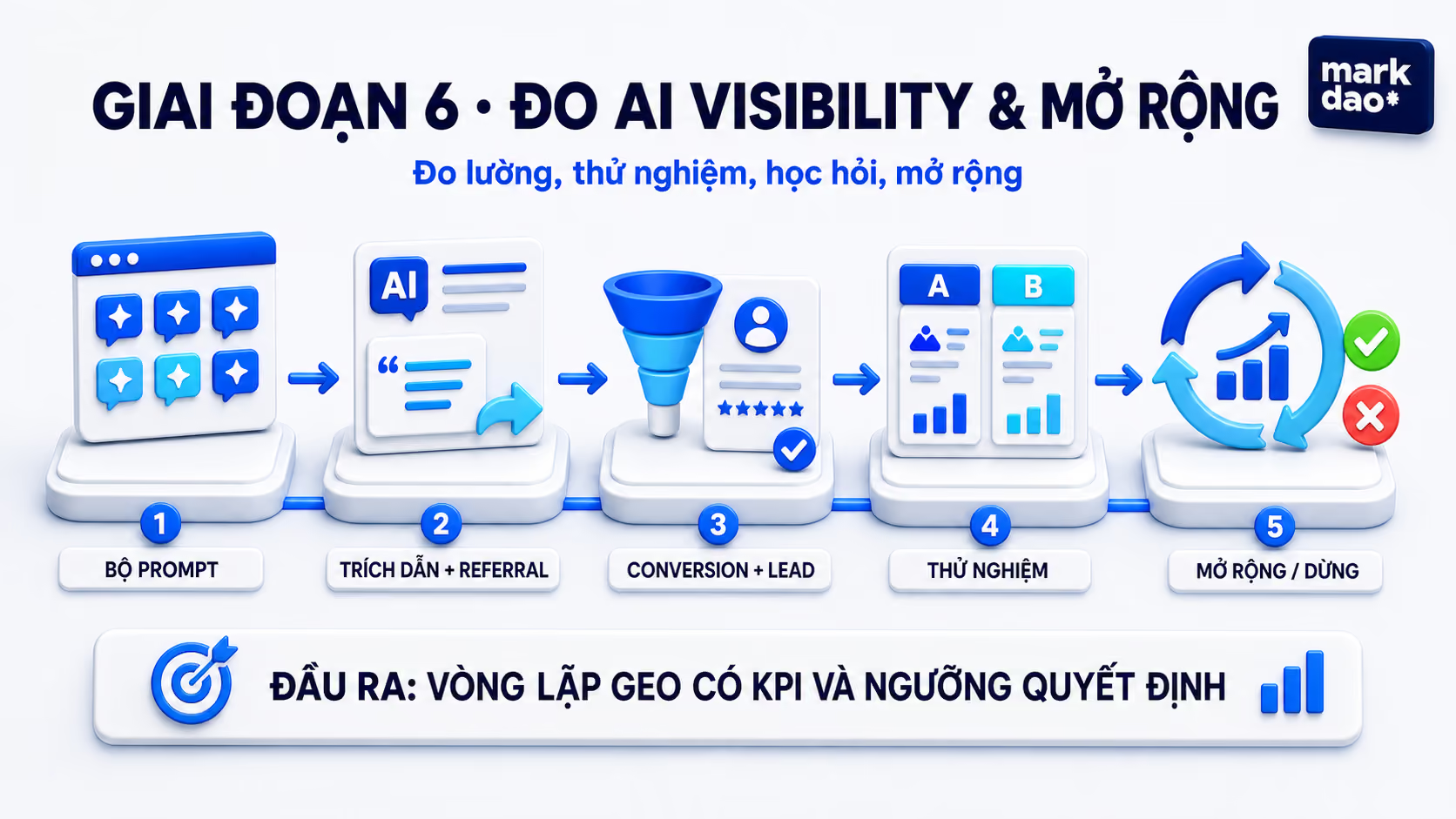
How to conduct consistent prompt testing
- Maintain a standardized set of prompts categorized by intent.
- Clearly document the language, market, device, or specific conditions that may influence the test.
- Follow the same process for every test and log the responses, sources, URLs, and brand positioning.
- Do not treat results as absolute rankings. Use them to identify patterns: which topics are mentioned, which pages are cited, and what information is incorrect.
- Combine prompt data with Search Console, analytics, and CRM insights before drawing conclusions about impact.
Designing GEO experiments
Every experiment requires a primary variable, a hypothesis, specific metrics, and pre-defined success thresholds.
Test example 1:
- Hypothesis: Adding original data and methodology to three specialized pages will increase the owned citation rate because the content will have its own evidence.
- Variable: Data and methodology section.
- Metric: Owned citation rate of the relevant prompt group.
- Success threshold: Pre-determined by the team based on the baseline and acceptable variance levels.
- Decision: Roll out, adjust, or stop.
Test example 2:
- Hypothesis: Updating internal links from informational articles to service pages will increase the correct landing rate and assisted conversions.
- Variable: Internal link placement and anchor text.
- Metric: Clicks to service pages, correct landing rate, and assisted conversions.
- Success threshold: Pre-determined before launch.
- Decision: Keep, test a different version, or revert.
Test example 3:
- Hypothesis: Splitting a page that mixes two intents into a guide page and a service page will improve impressions, citations, and conversions for each group.
- Variable: Page structure based on intent.
- Metric: Query coverage, owned URL citation rate, and qualified leads.
- Success threshold: Pre-determined based on baseline data.
- Decision: Expand to other topic clusters or stop.
How to prioritize the backlog
Score each change using ICE:
- Impact: the level of influence on citations, leads, or revenue.
- Confidence: the level of certainty based on data, official sources, or observed errors.
- Ease: the effort and risk involved in implementation.
Prioritize crawl and index blocking errors first. Then, address pages with commercial intent and strong evidence. Tips not confirmed by the platform, such as creating llms.txt solely to increase visibility on Google, should be deprioritized or removed from the backlog. Google has stated that Search does not use llms.txt and does not require special markup for AI Search.
Operational cadence after setup
- Each cycle: check for technical errors and priority URLs.
- Each content cycle: publish or upgrade a group of pages with the same intent.
- After each project: gather evidence to update case studies.
- After each experiment: record results, decisions, and lessons learned.
- When products, services, or policies change: update the source of truth first, then update support articles.
Roles and collaboration
- The Growth Lead owns the North Star metric, the backlog, and experiment decisions.
- The Analytics Lead owns tracking, dashboards, and data validation.
- The SEO Lead owns the prompt library, monitors citations, and tracks organic search changes.
- The content, development, and brand teams implement experimental variables within the agreed scope.
- The sales team provides feedback on lead quality and opportunity outcomes.
Required deliverables
- A dashboard connecting prompts, citations, referral sources, conversions, and lead quality.
- A prioritized experiment backlog.
- Experiment cards containing the hypothesis, single variable, metrics, thresholds, and decisions.
- Change log and lessons learned.
Completion criteria
Phase 6 is complete when the team can answer: what changes were implemented, which metrics shifted, did the results meet the threshold, and what is the next step—scale, adjust, or stop.
Release checklist for each GEO-ready page
Technical
- URL returns 200 and is publicly accessible.
- No unintended noindex tags.
- Canonical points to the correct version.
- Includes internal links from relevant pages.
- Included in the sitemap if indexing is desired.
- Main content appears in readable HTML.
Content
- Intent and page type match.
- Primary questions are answered directly.
- Includes conditions or limitations where necessary.
- Includes verifiable evidence or sources.
- Author or reviewer is identified.
- CTA aligns with the decision stage.
Structure and credibility
- Headings follow the correct hierarchy.
- Internal links pointing to relevant pillar pages, services, and evidence.
- Structured data of the correct type that matches the displayed content.
- Consistent brand information.
- No more unsubstantiated bold claims.
Measurement
- Conversion tracking is functional.
- Landing pages appear correctly in reports.
- Changes are documented.
- Pages are mapped to prompt groups and key metrics to track.
What not to prioritize
Creating llms.txt just to increase Google visibility
Google has stated that Search does not use llms.txt. This file may serve other systems if the business has a specific use case, but it does not replace crawling, indexing, content, and evidence.
Breaking every article into extremely short paragraphs
Google does not require chunking to a fixed length for AI Search. Structure should serve the reader and the completeness of the answer.
Creating bulk pages for every prompt variation
One page should represent one clear intent. Creating many nearly identical pages easily dilutes quality, causes duplication, and increases maintenance costs.
Buying mentions or creating unnatural profiles
Irrelevant signals do not replace expertise and evidence. Focus on relevant citations, real relationships, and content assets that others want to reference.
Publishing bulk AI content without adding value
Google allows the use of AI to assist with research and structure, but creating many pages without new value may violate spam policies. AI should support the process; experts, evidence, and editors remain responsible for quality.
GEO is a website system, not a content hack.
A website has a chance to be used as a source by AI Search when four layers work together: accessible bots, clear structure, credible content, and measurable results. Missing one layer often leads teams to invest in the wrong areas.
Markdao can audit your website across these six stages, from robots, canonicals, sitemaps, and templates to content clusters, case studies, conversion tracking, and testing backlogs. The audit results don't just show what your website is missing; they also prioritize tasks based on impact, confidence, and effort.
Sign up for an AI Visibility audit for your website to receive a setup roadmap tailored to your platform, growth goals, and existing resources.
FAQ

Check the technical side first. If important URLs are blocked, noindexed, have incorrect canonicals, or content cannot be rendered, writing more articles won't solve the bottleneck. Once accessibility and indexing are stable, prioritize pages with commercial intent and strong evidence.
No. OpenAI separates OAI-SearchBot for search and GPTBot for content usage in model training. Businesses can allow the search bot while establishing a separate policy for GPTBot.
No. Allowing bots, publishing high-quality content, and building trust signals only increase the likelihood of being found and selected. The decision to display content rests with each platform's system.
There is no plugin that automatically turns a website into a cited source. Plugins can support sitemaps, canonicals, metadata, or schema, but your team must still verify configuration, content, evidence, internal links, and tracking.
Google does not require special schema for AI Search. Use structured data appropriate for your page type, ensuring the data is accurate and matches the displayed content. For ChatGPT Search, prioritize crawlability, public content, and easily understandable information.