Have you ever wondered why more and more people are making money online with Affiliate Marketing? One of the most profitable models is CPS (Cost Per Sale) – where you only earn a commission when a customer actually purchases a product. This not only helps businesses optimize their advertising costs but also opens up sustainable income opportunities for publishers. So, what is CPS? How can you effectively apply this model to your affiliate campaigns? Let’s join Markdao to explore it in the article below!
What is CPS?
Defining CPS
CPS (Cost Per Sale) is a payment model where publishers (marketers) only receive a commission when a customer successfully completes a purchase. This means that businesses only pay for completed orders, rather than paying for clicks (CPC) or impressions (CPM).
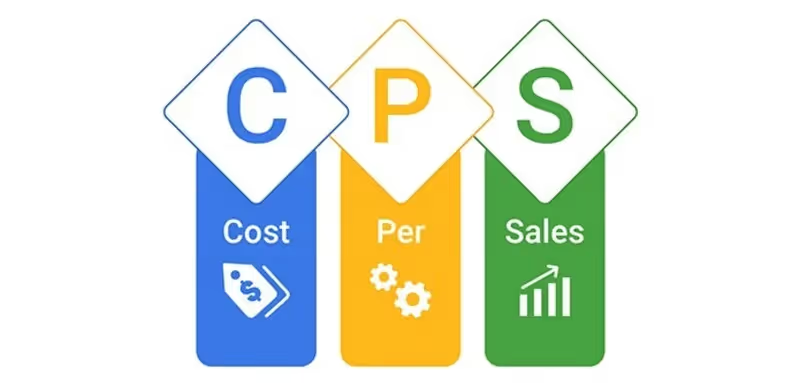
CPS is commonly used in Affiliate Marketing platforms, e-commerce, and partnership programs, helping to ensure cost-effectiveness for advertisers.
Example:
- A blogger writes a review about a laptop and includes an affiliate link to an e-commerce site. If a reader clicks the link and purchases the laptop, the blogger will receive a CPS commission from every successful order.
- A YouTube influencer promotes a skincare product along with a discount code. When a viewer uses the code to make a purchase, the influencer receives a commission based on the CPS model.
How does CPS work?
The CPS model operates on the principle of sales-based commission, typically following these steps:
- Advertiser (business) creates an affiliate marketing program and sets a CPS commission rate (e.g., 5% for every successful order).
- Publisher (affiliate marketer) joins the program and obtains an affiliate link or discount code to promote the product or service.
- Customer clicks on the affiliate link and completes a purchase.
- Tracking system records the order and identifies which publisher referred the customer.
- The advertiser confirms the valid transaction, then pays the commission to the publisher as agreed.

Note:
- CPS only pays out when the order is completed, excluding cases where the customer cancels the order or returns the product.
- Some platforms that apply order confirmation policy within 7-30 days before paying commissions to the publisher.
Distinguishing CPS from other models
To better understand CPS, let's compare it with other popular models:
The most important difference:
- CPS only pays when there is a successful order, helping businesses optimize their budget.
- CPC and CPM easily generate traffic but do not guarantee conversions, which can cause advertisers to lose money without generating revenue.
- CPA is more flexible than CPS because it only requires a specific action (signing up, downloading an app, filling out a form, etc.), but there is still a risk if the customer does not make a purchase afterward.
When should you choose CPS?
- When you want to optimize advertising costs and ensure profitability.
- When the product/service has a high conversion rate and customers are ready to buy.
- When you are a publisher with a robust content strategy, capable of attracting genuine buyers.
Benefits of the CPS model in Affiliate Marketing
The CPS (Cost Per Sale) model offers numerous benefits for both advertisers and publishers (affiliate marketers). By only paying commissions upon successful orders, CPS helps businesses optimize their advertising budgets while providing a sustainable income incentive for publishers.

Benefits of CPS for advertisers
Minimize risk and optimize advertising costs
- With the CPS model, businesses only pay when a sale is made, which helps minimize the risk of wasting spend on ineffective advertising.
- Compared to models such as CPC (cost per click) or CPM (cost per mille/impression), CPS ensures that every expenditure generates real value.
Boost sales performance at a low cost
- Instead of running expensive ads, businesses can partner with hundreds or thousands of Publishers to reach potential customers without any upfront costs.
- The Affiliate system acts as an "automated sales team," helping businesses expand their market without the need for significant personnel investment.
Easily track performance & optimize campaigns
- Every CPS transaction is tracked via tracking links, cookies, or discount codes, helping advertisers measure Publisher performance and better optimize their campaigns.
- Businesses can easily evaluate and adjust commission rates or focus on high-performing Publishers to drive sales growth.
Benefits of CPS for Publishers (Affiliates)
High commission opportunities and sustainable income
- CPS typically offers higher commission rates compared to CPC or CPM, as it is calculated as a percentage of the order value.
- For high-value products (such as software, electronics, or online courses), publishers can earn millions of dong from just a single transaction.
Real-world example:
- Affiliates for Shopee/Lazada can receive a 5-10% commission per order.
- For platforms like CJ Affiliate or Amazon Associates, commissions can reach up to 50% of the order value for certain digital products (eBooks, software, hosting, etc.).
No need for products, no worries about operations
- Publishers don't need to stock inventory or worry about shipping, warranties, or customer service, but can focus entirely on promoting products to generate revenue.
- This is a sustainable way to make money online, suitable for various groups such as bloggers, YouTubers, KOLs, or those with personal websites.
Flexible customer outreach
- CPS can be implemented across many different channels, from website SEO, social media, YouTube, TikTok, and email marketing to paid advertising.
- Publishers can choose product niches that align with their strengths to maximize profits.
For example:
- If you have a tech blog, you can focus on affiliate programs for laptops, smartphones, software.
- If you are a beauty blogger, you can choose CPS from platforms for cosmetics, skincare, fashion.
Passive income, scalable profits
- A high-quality review article can help a Publisher earn money for several months or even years without needing to be updated.
- The more valuable content you create, the more your CPS income will grow over time.
CPS – A sustainable, win-win Affiliate model
By optimizing costs for advertisers and generating high income for Publishers, the CPS model is becoming a leading trend in Affiliate Marketing. With the right campaign strategy, this can become an incredibly attractive source of passive income..
In short, if you are a business, → CPS helps you promote products at a low cost while optimizing sales performance.
If you are a Publisher, → CPS offers a long-term earning opportunity, provided you know how to reach the right potential customers.
How to effectively apply CPS in Affiliate Marketing
To succeed with the CPS (Cost Per Sale) model in Affiliate Marketing, both Advertisers and Publishers need a clear strategy. Below are ways to optimize CPS performance to help increase revenue and ensure sustainable profits.
1. For Advertisers
Build an attractive Affiliate program
- Determine a reasonable commission rate to attract Publishers (typically ranging from 5% – 50% depending on the industry).
- Support promotional tools (banners, landing pages, discount codes) to help Publishers market products easily.
- Provide transparent policies regarding cookie duration and commission payment terms.
Real-world examples:
- Shopee Affiliate offers high commission rates for trending niches like fashion and beauty.
- CJ Affiliate and Amazon Associates offer competitive commissions for tech products and online courses.
Improve conversion rates on Landing Pages
- Optimize interface and page load speed to ensure the best shopping experience for customers.
- Add trust signals such as customer reviews, warranty certifications, and refund policies.
- Use A/B Testing to determine which version yields a higher conversion rate.
Provide accurate tracking links & transparent reporting
- Support Publishers in tracking performance via tracking links, cookies, and pixel tracking.
- Feature a detailed, transparent reporting system for Publishers to evaluate campaign effectiveness.
2. For Publishers (Affiliate Marketers)
Choose the right products and Affiliate platforms
- Prioritize products with high conversion rates and attractive commissions.
- Consider cookie duration to maximize your chances of earning commissions.
- Select reputable Affiliate platforms such as Shopee, Lazada, Accesstrade, CJ Affiliate, Amazon Associates…
Example:
- If you are in the tech niche → Choose Affiliate programs for hosting, software, laptops, and smartphones.
- If you work in fitness → Choose supplements, gym equipment, online courses.
Create quality content & SEO for Affiliate articles
- Write authentic reviews, provide detailed information, and help readers easily make purchasing decisions.
- Optimize articles for SEO, using relevant keywords such as:
- Is [Product] any good?
- Detailed review of [product]
- Top [list of best products]
- Combine diverse content such as blog posts, YouTube videos, TikTok, email marketing…
Success examples:
- Tinhte.vn blog features a series of reviews on laptops and phones, with Affiliate links from Lazada and Shopee.
- YouTuber KOLs like Huy Cung and Vinh Vat Vo often create reviews and include Affiliate links below their videos.
Use Social Media & Advertising to drive traffic
- Share content on Facebook, Instagram, and TikTok to attract followers.
- Run Google Ads or Facebook Ads if you have a budget, targeting the right audience.
Example:
- Create a Facebook group about skincare, share your experience, and include your affiliate link.
- Use TikTok to review products, with a purchase link in your bio.
Use Email Marketing for remarketing
- Build a list of potential customer emails, and send them useful content along with product recommendations.
- Offer discount codes and hot deals to encourage immediate purchases.
3. Combine CPS with other strategies to optimize revenue
Use the CPS model in combination with other models (CPL, CPC) to diversify your income streams.
Track metrics and analyze Affiliate Marketing performance to continuously optimize your campaigns.
Build your personal brand to increase credibility and customer conversion rates.

In summary:
- If you are an Advertiser → Optimize your affiliate program and provide maximum support to Publishers.
- If you are a Publisher → Choose the right products, create quality content, and use multi-channel approaches to increase traffic.
Advantages of CPS
The CPS (Cost Per Sale) model is one of the most popular commission structures in Affiliate Marketing. However, despite its many benefits, CPS still has some limitations that both Advertisers and Publishers need to consider before implementation.
1. Benefits for Advertisers
- Only pay commissions on completed orders: Unlike models such as CPC (Cost Per Click) or CPM (Cost Per Mille), advertisers pay only for successful orders, helping to optimize marketing costs and avoid wasting budget on clicks or leads that do not generate actual revenue.
- Increase revenue with low risk: Advertisers can reach more customers through the Publisher network without needing to invest upfront in advertising. This is especially beneficial for small and medium-sized businesses looking to expand their market without a large marketing budget.
- Diverse Publisher network: CPS attracts many high-quality Publishers, from bloggers, YouTubers, and influencers to in-depth review websites, helping brands reach the right potential customers.
- Easy to measure effectiveness: Advertisers can track conversion rates, order volume, and revenue from each individual Publisher to accurately optimize their Affiliate campaigns.
2. Benefits for Publishers (Affiliate Marketers)
- Higher commissions compared to other models: Since CPS only charges when an order is completed, Advertisers are often willing to pay higher commissions compared to CPL or CPC. Some CPS programs can offer from 10% – 50% of the order value, or even more for digital products like courses or software.
- Potential for passive income: When Publishers have a high-quality content system (blogs, YouTube channels, fanpages, etc.) with stable traffic, they can earn sustainable income from CPS without the need for continuous advertising investment.
- No need to own products or services: Unlike traditional business models, affiliate marketers don't need to worry about production, operations, or customer support. They focus solely on marketing and earn a commission for every successful order.
Disadvantages of CPS
1. Limitations for Advertisers
- It may take longer to see results: Compared to paid advertising like Facebook Ads or Google Ads, CPS relies on publishers to promote products, so it can take time to generate the first order.
- Requires an accurate tracking system: To avoid disputes with publishers, advertisers need a transparent and accurate tracking system to record orders and commissions fairly. If the system is inadequate, it can lead to complaints and a loss of trust from publishers.
- Not all publishers generate revenue: Some publishers join without having the necessary skills or a suitable customer base, leading to poor performance. Advertisers need to select publishers carefully rather than accepting every application.
2. Limitations for Publishers
- More difficult than CPL or CPC models: To earn money from CPS, publishers must convince users not just clicking, but actually making a purchase, which is much harder than simply generating leads or driving traffic. If the content isn't compelling enough or the product isn't good enough, earning a commission is very difficult.
- Risks from refund and order cancellation policies: If a customer returns or cancels an order, the Publisher may not receive a commission, leading to unstable income. Some platforms have long order confirmation wait times, which can impact a Publisher's cash flow.
- High competition among Publishers: For trending products, many Publishers promote them simultaneously, leading to fierce competition, making it harder to secure orders, especially for beginners.
In summary, should you choose the CPS model?
CPS is a model that is low-risk for Advertisers, but a major challenge for Publishers. However, if you know how to optimize your content and select the right products, Publishers can generate a sustainable income with high commission rates.
For advertisers, building a transparent, attractive Affiliate program with a robust tracking system will help optimize revenue from the CPS model.