The Marketing Mix is not just a familiar concept in marketing; it is the key to helping businesses optimize their business strategies and capture the market. From selecting the right product and smart pricing to building effective promotional campaigns, the Marketing Mix provides the perfect balance of elements to drive success. So, what is the Marketing Mix? How can you apply this model effectively in practice? Let's join Markdao to explore the details in the article below!
What is the Marketing Mix?
The Marketing Mix, also known as the "marketing mix," is a set of tools and strategies that businesses use to shape how a product or service is brought to market, reaches target customers, and achieves business goals.
The traditional Marketing Mix model consists of 4 basic elements (4Ps): Product, Price, Place, and Promotion. Later, this model was expanded with 3 additional elements to form the 7Ps to better suit the service industry: People, Process, and Physical Evidence.
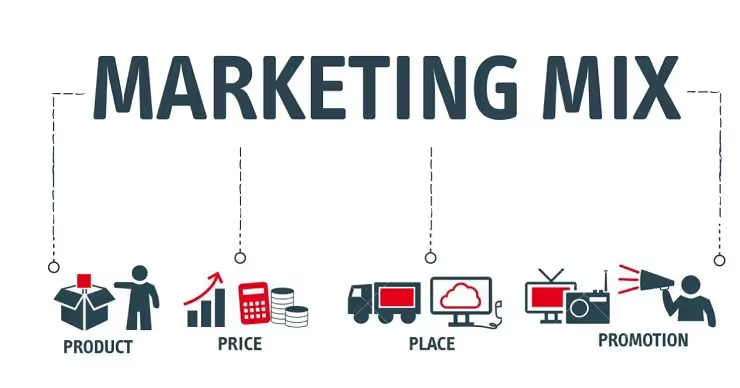
The Marketing Mix is not only a tool for optimizing marketing strategies but also helps businesses build sustainable relationships with customers and create a competitive advantage in the market.
The importance of the Marketing Mix in business strategy
1. Connecting businesses and customers
In today's business environment, customers don't just buy a product; they buy an experience. The Marketing Mix acts as a bridge, ensuring that the product not only meets needs but also creates a lasting impression.
When you clearly understand what customers need and want, coordinating the elements of the Marketing Mix will help you speak their "language."
2. Creating a superior competitive advantage
The market is always an arena where businesses compete not only on price but also on differentiation. A good Marketing Mix strategy is like a comprehensive arsenal, helping businesses position themselves uniquely and stand out among thousands of competitors.
From smart pricing strategies to selecting the right distribution channels, every decision can make a difference.
3. Guiding sustainable growth
The Marketing Mix is not just a tool for achieving short-term goals; it also builds a foundation for the future.
Regularly reviewing and adjusting Marketing Mix elements allows businesses to adapt to market changes and evolving customer behavior, thereby maintaining long-term competitiveness.
4. Optimizing resources and increasing efficiency
When each element of the Marketing Mix is utilized effectively, businesses not only save resources but also optimize their overall business performance.
For example, a creative promotional strategy can boost revenue without the need for deep discounts, while an efficient distribution channel reduces operating costs while still ensuring customer satisfaction.
The Marketing Mix is not a fixed formula but a flexible tool, constantly adjusted to suit each business and its stage of development. As a framework for shaping and guiding business strategy, the Marketing Mix is the key to helping businesses not only survive but thrive in today's fiercely competitive market.
Marketing Mix Strategies
The Marketing Mix is a powerful tool, but to fully unlock its potential, businesses need to understand how to apply different strategies. Depending on business goals and target audiences, one can choose from the 4P, 7P, or 4C Marketing Mix models. Below is a detailed analysis of each strategy.
1. The 4P Marketing Mix: The Traditional Foundation
The 4P Marketing Mix is a classic model that focuses on four fundamental elements, helping businesses build effective marketing strategies:

1.1. Product
Definition: This is the core element, representing the product or service that the business provides.
Strategy:
- Focus on quality, design, features, and differentiation.
- Meet the specific needs and desires of the target customer.
- For example, Apple succeeded with the iPhone thanks to the perfect combination of premium design and superior features.
1.2. Price
Meaning: Price not only reflects the value of a product but also influences purchasing decisions.
Strategy:
- Apply tactics such as penetration pricing, skimming, or competitive pricing.
- Consider customer affordability to optimize revenue.
1.3. Place
Meaning: The methods and locations for delivering products to customers.
Strategy:
- Build a widespread or specialized distribution system depending on the product.
- Combine online and offline sales channels to maximize reach.
1.4. Promotion
Meaning: How a business communicates its message to customers.
Strategy:
- Combine advertising, public relations, sales promotions, and social media marketing.
- Use creative content to make an impression and attract customers.
2. The 7P Marketing Mix: Development in the service industry
The 7P Marketing Mix expands on the 4P model, adding three key elements to better suit the service industry and customer experience:

2.1. People
Focus on employees, partners, and customers.
Ensure staff are well-trained to provide high-quality service.
2.2. Process
Smooth operational processes help ensure customers receive fast and professional service.
Example: Starbucks has optimized its preparation and payment processes to create a fast, convenient, and comfortable experience for customers.
2.3. Physical Evidence
Represents the tangible elements that customers can see or feel, such as store ambiance, product packaging, or a website.
Build trust through professionalism and consistency in physical elements.
3. The 4C Marketing Mix: Customer-centric focus
The 4C Marketing Mix represents a shift that places the customer at the heart of marketing strategy. Instead of focusing on the business, the 4Cs focus on the value received by the customer:

3.1. Customer Solution
Don't just sell a product; provide a solution to the customer's problem.
Example: Netflix provides not just entertainment content, but also personalized entertainment solutions tailored to individual preferences.
3.2. Customer Cost
Evaluate the total cost incurred by the customer, which includes not only the price but also their time, effort, and overall experience.
Optimize to minimize costs while maintaining product value.
3.3. Convenience
Ensure customers can easily access products or services, from searching for information and making a purchase to the post-purchase experience.
For example, online shopping with integrated fast payment options like Amazon is a clear demonstration of this factor.
3.4. Communication
Instead of just promoting, businesses need to build reciprocal relationships with their customers.
Two-way communication helps increase engagement and fosters brand loyalty.
Marketing Mix strategies not only help businesses build an effective marketing foundation but also open up new opportunities to better meet customer needs. Choosing whether to apply 4P, 7P, or 4C depends on specific goals and the industry, but the core remains flexibility and a customer-centric approach.
5 steps to build an effective Marketing Mix strategy
To build an effective Marketing Mix strategy, businesses need to follow a systematic process that combines market research, clear goal setting, and the optimization of each element within the Marketing Mix model. Below is a detailed guide:
1. Understand the market and target customers
The first step in any strategy is to research the market and the customers.
- Market analysis: Explore market trends, competition, and factors influencing consumer behavior.
- Understand target customers:
- Identify specific customer segments (age, gender, geographic location, interests).
- Research their needs, desires, and pain points.
These research findings will serve as the foundation for building an appropriate and effective Marketing Mix strategy.

2. Define business and marketing objectives
Set clear, specific, measurable, and achievable (SMART) goals. For example: Increase revenue by 20% in Q1 or expand market share by 10% this year.
Ensure business objectives align with your brand message and core values.
3. Optimize each element of the Marketing Mix
3.1. Product
- Develop the right product: Ensure your product or service meets the needs of your target audience.
- Enhance product value: Integrate features, design, and improvements to create differentiation.
- Practical example: A cosmetics brand might emphasize natural ingredients to meet the demands of modern consumers.
3.2. Price
- Pricing strategy:
- Price based on the value received by the customer.
- Balance pricing to remain competitive while maintaining profitability.
- Offers and promotions: Implement discounts or promotional packages to attract new customers and retain existing ones.
3.3. Place
- Distribution channel selection: Combine online channels (website, e-commerce) and offline channels (stores, agents) to increase customer reach.
- Supply chain optimization: Ensure goods are always available and delivered on time to the right location.
3.4. Promotion
- Communication strategy: Use a mix of media such as social networks, online advertising, and live events.
- Creative content: Create marketing campaigns with relatable, unique, and viral content.
4. Use measurement and performance evaluation tools
Performance measurement: Use metrics such as ROI (return on investment), conversion rate, and brand awareness to evaluate results.

Customer feedback analysis: Listen to customer feedback to improve aspects of the strategy that are not working.
5. Flexibility and continuous improvement
The market is always changing, so the Marketing Mix strategy needs to be adjusted periodically.
Update and innovate products, communication methods, and customer engagement approaches to maintain competitiveness.
Building an effective Marketing Mix strategy is not just about mechanically applying marketing models, but also requires a deep understanding of the market and customers. When elements are optimized and combined flexibly, businesses will not only achieve their business goals but also build sustainable relationships with customers.
Practical applications of the Marketing Mix in business
The Marketing Mix is more than just a marketing theory; it is a practical tool that helps businesses shape their strategies and gain a competitive advantage. Below is how businesses apply the Marketing Mix in practice, from improving products to building effective promotional campaigns.

1. Applications of the 4P Marketing Mix
1.1. Product
Product improvement:
- Businesses frequently conduct research and development to improve quality, add new features, or create unique products.
- Example: Samsung continuously upgrades its Galaxy phone line with advanced camera and display technology to compete with Apple.
Brand positioning through products: Companies like Nike focus on innovative design and the integration of high-tech features in their athletic footwear to maintain their premium brand status.
1.2. Price
Flexible pricing strategies: Low-cost airlines like Vietjet Air use penetration pricing strategies to attract new customers in competitive markets.
Promotions and discounts: Example: Lazada organizes major promotional events like "Mega Sale Days" to stimulate demand and increase revenue.
1.3. Place
Expanding distribution channels: Fashion brands like Zara use both physical store networks and e-commerce channels to reach a diverse range of customers.
Supply chain optimization: Amazon utilizes an automated logistics system to ensure fast and efficient global delivery.
1.4. Promotion
Omnichannel advertising: Coca-Cola developed a global advertising campaign with personalized messaging like "Share a Coke" to increase customer engagement.
Social media utilization: Brands like Dove leverage social media to run campaigns focused on emotional storytelling, building empathy with consumers.
2. Application of the 7P Marketing Mix in the service industry
2.1. People
Professional staff training: Starbucks focuses on training employees to deliver an excellent customer experience, from service attitude to barista skills.
2.2. Process
Service process optimization: Grab optimizes the booking, payment, and service rating processes through its mobile app, helping to enhance the customer experience.
2.3. Physical Evidence
Building brand space: McDonald's ensures every restaurant has a consistent design, creating a sense of familiarity for customers worldwide.
3. Application of the 4C Marketing Mix: Customer-centric focus
3.1. Customer Solution
Product customization: Dell allows customers to configure their own personal computers, ensuring products meet the specific needs of each user.
3.2. Customer Cost
Comprehensive cost reduction: Shopee provides discount codes and free shipping to optimize costs for consumers while increasing purchase rates.
3.3. Convenience
Simplifying the shopping experience: Mobile World (The Gioi Di Dong) utilizes home delivery and express payment services to enhance convenience for customers.
3.4. Communication
Two-way communication: Businesses like Tiki regularly collect customer feedback through surveys and social media interactions to improve their services.
When applied skillfully, the Marketing Mix can help businesses improve operational efficiency, build a strong brand, and meet customer expectations. Depending on the industry and target audience, the 4P, 7P, or 4C models all provide immense value when implemented correctly in business practice.
Conclusion
The Marketing Mix is not only the foundation of every marketing strategy but also the key to helping businesses conquer the market and their target customers. Whether using the 4P, 7P, or 4C model, a flexible combination of elements will provide a competitive advantage, optimize business performance, and build sustainable brand value. To succeed, businesses must constantly innovate, listen to customers, and update their strategies to align with market fluctuations.