Do you know why the same product is advertised differently to different customer groups? The secret lies in market segmentation! This is a crucial strategy that helps businesses understand their customers, optimize marketing campaigns, and increase revenue. In this article, Markdao will help you explore what market segmentation is, common criteria, and an effective segmentation process to apply in practice.
What is market segmentation?
Market segmentation is the process of dividing a target market into smaller groups of customers based on shared characteristics such as needs, interests, behaviors, or demographics. This allows businesses to focus on specific customer groups, thereby building more effective marketing strategies.
For example, a fashion brand might divide its market into segments such as: men's fashion, women's fashion, children's fashion or even more specifically into office wear, sportswear, streetwear. As a result, the business can create products and marketing campaigns tailored to each customer group instead of applying a one-size-fits-all strategy to the entire market.

Why is market segmentation important?
Market segmentation offers many significant benefits to businesses:
- Understand your customers: Helps businesses accurately identify the needs and desires of each customer group.
- Optimize marketing strategies: Businesses can design messages, products, and advertising campaigns that are better tailored to each target audience.
- Increase competitiveness: By focusing on a specific segment, businesses can create a competitive advantage over their rivals.
- Boost revenue: Reach the right potential customers, improve conversion rates, and maximize profits.
Market segmentation not only helps businesses reach customers more effectively but is also the key to building a brand and achieving sustainable growth in a highly competitive market.
The importance of market segmentation
In a vast market with millions of customers who have different preferences, needs, and behaviors, reaching everyone with a single, one-size-fits-all strategy is nearly impossible. This is why market segmentation has become a vital strategy, helping businesses understand their customers, optimize marketing strategies, and increase their competitive advantage.
1. Understand your target customers
Market segmentation help businesses precisely identify potential customer segments, understand their needs, desires, and purchasing behaviors. This allows businesses to personalize the customer experience, increase satisfaction, and foster long-term loyalty.

For example, a cosmetics brand might segment its customers by age:
- 18 - 25 age group: Interested in makeup products and affordable pricing.
- 26 - 40 age group: Focused on premium skincare products with an emphasis on natural ingredients.
Each group has different needs, so marketing strategies must be adjusted accordingly.
2. Optimize marketing & advertising strategies
Once a business identifies its market segments, it can create messages, content, and advertising strategies tailored to each customer group. This helps optimize marketing budgets and prevents wasting resources on audiences with no interest.
For instance, a sneaker brand will use different advertising approaches for:
- Young people passionate about streetwear (focusing on design and style).
- Athletes (focusing on technology, durability, and performance).
This allows the brand to reach the right customers with relevant content, helping to increase conversion rates.
3. Increase market competitiveness
When a business focuses on a specific segment, it can create products/services that fit and build a competitive advantage over rivals.

For example, instead of selling phones to everyone, Apple focuses on the premium customersegment, creating luxurious, high-quality products, thereby building strong brand loyalty.
4. Increase revenue & optimize profits
Reaching the right customer segment helps businesses increase conversion rates and maximize profits. Instead of selling mass-market products, they can set prices tailored to each segment, and implement promotions and offers specific to each group to stimulate purchases.
For example, an airline can segment the market as follows:
- Economy class customers: Interested in low fares and discount programs.
- Business travelers: Require premium, convenient services and are willing to pay more.
By using this segmentation, airlines can offer tailored ticket packages, optimizing revenue for every flight.
5. Supporting product development strategy
Market segmentation helps businesses identify new trends and demands, thereby allowing them to offer more relevant products and services.
For example, as the trend toward healthy eating grows, F&B brands have quickly launched organic, low-sugar, and preservative-free product lines to meet this demand.
6. Increasing customer loyalty
A business that understands its customers and provides suitable products or services can easily build long-term customer relationships. When customers feel valued and served according to their specific needs, they remain loyal to the brand and may even recommend it to others.
For instance, Starbucks does not just sell coffee; it segments customers based on personal preferences, providing personalized experiences such as writing names on cups and offering membership programs with exclusive perks. This has helped the brand build a massive base of loyal customers.
Market segmentation not only helps businesses understand their customers, but also optimizes marketing strategies, products, and revenue. This is the key to sustainable growth and gaining a competitive edge in an increasingly challenging business environment.
4 common market segmentation criteria
To segment the market effectively, businesses need to identify criteria that align with their products or services. Below are 4 common groups of criteria that help businesses break down the market and reach customers in the right way.
1. Demographic Segmentation

Demographic segmentation is the most common approach, based on personal characteristics of customers, including:
- Age: Children, young adults, middle-aged, and seniors.
- Gender: Male, female, or non-binary.
- Income: High, medium, low.
- Education level: High school, undergraduate, postgraduate.
- Occupation: Student, office worker, entrepreneur, manual laborer.
- Marital status: Single, married, parent.
Practical examples:
- Fashion brands with separate product lines for men and women.
- Banking services offering preferential loan packages for students or entrepreneurs.
2. Geographic Segmentation
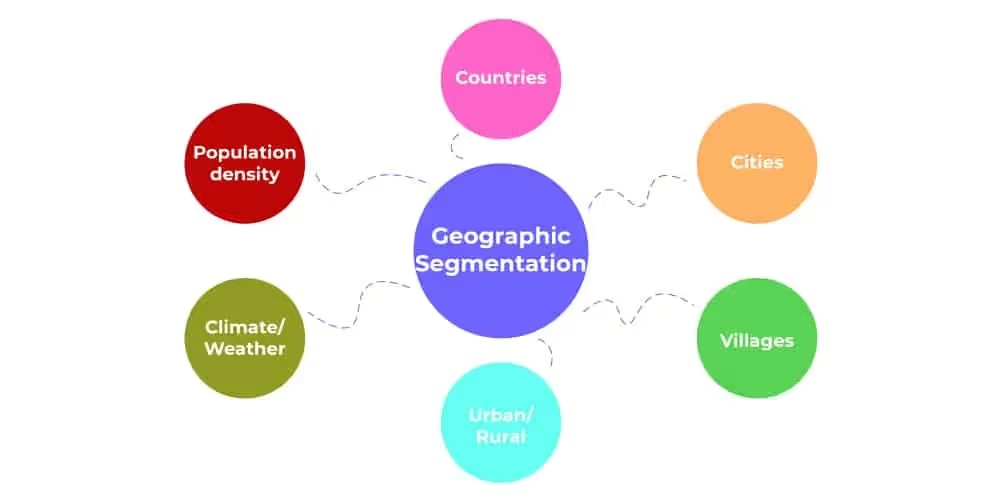
This criterion divides customers based on geographic location, which can include:
- Country, region: Vietnam, Southeast Asia, Europe...
- Urban, rural: Urban residents tend to have different consumption habits compared to those in rural areas.
- Climate and weather: Regions with colder climates have a higher demand for jackets than tropical regions.
Real-world examples:
- McDonald's offers localized menus for different countries (beef burgers in the US, chicken rice in Asia).
- Cosmetic brands sell moisturizing creams for dry climates and oil-control creams for hot and humid regions.
3. Behavioral Segmentation

This segmentation method is based on consumer behavior and shopping habits, including:
- Purchase frequency: Frequent buyers, seasonal buyers, one-time buyers.
- Brand loyalty: Loyal customers versus those who frequently switch brands.
- Benefits sought: Whether customers buy a product for its price, quality, or brand reputation.
- Buyer readiness: Those who are researching, ready to buy, or already using the product.
Real-world example:
- Cosmetic brands offer exclusive rewards to loyal customers.
- E-commerce platforms like Shopee and Lazada send discount codes to customers with high purchase history.
4. Psychographic Segmentation
This criterion is based on lifestyle, interests, and personal values of customers, including:
- Lifestyle: Sports enthusiasts, travel lovers, office workers, etc.
- Personality: Introverted, extroverted, innovation-oriented, or traditional.
- Personal values: Focus on health, the environment, career, or family.
Real-world examples:
- Nike targets customers who are passionate about sports and value durability.
- Apple targets customers who love high-end, innovative technology.
Choosing the right segmentation criteria helps businesses understand their customers and optimize their products and marketing strategies. Depending on the industry, businesses can apply one or a combination of multiple criteria to achieve the best results.
A 5-step process for effective market segmentation
Market segmentation is a crucial step that helps businesses identify the right target audience, thereby optimizing outreach strategies, product development, and profit margins. To segment the market effectively, businesses need to follow a structured process, including the following steps:
1. Define the overall market
Before proceeding with segmentation, businesses need a comprehensive overview of the market they are entering. This helps determine the size, potential, and level of competition, allowing for an assessment of whether segmentation will be beneficial.
Key factors to consider when defining the overall market:
- Market size: The number of potential customers the business can reach.
- Growth rate: Is the market expanding or saturated? Are consumer trends shifting?
- Level of competition: How many major competitors are in the industry? Which segments are they targeting?
- Consumer behavior: How do customers tend to spend? What influences their purchasing decisions?
For example, a dietary supplement company needs to identify that they are operating in the health and wellness sector, which includes various segments such as the elderly, office workers, athletes, and postpartum women.
2. Collect and analyze customer data

Once you have a market overview and begin market segmentation, businesses need to collect customer data to better understand the needs, preferences, and behaviors of each group. There are two primary data sources:
- Secondary data: Collected from existing sources such as market research reports, government statistics, data from Google Trends, or research organizations like Nielsen.
- Primary data: Collected directly by the business through surveys, customer interviews, focus groups, or by analyzing data from CRM systems and Google Analytics.
For example, a fashion brand can analyze Google search data and website shopping behavior to identify which fashion trends are most popular among specific customer segments.
3. Determine appropriate market segmentation criteria
Not every segmentation criterion is suitable for every business. Choosing the right criteria will make the segmentation process more accurate. Some common criteria include:
- Demographic segmentation: Age, gender, income, occupation, education level.
- Geographic segmentation: Country, city, region, climate.
- Behavioral segmentation: Purchase frequency, loyalty level, preferred shopping channels.
- Psychographic and lifestyle segmentation: Interests, habits, personal values, lifestyle perspectives.
For example, a sneaker brand might segment customers by age (teenagers, office workers, middle-aged individuals), by behavior (runners, gym-goers, trend-driven buyers), or by lifestyle (streetwear enthusiasts, professional sports enthusiasts).
4. Evaluate and select potential market segments

After identifying potential segments, businesses need to evaluate the attractiveness of each group to decide where to focus. A potential segment should meet the following criteria:
- Large enough to be profitable: If a segment is too small, the business may not achieve its desired revenue.
- Has potential for future growth: A rapidly growing segment will offer more long-term opportunities.
- Easily accessible through appropriate marketing channels: If a customer group is too difficult to reach or marketing costs are too high, the business should reconsider.
- Has little competition or a clear competitive advantage: If a segment is already dominated by major brands, entering it can be very difficult.
For example, an organic food startup might choose to focus on high-income, health-conscious consumers, as this group is willing to pay a premium for quality products.
5. Develop an approach strategy for each market segment
Once potential segments have been selected, the business needs to design a marketing strategy to reach those customers. Factors to consider in the strategy include:
- Product/Service: Adjust product features, packaging, and design to suit the preferences of each customer group.
- Pricing: Set prices appropriate for each segment, whether through premium, mid-range, or budget pricing strategies.
- Distribution Channels: Select appropriate sales channels, such as traditional retail stores, e-commerce, or distributors.
- Communication Strategy: Choose advertising channels suitable for each customer group, such as:
- Targeting Gen Z via TikTok and Instagram.
- Targeting office workers via Google Ads and Email Marketing.
- Target middle-aged audiences via Facebook, newspapers, and TV.
For example, Apple has built its customer outreach strategy by focusing on the premium tech enthusiast segment, utilizing sophisticated design, premium pricing, and aggressive promotion across digital media channels.
Market segmentation is a vital process that helps businesses focus resources on the right target audience, thereby enhancing marketing effectiveness and optimizing revenue. An effective market segmentation process involves several steps: defining the total market, collecting and analyzing data, selecting segmentation criteria, evaluating potential segments, and developing a tailored outreach strategy.
Common mistakes in market segmentation
Although market segmentation is a key strategy for optimizing business operations, executing it incorrectly can lead to wasted resources and missed growth opportunities. Below are common mistakes businesses often make when market segmentation.
1. Segments that are too broad or too narrow
- Segments that are too broad: If a segment is too large and lacks sufficient differentiation between customer groups, businesses will struggle to personalize their outreach strategy. This can result in generic marketing messages that fail to resonate with or persuade specific customer groups.
- Segments that are too narrow: Conversely, if a segment is too small, the number of potential customers may not be enough to generate sustainable revenue. This often happens when businesses attempt to target a group that is too specific without considering the scale and growth potential of that segment.
Example: A fashion brand market segmentation into “young people who love minimalism” could be a good direction. However, if you continue to narrow it down to “young people aged 22-25, living in big cities, earning 15-20 million, who like wearing neutral-colored clothes,” this customer segment might become too small to generate significant profit.
2. Not based on actual data
One of the biggest mistakes is market segmentation based on assumptions instead of actual data. If a business relies solely on intuition or subjective experience, it is very likely that they will misidentify their target customer group and waste their marketing budget.
How to avoid this mistake:
- Use customer surveys, data from Google Analytics, CRM, and market research to clearly understand the real needs of each customer group.
- Apply A/B Testing to check which strategy is suitable for each segment.
Example: A retail business might assume that online shoppers are young people. However, actual data might show that the 35-45 age group also has high demand but has not been targeted correctly.
3. Choosing the wrong segmentation criteria
Not every criterion is suitable for every industry. If the wrong segmentation criteria are chosen, a business may miss out on potential opportunities or target a customer group that does not actually provide high value.
- Common mistake: An insurance company segments customers by gender without considering age, occupation, or financial status. In reality, income or age may be more important than gender when deciding to purchase insurance.
- How to avoid this mistake: Combine multiple criteria (demographic, behavioral, psychographic) to define segments more accurately.
4. Failing to re-evaluate market segments over time
The market is constantly changing, so a segment that is effective today may no longer be relevant in the future. If a business does not continuously evaluate and adjust its segmentation strategy, it risks falling behind its competitors.
How to avoid this mistake:
- Monitor market trends and customer behavior through periodic reports.
- Adjust segments based on real-world data and customer feedback.
- Use AI technology and Big Data to quickly update on new trends.
Example: Previously, customers often visited showrooms in person to buy cars, but today, many are interested in the online car-buying experience. If a car manufacturer only focuses on the traditional customer segment without expanding to the online group, they could lose a large number of potential customers.
Conclusion
Market segmentation is not just a step in a business strategy but also the key to helping businesses reach the right customers, optimize resources, and increase marketing effectiveness. An effective market segmentation process requires thorough research, the selection of appropriate criteria, and continuous adjustment based on market changes.
However, many businesses still make mistakes such as segmenting too broadly or too narrowly, failing to rely on actual data, choosing the wrong criteria, or failing to personalize their outreach strategy. These errors can cause businesses to waste resources and miss out on growth opportunities.