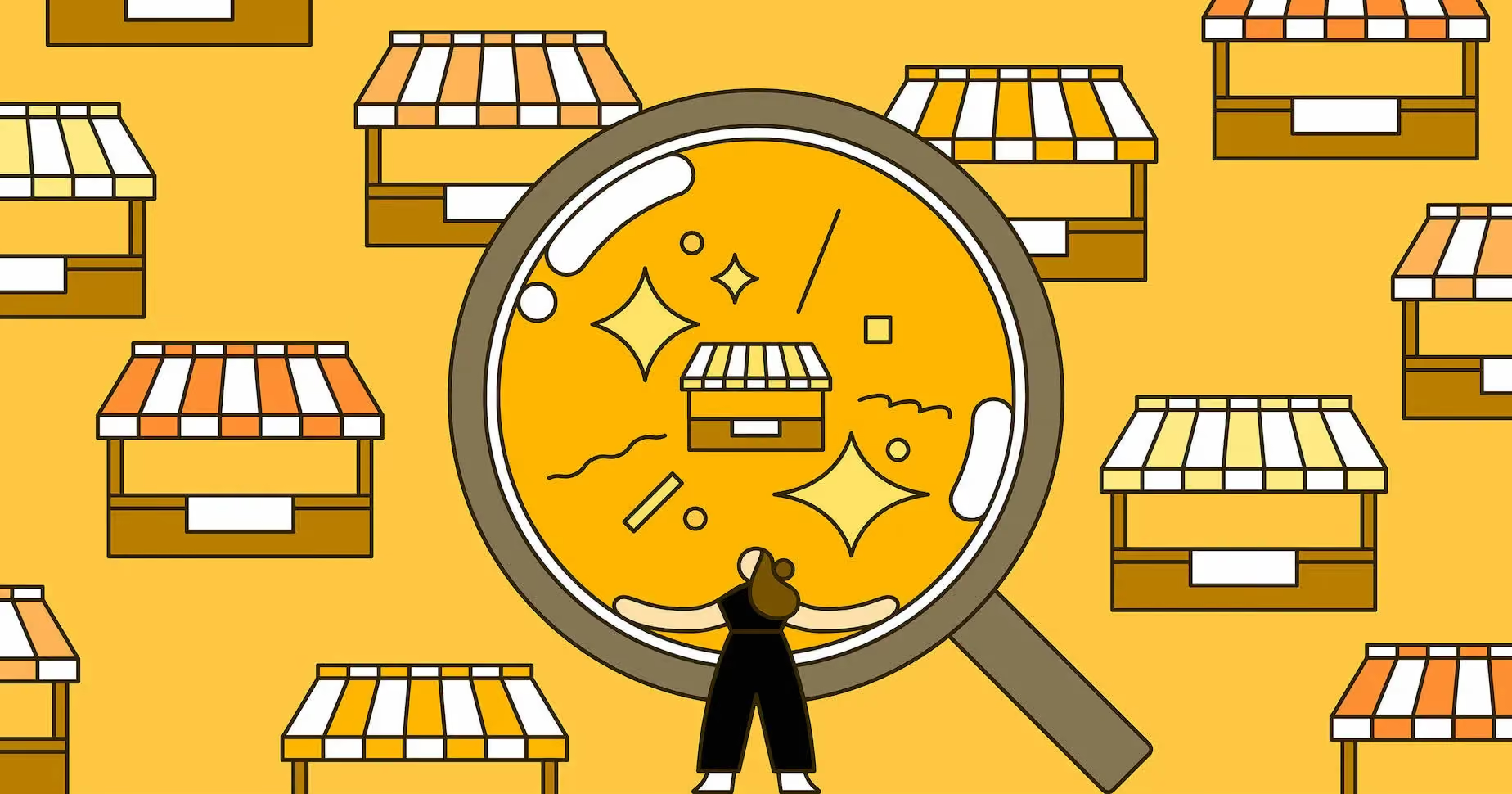


Are you sure you really understand your customers? Who are they, what do they like, and what drives their purchasing decisions? Without clear answers, your marketing strategy is just a shot in the dark.
Customer persona is the roadmap that helps businesses identify the right audience, speak their language, and create marketing campaigns that resonate. Let's join Markdao to discover how to build an effective customer persona so you never miss a business opportunity!
What is a customer persona?
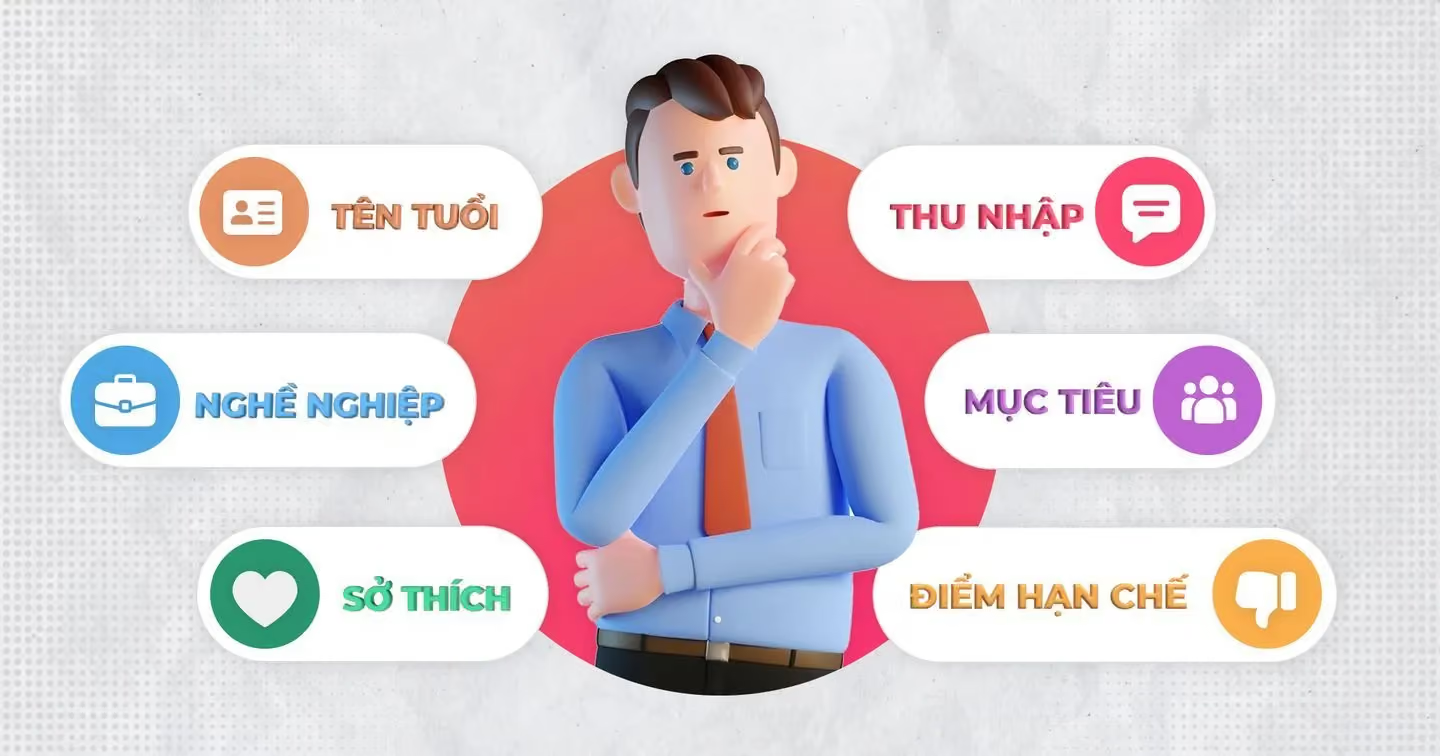
A customer persona is a detailed description of your ideal customer, based on real data and market research. It goes beyond a basic profile of age, gender, or income to include deeper insights like behaviors, interests, motivations, needs, and the challenges they face.
How is a customer persona different from market segmentation?
Many people often confuse customer personas with market segmentation. Market segmentation divides the market into large groups based on common characteristics like age, income, geography, or interests. Meanwhile, a customer persona turns those groups into a specific, detailed character with a hypothetical name, job, spending habits, buying motivations, and the problems they are looking to solve.
For example, if a business sells personal finance software, they might define a market segment as "young people with average incomes who want to better manage their spending." But a specific customer persona would describe a detailed character like this:
- Name: Minh Truc, 26 years old
- Occupation: Office worker, monthly income of 15 million VND
- Problem: Frequently overspends but doesn't know how to manage it
- Needs: Looking for an app to track expenses, create budgets, and provide alerts when nearing budget limits
With this description, businesses can develop content, products, and marketing campaigns tailored to Minh, rather than just focusing on a generic group.
Benefits of building customer personas
Building customer personas not only helps businesses better understand their target audience but also provides significant advantages for marketing, sales, and product development strategies. Below are the specific benefits businesses can achieve by effectively utilizing Customer Personas.
1. Targeting potential customers accurately
Instead of marketing in a broad and unfocused manner, businesses can precisely identify who their ideal customers are. Customer personas help businesses identify key characteristics such as age, occupation, income, interests, and consumer behavior, thereby allowing for the creation of relevant marketing campaigns.

2. Optimizing marketing strategies
Once there is a clear picture of the target customer, businesses can create more relevant marketing content, from advertisements and blog posts to email marketing. This increases engagement with customers and improves the effectiveness of communication campaigns.
3. Improving customer experience
Customer personas not only help businesses understand who their customers are but also what they need. This allows businesses to personalize services, improve products, and provide a better user experience.
4. Increasing conversion rates and revenue
By reaching the right customers with the right content, businesses can significantly increase their conversion rates. Instead of trying to attract too many unqualified leads, businesses can focus on those with genuine needs, thereby optimizing marketing costs and boosting revenue.
5. Supporting the development of more relevant products/services
Customer personas help businesses understand user needs, desires, and pain points, allowing them to adjust products or services to better fit market realities. This increases customer satisfaction and builds brand loyalty.
6. Improving customer service efficiency
When businesses truly understand their customers, they can build more effective customer service processes. From personalizing emails, chatbots to providing solutions tailored to specific customer segments, everything helps enhance the user experience and satisfaction.

Customer personas are powerful tools that help businesses steer their strategies accurately and effectively. From targeting the right audience and optimizing marketing campaigns to improving products/services and enhancing user experience, everything contributes to sustainable business growth.
What does a customer persona include?
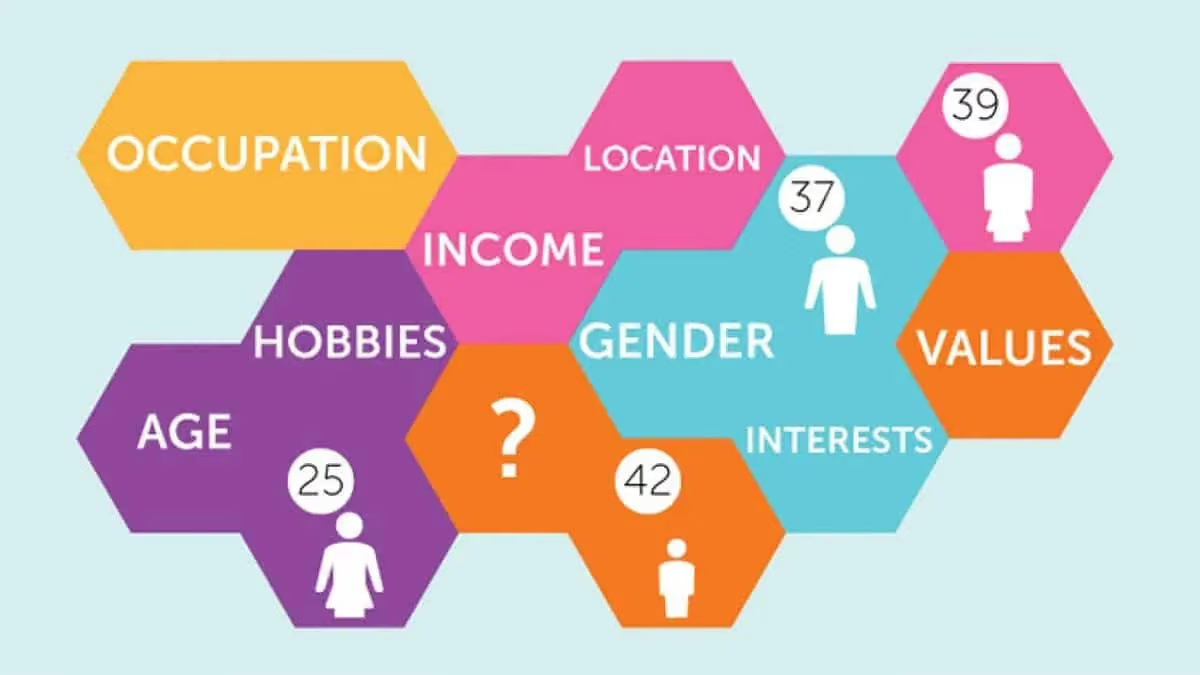
A customer persona is not just a collection of personal information like name, age, and gender; it is a comprehensive picture of a customer's behaviors, interests, needs, and motivations. Below are the key elements required for a complete customer persona .
1. Demographic information
Demographic information helps businesses categorize customers based on basic characteristics, including:
- Age: Which age group does the customer belong to? (18-24, 25-34, 35-44, etc.)
- Gender: Male, female, or prefer not to say?
- Geographic location: Do customers live in urban or rural areas? Where are they located?
- Marital status: Single, married, or have a family?
- Occupation and income: What do they do for a living? What is their average income?
- Education level: What are their educational qualifications?
2. Consumer behavior
Consumer behavior helps businesses better understand how customers approach and use their products or services. Key factors to analyze include:
- Preferred shopping channels: Do customers prefer shopping online or in-store? Which platforms do they typically use (e.g., Shopee, Lazada, Facebook, Instagram, or websites)?
- Purchase frequency: Do they buy products regularly or only on special occasions?
- Factors influencing purchase decisions: Price, quality, brand, reviews from others, or promotional offers?
- Information search habits: Do they read reviews before making a purchase? Do they trust KOLs, blog posts, or advertisements?
- Personal interests: What topics are they interested in? How do their hobbies influence their purchasing decisions?
3. Needs and Pain Points
The next important factor in customer personas is Needs and Pain Points. Understanding the needs and challenges customers face is key to helping businesses build relevant products and services. Some important questions to answer:
- What problems are customers facing that the business can solve?
- What do they expect from a product or service?
- What obstacles are preventing them from making a purchase decision?
- What are they worried about when choosing to buy a product or service?
.avif)
4. Motivations and Goals
Every customer has a specific motivation when searching for and purchasing products or services. Understanding these goals helps businesses create more effective marketing campaigns.
- Short-term goals: They want to solve an immediate problem, such as taking an online course to improve their job skills.
- Long-term goals: They want to improve their quality of life, build their career, or invest in the future.
- Purchasing drivers: What are they drawn to? Brand value, product quality, convenience, or user experience?
5. Customer Journey
Journey customer persona describes the steps a customer goes through before making a purchase decision. Some key stages include:
1. Awareness: The customer realizes they have a problem or a need that requires a solution.
2. Consideration: They begin searching for information, comparing options, and reviewing feedback.
3. Decision: They select a product/service and proceed with the purchase.
4. Post-Purchase: They evaluate the quality of the product/service, potentially becoming a loyal customer or sharing reviews with others.
Customer persona goes beyond describing a generic target group; it delves into every aspect, from personal information, behaviors, needs, and motivations to the shopping journey. By understanding these factors, businesses can build more precise marketing strategies, improve customer experience, and optimize business performance.
6 steps to build an effective customer persona
Building a customer persona is not just about collecting information; it requires a structured process to ensure accuracy and practical application. Below are the detailed steps for effective construction.
1. Define the goal of the customer persona
Before you begin building customer persona, businesses need to clearly define their goals. Customer personas can be used for various purposes, including:
- Optimizing marketing strategies to help create content and messaging that better resonates with each customer segment.
- Improving products or services to precisely meet the actual needs of customers.
- Enhancing the customer experience by personalizing services and providing more effective customer support.
- Assisting the sales team in reaching potential customers effectively and increasing conversion rates.

Clearly defining goals from the outset helps businesses focus on essential information and avoid wasting resources on unnecessary data.
2. Collecting customer data
To build an accurate customer persona , businesses must rely on actual data rather than just assumptions. Key data sources include:
- Internal data: Transaction history, purchasing behavior, information from customer support, CRM data, Google Analytics, and digital marketing channels.
- Surveys and interviews: Gathering direct feedback from customers through surveys, personal interviews, or focus groups.
- Social media analysis: Monitoring customer conversations, comments, and interactions on platforms like Facebook, Instagram, TikTok, and LinkedIn to better understand their interests, habits, and needs.
- Competitor research: Observe how competitors are approaching customers, their brand feedback, and weaknesses that your business can exploit.
The collected data must be diverse, highly reliable, and accurately reflect actual customer behavior.
3. Customer segmentation and grouping
After collecting data, the next step in building a customer persona is to categorize customers into groups with similar characteristics. Classification criteria may include:
- Demographics: Age, gender, income, education level, marital status, and geographic location.
- Consumer behavior: Shopping habits, frequency of product/service usage, and preferred shopping channels.
- Psychographics and buying motives: Factors influencing purchasing decisions and customer expectations for the product/service.
- Brand interest and loyalty level: Potential customers, new customers, loyal customers, or those who have used the service but did not return.

This classification helps businesses build customer personas that are specific, rather than relying on a generic model that does not accurately reflect reality.
4. Developing detailed customer persona profiles
Once customers have been grouped into specific segments, businesses need to create detailed profiles for each group. A customer persona typically includes:
- Personal information: Fictional name, age, gender, occupation, income, and geographic location.
- Consumer behavior and habits: How they search for products, factors influencing their purchasing decisions, and preferred shopping channels.
- Needs and pain points: The challenges they face and their primary needs when seeking a product or service.
- Purchasing motivations: What do they expect from the product or service? Which values are most important to them (quality, price, convenience, etc.)?
- Customer journey: The stages customers go through before deciding to purchase, from awareness and consideration to action.
This profile helps businesses easily visualize their potential customers and adjust their outreach strategies accordingly.
5. Applying customer personas to business strategy
A customer persona is not just a static analysis; it should be put into practice to optimize business and marketing activities. Some effective ways to apply it include:
- Personalizing marketing content: Creating advertising content, email marketing, and blog posts tailored to each customer group.
- Optimizing sales channels: Adjust sales strategies based on the consumption habits of your target audience.
- Product/Service Development: Improve products to precisely meet customer needs.
- Enhance Customer Experience: Create customer care programs tailored to each segment.
Continuously applying and adjusting customer personas based on real-world conditions helps businesses maintain a competitive edge in the market.
6. Regularly update and adjust customer personas
The market is always changing, and customer needs and behaviors are not static. Therefore, businesses need to update customer personas periodically to ensure accuracy and effectiveness.
- Monitor performance metrics: Track the performance of marketing campaigns and customer feedback.
- Update with new data: Gather additional information from various sources to enrich customer profiles.
- Adapt to new trends: If customer consumption behavior shifts, businesses must adapt quickly to avoid being left behind.
The process of building customer personas is not a one-time task, but rather something that needs to be continuously updated to remain relevant to the market and the business's strategy.
Conclusion
Building a customer persona is a crucial step that helps businesses clearly understand their customers, optimize marketing strategies, and improve business performance.
A detailed customer persona reflects not only basic information but also delves into customer behaviors, needs, and motivations. Continuously updating and applying these insights will help businesses create more precise outreach strategies, increase customer loyalty, and achieve a sustainable competitive advantage.