

What is a programming language? This is a question many people ask when starting their journey into the world of technology. In the digital age of 2026, learning to code is not just a trend but an essential skill to help you advance your career. But with hundreds of programming languages out there, how do you choose the right one? Python, JavaScript, and Java are the three most prominent names, each with its own unique advantages and applications. This article Markdao will help you understand the characteristics of each language so you can make an informed decision.
Programming languages in the current landscape
What is a programming language?
A programming language is a set of rules and syntax designed to allow humans to communicate with and instruct computers to perform specific tasks. In other words, it is a tool that helps us build software, applications, games, and many other technological solutions.
In the modern tech world, programming languages play a crucial role in developing digital systems. From the websites you visit every day to mobile apps, and from business management software to advanced artificial intelligence (AI) solutions, everything is built with the support of programming languages.
The role of programming languages in technological development
1. The core of software development:
Every piece of software, whether simple or complex, is created using one or more programming languages.
2. The bridge between humans and computers:
Computers only understand commands in binary (0s and 1s). Programming languages make it easier for humans to write code through familiar syntax and structures, which are then compiled or interpreted into a language the computer understands.
3. Diversity in applications:
What is a web programming language? These are languages used to build and develop websites and web applications.
For example: HTML, CSS, JavaScript, PHP.
- In the fields of data science and artificial intelligence, Python is widely used thanks to its powerful data processing capabilities.
- Languages like Java and C# focus more on enterprise software or game development.

Programming languages in the 2026 landscape
Technology is changing rapidly, driving the evolution of programming languages. Key factors shaping this landscape include:
1. The continuous evolution of technology:
Fields such as artificial intelligence (AI), blockchain, and web development are constantly expanding, requiring developers to master specialized languages.
2. Growing demand for developers:
Today, programming is a "hot" skill, with millions of jobs created annually. In particular, major tech companies are always looking for developers skilled in Python, JavaScript, and Java.
3. Most popular programming languages in 2026:
- Python: Leading the way in AI, data science, and automation.
- JavaScript: Still the "king" of web development thanks to the popularity of frameworks like React, Angular, and Vue.js.
- Java: Stable in enterprise systems and Android application development.
4. Diversity in the application of programming languages:
- Web programming languages include frontend tools like HTML, CSS, and JavaScript, along with backend server-side languages like PHP, Python, or Node.js.
- With Python, you can handle both backend development (Django, Flask) and data analysis, which makes it highly versatile.
Structure and classification of programming languages
What are the components of a programming language?
1. Character set
The character set in a programming language consists of the characters and symbols necessary to write code. Components of the character set include letters, numbers, operators, keywords, and special symbols such as brackets, punctuation, spaces, and line breaks. Each programming language has its own character set, designed to suit its specific syntax.
2. Syntax
Syntax is the system of rules that defines how components in a program are arranged and structured. Syntax helps programmers write code correctly and avoid syntax errors. These rules may include regulations for naming variables, functions, operators, control statements, punctuation, and special characters. Adhering to proper syntax is a crucial factor in ensuring a program functions accurately and minimizing errors.
3. Semantics
Semantics in programming languages refers to the meaning and purpose of statements, expressions, and source code structures. Semantics are defined based on the syntax and programming rules of the language. A clear understanding of semantics is essential for developing and maintaining high-quality, efficient software applications.
Classification of Programming Languages
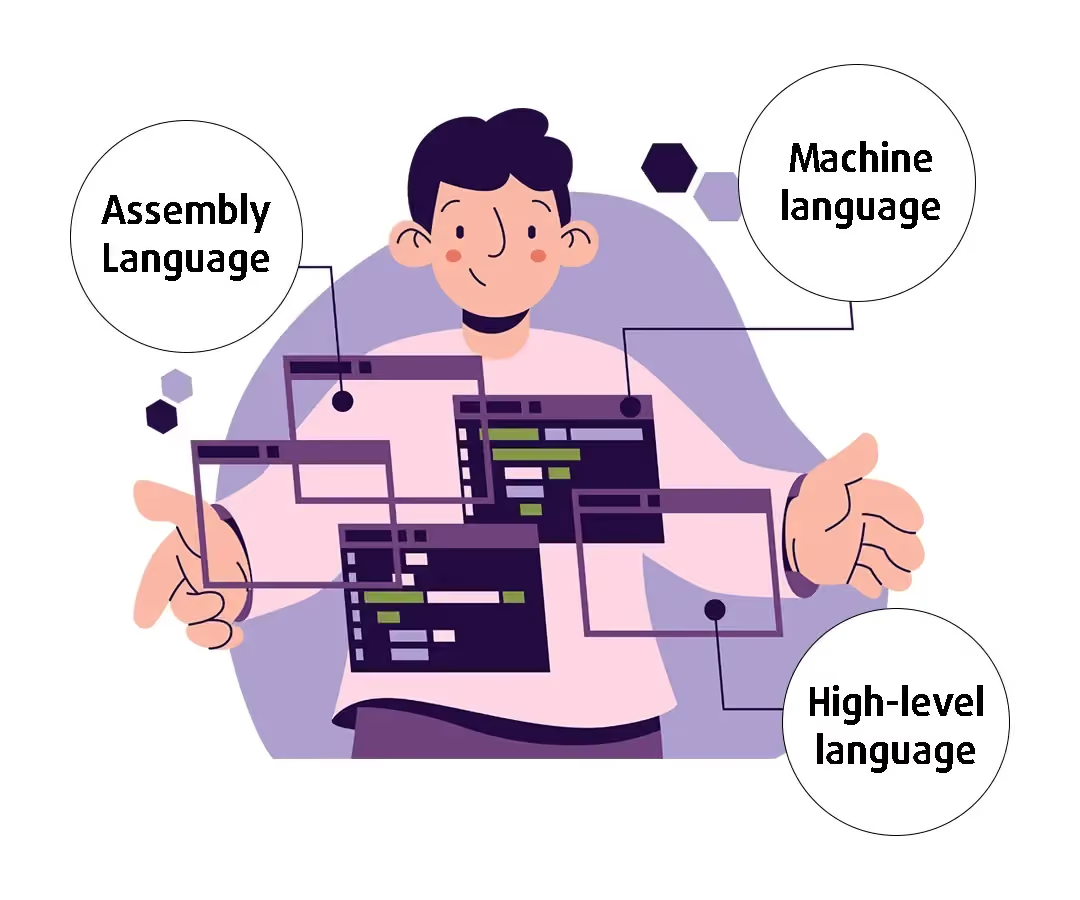
Programming languages can be divided into three main categories based on their level:
1. Machine Language: This is the lowest-level programming language, interacting directly with computer hardware. It uses binary instructions (0s and 1s) to enable the computer to perform basic tasks.
2. Assembly Language: As a low-level programming language, assembly allows programmers to write code that interacts with computer hardware. Instead of using natural language, assembly uses abbreviations and symbols to represent instructions such as "mov" (move data), "add" (addition), "sub" (subtraction), and so on.
3. High-Level Programming Languages: These are designed with syntax that is close to natural language, making them easy to understand and use. These languages help programmers focus on solving complex problems through powerful abstractions, libraries, and frameworks.
Overview of 3 Popular Programming Languages
Programming languages are tools for developers to build software, applications, and systems. Among hundreds of programming languages, Python, JavaScript, and Java stand out due to their wide range of applications and market popularity. Below is a detailed overview of these three languages.
Python
What is a programming language from the perspective of Python? Python is considered one of the easiest programming languages to learn thanks to its clear and friendly syntax. It is designed to help users focus on solving problems rather than dealing with complex technical details.
1. Advantages
Simple, easy-to-learn syntax: Python is perfect for beginners. Its concise, intuitive syntax allows developers to write code quickly and efficiently.
Powerful applications: Python is a top choice in fields such as:
- Artificial Intelligence (AI): Libraries like TensorFlow and PyTorch support the development of machine learning models.
- Data Science: Pandas, NumPy, and Matplotlib help with data processing and visualization.
- Automation: Tools like Selenium and pyAutoGUI help automate repetitive tasks.
2. Limitations
Lower performance: Python is not the optimal language for systems requiring high performance, as it is an interpreted language.
Limited in mobile development: Python is not commonly used to build mobile applications, which makes it less flexible for certain projects.
3. Trends for 2026
Python continues to grow strongly thanks to the boom in artificial intelligence and data science. Additionally, its large community and wealth of learning resources help Python maintain its top position among the most popular programming languages.
JavaScript
JavaScript is the common answer when someone asks "What is a programming language?"This is an essential language for modern web development, ensuring high interactivity and performance across browsers.
1. Advantages
A "must-have" language for web development: JavaScript is a pillar of frontend web development with frameworks like React, Angular, and Vue.js.
Cross-platform:
- Mobile applications: Use React Native to develop mobile apps for both iOS and Android.
- Desktop applications: Electron helps create desktop applications like Visual Studio Code.
2. Limitations
Difficult to manage in large projects: For complex projects, managing source code can become difficult without the right tools and processes.
Complex frameworks: JavaScript evolves rapidly with many modern frameworks, which can sometimes be confusing for beginners.
3. Trends for 2026
JavaScript remains the core of web programming thanks to its flexibility and widespread use in developing cross-platform applications. Frameworks like React and Next.js will continue to shape the web development market.
Java
Java is one of the oldest programming languages but maintains its position due to its stability and scalability, especially in enterprise systems.
1. Advantages
High performance and stability: Java is renowned for its ability to handle large-scale systems, particularly in the banking and telecommunications sectors.
Diverse applications:
- Enterprise: ERP (Enterprise Resource Planning) and CRM (Customer Relationship Management) systems are frequently built on Java.
- Android applications: Java is the official language for Android app development, although it now faces competition from Kotlin.
2. Limitations
Complex syntax: Compared to Python, Java's syntax is more verbose and harder to grasp, especially for beginners.
Less flexible: Java is not commonly used for experimenting with new technologies or for projects that require rapid agility.
3. Trends for 2026
Java continues to play a vital role in large enterprise systems and Android development. However, Kotlin is steadily becoming a strong competitor in the mobile space.
Understanding the characteristics and applications of each language helps you answer the question "Which programming language should I choose to learn?"
- Python: Suitable for beginners and those looking to enter the fields of AI and big data.
- JavaScript: The top choice for web development and cross-platform applications.
- Java: Robust and stable, suitable for enterprise systems and Android development.
Choosing a programming language depends not only on trends but also on your personal goals and interests. Start with the language that fits you best and build a solid foundation for your programming career!
4 Criteria for choosing the right programming language
A programming language is more than just a tool for writing code; it is a bridge that helps you bring your ideas to life in the digital world. However, with the vast array of programming languages available today, choosing the right one to learn and build your career around is a significant decision. Here are four key criteria to help you make the right choice.
1. Personal goals
One of the most important factors when choosing a programming language is defining your personal goals. Why are you learning to program? Each language has its own strengths, suited to different fields:
Web development: If you want to become a web developer, then JavaScript is an essential choice. It is a language widely used in both frontend (user interface) and backend (server-side processing).
Artificial Intelligence (AI) and data science: Python is the top choice thanks to its simple syntax and strong support from libraries like TensorFlow, PyTorch, and Pandas.
Mobile app development:
- Android: Java or Kotlin are two popular choices.
- iOS: Swift is the primary language.
Enterprise systems: If you want to build large, stable, and secure systems, Java is the ideal choice due to its scalability and high performance.
Practical examples:
- If you want to work in AI → choose Python.
- If you enjoy web design → learn JavaScript.
- If you want to develop Android apps → choose Java or Kotlin.
2. Job market
Which programming languages are in highest demand? Researching hiring trends will help you make the right decision, especially in a constantly evolving tech landscape.
- Python: Python is leading the way in artificial intelligence and data science. Demand for Python developers is surging as companies focus on big data analytics and process automation.
- JavaScript: As an essential language for web development, JavaScript is in high demand for both frontend and backend roles. Frameworks like React, Angular, and Node.js have helped JavaScript dominate the market.
- Java: Known for its stability and high security, Java is the preferred language for enterprise systems, particularly in banking, finance, and telecommunications. Additionally, Java remains a popular choice for Android app development.
2026 Forecast:
- Python and JavaScript will continue to lead, driven by the boom in emerging technologies like AI, IoT, and web applications.
- Java will maintain its position in large-scale systems, though it may face competition from Kotlin in Android development.
3. Ease of Learning
Which programming language is right for you depends on how easy it is to learn, especially if you are a beginner.
- Python: Python is widely considered the ideal language for beginners. Its simple syntax, which closely resembles natural language, makes it easy to write and read code.
- JavaScript: JavaScript can be a bit more complex, especially when you start working with concepts like the DOM, callbacks, or asynchronous programming. However, with the abundance of resources available, it is still easy to get started.
- Java: While it is a powerful language, Java's verbose and strict syntax can be a hurdle for beginners. However, if you already have a basic programming foundation, learning Java will not be too difficult.
Advice:
- If you are a complete beginner → learn Python to get comfortable with programming.
- If you have a basic foundation and an interest in the web → choose JavaScript.
- If you want to develop large-scale software or Android applications → learn Java.
4. Support community and learning resources
When learning a programming language, having a strong community and diverse learning resources will help you overcome challenges more easily.
- Python: Python has a massive and very friendly community. You can find thousands of free courses, tutorials, and answers on forums like Stack Overflow.
- JavaScript: JavaScript also has a large community, but the variety of frameworks (React, Vue.js, Angular) can sometimes be confusing for beginners. However, learning resources for JavaScript are still very abundant, ranging from YouTube to courses on Udemy and Coursera.
- Java: Java has a stable community, though it is not growing as rapidly as Python or JavaScript. Learning materials are primarily focused on enterprise application development and Android.
Advice:
- Choose a language with a strong support community if you need self-study materials or want to contribute to open-source projects.
- With Python and JavaScript, you can easily find solutions to most of the problems you encounter.
Choosing the right programming language not only saves you time but also sets you on the right career path. Consider criteria such as your personal goals, market demand, ease of learning, and community support to make your decision!
Conclusion
Choosing the right programming language not only helps you get started easily but also provides a clear direction for your future career. In 2026, Python, JavaScript, and Java continue to be top choices due to their wide range of applications and high market demand. Python is suitable for those who want to pursue artificial intelligence and data science; JavaScript is a "must-have" for web development and cross-platform applications; meanwhile, Java remains an ideal choice for enterprise system development and Android apps. Define your goals and start with the right language to open the door to the world of technology!