

Slogan is more than just a short phrase; it is a brand "signature" that etches itself into the customer's mind and creates a distinct identity. An impressive slogan can transform an ordinary business into a memorable brand, helping customers instantly associate it with your products or services.
But how do you create a slogan that is unique, memorable, and highly compelling? In this article, we will explore the secrets to crafting a slogan that attracts customers and elevates your brand. Let's dive in with Markdao !
What is a slogan?
A slogan is a concise, memorable phrase that captures the spirit and core values of a brand, product, or marketing campaign. It is a vital tool that helps businesses leave a lasting impression on customers, boost brand recognition, and increase market competitiveness.
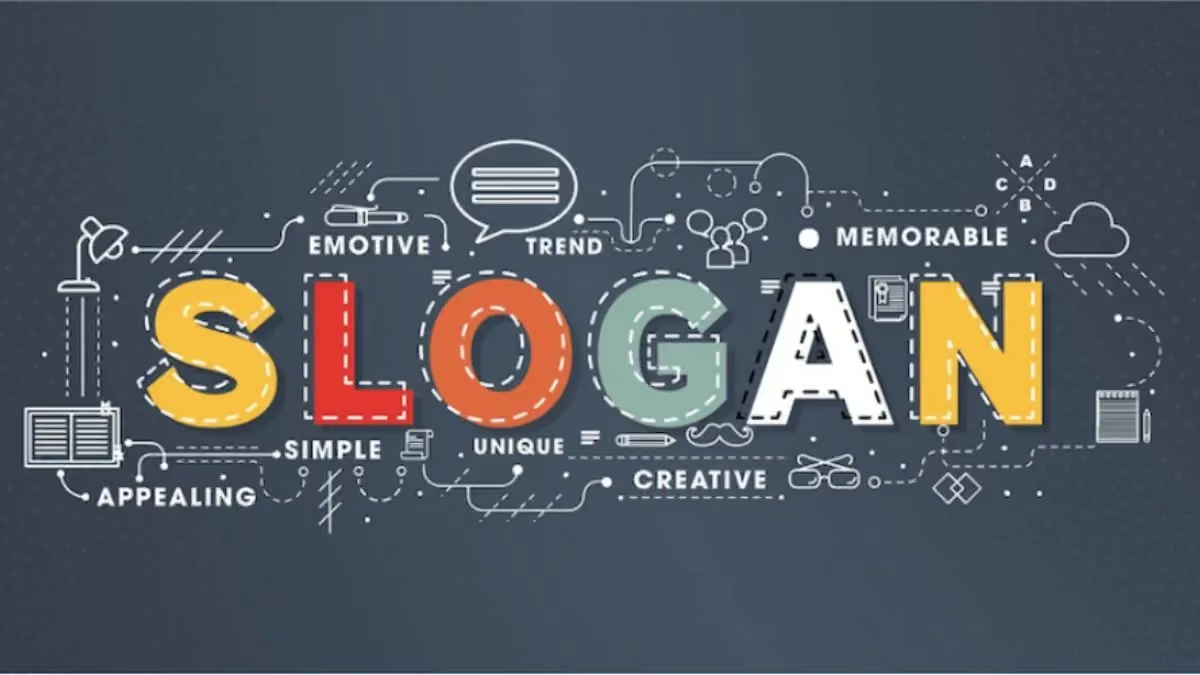
The role in branding
An impressive slogan is more than just a catchy phrase; it serves a strategic purpose, helping your brand:
- Increase brand recognition: A unique slogan makes it easy for customers to recall your brand the moment they hear or read it.
- Convey messages quicklyIn just a few words, they can clearly articulate brand positioning and core values.
- Evoke emotions and build connections with customers: A great slogan can stir emotions, provide motivation, or affirm the value a brand delivers.
The difference between a slogan and a tagline
Many people often confuse slogans and taglines, but there is a distinction between the two:
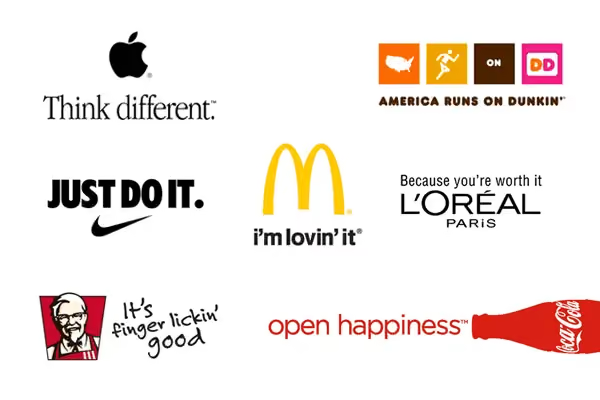
- Slogan: Typically used for marketing campaigns or to represent the overall brand value. For example: “Think Different” (Apple).
- Tagline: Usually a fixed descriptive phrase that accompanies a brand logo and rarely changes over time. For example: “I'm Lovin’ It” (McDonald's).
A slogan is the “weapon” that helps a brand stand out and become memorable. So, what are the common types of slogans? Let’s explore them right now!
5 common types of slogans
Slogan can be categorized by how they convey messages and their intended use. Below are some common types that major brands often use to leave a strong impression on customers' minds.
1. Descriptive slogans
This type directly describes the features or benefits of the product or service a business provides. It helps customers immediately understand the value the brand offers.
Example:
- “Cherishing Vietnamese feet” – Biti’s (Emphasizing the comfort and quality of their footwear).
- “Naturally fermented drinking yogurt” – Yakult (Directly describes the product).
When should you use them?
- When a business wants to focus on promoting the standout features of a product.
- Suitable for new brands looking to quickly make an impression on customers.
2. Brand value slogans
This slogan type expresses the business philosophy or core values that a brand pursues, helping customers better understand the company's vision.
Example:
- “Think Different” – Apple (Encouraging creativity and individuality).
- “The Ultimate Driving Machine” – BMW (Emphasizing premium quality and powerful performance).
When should you use it?
- When a brand wants to build long-term image and value.
- Suitable for businesses with a grand vision that aim to differentiate themselves in the market.
3. Call-to-action slogans
This type of slogan aims to prompt customers to take a specific action, creating a sense of urgency or providing motivation.
Examples:
- “Just Do It” – Nike (Promoting a sporting spirit and immediate action).
- “Have a Break, Have a KitKat” – KitKat (Encouraging customers to enjoy the product).
When should you use it?
- When a brand wants to motivate customers to engage in a specific action.
- Suitable for sports brands, food products, or services that require high interaction.
4. Emotionally driven slogans
These are slogans has the ability to evoke emotions, helping customers feel more connected to the brand.
Example:
- “Finger Lickin’ Good” – KFC (Stimulates the taste buds, creates a sense of deliciousness).
- “Red Bull Gives You Wings” – Red Bull (Evokes strength and boundless energy).
When should you use it?
- When the brand wants to build a deep emotional connection with customers.
- Suitable for the food, beverage, travel, and entertainment industries.
5. Commitment and quality assurance slogans
These slogans help the brand affirm the quality of its products/services and build trust with customers.
Example:
- “German quality in every product” – Bosch (Affirms premium quality).
- “Always reaching further” – Vinamilk (Demonstrates sustainable development).
When should you use it?
- When a business wants to emphasize its credibility and quality.
- Suitable for major brands in the technology, finance, and automotive sectors.
Each type of slogan has its own impact and suits different brand strategies. To create an effective tagline, businesses need to clearly understand their core values and target audience.
3 Secrets to creating an impressive slogan that attracts customers
A slogan is more than just a short phrase; it is the soul of a brand, helping customers remember you instantly. A great tagline can evoke emotions, convey core values, and help a brand stand out among thousands of competitors. So, how do you create a slogan that is truly impressive?

1. Short, memorable, yet powerful
An effective tagline is usually short, ranging from 3 to 7 words, yet powerful enough to leave a lasting impression. Brevity makes it easy for customers to read, remember, and repeat—a crucial factor in brand building.
Nike with "Just Do It", Apple with "Think Different", McDonald's with "I'm Lovin' It" — these are not only concise but also convey the brand's spirit with incredible impact.
Pro tip:
- Use short, easy-to-pronounce words.
- Avoid complex, wordy sentences.
- Read the slogan aloud to check its rhythm—if it flows well and is easy to remember, that’s a good sign.
2. Convey your brand's true value and identity
A great slogan isn't just memorable; it must clearly express what your brand stands for. Think of BMW's "The Ultimate Driving Machine" —you immediately sense luxury and prestige. Or Nokia's "Connecting People" —simple, yet it perfectly captures the brand's mission.
Ask yourself: What makes your brand different? What core value do you want to convey? A powerful slogan must embody this spirit.
Pro tip:
- Define your core values clearly before you start writing.
- Ensure it accurately reflects your brand identity.
- Check to see if it overlaps or sounds too similar to other brands.
3. Tap into customer emotions
Phrases slogan The most impressive ones evoke strong emotions. They can build trust, encourage action, or suggest a specific lifestyle.

- "Because You’re Worth It" by L’Oréal encourages self-confidence.
- "Red Bull Gives You Wings" creates a sense of power and high energy.
- "Open Happiness" by Coca-Cola brings joy and positivity.
Emotion is what makes a slogan more memorable. A single phrase can become a motivator, provide inspiration, or tap into the deep-seated needs of your customers.
Pro tip:
- Use words that evoke strong emotions (happiness, success, confidence, energy, etc.).
- Think about how you want your customers to feel when using your product or service.
- Avoid overly generic phrases that fail to create an emotional connection.
A great slogan is more than just a nice string of words; it must touch the heart, reflect the true spirit of the brand, and, above all, be memorable. If you are looking for an impressive tagline, start with your own brand story and keep things simple yet meaningful. When a slogan combines brevity, creativity, emotion, and brand value, it becomes the key to winning over your customers!
5 steps to create an effective slogan
A slogan does more than just make a brand memorable; it communicates a vital message to your customers. Crafting an impactful one requires a blend of linguistic creativity and brand strategy. Here are the steps to help you build an effective slogan.

1. Define your brand identity and core message
Before you start creating, you need to clearly understand what your brand stands for. A slogan is not just a catchy phrase; it is a reflection of your brand identity.
Ask yourself the following questions:
- What value does the brand want to convey?
- What sets you apart from your competitors?
- Who is your target audience, and what do they care about?
- What emotions do you want to evoke in your customers?
For example, Nike wanted to inspire action and pushing boundaries, which led them to choose "Just Do It".
How to do it:
- Write down three to five core brand values.
- Identify the one key message you want your customers to remember.
2. Choose the right linguistic style
Slogan can take on many different styles, depending on the brand's personality:
- Short and punchy: “Think Different” (Apple)
- Emotionally evocative: “Because You’re Worth It” (L’Oréal)
- Witty and playful: “The Quicker Picker Upper” (Bounty)
- Action-oriented: “Just Do It” (Nike)
Ensure the tone of voice aligns with your brand identity and resonates with your customers.
How to do it:
- Avoid overly long or confusing words.
- If your brand is premium, choose sophisticated and elegant language.
- If targeting a younger audience, feel free to experiment with creative and fun expressions.
3. Brainstorming initial slogan ideas
Once you have defined your tone of voice, start writing down a variety of ideas. Don't worry about perfection at this stage; the goal is to generate as many options as possible to choose from.
Some useful techniques:
- Wordplay: Use rhyme and rhythm to make slogan memorable. For example: “Finger Lickin’ Good” (KFC).
- Use strong, affirmative statements: Inspiring and motivating. For example: “Impossible is Nothing” (Adidas).
- Ask a question: Spark customer curiosity. For example: “Got Milk?” (US milk campaign).
How to do it:
- Write at least 10-15 different options.
- Experiment with various phrasings to find the optimal version.
4. Review and select the best slogan
Once you have a list of ideas, evaluate and select the most suitable one based on the following criteria:
- Easy to remember, read, and pronounce.
- Accurately conveys the brand message.
- Does not cause misunderstanding or have negative connotations.
- Distinct from slogan of competitors.
You can test it by:
- Reading it aloud to see if it sounds natural.
- Asking for feedback from colleagues and potential customers.
- Place the slogan in real-world contexts like advertisements or product packaging to evaluate its suitability.
5. Testing and refinement
Once you have selected a slogan that fits, put it into practice to test its effectiveness. Some testing methods include:
- Using it across media platforms such as websites, social media, and advertisements.
- Combining it with your logo and brand imagery to check for visual harmony.
- Monitoring customer feedback to gauge memorability and appeal.
If the slogan makes your brand more memorable and is well-received by customers, that is a sign of a slogan success.
Creativity is not just a linguistic exercise but a vital branding strategy. An effective slogan should be concise, memorable, convey brand identity, and create an emotional connection with customers.
Conclusion
An impressive slogan not only helps a brand leave a mark but also builds a strong connection with customers. By combining creativity and strategy, businesses can craft a concise, memorable phrase that delivers the right message. Invest carefully to ensure your slogan becomes a highlight that helps your brand stand out and differentiate itself in the market!