


In the world of online advertising, cost control is always a key factor in ensuring campaign effectiveness. One of the most important metrics that cannot be overlooked is CPC (Cost Per Click) – the cost per click. So, what is CPC, why is it important, and how can you optimize this metric? In this article, Markdao will help you understand the definition, the formula for calculating CPC, and methods to help you reduce advertising costs while still achieving optimal results. Let's dive in!
What is CPC?
In online advertising, CPC (Cost Per Click) is a key metric that advertisers use to calculate the cost incurred every time someone clicks on their ad.
Definition
Simply put, CPC is the amount you pay for each time a user interacts and clicks on an ad you have placed on online platforms such as Google, Facebook, or other advertising networks.
This is a common billing method in Pay-Per-Click (PPC) advertising campaigns, helping you determine the cost you pay for each click on your ad.
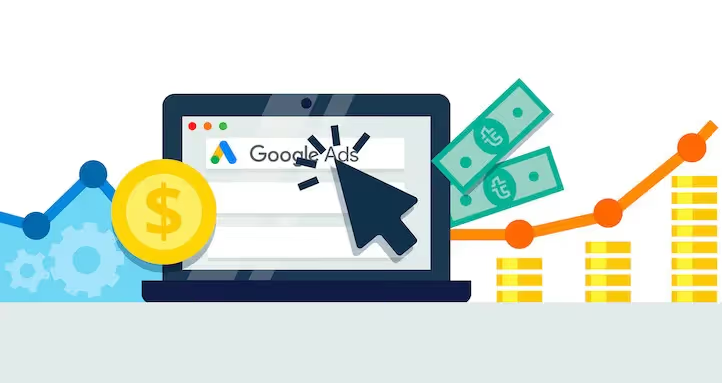
What is the CPC formula?
CPC is not the cost you pay every time your ad is displayed, but rather the cost you pay when a user actually clicks on your ad. This metric is calculated using the following formula:
CPC = Total advertising cost / Total number of clicks.
For example, if you spend 100,000 VND on an advertising campaign and receive 500 clicks, your CPC will be 100,000 VND / 500 = 200 VND per click. This means you pay 200 VND every time someone clicks on your ad.
CPC is a very important metric for advertisers to evaluate the effectiveness of their campaigns. A low CPC often means you have an effective campaign with reasonable costs, while a high CPC may indicate that you need to optimize your campaign to minimize expenses.
The relationship between CPC and online advertising formats
CPC is commonly found on popular online advertising platforms such as Google Ads, Facebook Ads, and Bing Ads. Each platform has its own method for calculating and optimizing CPC, but all are based on the fundamental principle of charging only when a user clicks on the ad.
- Google Ads: CPC in Google Ads is typically influenced by a keyword bidding system. When you set up an ad campaign, you select keywords and set a bid amount for each click. Google conducts an auction based on your bid and your ad's Quality Score to determine how much you pay per click.
- Facebook Ads: With Facebook, CPC is also calculated based on an auction. However, factors such as campaign objectives, target audience, and the relevance of the ad to the user influence the cost per click. This helps Facebook optimize costs and deliver the best results for advertisers.
- Bing Ads: Similar to Google, Bing also uses a keyword auction model for CPC advertising. However, CPC rates on Bing can be lower than on Google because search volume on Bing is lower, resulting in less competition.
.avif)
In summary, CPC is a core metric that helps advertisers measure cost-efficiency in online advertising campaigns. Understanding CPC and how to optimize this metric will help you manage your budget more effectively and maximize the return on your advertising campaigns.
What factors affect CPC?
CPC (Cost Per Click) is not a fixed metric; it is influenced by various factors. Understanding these factors will help you optimize your ad campaigns and minimize costs. Below are the main factors that affect CPC:
1. Ad Quality (Quality Score)
Ad quality is one of the most important factors affecting CPC, especially on platforms like Google Ads. Quality Score is the score Google assigns to your ad based on three main factors:
- Keyword quality and relevance: The keywords you choose must be closely related to your ad and landing page.
- Click-Through Rate (CTR): If your ad receives a high click-through rate, Google will rate your ad highly, which helps reduce your CPC.
- Landing Page Quality: Your landing page must provide a great user experience, fast loading speeds, and content that is relevant to your ads.
.avif)
Ads with a high Quality Score are charged a lower CPC by Google and other advertising platforms because they are considered to provide high value to users.
2. Keyword Competition
CPC is also influenced by the level of competition for your chosen keywords. Popular, highly competitive keywords (such as "insurance," "finance," or "study abroad") typically have higher CPCs because many advertisers are competing for top placement on search results pages.
Conversely, less popular or less competitive keywords will have lower CPCs. Using long-tail keywords with lower competition can help you save costs while still achieving effective advertising results.
3. Ad Placement
The position where your ad appears on a webpage also affects CPC. Ads in the top position on a search page usually have a higher CPC because they attract the most user attention. Conversely, ads in lower positions or on subsequent pages will have lower CPCs.
Furthermore, on platforms like Google Ads, the auction system determines ad placement based on your bid and Quality Score, so you can reduce your CPC by optimizing your ads and selecting placements that align with your budget.
4. Industry and Target Market
Highly competitive industries, such as insurance, finance, technology, and travel, typically have higher CPCs. This is because the demand for advertising in these sectors is immense, and advertisers are willing to pay more to reach potential customers.
Additionally, if you are targeting a specific market with a smaller population or lower internet usage, your CPC may be lower. However, you must carefully weigh CPC against conversion rates to ensure your campaign remains effective.
5. Relevance Between Ads and Target Audience
CPC also depends on the precision of your ad targeting. If your ads are not relevant to your target audience, your click-through rate (CTR) will be low, leading to higher advertising costs. Conversely, if you target the right audience with the right message, your CTR will be high and your CPC will decrease.
6. Timing and Seasonality
Seasonality and timing also impact CPC. For example, during peak seasons like holidays, Black Friday, or major events, competition increases significantly, causing CPC to rise as well. Therefore, advertisers need to monitor and adjust their strategies in response to timing changes to optimize their budgets.
7. Bidding Structure and Strategy
Online advertising platforms (Google Ads, Facebook Ads) use an auction system to determine CPC. The bid you set will influence your CPC. If you set your bid too low, your ad may not be displayed or may appear in a low position, causing your click-through rate to drop. However, a sound bidding strategy, combined with other factors, will help you optimize costs while still achieving your desired advertising results.
In summary, these factors all have a profound impact on the CPC of your advertising campaign. To minimize costs and optimize advertising effectiveness, you need to clearly understand each factor and adjust your strategy to suit your specific goals.
How to optimize CPC in advertising
Optimizing CPC (Cost Per Click) not only helps you reduce advertising costs but also increases campaign effectiveness, allowing you to achieve your marketing goals while maintaining a reasonable budget. Here are effective ways to optimize CPC in online advertising campaigns:
1. Improve your Quality Score
One of the most important ways to optimize CPC is to improve your Quality Score on platforms like Google Ads. High-quality ads help lower CPC, as advertising platforms always prioritize high-quality content. To improve your Quality Score, you need to focus on the following factors:
- High relevance between keywords and ads: Ensure your ads are relevant to the keywords users are searching for. Ad content should be clear, engaging, and address the customer's needs.
- High Click-Through Rate (CTR): An ad with a high click-through rate helps lower CPC because the advertising system views your ad as valuable and reduces costs when users click.
- Improve your landing page: Your landing page must have content relevant to the ad, be user-friendly, load quickly, and, most importantly, be optimized for mobile devices. A good landing page reduces bounce rates and increases conversion rates.
2. Use long-tail keywords
Long-tail keywords tend to have lower CPC compared to short, highly competitive keywords. Although long-tail keywords have lower search volume, they target specific customer needs more accurately and can yield higher conversion rates. Therefore, using long-tail keywords can help you reduce CPC and achieve better results at a lower cost.
.avif)
3. Use Smart Bidding
Advertising platforms like Google Ads and Facebook Ads offer Smart Bidding, a feature that allows the system to automatically adjust your bids based on factors such as location, time of day, device used, and user behavior. Using Smart Bidding helps you optimize your bids, thereby reducing CPC while maintaining advertising effectiveness.
You can also experiment with bidding strategies such as Max CPC (Max CPC) or Target CPA (Target CPA) to find the most effective approach for your advertising campaign.
4. Precise Targeting
To optimize CPC, you need to target the right audience. Using the advertising platform's targeting tools will help you reach only those most likely to click on your ads. Some precise targeting methods include:
- Behavioral targeting: Based on users' online behavior data, you can display ads to people who have shown interest in similar products or services.
- Geographic targeting: Adjust your ad campaigns by geographic region to display ads only in areas with the highest conversion potential.
- Device targeting: You can adjust your ad budget for mobile devices or desktops to optimize CPC.
5. Ad placement optimization
Ad placement on a website has a significant impact on CPC. Ads in prominent positions often have a higher CPC. However, sometimes choosing a lower position while targeting the right audience can save costs while still being effective. Here are some suggestions:
- Choose ad placements that fit your budget: Don't always try to place ads in the top position; instead, choose placements that align with your strategy and budget.
- A/B testing: Test different placements to find which ones yield the highest click-through rate at the lowest CPC.
6. Ad scheduling optimization
One of the key factors in reducing CPC is optimizing your ad schedule. The time of day, day of the week, or seasonality can all impact competition levels and your CPC. Here are some tips for optimizing your ad timing:
- Run ads during peak hours: Analyze the times when potential customers are most likely to click on your ads and focus your budget on those specific time slots.
- Customize ads by day of the week: If you know your customers tend to shop on specific days, adjust your ad schedule accordingly.
7. Use appropriate advertising strategies
Choosing the right type of ad campaign can also help you lower your CPC:
- Run remarketing campaigns: Remarketing campaigns help you reach people who have already interacted with your brand, lowering your CPC and increasing conversion rates.
- Run display ad campaigns: Display ads typically have a lower CPC than search ads, and with a solid strategy for creating engaging ads, you can reach potential customers at a lower cost.
CPC optimization is an ongoing process that requires testing and adjusting your strategy to achieve the best results. By understanding the influencing factors and applying the right optimization strategies, you can reduce advertising costs while maintaining campaign effectiveness.
Conclusion
CPC (Cost Per Click) is a key metric for evaluating the effectiveness of online advertising campaigns. Understanding CPC not only helps you control costs but also allows you to optimize your advertising strategy for maximum performance. By improving ad quality, using long-tail keywords, optimizing placements, and targeting accurately, you can minimize CPC while ensuring your campaigns deliver high conversion rates.
However, for sustainable CPC optimization, you must consistently monitor and adjust your strategy based on real-world performance. This process requires testing, data analysis, and flexibility in adjusting the factors that influence CPC. When done correctly, CPC optimization not only saves you money but also boosts ad performance, thereby increasing revenue and helping you achieve your marketing goals.