

In the digital age, running ads is no longer just an option; it has become a mandatory strategy for businesses to reach potential customers. Facebook Ads—one of the most powerful advertising platforms today—helps brands expand their reach, increase sales, and optimize marketing costs. But do you truly understand what running ads means, how Facebook Ads work, and how to maximize their potential?
If you are looking for a detailed, easy-to-understand guide that you can apply immediately to improve the effectiveness of your Facebook advertising campaigns, this article is exactly what you need! Join Markdao to explore it now!
What is running ads? An overview of online advertising
Running ads (advertising) is the practice of using paid advertisements to get a business's content, products, or services in front of potential customers. Instead of waiting for customers to find you, advertising allows brands to proactively appear before the right target audience, at the right time, and on the right platform.
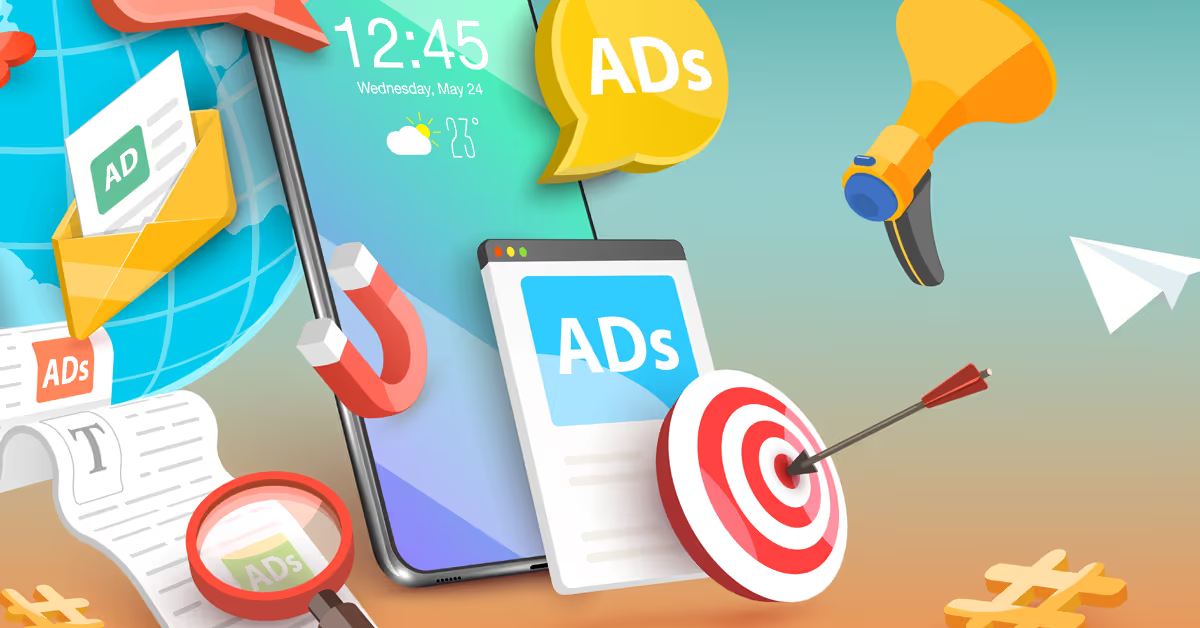
Unlike traditional marketing that relies on flyers, billboards, or television, running ads on digital platforms offers precise targeting, clear performance measurement, and flexible cost optimization. Businesses can reach millions of users with a single click, helping to expand their market rapidly without requiring excessive resources.
Online advertising and its explosive growth
Over the past few years, online advertising has become an unavoidable trend. Statistics show that global digital advertising budgets are growing strongly every year, with Facebook Ads and Google Ads accounting for the majority of the market share.
Reasons for the strong growth of online advertising include:
- Changing consumer behavior: Today, most people spend the majority of their time on the Internet, especially on social media, searching for information and shopping online.
- Precise reach capabilities: Modern advertising platforms provide tools to target by age, gender, interests, behavior, and even geographic location, helping businesses optimize their reach effectiveness.
- Easy to measure and optimize: Unlike traditional advertising, online advertising provides detailed data on impressions, clicks, and conversion rates, allowing advertisers to quickly adjust campaigns to achieve the best results.
Popular online advertising platforms
Currently, there are many platforms that support running ads, the most popular of which are:
- Google Ads: Display ads on Google Search, YouTube, and partner websites.
- Facebook Ads: Reach billions of users on Facebook, Instagram, and Messenger.
- TikTok Ads: Engage younger audiences with creative video content.
- YouTube Ads: Video advertising on the world's largest video platform.
- LinkedIn Ads: Ideal for B2B businesses, targeting professionals and recruiters.

Running ads is not just about spending money to display content; it is a comprehensive process of research, testing, and optimization to achieve the best results. Among current platforms, Facebook Ads is one of the most powerful tools for businesses to reach customers effectively. In the next section, we will dive deeper into Facebook Ads and how it works.
What is Facebook Ads?
Facebook Ads is Facebook's paid advertising platform, allowing businesses and individuals to display ad content to users across Facebook, Instagram, Messenger, and the Audience Network. Instead of waiting for customers to find you, Facebook Ads allows advertisers to proactively reach the right target audience based on interests, behaviors, and demographics.
With over 3 billion monthly active users, Facebook Ads has become a powerful marketing tool that helps brands increase awareness, attract potential customers, and drive sales. The unique strength of Facebook Ads lies in its precise targeting capabilities and flexible costs, making it suitable for both large enterprises and small business owners.
How does Facebook Ads work?
Facebook Ads operates on an ad auction mechanism, where advertisers compete to display their ads to potential users. Facebook's system evaluates ads based on three main factors:
- Bid Amount: The amount an advertiser is willing to pay for each impression, click, or conversion.
- Ad Quality: Facebook assesses ad quality based on relevance, user experience, and customer feedback.
- Estimated Action Rate: Based on behavioral data, Facebook predicts the likelihood that a user will interact with an ad.

Facebook selects the ad that offers the best balance of the three factors above to display to the most relevant users. This means that simply bidding higher doesn't guarantee more impressions—engaging content and precise targeting also play a decisive role.
Why use Facebook Ads?
- Reach a vast pool of potential customers: Facebook possesses one of the world's largest user datasets, making it easy for businesses to reach the right customer segments.
- Precise targeting: Facebook Ads allow you to customize your audience based on age, gender, interests, occupation, shopping behavior, and even relationship status.
- Flexible costs: You don't need a massive budget; you can start running ads with just a small amount and optimize as you go based on campaign performance.
- Diverse ad formats: From images, videos, and carousels to ads in Messenger or Stories, Facebook Ads offer a wide range of options to suit every marketing goal.
- Easy tracking and optimization: The Facebook Business Manager system provides detailed measurement tools, helping advertisers track performance and adjust campaigns for maximum effectiveness.
Facebook Ads is more than just an advertising platform; it is a powerful tool that helps businesses grow and optimize their digital marketing strategies. In the next section, we will explore the different types of Facebook ads to learn how to choose the format that best fits your business goals.
7 types of Facebook ads
Facebook Ads offers a variety of ad types to suit different marketing objectives. Below are the most popular ad types that advertisers can leverage to reach potential customers effectively.
1. Image Ads
This is the simplest type of ad, displayed as a single image accompanied by descriptive text and a call-to-action (CTA) button. Image ads are commonly used to increase brand awareness, promote products, or drive traffic to a website.

Pros:
- Easy to set up and quick to deploy.
- Ideal for businesses with visually appealing products.
- Low cost and highly effective when the visual content is engaging.
Cons:
- Limited in terms of content delivery compared to video or carousel ads.
- Requires high-quality imagery to capture attention.
2. Video Ads
This ad format uses video to convey brand messages in a more vivid and engaging way. Video Ads can appear in News Feeds, Stories, Reels, or within video streams on Facebook Watch.
Pros:
- Captures attention better than static images.
- Enhances the ability to tell a brand story.
- Well-suited for product promotion or tutorials.
Cons:
- Requires high-quality and engaging video content.
- Video length must be optimized to match user behavior.
3. Carousel Ads
This ad format allows you to display multiple images or videos within a single ad. Users can swipe left or right to view each item.

Pros:
- Display multiple products or features in a single ad.
- Increase engagement through a horizontal scrolling design.
- Suitable for e-commerce stores, fashion brands, and software companies.
Cons:
- Requires preparing multiple cohesive images/videos.
- If the design is not engaging, users may scroll past it.
4. Collection Ads
Collection Ads combine a main image or video with multiple products underneath, providing users with a direct shopping experience on Facebook or Instagram.
Pros:
- Seamless shopping experience directly on the Facebook platform.
- Suitable for retail, fashion, and beauty industries.
- Increases conversion rates through visual design.
Cons:
- Requires integration with a product catalog in Facebook Shop.
- Demands compelling images and videos to attract customers.
5. Messenger Ads
This ad format appears within the Messenger app and can lead users directly into a conversation with your business.

Pros:
- Increase direct customer engagement.
- Suitable for businesses offering consulting or customer support services.
- Drive faster conversions through conversation.
Cons:
- Requires staff or a chatbot for prompt responses.
- Not suitable for brand awareness goals.
6. In-stream Ads
These ads appear during videos that users are watching on Facebook Watch or partner platforms.
Pros:
- Retains viewers because the ads appear within content they are interested in.
- Increases brand visibility.
Cons:
- If the ad is not engaging, users may skip it.
- Requires concise videos that grab attention from the very first seconds.
7. Stories & Reels Ads
Ads that appear on Facebook Stories, Instagram Stories, or Reels, typically as short vertical images or videos.
Pros:
- Full-screen display, easy to capture attention.
- Well-suited for creative, viral content.
- Highly optimized for mobile advertising.
Cons:
- Content disappears quickly, requiring significant investment in design.
- Short display time, making it difficult to convey long messages.
Using the right type of Facebook Ads will help businesses optimize marketing effectiveness and achieve business goals quickly. In the next section, we will learn how to build an effective Facebook Ads campaign!
How to run effective Facebook Ads
Running Facebook ads is not just about creating a post and putting money into it. To achieve high effectiveness, you need to clearly understand how this platform works, optimizing every step from setting up the campaign and choosing the right audience to monitoring and adjusting the ads. Below is a detailed guide to help you run effective Facebook Ads.
1. Define clear advertising objectives
Facebook Ads offers a variety of advertising objectives, each suitable for different stages of the customer journey. Before running ads, you need to clearly define what you are aiming for:
- Brand awareness: Helps more people learn about your business.
- Engagement: Increases likes, comments, shares, or messages.
- Traffic: Directs users to your website or landing page.
- Conversion: Encourages customers to take actions such as making a purchase, signing up, or filling out a form.

Defining your objectives from the start helps you choose the right ad format, optimize your budget, and measure effectiveness more accurately.
2. Choose the right target audience
One of the deciding factors for the success of Facebook Ads is the ability to reach the right people. Facebook provides many tools to help you precisely target potential customers:
- Demographic targeting: Gender, age, location, marital status, occupation, interests, and more.
- Behavioral targeting: Facebook can identify users based on their shopping habits, device usage, or intent to travel, purchase a vehicle, and more.
- Custom Audiences: Upload customer lists via email, phone number, or target people who have previously interacted with your Facebook page.
- Lookalike Audiences: Facebook will find people who share similar characteristics with your existing customer base.
Optimization tips:
- Test multiple audience groups to identify which one delivers the best results.
- Exclude irrelevant audiences to avoid wasting your budget. For example, if you sell products exclusively for women, exclude men from your target audience.
3. Create compelling ad content
An engaging ad requires creative content, high-quality visuals, and a clear message. Key elements to optimize:
- High-quality images and videos: Facebook prioritizes visual content, so use sharp images and engaging videos, and avoid images with too much text.
- Impactful headlines: Keep them concise, spark curiosity, or highlight product benefits.
- Clear descriptions: Highlight your product/service's unique selling points and why customers should choose you.
- Strong call to action (CTA): Use CTAs like "Buy Now," "Sign Up Today," or "Get Offer" to help increase conversion rates.
Optimization tips:
- A/B Testing: Run multiple ad versions with different content, images, and CTAs to identify the most effective ad creative.
- Write concise, easy-to-understand content, avoiding wordiness that leads to boredom.
- Use action-triggering elements, such as discounts, gifts, or limited-time promotions.
4. Budget management and ad optimization
Facebook Ads offers two main types of budgets:
- Daily budget: Facebook allocates the budget on a daily basis, suitable for short-term campaigns.
- Lifetime budget: The total budget is distributed evenly throughout the ad run, suitable for long-term campaigns.
To optimize your budget, you need to:
- Monitor key metrics such as CPC (cost per click), CTR (click-through rate), and ROAS (return on ad spend).
- Turn off low-performing ads to avoid wasting your budget.
- Adjust bids reasonably to compete effectively without exceeding your planned budget.
Additionally, you should use the Facebook Pixel to track conversions on your website and optimize ads based on actual customer behavior.
Running Facebook Ads is not just about creating ads and waiting for customers to come to you. To achieve high efficiency, you need to plan clearly, target the right audience, create engaging content, and continuously optimize your budget. By applying the strategies above, you can maximize the potential of Facebook Ads to increase sales and expand your brand.
Some notes when running Facebook Ads
Facebook Ads is a powerful advertising tool, but if not done correctly, you can waste your budget without achieving the desired results. Below are some important notes to help you run ads more effectively.
1. Do not run ads without a clear strategy
Many businesses make the mistake of pouring money into Facebook Ads without a specific plan. Before running ads, you need to clearly define:
- Advertising goals: Do you want to increase brand awareness, attract potential customers, or increase sales?
- Target audience: Who are your potential customers? What are their characteristics in terms of age, interests, and behavior?
- Budget and KPIs: How much do you plan to spend and what results do you expect to achieve?
A well-planned campaign will help optimize costs and increase ad performance.
2. Choose the right ad format for your goals
Facebook offers various ad formats, including images, videos, carousels, and lead ads. Not every format is suitable for every objective.
- If you want to increase brand awareness → Choose video ads or eye-catching images.
- If you want to generate leads → Use Lead Ads so customers can fill out their information directly on Facebook without leaving the platform.
- If you want to drive direct sales → Run Conversion Ads and install the Facebook Pixel to track performance.
Choosing the right format will make your ads more effective and save your budget.
3. Avoid targeting that is too broad or too narrow
Audience targeting is a key factor in campaign success. However, many people make these mistakes:
- Targeting too broadly: The ad reaches too many people who aren't potential customers, leading to high costs without generating conversions.
- Targeting too narrowly: Over-restricting your audience can cause your ads to show infrequently and fail to reach the desired number of customers.
How to optimize:
- Use Lookalike Audiences to expand your reach while maintaining quality.
- Combine multiple targeting criteria such as location, behavior, and interests to hit your target audience.
- Exclude irrelevant audiences to avoid wasting your budget.
4. Ad content must be engaging and compliant
Facebook has strict advertising policies; violations can lead to ad rejection or account restrictions. Here are some important notes:
- Avoid using images with too much text (Facebook recommends that text should not cover more than 20% of the image area).
- Avoid sensational, misleading, or unrealistic content (e.g., "Lose weight instantly!", "100% success in making money!").
- Images and videos should be clear and high-quality to attract viewers.
- Keep headlines concise and engaging, avoiding unnecessary length.
Additionally, you should regularly conduct A/B testing on different ad versions to identify the most effective content.
5. Monitor and optimize ads continuously
Running ads does not mean "set and forget." You need to monitor performance regularly to make adjustments when necessary.
Key metrics to track:
- CTR (Click-Through Rate): If the CTR is too low, your ad content may not be engaging or may not be reaching the right audience.
- CPC (Cost Per Click): If the CPC is too high, you might want to adjust your targeting or ad content.
- ROAS (Return on Ad Spend): If the ROAS is low, you need to re-evaluate the effectiveness of your ads in driving sales conversions.
How to optimize:
- Turn off underperforming ads and reallocate your budget to those that are performing better.
- Test different audience segments to identify your most potential customers.
- Adjust budgets and bids based on real-time data.
Conclusion
Facebook Ads is a powerful tool, but to run effective campaigns, you need a clear strategy, precise targeting, and continuous content optimization. Avoid common mistakes like targeting too broadly, creating unengaging content, or failing to track performance. When applied correctly, Facebook Ads can help you reach the right potential customers and maximize your revenue.