

In today's competitive business world, if you try to reach everyone, you won't effectively reach anyone. Target a target market is the key to helping businesses reach the right potential customers, optimize marketing costs, and increase profits. But how do you identify your ideal customer base? What is the most effective Target method? Let Markdao help you explore this in today's article so your business can stand firm and break through in the market!
What is targeting?
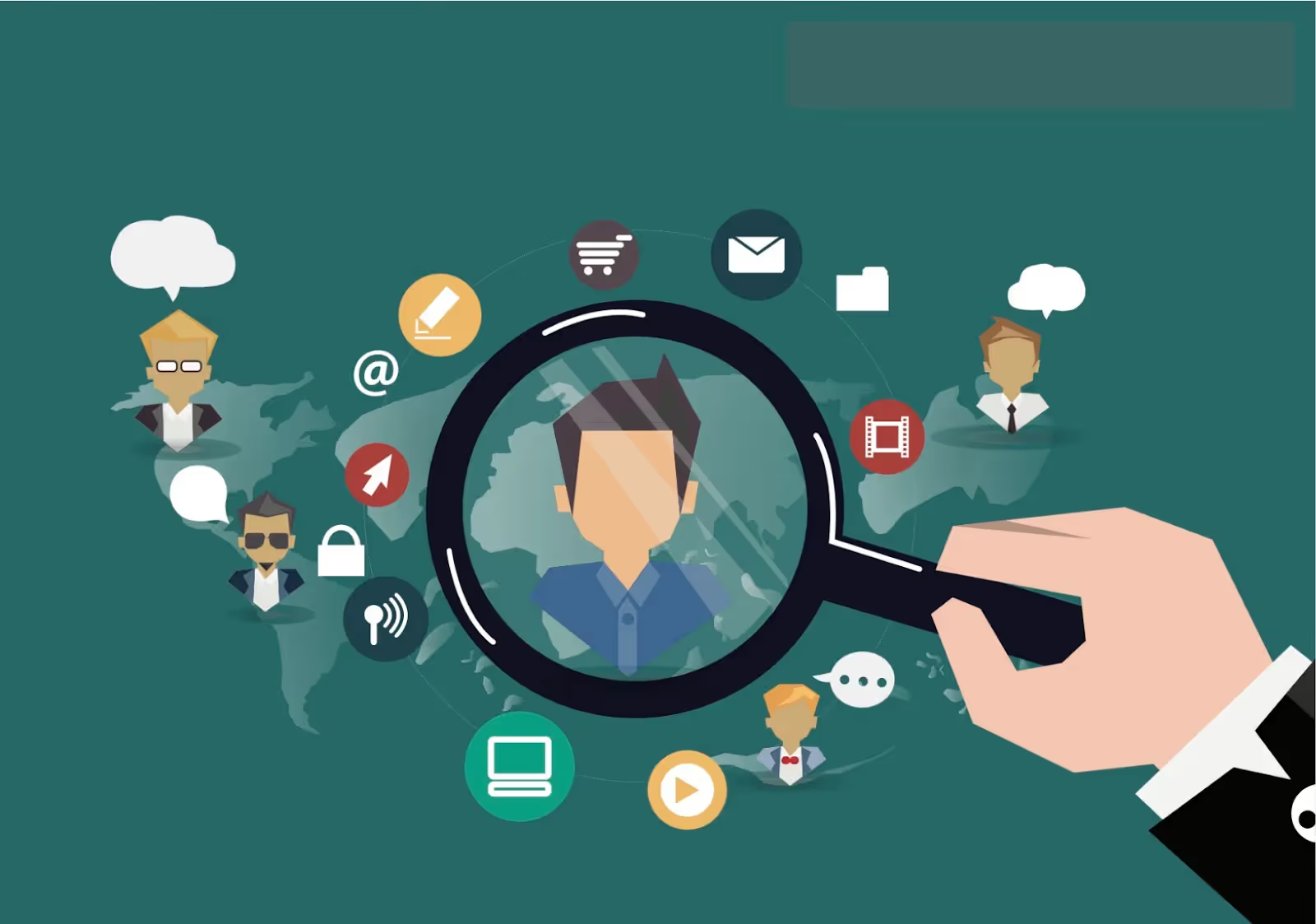
Targeting is the process of identifying and focusing on a specific group of customers that a business wants to reach. This is a crucial step in optimizing marketing strategies, from advertising and content to product and service development.
It is not simply about choosing a random group of customers; it requires analysis based on factors such as age, gender, income, interests, consumer behavior, and many other characteristics. The goal of targeting is to reach the audience with the highest demand, thereby increasing conversion rates and maximizing revenue.

Distinguishing Targeting from Segmentation and Positioning
- Segmentation (Market Segmentation): The process of dividing a broad market into smaller groups of customers based on shared characteristics. This is the first step before defining your target.
- Targeting: After segmenting the market, a business selects one or more of the most potential customer groups to focus its resources on.
- Positioning: How a business builds its brand image and product value in the minds of customers within the target market.
Example, in the beverage industry, a mineral water brand can segment its market into various groups such as sports enthusiasts, office workers, families with young children, and more. They can then target sports enthusiasts by communicating the benefits of rehydration and mineral replenishment. Finally, they position the product as a specialized mineral water for athletes.
Targeting the right audience not only helps save on marketing costs but also contributes to building sustainable relationships between businesses and customers, thereby enhancing long-term business performance.
Why is market targeting important?
Identifying the right target market not only helps businesses save costs but also improves business efficiency. Below are the key reasons why market targeting is a core element of every marketing strategy.
- Optimize marketing budget: Instead of advertising broadly to everyone, targeting helps businesses focus on the most potential customer groups. This reduces budget waste while increasing the performance of marketing campaigns.
- Increase conversion rates: When reaching the right audience with specific needs, the likelihood of converting interested individuals into actual customers is higher. An advertising campaign that targets the right market will significantly increase click-through, registration, and purchase rates compared to generic targeting.
- Strengthen brand loyalty: A brand cannot please everyone, but by focusing on a specific customer segment, it can create unique value for that group. When customers feel that products and services are tailored specifically for them, they are more likely to remain loyal to the brand.
- Improve business performance: Identifying a target market helps businesses develop more appropriate strategies for products, pricing, distribution channels, and communication. For example, a company providing management software for small businesses will have flexible pricing strategies and advertising content aimed at business owners, rather than large corporations.
- Increase market competitiveness: In a highly competitive market, businesses that know how to target accurately will have an advantage. They can create specialized products, relevant content, and better customer experiences than their competitors, thereby capturing market share within their segment.
When a business truly understands its customers and applies effective targeting, it not only increases revenue but also builds lasting relationships, driving long-term growth.
5 steps to target your market most effectively
Target your target market is not just about identifying potential customers; it is about deeply understanding their needs, habits, and the most effective ways to reach them. Below are the detailed steps to help businesses build a precise and optimized targeting strategy:
1. Market Segmentation
Before identifying your target customers, businesses need to segment the market into smaller groups with shared characteristics. There are many ways to segment a market, including:
.avif)
- Demographic Segmentation: Based on age, gender, income, occupation, education level, etc. For example: A luxury car brand will target high-income customers aged 30-50.
- Geographic Segmentation: Based on country, region, climate, or urban versus rural areas. For example: A clothing brand will sell heavy coats in the North while focusing on t-shirts in the South.
- Psychographic Segmentation: Based on interests, lifestyle, and personal values. For example: A premium coffee brand will target individuals who appreciate a sophisticated lifestyle and enjoy high-quality experiences.
- Behavioral Segmentation: Based on shopping habits, brand loyalty, and product interaction. For example: A tech company might target customers who frequently upgrade to the latest phone every year.
After segmenting, businesses can choose one or a few potential segments to focus on Target.
2. Buyer Persona Analysis
After defining your market segments, the next step is to create a Buyer Persona. This is a detailed profile of your ideal customer, helping your business understand them more deeply. A Buyer Persona typically includes:
- Personal information: Age, gender, occupation, income.
- Goals and needs: What solutions are customers looking for? What problems do they want to solve?
- Shopping behavior: Where do they usually shop? Online or in-store?
- Pain points: What are the difficulties or barriers they face when making a purchase decision?
.avif)
Example: Buyer Persona for an organic cosmetics brand
- Name: Linh Nguyen
- Age: 28
- Occupation: Office worker
- Income: 15-20 million/month
- Needs: Seeking skincare products that are free of harmful chemicals and environmentally friendly.
- Challenges: Concerned about cosmetic quality, needs to read many reviews before purchasing.
Creating a Buyer Persona helps businesses craft precise marketing messages that meet customer expectations.
3. Evaluating market potential
Not every customer segment is highly profitable. Businesses need to assess the attractiveness of each segment based on the following criteria:
- Market size: Is it large enough to justify investment?
- Level of competition: Has the market been captured by competitors, or are there still opportunities?
- Accessibility: Through which channels can customers be easily reached?
- Potential profitability: How much are customers willing to spend on the product/service?
For example, a luxury fashion brand might find that younger customers have high demand but lack significant purchasing power. Instead, they might focus on middle-aged customers with high incomes who are willing to pay for quality products.

4. Developing messaging and outreach strategies
Once the target audience is identified, businesses need to develop an appropriate outreach strategy. Key factors include:
- Marketing messaging: Content must address the needs and mindset of the customer. For example, if targeting a group of customers who value a green lifestyle, the message should emphasize sustainability and environmental friendliness.
- Outreach channels: Depending on customer behavior, businesses can choose Facebook ads, website SEO, TikTok, email marketing, or event hosting.
- Promotional formats: You can use content marketing, video, influencer marketing, or promotional campaigns to attract customers.
Example:
If targeting Gen Z, businesses can focus on TikTok and YouTube Shorts with short, creative content.
If targeting business professionals, email marketing and webinars will be more suitable.
5. Measuring and adjusting targeting strategies
Targeting does not stop at identifying customers; it requires constant monitoring and optimization. Some ways to measure effectiveness include:
- Tracking analytics data: Check conversion rates and advertising costs for each customer segment.
- A/B Testing: Test multiple target groups to identify the most effective segment.
- Collect customer feedback: Listen to customer reviews to improve products and marketing campaigns.

Example: A business runs ads for two customer groups—those aged 25-30 and those aged 31-40. After analysis, they find that the 31-40 age group has a higher purchase rate, and consequently, they focus their advertising budget on this group.
Targeting a market is not just a step in a marketing strategy; it is a decisive factor in a business's success. By reaching the right audience, businesses can optimize their budgets, increase conversion rates, strengthen their brand, and boost profits.
Terms related to Targeting
When referring to Targeting in Marketing, there are several key terms that businesses and advertisers need to understand to optimize their customer outreach strategies. Below are common related terms:
What is ad targeting?
Ad targeting is a term commonly used in advertising, especially in Digital Marketing. It means running advertising campaigns that select specific customer segments based on defined criteria such as age, gender, interests, geographic location, behavior, etc.
Practical example:
- A fashion shop targets females aged 18-30 interested in Korean fashion on Facebook Ads.
- An English center targets people who have previously searched for IELTS courses on Google Ads.
The main goals of ad targeting:
- Helping businesses reach the right potential customers.
- Increasing conversion rates and optimizing advertising costs.
- Avoiding budget waste on audiences uninterested in the product/service.
What is a Target Market?
Target Market is the specific group of customers that a business aims to reach when marketing its products or services.

Key factors for defining a Target Market:
- Demographics: Age, gender, income, education level, etc.
- Consumer behavior: Interests, shopping habits, decision-making processes, etc.
- Geographic location: Country, region, city, etc.
- Psychographics: Lifestyle, opinions, personal values, etc.
Real-world example:
- Apple targets high-end users who are passionate about technology.
- McDonald's targets the mass market, especially young people and families.
Defining the right target market helps businesses:
- Create more effective marketing strategies.
- Optimize advertising costs by focusing on potential customers.
- Build a strong brand within a specific market segment.
What is a target audience?
Target Audience is the specific group of customers a business wants to reach through advertising campaigns or marketing content.

Distinguishing between target market and target audience:
- A target market is a broad market consisting of many potential customer groups.
- A target audience is a smaller group, focused on those likely to be reached by and respond to an advertising campaign.
Practical example:
- Nike's target market is everyone interested in sports.
- The target audience for a Nike running shoe ad campaign might be men aged 20-35 who run regularly and are interested in marathons.
Why is this important?
- It helps businesses create marketing content that is more relevant to each customer group.
- Personalize advertising messages to increase engagement and conversion rates.
- Optimize marketing costs and avoid wasting budget on uninterested audiences.
What is Facebook Ads targeting?
Facebook Ads Targeting is the method of identifying and reaching potential customers on the Facebook platform using advertising tools.

Types of targeting on Facebook Ads:
- Demographic targeting: Age, gender, education level, income, etc.
- Interest targeting: Interests in travel, sports, fashion, technology, etc.
- Behavioral targeting: Frequent online shoppers, iPhone users, loyal customers, etc.
- Geographic targeting: Cities, districts, or even within a radius of a few kilometers around a specific location.
- Retargeting (Targeting existing customers): Aimed at people who have previously interacted with your brand, such as visiting your website, watching video ads, or making a purchase.
Practical examples:
- A cosmetics store runs Facebook Ads targeting women aged 20-35 who are interested in skincare.
- A travel agency runs ads targeting people who have previously searched for international tours.
Effective Facebook Ads targeting helps:
- Reach the right customers and increase conversion opportunities.
- Optimize your advertising budget and avoid waste.
- Create personalized messages to make your ads more engaging.
Understand the terms related to targeting helps businesses build more accurate marketing strategies, optimize ads, and increase the effectiveness of reaching potential customers. Whether you are running targeting or identifying related terms, using the right methods will help businesses achieve their business goals faster.
Conclusion
Effective targeting of your target market is a crucial factor in helping businesses optimize marketing strategies and increase revenue. By correctly identifying your audience and applying appropriate targeting methods, you can reach potential customers accurately and cost-effectively. Always remember that understanding your customers is the key to marketing success.