


In an increasingly competitive market, reaching customers goes beyond loud advertising campaigns; it requires finesse at every point of sale. This is where Trade Marketing – a strategy focused on connecting brands, distributors, and consumers – becomes the key to helping businesses dominate the market. So, what is Trade Marketing, and what are the key factors for effective implementation? Let Markdao guide you through its role and the secrets to success in the article below.
What is Trade Marketing?
Trade Marketing is a marketing strategy focused on optimizing the relationship between a business and its distribution channels, retailers, and points of sale to get products into the hands of consumers as effectively as possible. The primary goal of Trade Marketing is not just to generate sales, but also to build satisfaction and engagement among business partners within the supply chain.
Unlike direct-to-consumer marketing strategies, this approach primarily works with intermediaries such as distributors, wholesalers, and retailers to ensure products are in the right place at the right time, making them easily accessible to the end customer.

Differences between Trade Marketing and Brand Marketing
Although both are vital aspects of a marketing strategy, Trade Marketing and Brand Marketing have distinct differences. Below is a comparison table highlighting the differences between Trade Marketing and Brand Marketing in a simple and intuitive way:
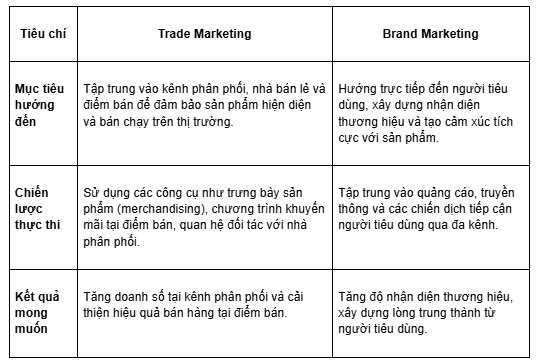
Although Trade Marketing and Brand Marketing have different goals and approaches, when harmoniously combined, they create a comprehensive marketing strategy that helps businesses achieve both short-term sales performance and long-term brand value.
The 3 targets of Trade Marketing
Trade Marketing focuses on three main target groups that play a crucial role in the supply chain:

1. Distributors: These are partners who purchase products directly from manufacturers and distribute them to retail channels. Trade Marketing ensures strong relationships are built with distributors to maintain stability and efficiency within the supply chain.
2. Retailers: This includes supermarkets, convenience stores, and other retail outlets. Trade Marketing focuses on supporting retailers by providing promotional programs, eye-catching product displays, and improving the in-store shopping experience.
3. End Consumers: Although they are not the primary target, Trade Marketing still indirectly influences end consumers by ensuring products are always available across distribution channels and attractively displayed at the point of sale.
Acting as a bridge between businesses and their trade partners, this form of marketing not only ensures commercial success but also contributes significantly to the sustainable growth of the brand in the market.
The Role of Trade Marketing in Business
Trade Marketing plays a vital role in connecting businesses, distributors, and consumers, ensuring products are distributed effectively and achieving satisfaction for all parties in the supply chain. Below are its key roles within a business:

1. Connecting the brand with consumers through distribution channels
Trade Marketing helps businesses build strong relationships with distributors and retailers to ensure products reach consumers seamlessly. This creates a consistent shopping experience, from ensuring products are well-stocked and available at the right time to engaging consumers through promotional programs.
Example: Prominent product displays in supermarkets or convenience stores help the brand capture attention and encourage consumer purchasing behavior.
2. Increasing product distribution efficiency
One of the primary tasks of Trade Marketing is to ensure products are distributed evenly across sales channels. This helps minimize stockouts or excess inventory.
- By working closely with distributors and retailers, businesses can optimize their supply chain.
- Tools such as demand forecasting, inventory management, and logistics support are used to ensure products are always in the right place at the right time.
3. Boosting sales at the point of sale
Trade Marketing focuses on strategies to increase sales at the point of sale, such as:
- In-store promotional programs for customers.
- Improve product displays to capture consumer attention.
- Utilize Point of Sale Materials (POSM) such as banners, standees, and display counters.

These activities not only drive in-store purchasing behavior but also help enhance brand image.
4. Support retailers and distributors in achieving higher business performance
Trade Marketing does not only help businesses increase sales but also delivers value to retailers and distributors.
- Sales training programs, exclusive offers, and promotional support help retailers operate more effectively.
- This creates a mutually beneficial relationship, helping businesses maintain sustainable partnerships within the supply chain.
5. Strengthen market competitiveness
In a highly competitive market, Trade Marketing helps businesses gain an advantage through:
- A strong presence across retail channels.
- The implementation of creative in-store marketing campaigns.
- Ensuring products stand out from competitors through presentation, pricing, and attractive promotional programs.
6. Contribute to long-term brand building

Although the primary goal of Trade Marketing is to increase sales, but it also contributes significantly to building brand identity.
- A consistent presence at points of sale creates a positive impression in the minds of consumers.
- Sustainable partnerships with retailers also help increase brand awareness.
Trade Marketing is not just a business support tool but a vital strategy for maintaining a company's market position. With its multifaceted role—from optimizing distribution and driving sales to building strong relationships with partners— Trade Marketing is truly the bridge that helps businesses grow sustainably.
7 elements for successful Trade Marketing
Trade Marketing is more than just an in-store marketing strategy; it requires close coordination of core elements to ensure effectiveness and sustainability. Below are the key factors for implementing a successful strategy:
1. Understand the market and target customers
- Market research: Before implementing Trade Marketing, businesses need to clearly understand the market, including consumer trends, customer needs, and competitor activities.
- Customer analysis: Identifying the right target audience for each distribution channel will help optimize outreach strategies and increase sales efficiency.
- For example: In supermarkets, shoppers often prioritize convenience and promotions, whereas small retail stores focus more on competitive pricing.

2. Build sustainable relationships with distributors and retailers
Building strong relationships with supply chain partners is a key factor in Trade Marketing.
- Partner support: Provide promotional programs, point-of-sale materials (POSM), and training support to ensure partners have the tools they need to drive sales.
- Shared benefits: Ensure pricing policies, discounts, and partnership terms are mutually beneficial.
- For example: Performance-based discount policies encourage distributors to increase their sales efforts.
3. Optimizing in-store product displays
How products are displayed plays a major role in capturing consumer attention at the point of sale.

- Effective merchandising:
- Ensure products are placed in highly visible locations, such as eye-level shelves or near checkout areas.
- Use support materials like signage, standees, and eye-catching display counters.
- Space management: Allocate space reasonably between products to avoid clutter or items being obscured.
4. Creating attractive promotional programs
In-store promotions are a crucial element for driving sales and increasing customer engagement.
- Types of promotions:
- Direct discount.
- Buy 1 get 1 free.
- Gift with purchase.
- Strategic timing: Run promotions during peak periods such as weekends, holidays, or shopping seasons to maximize revenue.
5. Use data and technology for effective management
Applying technology helps businesses measure and adjust strategies Trade Marketing effectively.

- Distribution Management System (DMS): Helps track product status, inventory, and sales performance at each point of sale.
- Data analytics: Use sales data and consumer behavior to make timely strategic decisions.
6. Train and develop the sales team
The sales team at the point of sale plays a crucial role in conveying messages and driving sales.
- Skills training: Equip staff with product consulting skills, situational handling, and customer relationship building.
- Incentivize performance: Implement performance-based incentive policies to encourage employees to achieve better results.
7. Ensure consistency in brand messaging
Trade Marketing needs to work closely with Brand Marketing to convey brand messaging consistently.
- POSM Design: Point-of-sale marketing materials must be consistent with the brand image.
- Marketing messaging: Promotional programs and customer outreach strategies must align with the brand's core values.
Conclusion
Success in Trade Marketing is not based on individual elements alone, but rather on the close integration of various aspects, from market research and distribution channel management to point-of-sale optimization and technology application. By focusing on these factors, businesses can build an effective Trade Marketing strategy that drives sales and maintains a competitive advantage in the market.