

In a crowded market, why should customers choose you over your competitors? The answer lies in your USP (Unique Selling Proposition)—the distinct advantage that helps a business stand out, attract customers, and build a solid brand.
A strong USP not only helps you stand out from the crowd but also drives sales and customer loyalty. However, not everyone knows how to identify and develop a truly effective USP. In this article, Markdao will explore strategies to help your business find the right USP and turn it into a tool for market success.
What is a USP?
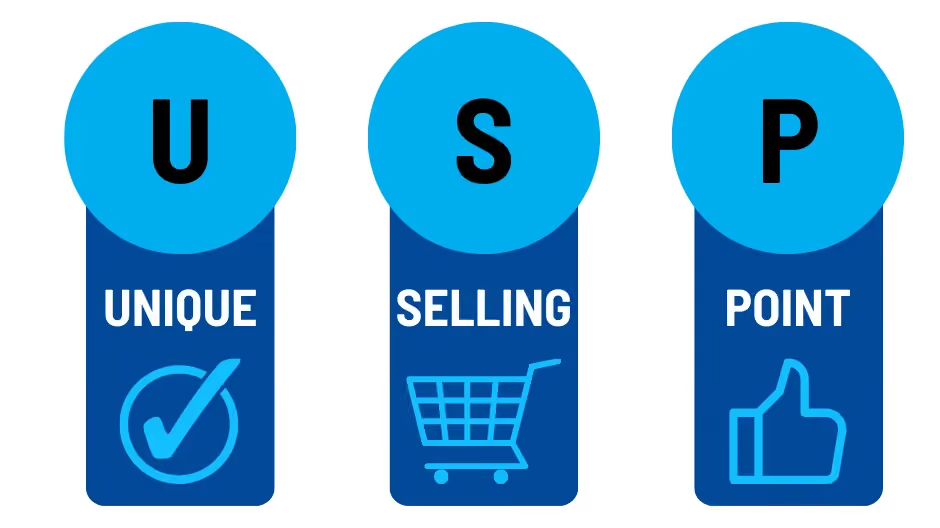
A USP (Unique Selling Proposition) is the unique selling point that makes a business, product, or service stand out from the competition. It is the core factor that creates differentiation, helping customers recognize the value that only your brand can provide.
A USP is more than just a catchy slogan or a unique feature; it must represent the true value of the product and address a specific customer need. When a business has a strong USP, it can easily attract customers, increase loyalty, and strengthen its market position.
What makes a USP stand out?
Many people confuse USP with concepts like UVP (Unique Value Proposition) or competitive advantage. However, a USP emphasizes a single, distinct differentiator that a brand possesses, whereas a UVP can encompass the broader range of values a business provides.
Examples:
- Domino’s Pizza USP: "You get fresh, hot pizza delivered to your door in 30 minutes or less or it's free." → Emphasizes delivery speed.
- FedEx USP: "When it absolutely, positively has to be there overnight." → A commitment to precision and reliability.
- Tesla USP: "High-performance electric vehicles with cutting-edge technology." → Positions itself as technologically superior to other electric vehicles.
A strong USP not only helps a business brand differentiation, but also directly influences customer purchasing decisions. Therefore, identifying and developing a USP is a crucial step in building a sustainable brand in the market.
Why is a USP important for businesses?
In a crowded marketplace, customers are faced with countless choices among similar products and services. A USP (Unique Selling Proposition) is the factor that helps a business stand out, attract customers, and build a sustainable competitive advantage. A strong USP offers several key benefits:
- Helps businesses differentiate from competitors: Without a USP, your brand will just be one of many similar options. A clear USP helps a business create a unique identity, ensuring customers think of you first when they have a need.
- Increases persuasiveness and boosts sales: Customers often make purchasing decisions based on specific benefits. A strong USP helps a business communicate its core value quickly and clearly, thereby driving purchasing decisions.
- Builds customer loyalty: When a brand has a strong USP, customers find it easier to remember and return for future purchases. A USP helps create a connection between the customer and the brand, turning them into loyal patrons.
- Increases marketing strategy effectiveness: A USP provides businesses with a clear, consistent message across all marketing campaigns. This saves on advertising costs and improves communication effectiveness, as customers can easily recognize the brand and the core value it provides.
- Guides sustainable business development: Once a business identifies a clear USP, all decisions regarding products, services, and business strategy will have a consistent direction. A USP is not just a marketing tool; it is a compass that helps a business build long-term value.
A strong USP not only helps a business stand out but also delivers significant value, such as increased sales, customer loyalty, and optimized marketing strategies. Identifying and developing a USP is a vital step toward building a sustainable brand in a fiercely competitive market.
How to identify an effective USP
In a competitive market, customers aren't just looking for products or services; they are looking for a reason to choose you over the competition. A USP (Unique Selling Proposition) is more than just a slogan or a statement; it must clearly reflect what makes you truly different and valuable to your customers. Below are the key steps to help you identify your USP effectively.
1. Understand what your customers need
A strong USP doesn't start with the business; it starts with the customer. You need to clearly understand:
- Who is your ideal customer? (Demographics, interests, purchasing behavior, etc.)
- What problems are they facing, or what are their desires?
- What matters most to them when making a purchase decision?

For example, if you sell cosmetics, customers might care not only about product quality but also about natural ingredients, safety, or whether the brand values sustainability.
2. Analyze the market and your competitors
A USP cannot be defined in a vacuum. You need to examine how your competitors are operating:
- What are they doing well?
- What weaknesses do they have that you can capitalize on?
- What are customers complaining about regarding them?
Suppose you open a coffee shop; if most shops in the area only serve drinks, you could differentiate yourself by offering a quiet workspace experience combined with personalized service.
3. Identify what truly sets you apart
A USP is more than just a competitive advantage. It needs to reflect a core value that only you possess. To find your USP, answer the following questions:
- What is unique about your product or service?
- Do you have proprietary technology, processes, or expertise?
- Can you offer something your competitors cannot?
For instance, if you own a fashion brand, instead of focusing on low prices, you could emphasize minimalist yet premium designs or sustainable materials that help protect the environment.
4. Create a powerful USP statement
Once you have identified what makes you different, turn it into a clear, memorable, and persuasive statement. An effective USP often follows this structure:
- [Your Product/Service] helps [Target Audience] solve [Problem] through [Unique Advantage].
Example:
- Domino’s Pizza: “Delivered in 30 minutes or it’s free.”
- IKEA: “Beautiful, affordable, and easy-to-assemble furniture.”
- Apple: “Premium design, powerful performance, and a seamless experience.”
A USP statement should be concise, easy to understand, and make an immediate impression on customers.
5. Test and optimize your USP
Once you have developed your USP, you need to verify its effectiveness. Try testing it by:
- Checking customer reactions when they hear your USP.
- Evaluating how well the USP aligns with your overall marketing strategy.
- Comparing it against competitors to ensure it is truly distinctive.
If customers still don’t find your USP compelling or memorable, you may need to adjust the wording or better clarify the value it provides.
A USP is more than just a slogan or a marketing message; it is the reason customers choose you over the competition. A strong USP not only helps a business attract customers but also builds long-term brand equity, providing a foundation for marketing strategy and sustainable growth.
Successfully developing and implementing a USP
After identifying a strong USP, a business needs to know how to turn it into a real market advantage. A USP is not just a statement; it must be consistently implemented across all business operations, from products and services to communications and the customer experience.
Below are the key steps to help you develop and implement an effective USP.
1. Integrate your USP into every aspect of your business
A USP shouldn't just appear on your website or in marketing materials. To become a true competitive advantage, it needs to be reflected in:
- Products/Services: If your USP is high quality, your products must truly meet that standard. If your USP is excellent customer service, your business needs to have better support processes than your competitors.
- Customer Experience: A USP is more than just a promise; it must be felt by customers at every touchpoint, from the purchasing process and communication to after-sales service.
- Brand Identity: All elements, such as your logo, color palette, and marketing messaging, must accurately convey the values defined by your USP.
Apple doesn't just claim their products have premium designs; everything from their packaging and product interfaces to their customer service reflects sophistication and class.
2. Clearly communicate your USP in your marketing strategy
A strong USP is meaningless if customers don't recognize it. Ensure your USP is communicated powerfully across the following channels:
- Website and digital content: Your USP should appear prominently on your homepage, product pages, and marketing content so customers can immediately grasp your advantage.
- Advertising campaigns: Whether it's Google Ads, Facebook Ads, or TV commercials, your USP should be highlighted as the primary reason for customers to choose your brand.
- Social media: Every post, video, and customer interaction should naturally reinforce your USP.
The Body Shop doesn't just sell cosmetics; they consistently emphasize their USP of "vegan, cruelty-free beauty products" in every communication campaign.
3. Train your team to communicate your USP consistently
Your employees are the ones who bring your USP to customers every day. If they don't fully understand or accurately convey the value of your USP, your brand could lose its competitive edge. Therefore:
- Train your sales and customer service teams to understand and embody your USP through their consulting and support approach.
- Build a corporate culture centered around your USP so that every decision and action within the company is aimed at upholding that unique value.
At Starbucks, the USP isn't just great coffee; it's the customer experience. Every employee is trained to create a welcoming atmosphere and personalize service by remembering customers' names.
4. Evaluate and optimize your USP over time
The market is constantly changing, competitors may copy or improve upon your services, and customer needs are not static. Therefore, your USP must be periodically adjusted and optimized to maintain your edge.
- Listen to customer feedback to see if they are truly experiencing your USP.
- Monitor competitors to ensure your USP remains unique and maintains a competitive advantage.
- Update your marketing strategy so that your USP remains aligned with market trends and customer needs.
In the past, BlackBerry's USP was its physical QWERTY keyboard for office professionals. But when the touchscreen smartphone trend took over, they failed to adjust their USP in time, leading to the brand's decline.
Conclusion
Developing and implementing a USP is more than just defining a slogan or a statement of difference. A truly successful USP is one that is integrated into every aspect of the business, clearly communicated in marketing, reflected in the customer experience, and continuously optimized over time.
When executed correctly, a USP becomes a valuable asset that helps a brand make its mark, attract loyal customers, and create a sustainable competitive advantage.