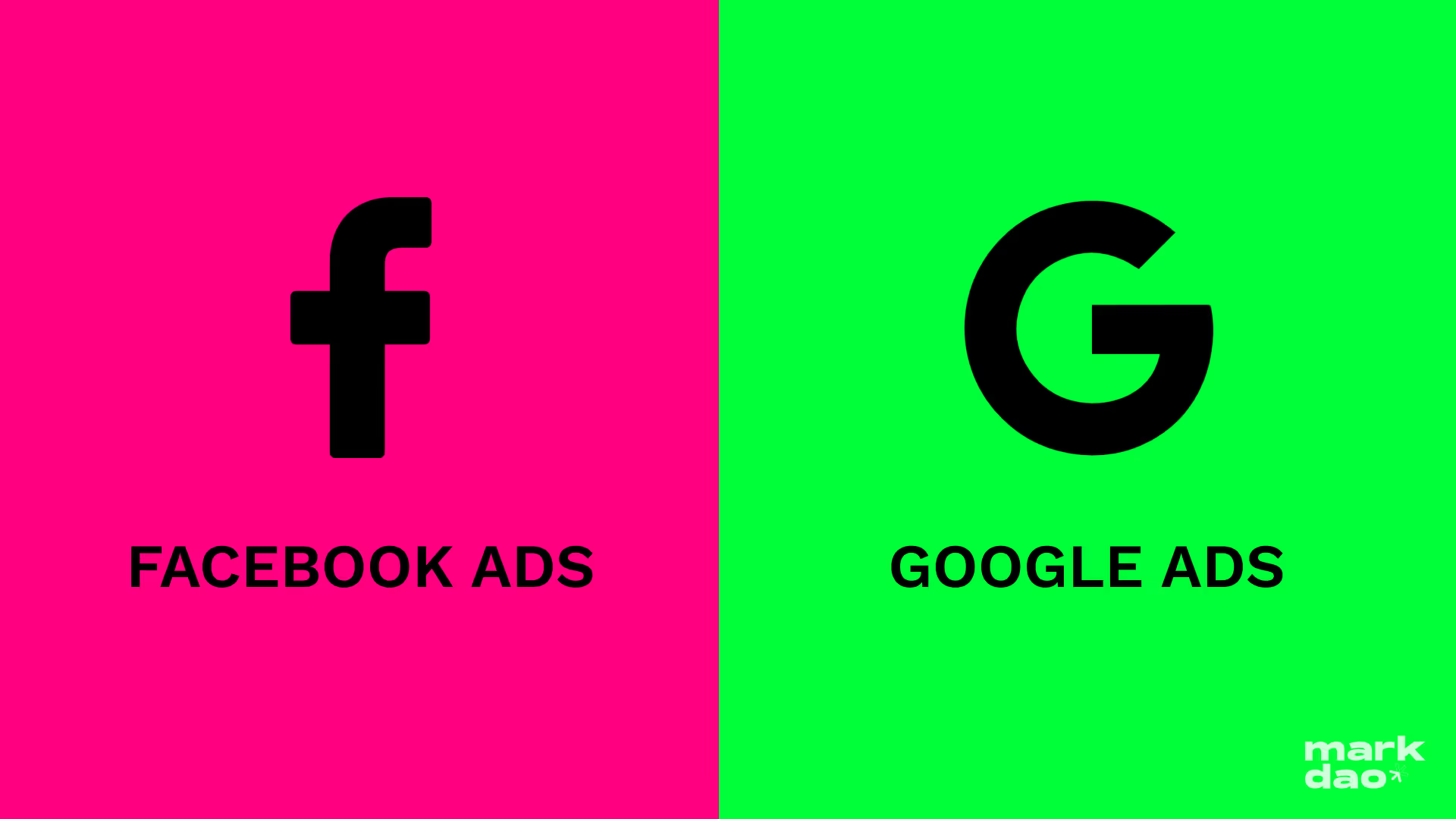

We are often asked by clients: "Which is better for businesses, Facebook Ads or Google Ads?" The answer is almost always that it depends on your specific goals. Both advertising platforms have their own unique pros and cons. So, how do they differ, and how can you choose the optimal one for your business? Let’s find the answer together!
The online marketing rivalry between Facebook and Google
We understand that small and medium-sized businesses often have limited budgets, making the decision of where to place expensive ads a significant challenge. Both Google Ads and Facebook Ads are giants in the PPC (Pay-Per-Click) advertising space, and both can serve as powerful engines to expand a business's reach. Although the media often dramatizes the competition between them, many businesses successfully leverage the strengths of both platforms to maximize visibility, generate leads, acquire new customers, and implement strategies tailored to each platform's unique functions, ultimately achieving a significant return on their advertising spend.
Before we discuss the strengths of each platform, let’s explore their key differences.
Google Ads – The origin of paid online marketing
It is no exaggeration to say that Google Ads remains the largest and most popular PPC platform in the world. It is so widely used that the term is sometimes used interchangeably with "Paid Search," even though paid search is not exclusive to Google and has been implemented by other search engines like Bing. Google Ads focuses on targeting potential customers based on high-volume search keywords, primarily using text-based ads. Advertisers bid on keywords—specific words and phrases derived from search queries made by Google users—in the hope that their ads will appear alongside the search results for those queries. Each time a user clicks on an ad, the business (or the advertiser) is charged a certain amount. This is why it is classified as PPC.
Google advertising targets audiences based on the following factors:
- Demographics (age, gender, language, family status, etc.)
- Localization (targeting customers based on city, country, territory, or geographic radius)
- Device (segmenting customers based on the device they use, such as mobile phones, tablets, desktops, or laptops)
- Keywords (targeting based on relevant keywords used in search engines)
- Retargeting (targeting existing audiences such as frequent website visitors, loyal customers, etc.)
Facebook Ads – Paid online marketing on social media platforms
Facebook advertising is a prime example of "Paid Social"—paid activities directly on social media platforms. With the highest number of monthly active users of any social network in the world, Facebook has become a highly competitive and profitable component of the digital marketing strategies for countless businesses.
Although many people consider Facebook Ads to be similar to Google Ads, in essence, they are different. Unlike Paid Search, which helps businesses find new customers through keywords, Paid Social helps users find businesses based on their interests, behaviors, and online habits. In short, the difference between Google Ads and Facebook Ads is that Google helps you find new customers, while Facebook helps new customers find you.
Facebook advertising targets audiences based on the following factors:
- Localization and demographics (similar to Google Ads)
- Interests (building customer groups with shared
interests, based on the pages they like or follow on social networks)
social) - Custom Audiences (create custom audiences based
on their activity on your own website using the
Facebook pixel) - Behavior (based on behaviors, habits, or
spending patterns, and product or service usage) - Lookalike Audiences (create audience groups with
interests and activities similar to your existing customers)
Should you choose Google AdWords or Facebook Ads for online marketing?
Google AdWords is recommended for businesses looking to increase sales immediately, meaning they want their products and services to be consumed in large quantities over a short period via search engines on the Internet. When considering the maximum potential audience reach, Google significantly outperforms Facebook. With over 3.5 billion searches occurring every day, paid advertising on Google opens up a vast market with more opportunities and a larger customer base compared to Facebook's 1.45 billion daily active users. Furthermore, it is worth noting that 91% of this social media giant's revenue comes from mobile app advertising rather than desktop.
If you are wondering how Google can provide access to such a large customer base, the answer lies in the empire Google has built, spanning across various platforms rather than being limited to its own search bar. When using Google Ads, your ads are automatically displayed on Google Search, YouTube, the Google Display Network, Google Maps, Google Play, and more; therefore, the audience you reach is guaranteed to be highly potential.
Is Facebook Ads inferior to Google in the online marketing battle?
However, precisely because of the potential of such a lucrative market, Google AdWords is significantly more expensive to run than Facebook ads. The average Cost Per Action (CPA) on Facebook is around $18.68, while this figure for Google reaches $48.96, nearly three times higher. Even when calculating the average CPC across various industries such as real estate, education, and healthcare, the costs for Google ads remain higher than Facebook in every category. Nevertheless, using Facebook Ads does not mean your marketing activities are confined solely to the Facebook newsfeed. You still have the opportunity to appear on platforms owned by or affiliated with Facebook, such as Instagram, the Audience Network, or Facebook Messenger. Therefore, in complete contrast to Google AdWords, Facebook Ads are considered the ideal tool for businesses looking to increase brand awareness, build a dedicated audience, and introduce new, creative products, rather than focusing primarily on sales like Google Ads.
Markdao has just presented the strengths of both Facebook and Google Ads, and we hope this information helps you better understand these two methods to make the right choice for your online marketing strategy.