Today, every business wants their website to appear on the first page of Google without spending too much on advertising. This is the power of Organic Search – a source of natural traffic that brings in sustainable potential customers. But what is Organic Search? How can you get your website to rank higher without relying on paid ads? Let Markdao help you explore effective optimization strategies to increase Organic Search and take your website to the next level!
What is Organic Search?
Organic Search refers to the natural search volume and traffic of a website; these are search results that appear on Google and other search engines without the use of paid advertising. When a user enters a query into the search bar, the search engine displays a list of the most relevant websites based on its ranking algorithm.
These results earn their positions through content quality, relevance, and SEO optimization, rather than being boosted by ads.
Suppose you search on Google for the keyword “how to increase Organic Search for a website”, you will see a list of articles from various websites. The results that appear in the main section of the page (without an “Ad” or “Sponsored” label) are Organic Search results.
How do Organic Search and Paid Search differ?
Many businesses use both Organic Search (organic optimization) and Paid Search (paid advertising) to attract customers. Below is a comparison table of these two methods:

Why is Organic Search important for SEO and websites?
Organic Search is not just a traffic source; it is a core factor that determines the success of an SEO strategy and the sustainable growth of a website. Here are the main reasons why Organic Search plays such a vital role:

- Organic Search provides a sustainable and free source of traffic: Unlike Paid Search, where you have to pay for every click, organic search brings in traffic completely free of charge. When a website is well-optimized and contains valuable content, it maintains high rankings on search engines without the need for continuous, heavy investment in advertising.
- Users trust Organic Search more than ads: Studies show that users tend to trust organic search results more than paid advertisements. This is because results are ranked by Google based on relevance and quality, not because someone paid to appear there.
- Organic Search helps increase conversion rates: Users coming from Organic Search often have a genuine need for the products or services they are searching for. Therefore, the conversion rate from organic search is typically higher than from other traffic sources like social media or advertising.
- Organic Search helps your website compete more effectively: If your website ranks highly in Organic Search, you can compete with major brands without needing a massive advertising budget. A strong SEO strategy can help small businesses or startups attract as many customers as—or even outperform—large industry competitors.
- Organic Search influences your entire Digital Marketing strategy: A website well-optimized for Organic Search not only increases traffic but also supports other Digital Marketing efforts.
- Organic Search helps maintain marketing effectiveness: Unlike paid advertising, where traffic stops the moment you stop spending, Organic Search is sustainable. High-quality, well-optimized content can maintain high rankings for months or even years, continuing to drive consistent traffic.
Organic Search not only helps your website gain free traffic but also builds credibility, increases conversion rates, and provides a long-term competitive advantage. Investing in an SEO strategy to optimize Organic Search is not just an option; it is a necessity for businesses to grow sustainably in the digital landscape.
8 factors that influence Organic Search
To achieve high rankings on Google and other search engines, you need to optimize various factors. Below are the key elements that directly impact Organic Search you need to pay attention to:
1. Content Quality
Content is the most important factor affecting Organic Search. Google prioritizes displaying websites with useful, unique content that provides real value to users.

- Content must accurately address the searcher's needs: Clearly answer the questions users are interested in.
- Depth and appropriate length: Longer articles containing in-depth information often have a better chance of ranking higher.
- Regular updates: New and consistently refreshed content has an advantage over outdated content that is no longer relevant.
2. Keywords and On-Page SEO optimization
Keywords (keywords) play a crucial role in helping Google understand website content and improving Organic Search.
- Thorough keyword research: Select keywords that align with user search intent.
- Optimize titles, meta descriptions, and headings (H1, H2, H3) to include important keywords.
- Reasonable keyword density: Avoid keyword stuffing; instead, use keywords naturally.
- URL optimization: URLs should be concise, contain the main keyword, and be easy to read.
Example: Good URL: www.example.com/what-is-organic-search
Bad URL: www.example.com/p=12345
3. User Experience (UX)
Google prioritizes websites that provide a great user experience. Key UX factors include:
- Fast page load times: Your website should load within under 3 seconds to avoid losing visitors.
- Mobile-friendly design: Google prioritizes websites that perform well on both mobile devices and desktops.
- Easy navigation: A clear website structure and intuitive menus help users find information quickly.
- Low bounce rate: If users leave your site immediately after arriving, Google may interpret this as a sign that your content is not useful and lower your ranking.

4. Backlinks and website authority
Backlinks (links from other websites pointing to your page) are one of the most important factors affecting organic searchrankings.
- Quality backlinks from reputable websites help Google perceive your website as more trustworthy.
- Natural backlinks: Placed within relevant articles, not spam links.
- Internal linking: Linking between articles on your website helps users easily find related content and helps Google understand your site's structure.
5. User engagement signals
Google uses user engagement metrics to evaluate website quality and improve Organic Search. Some key metrics include:
- CTR (Click-Through Rate): If your title and description are compelling and attract clicks, Google will consider your website valuable.
- Time on Page: The longer users stay on a page, the more it proves your content is useful.
- Bounce Rate: If this rate is too high, Google may interpret it as your content not meeting user needs.
6. Technical SEO
Technical SEO makes it easier for search engines to crawl and index your website. Some key factors include:
- Creating an XML sitemap to help Google easily find and index pages on your website.
- Optimizing robots.txt to guide Googlebot to crawl your data correctly.
- Improving page load speed by optimizing images, using caching, and minifying source code.
- SSL/HTTPS: Google prioritizes websites secured with the HTTPS protocol.

7. Social Signals
Although Google has not confirmed that social signals directly impact rankings, content that is widely shared on Facebook, LinkedIn, Twitter, etc., can help increase traffic and natural backlinks.
- Sharing content on social media helps more people discover your website.
- Increasing engagement and clicks can indirectly improve Organic Search.
8. Search Intent Relevance
Google doesn't just focus on keywords; it also evaluates search intent . Your website content must align with the type of search the user is performing:
- Informational search: Users looking to gain knowledge, for example: "What is Organic Search?".
- Navigational search: Users looking to visit a specific website, for example: Markdao Homepage.
- Transactional search: Users who intend to make a purchase, for example: "How much does Markdao SEO service cost?".
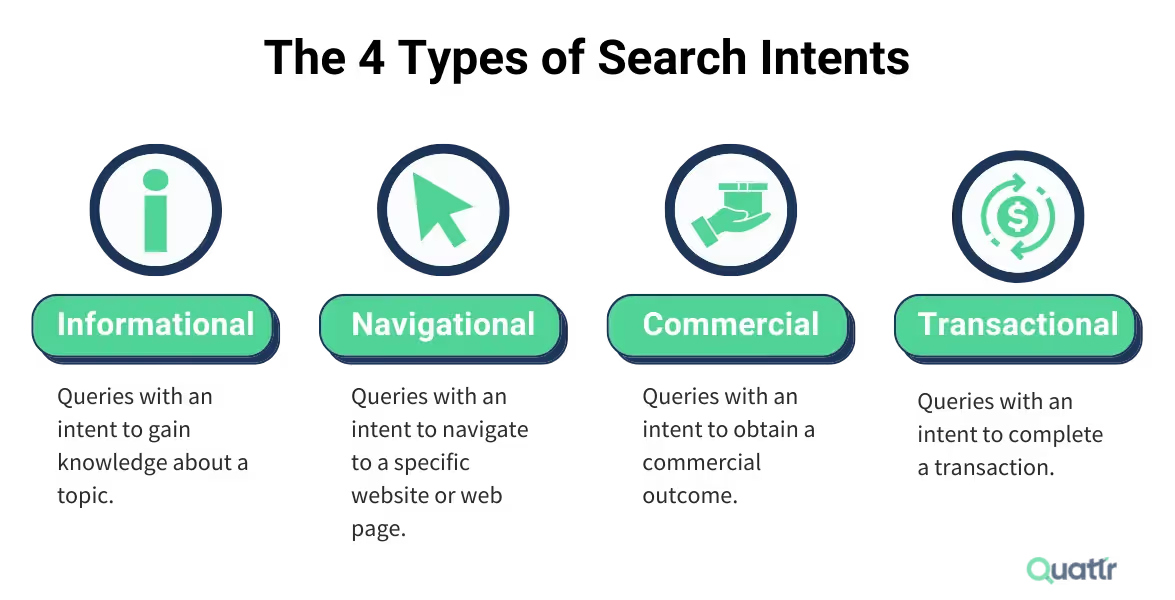
If your content does not align with the search intent, it is highly unlikely to rank well on Google.
Organic Search is influenced by many factors, ranging from content quality, on-page SEO optimization, user experience, backlinks, user signals, and technical SEO to search intent. To achieve high rankings on Google and maintain stable traffic, you need to integrate all these elements into your SEO strategy.
In the next section, we will explore how to effectively increase Organic Search to help your website achieve the best possible rankings on search engines!
4 Effective ways to increase Organic Search for your website
To increase organic traffic from Organic Search, you need to implement a comprehensive SEO strategy. Below are the key methods to help your website achieve high rankings on Google.
1. Optimize content and keywords
Quality content is the core factor in increasing Organic Search. To achieve high effectiveness, you need to:
- Create useful, in-depth content: Articles should address user search intent, have an appropriate length (at least 1,500 words), and be updated regularly.
- Optimize for natural keywords: Include primary and related keywords in titles, meta descriptions, headings, content, and URLs. Avoid keyword stuffing.
- Leverage long-tail keywords: Specific keywords like “how to effectively increase Organic Search” often have lower competition but higher conversion rates.
- Optimize the reading experience: Content should be broken into short paragraphs, using bullet points, illustrative images, and statistical data to add value.

2. Improve On-Page and Technical SEO
On-Page SEO helps Google better understand your website content, while technical SEO ensures your site is search-engine friendly. Key elements to optimize include:
- Title and Meta Description: Engaging, containing primary keywords and a call to action to increase click-through rates (CTR).
- Optimize URLs and headings (H1, H2, H3): Keep URLs concise and intuitive, and use a logical heading structure to make content easy to read.
- Improve page load speed: Use a CDN, compress images (WebP format), and minify unnecessary JavaScript/CSS code.
- Optimize images: Use descriptive filenames and include relevant keywords in ALT tags.
- Logical internal linking structure: Effectively guide users and help Google understand the relationships between pages on your website.
- Create and update XML Sitemap: Help Google index your website faster.
3. Build backlinks and optimize user experience
Quality backlinks help increase website authority and boost Organic Searchrates, while a good user experience helps reduce bounce rates and keeps customers engaged longer.
- Effective backlink building strategy:
- Write guest posts on reputable websites.
- Create high-quality content to attract natural backlinks.
- Post on forums and blogs relevant to your industry.
- Improve user experience (UX):
- The website must fast loading (under 3 seconds).
- Interface mobile-friendly.
- Content is easy to read, with clear CTAs to retain users.

4. Monitor SEO performance and integrate with Social Media
SEO is an ongoing process, so you need to regularly track performance to adjust your strategy in a timely manner.
- Use SEO tracking tools:
- Google Search Console to check keyword rankings and indexing errors.
- Google Analytics to track traffic and user behavior.
- Update content regularly:
- Add new information and re-optimize keywords to maintain Google rankings.
- Remove outdated content and improve the quality of older posts.
- Combine SEO with Social Media:
- Share the article on Facebook, LinkedIn, and Twitter to increase reach.
- Create engaging, viral content to attract natural backlinks.
Increase Organic Search is a long-term strategy that requires a combination of content optimization, On-Page SEO, quality backlinks, user experience, and SEO performance tracking. If implemented correctly, your website will rank highly on Google, attracting sustainable organic traffic without the need for advertising costs.
Conclusion
Organic Search plays a crucial role in your SEO strategy, helping your website attract sustainable traffic without advertising costs. By optimizing content, improving technical SEO, building quality backlinks, and tracking performance, you can improve your search rankings and increase conversion rates. Start applying these strategies now to help your website grow!