

There is a familiar paradox for writers: you spend all afternoon on the body of your piece, refining every argument and hunting for compelling data. Then, when you reach the introduction—exhausted and ready to finish—you dash off a few generic sentences. Ironically, that is the very paragraph that decides whether anyone will actually read the work you labored over.
This article explores that short paragraph: the lead. We’ll cover what it is, why it carries more weight than its word count suggests, and most importantly, how to write a lead that makes readers want to keep going.
Seven criteria for a high-quality lead
These seven criteria serve as a quick filter. If a lead fails two or more, it is better to rewrite it than to edit it. The rest of this article explains each criterion, provides 10 writing techniques with examples, shows three examples of how to fix a poor lead, and offers templates for five different industries.
What is a lead?
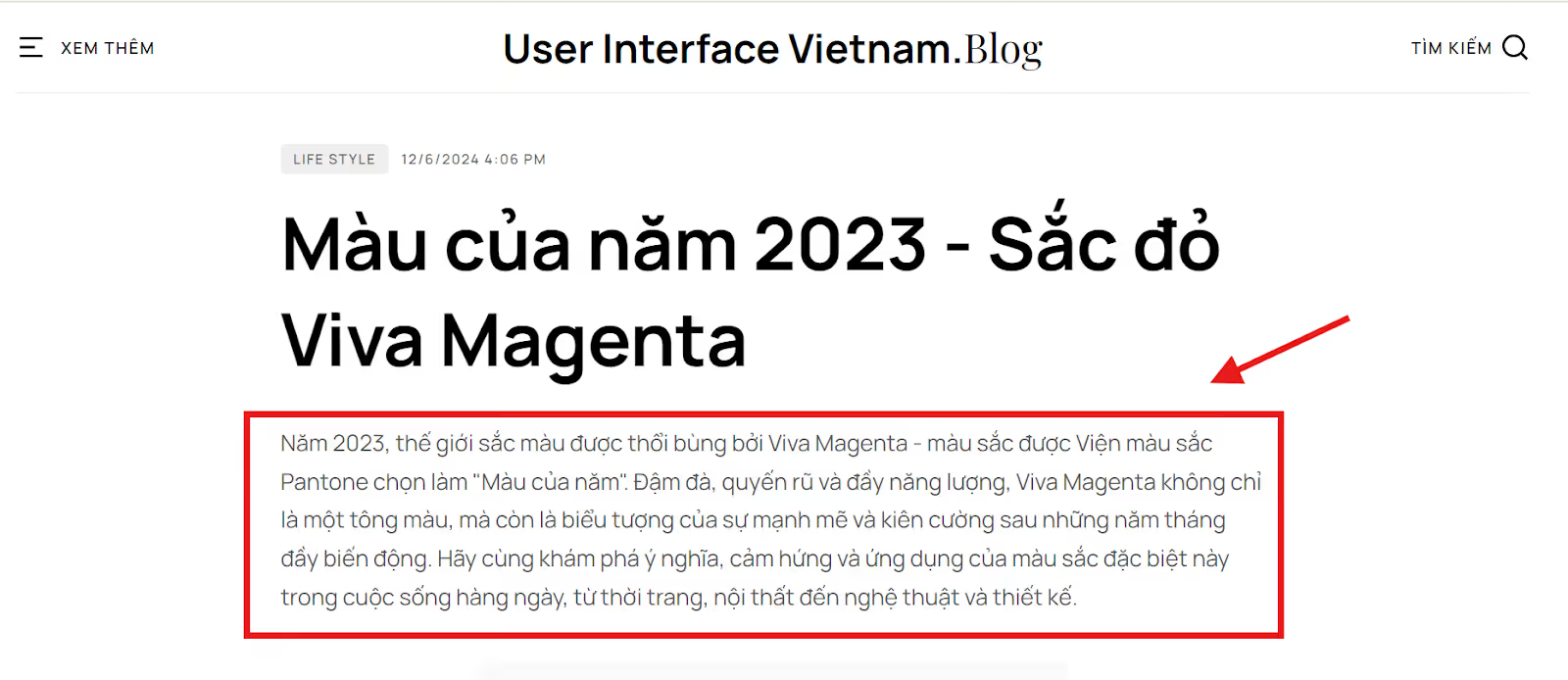
The term "sapo" comes from the French word "chapeau," meaning hat. True to its name, it sits atop the article between the headline and the body, often distinguished by a larger font size or a lighter color.
Functionally, a lead does two things at once: it summarizes the content so readers know what the article is about, and it persuades them to keep reading. These two goals sometimes pull in opposite directions, and the difficulty in writing a great lead lies in balancing them.
Are the lead, the hook, and the introduction the same thing?
These three terms are closely related but not identical; distinguishing between them will help you write more effectively.
Lead is a journalistic term for the summary paragraph placed under the headline, visually separated from the body of the text.
Lead (English-American) is an Anglo-American journalistic term for the first sentence or paragraph containing the core information, typically answering who, what, when, and where.
Introduction is the broadest concept, referring to the entire opening section before the main content, which can span several paragraphs.
In a web environment, these three often merge into one. The goal isn't just to use the right terminology, but to understand that the first paragraph must both summarize and persuade within a very limited space.
How does a lead differ from a meta description?
These two are frequently confused, and that confusion makes both of them less effective.
They can share the same meaning but should not share the same wording. Meta descriptions sell the click. The lead keeps the reader who clicked.
Why is the lead important in an SEO-optimized article?
This isn't just a matter of opinion. There is measurable data on how people read on screens.
Research by Nielsen Norman Group analyzed 45,237 page views and reached a rather harsh conclusion for writers: during an average visit, users only have time to read at most 28% of the words on a page, and the actual figure is more likely just 20%.
Three other facts from that same study speak directly to the work of a lead writer:
- Every 100 words you add to a page only keeps the reader there for about 4.4 seconds
- On a page with fewer than 111 words , readers can absorb about half of the content.
- The average page in the study was 593 words long, and the reading rate dropped to around 20%.
Putting these numbers together reveals the most thought-provoking aspect of the lead. If readers only consume about one-fifth of the text, and they read from top to bottom, then the opening 50 words account for a disproportionately large share of everything they actually take in. For a 2,000-word article, the average reader only absorbs about 400 words, and the lead is entirely contained within that portion.
In other words, the lead accounts for only 2.5% of the article's length but makes up more than 12% of the actual text read. That is why investing time in this section offers a higher return on investment than any other part.
The two hardest criteria to meet
Of the seven criteria at the beginning of this article, five can be checked by eye in a few seconds. The remaining two require thought, and they are also the two where most people fail.
Independence. Hide the headline, and the lead paragraph should still be fully understandable. It sounds simple, but many writers fail to realize they are violating this because they always see the headline right above while writing. Phrases like "Below are 5 ways to help you do that" are completely meaningless if separated from the headline.
This criterion is more important than before, as AI tools often extract paragraphs out of their original context. A paragraph that cannot stand on its own is unlikely to be selected for citation.
Tone of voice. This is the only criterion without an absolute right or wrong answer, which is why it is often overlooked. A lead paragraph that is technically correct, informative, and of the right length, but out of sync with the topic, will still leave readers feeling that something is off without them being able to pinpoint what.
A lead paragraph about life insurance and one about a vacation in Da Nang cannot have the same sentence rhythm. The next section discusses this in detail.
How long should a lead paragraph be?
About 40 to 80 words, equivalent to two to four sentences. This is not a hard rule but a range that works well on both computers and mobile phones.
Anything under 30 words usually doesn't say anything significant yet. Anything over 90 words takes up almost the entire first view on a mobile screen, and readers see a dense block of text before they can see any headings.
Long-form analysis or in-depth articles can be extended to 80 to 100 words if a broad scope needs to be summarized. For short news pieces, 30 to 50 words is sufficient.
Lead paragraphs in the age of AI Overview
Previously, the lead paragraph served only one audience: the reader. Now, it serves two.

Google AI Overview and AI-powered search tools synthesize answers from multiple sources and display them at the top of the results page. When selecting snippets to cite, they prioritize paragraphs that provide direct, concise answers and are placed in easily identifiable positions. The first paragraph of an article is the top candidate.
The general landscape is also shifting. According to StatCounter, Google's global search market share is around 89% to 90% in 2026, down from about 91% in 2023, with the decline flowing toward AI-powered answer engines.
This impacts how lead paragraphs are written in a very specific way: information-heavy content should appear early. You can still provide a lead-in and set the tone, but don't make the reader or the machine wait until the fourth sentence to know what the article is about.
If you want to learn more about optimizing content for AI tools, the article What is GEO and the roadmap for setting up a website for ChatGPT and AI Search covers this topic in detail.
Lead writing: there is no one-size-fits-all approach
This is the part most guides skip, and where many writers get stuck. They read advice like "keep it short and direct," then apply it to every piece, even when that tone is completely out of place.
The truth is that leads come in many different tones, and if you choose the wrong one, no amount of concise phrasing will convince anyone.
Let's look at the same content—a piece on skincare routines after 30—written in three different tones.
Direct, fact-first tone. Suitable for readers looking for specific solutions who are accustomed to technical content.
After age 30, the rate of skin cell regeneration slows significantly, and collagen levels decline annually. The three active ingredient groups with the strongest scientific backing for this stage are retinoids, vitamin C, and broad-spectrum sunscreen. This article analyzes how to combine them without causing irritation.
Conversational, rhythmic tone. Suitable for lifestyle blogs and brands that want to create a conversational feel.
Have you ever looked in the mirror one morning and realized your skin isn't responding the way it used to? Same cream, same routine, but different results. You aren't imagining it; it's something almost everyone experiences after 30. This article covers what is changing beneath the surface and what you can do about it.
Professional, composed tone. Suitable for medical content and material requiring high credibility.
Skin aging begins much earlier than many realize, with structural changes in collagen detectable from the early 30s. The following article presents the mechanisms of this process and the active ingredient groups clinically proven to be effective, along with recommendations on the order of application.
All three are correct. All three cover the same content. They only differ in the audience they are targeting.
Choosing a tone based on three factors
A simple tone-check tip: read the lead aloud. If you wouldn't say that sentence to your client in a real meeting, it isn't the right tone.
10 ways to write a compelling lead, with examples
Each method below includes a complete sample paragraph. The examples are written in various tones, as discussed above, so you can see how each method can be adapted to be softer or firmer depending on your needs.
1. Answer the question directly
Use this when the article addresses a clear question. This style is the most compatible with how AI tools extract content.
What is the ideal age to buy life insurance? The short answer is between 25 and 35, because premiums are calculated based on your age at the time of signing and remain fixed thereafter. This article explains how premiums are calculated and three scenarios where buying later can actually be advantageous.
2. State the reader's problem
Use this when the reader has a specific concern and is already aware of it.
Your website gets thousands of visits every month, but the number of people actually picking up the phone to call you can be counted on one hand. The problem usually isn't the traffic; it's the landing page. Here are 14 factors that determine whether a page converts or not.
3. Present surprising data
Use this when you have a real, attention-grabbing statistic. The data must be sourced; otherwise, do not choose this approach.
Out of 9.1 million app submissions to the App Store in 2025, over 2 million were rejected. Apps that are simply wrapped websites are among the most frequently rejected. This article analyzes why Apple issues rejections and how to pass the review process.
4. Highlight the gap between perception and reality
Use this when there is a common misconception in your field. This approach creates curiosity without being sensationalist.
Many people still believe that maintaining rankings means maintaining traffic. This year, that is no longer true. Many websites have stayed in the top 3 with no drop in impressions, yet their traffic is steadily declining. The reason is that Google is now answering for you.
5. Tell a short story
Use this when the topic is dry and needs a more approachable entry point. It works well with a softer tone and should be kept to two or three sentences.
Lan has been running her bakery for four years with plenty of regulars, but she has never known for sure how much profit she makes each month. All the numbers are scattered across notebooks, chat messages, and her own memory. This story is familiar to most small business owners, and this article discusses how to solve it without expensive software.
6. Ask a question the reader is already asking themselves
Use this when the question is specific enough. Avoid empty rhetorical questions like "Do you want to be successful?"
Does Google penalize AI-generated content? Every content creator has wondered about this, and it turns out the answer isn't about which tool you use. This article presents Google's official stance and identifies where the real line is drawn.
7. Summarize the conclusion first
Use this for analytical or long-form articles when the reader needs to know upfront where you are leading them.
After reviewing 40 completed projects, we found that three causes account for 77% of underperforming content, and all three occur before a single word is written: choosing the wrong keywords, misaligned search intent, and vague briefs. This article analyzes each cause and how to prevent them from the start.
8. Compare two options
Use this for articles that help readers choose between two options. State the comparison criteria upfront instead of making them read the whole piece to find out.
Whether to hire an in-house team or outsource depends not on the price, but on how often you need to update your content. If you publish fewer than two articles per week, outsourcing is cheaper. Beyond that, an in-house team becomes more cost-effective. This article analyzes how to determine the break-even point for your specific situation.
9. State the conditions for application right from the start
Use this when the content only applies to a specific group. Filtering readers early helps retain the right audience and reduces bounce rates.
This guide is for websites that already have at least 20 articles and have accumulated data in Google Search Console. If you have just built your site, the steps below are not yet applicable, and a more suitable starting point for you is keyword research.
10. Debunk a common piece of advice
Use this when you have a stance that goes against the grain and have the evidence to back it up. This style creates strong curiosity but requires the body of the article to prove your point.
The advice to write over 2,000 words to rank on top has long been outdated. Length has never been a ranking factor, and reading behavior studies show that users only consume about one-fifth of the text on a page. This article reveals what truly determines rankings.
Don't try to memorize all ten. Choose two that fit what you write most often and master them.
10 common types of content for intro paragraphs
The writing style is the form. The content type is the material you put into that form. Below are the most commonly used materials, along with notes on how to use them.
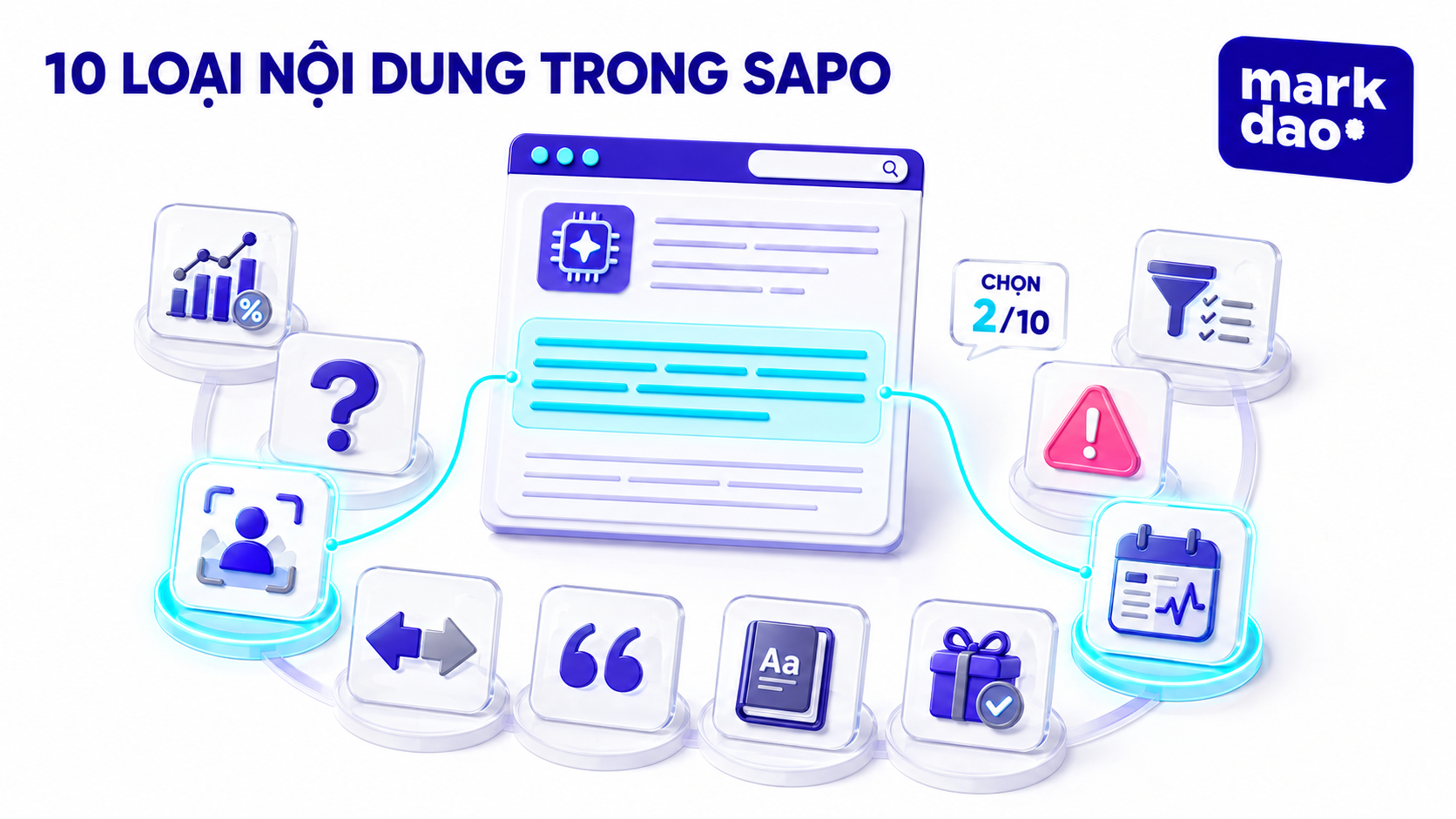
A good intro paragraph usually combines two types, no more. For example, a statistic paired with a benefit, or a scenario paired with a question. Cramming four types into 60 words will make the paragraph cluttered and unfocused.
Three examples of turning a bad intro into a good one
Theory is easy to agree with, but putting it into practice is where it gets difficult. Here are three complete cases.
Example 1: Cliché opening
Original version, 71 words:
In today's rapidly evolving digital age, building a brand online has become an incredibly important factor for every business. Let's explore this interesting topic in the article below.
Four problems: It starts with a cliché that everyone uses. It doesn't specify what the article is about. It contains no actual information. And the final sentence is an invitation to read, not a reason to read.
Rewritten version, 52 words:
It typically takes 6 to 12 months for a new website to gain stable search traffic. Most of that time is wasted fixing poor initial decisions. This article outlines 5 key decisions to finalize before you write your first post.
Example 2: repeating the title
Title: How to choose hosting for a business website
Original, 44 words:
Choosing hosting for a business website is an important task. The article below will guide you on how to choose the most suitable hosting for your business website in detail.
This paragraph repeats the title almost verbatim and adds no new information. Readers are left exactly where they started.
Rewritten, 51 words:
Most businesses pay for hosting packages three times more powerful than they actually need, yet still face slow load times due to poor server location choices. The three parameters that actually determine speed are often missing from price lists. This article identifies them and shows you how to check them before signing a contract.
Example 3: excessive preamble
Original, 83 words:
We have all felt tired of work at some point. Pressure from deadlines, bosses, and colleagues leads many into a state of burnout. So, how can you balance work and life? Let's find out in the following article.
The first three sentences set a mood but provide no information. The question in the fourth sentence is too generic. Readers have likely left by the second sentence.
Note that the problem here is not the soft tone. A soft tone is perfectly appropriate for this topic. The problem is that the first three sentences say nothing the reader doesn't already know.
Rewritten, 62 words, maintaining a soft tone:
Work burnout rarely stems from the sheer volume of tasks. It usually comes from the feeling of losing control over your own priorities. This article presents three early warning signs and a way to reorganize your work week that you can try as early as next Monday.
Common thread among all three: try deleting each sentence one by one. If a sentence can be removed without the paragraph losing anything, it shouldn't exist. Intros are usually shortened by about a third after this process, and they are always better for it.
Sample intros by industry
The principles are the same, but the content and tone differ. Here are examples for five popular fields.
Real Estate
Two apartments in the same project with the same floor area can differ in price by 400 million VND. The difference lies in the balcony orientation and floor level—two factors rarely specified in sales listings. This article lists 6 price-influencing factors that brokers often fail to mention upfront.
Health and Wellness
Stomach pain lasting more than two weeks rarely resolves on its own with over-the-counter medication. This is one of four warning signs that you should see a doctor instead of continuing self-treatment. The following content has been medically reviewed by a gastroenterologist.
Education and Training
Students drop out of courses most frequently in the third week, not the first. This is when initial excitement has faded, but a habit has not yet been formed. This article presents how to design a learning path that helps students overcome that milestone.
E-commerce
Cart abandonment rates are significantly higher at the address entry step than at the payment step. The cause often lies in forms with too many mandatory fields. This article analyzes 5 common drop-off points in the ordering process and how to fix each one.
B2B and Business Services
The B2B sales cycle in Vietnam typically lasts from 3 to 9 months, yet most marketing content only caters to the first month. This article identifies three types of content needed for the middle stage, where most deals are lost.
The common thread among all five: the first sentence is always a specific fact, not a greeting.
Mistakes to avoid when writing a lead paragraph
Starting with clichés. "In the 4.0 era," "Nowadays," "It cannot be denied that." These phrases carry no information and readers have seen them thousands of times.
Repeating the title verbatim. If your title says "5 ways to write a lead," don't start the lead with "There are 5 ways to write a lead." You've just wasted the most important paragraph of the article.
Keyword stuffing. The main keyword should appear once and naturally. Stuffing it three times into 50 words makes the writing awkward and does nothing for your rankings.
Promising more than the article delivers. If your lead promises "never-before-revealed secrets" while the body only contains basic knowledge, readers will bounce immediately and lose trust in your entire website.
Leading in for too long. Spending three sentences setting the mood before getting to the point. Readers have already left by the second sentence.
Using unsourced data. "According to research, 85% of users prefer visual content" without specifying which research. This is the fastest way to lose credibility, and it's the first thing an editor will flag.
Using a single tone for every post. This mistake is rarely mentioned but causes long-term damage. Writing in a blunt style for a travel piece, or using flowery language for a data security article, makes readers feel like something is off, even if they can't quite put their finger on it.
Introductions for different types of pages
Not every page should have the same type of introduction.
For landing pages, the shorter the introduction, the better, because the reader already has a need and is looking for a reason to trust you. The article SEO-friendly landing page design has a dedicated section discussing the structure of the top of the page.
Web introductions are different from social media hooks
These two environments are opposites in one crucial way.
On a website, the reader has actively clicked through, so the introduction can summarize and provide direction. On social media, the user is scrolling without a specific intent, so the first sentence must stop their thumb in its tracks.
A common mistake is copying a blog post's introduction directly into a caption. It summarizes things too well; the scroller reads it, feels satisfied, and doesn't bother clicking through.
12-point introduction checklist
Run through this list before publishing. It takes about two minutes.
□ Between 40 and 80 words long
□ Does not start with a cliché
□ Do not repeat the title verbatim
□ The first sentence contains a specific fact, not a greeting
□ The reader knows what the article is about within the first two sentences
□ The tone is appropriate for the topic and the target audience
□ The main keyword appears exactly once, naturally
□ All data in the lead paragraph has verifiable sources
□ Everything promised in the lead paragraph is covered in the body
□ It remains fully understandable when separated from the title
□ It sounds natural and effortless when read aloud
□ Try deleting each sentence; none can be removed without compromising the paragraph
To know which lead paragraph truly keeps readers engaged instead of guessing, run a controlled experiment following the guide in this article A/B Testing, while tracking click-through rate and time on page.
Conclusion
The lead paragraph is the shortest section of an article, yet it largely determines how many people will read to the second paragraph. With data showing that users only consume about one-fifth of the text on a page, the opening paragraph accounts for a disproportionately large share of everything they actually read.
In 2026, it takes on an additional task: it is the section most frequently cited by AI tools.
Three things to do right now. Review the lead paragraphs of your top-ranking articles and remove all cliché introductory phrases. Ensure every lead paragraph tells the reader what the article is about within the first two sentences. And check the tone, because a technically correct lead paragraph that is out of sync with the topic will still drive readers away.
The lead paragraph is only one part of a good article. If you want a more complete picture of how to write content this year, continue reading the article What is content and how to write content that engages readers.
If you need a team to work with, Markdao's website SEO services include content production with a step-by-step approval process, or contact us to have us review the existing content on your website.
FAQ

A lead is a short paragraph of about 40 to 80 words located right below the article title, tasked with summarizing the main content and persuading the reader to continue to the body of the article.
Almost every blog post and news article should have one. Exceptions include pages with specific structures like contact pages, list pages, or pages where the main content begins immediately with a tool or form.
It should, appearing once and naturally. It helps both readers and search engines quickly confirm they are on the right page. But don't force it if it makes the sentence sound awkward.
They should not. The meta description's job is to persuade people to click from the search results page. The lead's job is to retain those who have already clicked. Since the goals are different, the wording should be different too.
Not directly. There is no ranking factor called a "sapo." However, it has an indirect impact in two ways: by keeping readers engaged longer and by providing a concise, quotable paragraph for AI aggregation tools.