


The content writing profession has just undergone its biggest shift in a decade. This isn't because writing tools have changed, but because where readers encounter content has evolved. Google now answers questions directly on the results page instead of just providing links, and ChatGPT has become the starting point for countless search journeys.
The consequences for writers are clear. Generic "What is X" articles rewritten from five other sources are effectively dead. This is the type of content AI can summarize in three sentences, leaving users with no reason to click.
This article answers two questions: What is content and what are its forms? More importantly, how do you write content that people will still be reading in 2026?
The quick answer: Content is any material created to convey a message to a specific audience, including text, images, video, and audio. Engaging content requires three things: a headline that makes people click, an introduction that makes them keep reading, and a body that provides information they can't find anywhere else. The third element is the hardest, yet it is the most decisive.
What is content?
Content is material created with intent to convey a message to a defined audience. This definition is short, but two words are crucial: "intent" and "defined." Content that doesn't target anyone isn't content; it's just words.
Content exists in many forms: articles, videos, images, infographics, podcasts, emails, and livestream scripts. They all share a common goal, usually one of three: making people aware of you, making them trust you, or making them buy from you.
Distinguishing three often-confused roles
These three job titles are often used interchangeably, but the actual work differs significantly.
Newcomers to the field should know which skill they are honing. A great copywriter isn't necessarily able to write a 3,000-word SEO article, and vice versa.
What is the difference between Content Marketing, SEO Content, and Social Media Content?
Content Marketing is a strategy that uses content to attract and retain customers rather than selling directly. It is the big picture that encompasses the three types below.
SEO Content is content written to appear in search results. Its hallmark is following a specific query that users type into Google and adhering to a structure that search engines can understand.
Social Media Content is content that lives on social media, where users don't actively search but rather scroll past. This flips all priorities: the first three seconds decide everything, and length is the enemy.

A common mistake is applying the mindset of one format to another. An SEO article written like a Facebook caption will be too thin to rank. A Facebook caption written like an SEO article won't get read past the second line.
What changed in 2026: Google provides answers instead of links
This is the part that most content writing guides leave out, and it is the most important change.
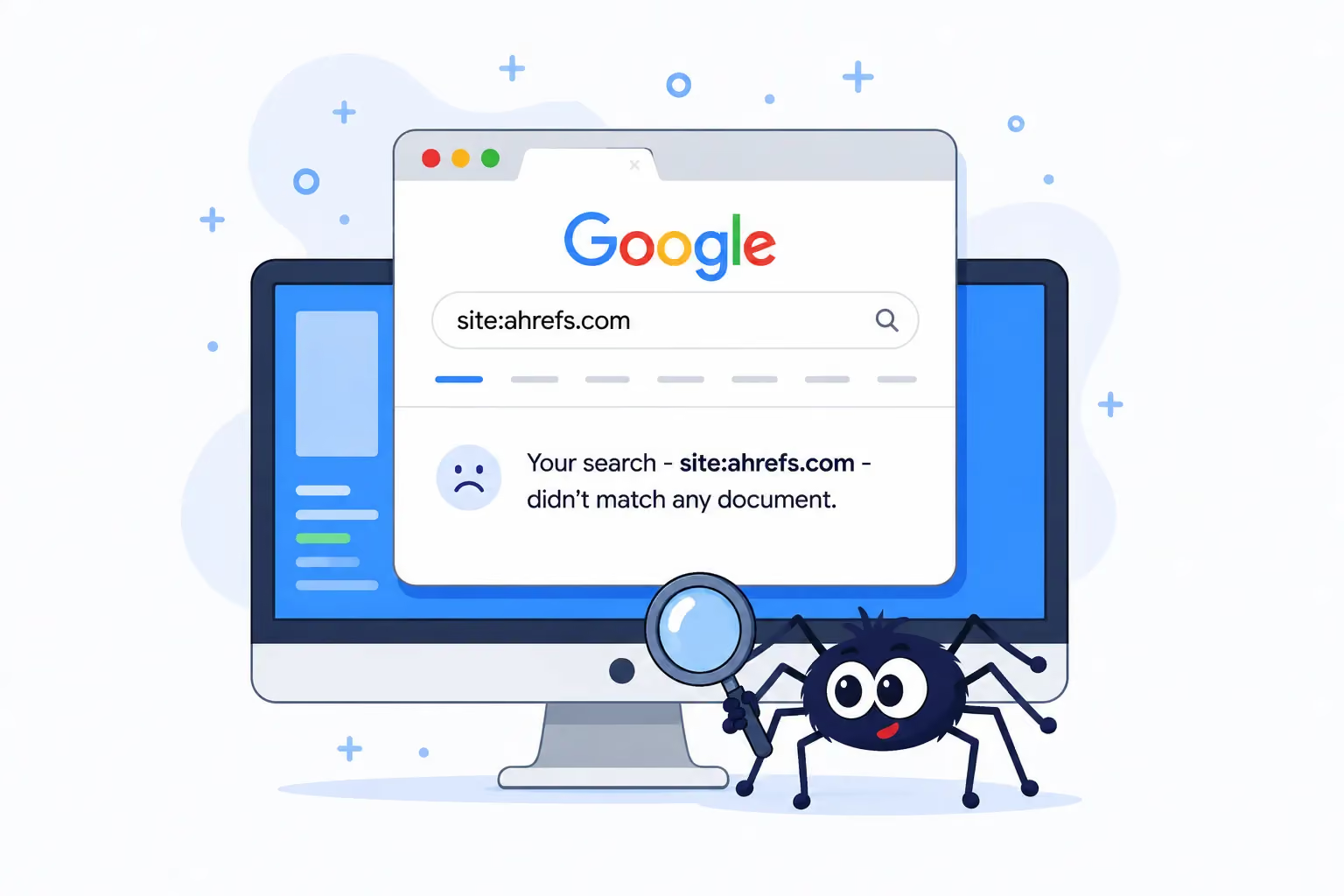
Google AI Overview displays a summarized answer right at the top of the search results. Users read that snippet, find it sufficient, and don't click on any links. This phenomenon is widely recognized in the industry: many websites maintain their rankings and impressions, but their traffic and lead generation drop significantly.
This means that ranking is no longer a sufficient metric. You can be in the top three and still get no visitors.
The type of content most heavily affected
The easier content is to summarize, the easier it is to lose traffic. Ranked by risk level from high to low:
High risk. Pure definition articles, like "What is X" with nothing else. Generic tip lists. Basic knowledge summaries that every source writes the same way. This is exactly the type of content AI summarizes best.
Medium risk. Step-by-step guides. Comparison articles. These still get summarized, but people who need to follow instructions usually still click through for the details.
Low risk. Content featuring real-world experience, proprietary data, interactive tools, strong opinions, or information only you possess. AI cannot summarize what it cannot find elsewhere.
The conclusion is straightforward: what helps you survive isn't writing better, but writing what others don't have.
How to get cited by AI
When AI synthesizes an answer, it still cites sources. Being among those sources is the new goal, and there is a specific way to do it:
- Answer the question directly in 40 to 60 words at the beginning of each section, before providing a detailed explanation.
- Use headings that are actual questions users type, rather than catchy but empty headings.
- Include data with clear sources, as content with evidence is more likely to be selected for citation.
- Structure information into tables and lists when content is comparable
- Clearly state who the author is and what their experience is based on
This is a distinct discipline that is rapidly evolving. We have written about it in detail in our article What is GEO and the roadmap for setting up a website for ChatGPT and AI Search.
Common types of content and when to use each one
Choosing the wrong format is a costly mistake, as it happens before a single word is written.
A quick rule of thumb: if the reader is actively searching, write for search engines. If they are browsing, create visual content. If they are about to make a decision, provide evidence.
Structuring engaging content
The headline, which determines whether anyone reads your content
A headline does three things at once: clearly states what the article is about, promises a specific benefit, and includes keywords if it is an SEO article.
Four types of headlines that work well in Vietnamese:
- Specific numbers. "7 content writing formulas with real-world examples" is better than "Content writing formulas"
- Questions the reader actually has. "Does AI-generated content get penalized by Google"
- The gap between expectations and reality. "Why traffic drops even when the article stays in the top 3"
- Benefits combined with limitations. "Writing SEO-friendly content in 90 minutes, for beginners"
Avoid clickbait headlines that don't deliver on their promise. If readers click through only to find the content irrelevant, they’ll bounce within ten seconds, and that signal will hurt your rankings.
If you want to know which headlines actually work instead of just guessing, run a controlled experiment. This A/B Testing guide shows you how.
The introduction: three sentences to hook your reader
An introduction has only one job: to get people to read the next sentence.
The most effective approach is to dive straight into the problem the reader is facing or lead with a surprising fact. The least effective way is to start with generic context like "In today's digital age." That sentence provides no value and readers have seen it a thousand times before.
A quick tip: delete your introduction and read the rest of the piece. If nothing is lost, that section was just fluff.
The body: where you win or lose
The body is where you determine whether your content stands out from the rest. Follow these three principles:
One idea per paragraph. Keep paragraphs to 2–4 sentences. Long blocks of text look like a wall of words on mobile screens, and readers will skip them.
Specifics beat generalities. "Significant increase" is a meaningless phrase. "Increased from 1,200 to 3,400 visits in 90 days" is a valuable one.
Take a stand. An article that says "it depends" on every point doesn't help anyone make a decision. State your recommendation and explain why.
The conclusion and call to action
The conclusion is not the place to summarize what you just wrote. The reader just finished the piece; they don't need to hear it all again.
A good conclusion does one of two things: provides a concrete next step or leaves the reader with a memorable takeaway. Your call to action must match the reader's current stage. Someone who just read "what is content marketing" isn't ready to buy services, so inviting them to read a more in-depth article is more effective than asking them for a quote.
7 content writing formulas, with Vietnamese examples
There are dozens of formulas listed online, most of which are variations of one another. The seven formulas below are sufficient for almost any situation, and each includes a real-world example to show you how it works.
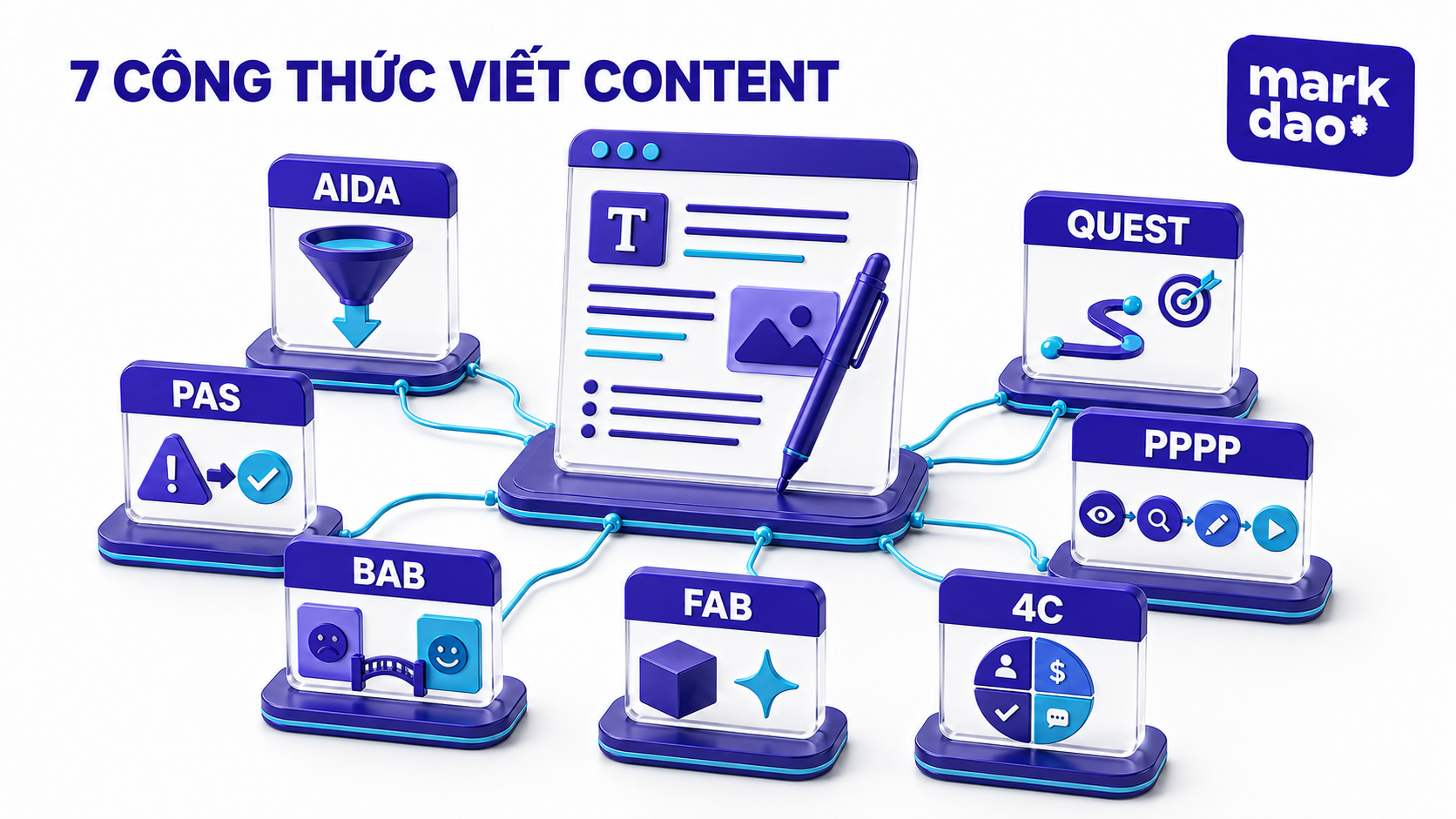
AIDA. Attention, Interest, Desire, Action. The oldest formula, and still effective for advertising.
Example: "Your website gets 5,000 visits per month but only 3 inquiries. The problem usually isn't the traffic, but the landing page. A properly designed landing page can double your conversion rate with the same amount of traffic. See the 14 essential elements."
PAS. Problem, Agitation, Solution. Powerful when the reader is truly experiencing a pain point.
Example: "Your article is in the top 3, but traffic is still dropping. You write new posts, rankings remain good, yet traffic continues to fall. The cause isn't SEO; it's that Google is answering for you."
BAB. Before, After, Bridge. Suitable for services with visible results.
Example: "Before: each post took three days and no one read it. After: each post takes one day and reaches the first page. The bridge is a process that checks search intent before writing."
FAB. Features, Advantages, Benefits. Use this when selling products with technical specifications.
Example: "Hosting located in Singapore. The server is closer to Vietnamese users. Pages load about a second faster, and that is the deciding factor in whether people stay or leave."
4C. Clear, Concise, Compelling, Credible. Not a writing framework, but a filter to review your drafts.
PPPP. Picture, Promise, Prove, Push. Suitable for sales emails and long-form sales pages.
QUEST. Qualify, Understand, Educate, Stimulate, Transition. Suitable for consultative content, where you need to demonstrate that you understand the problem before making a proposal.
Don't memorize all seven. Choose the two that best fit what you write most often and master them.
Content writing tips: which ones are still relevant in 2026
Many content writing tips are repeated over and over even though they are no longer accurate. Here is a comparison table.
Regarding images, heavy files slow down your site, and slow sites cause readers to leave before seeing your content. The article standard image sizes for websites provides specific specifications for each placement.
Before you write, make sure you are targeting the right keywords. Choosing the wrong target is the leading cause of why a good article fails to get results, and the article 5 steps to check Google keywords provides a guide on how to check beforehand.
Four mistakes that make your content go unread
According to Markdao's internal statistics from implemented projects, the three main reasons for underperforming articles are choosing the wrong keyword target (35%), misalignment with search intent (28%), and vague briefs that force writers to guess (14%). The common thread among all three is that they occur before writing, not during the writing process.
Mistake one: writing first, thinking later. Sitting down at the keyboard without knowing who the article is for or what question it answers. No amount of editing can save an article that is flawed at its core.
Mistake two: targeting a query with an unsuitable content format. If the top 10 results for a keyword are all product category pages, writing a blog post for it won't rank, no matter how good it is. Look at the actual search results before choosing your content format.
Mistake three: rewriting what the top ten pages have already covered. If your post is just a condensed summary of what already exists, there is no reason for it to exist, and by 2026, AI will be doing that summarizing faster than you.
Mistake four: no one is responsible after publication. Posts are published and abandoned—no tracking, no updates. The content grows stale and drops in rankings, while competitors update theirs constantly.
Measurement: how to know if your content is effective
This is a part almost no guide mentions, but without it, you are writing in the dark.
Four metrics you should track, in order of importance:
Impressions and average position. These indicate whether Google understands what your post is about. Check these in Google Search Console, and this post What is Google Search Console and its 8 key features provides a guide on how to read these figures.
Click-through rate. High impressions with low clicks mean your title or description isn't compelling enough, or that AI Overviews are stealing your clicks. This post What is CTR explains what thresholds are acceptable.
On-page behavior. How long readers stay, whether they scroll to the end, and if they click through to other pages.
Conversion. Ultimately, it comes down to how many people contact you, sign up, or make a purchase. If a post brings in traffic but no one takes action, the problem lies in your call to action or in attracting the wrong audience. This post CRO and 7 key principles handle this part.
Reasonable timeframes for evaluation are 30, 60, and 90 days after publication. Evaluating sooner won't provide enough data to draw conclusions.
AI-generated content: Does Google penalize it?
Everyone is asking this now, so let's get straight to the point.
Google does not penalize content simply because it is AI-generated. Google's public guidelines clearly state that they evaluate the quality and usefulness of content, not how it was produced. The target of their anti-spam policy is the mass production of content intended to manipulate rankings, regardless of whether it was written by a human or a machine.
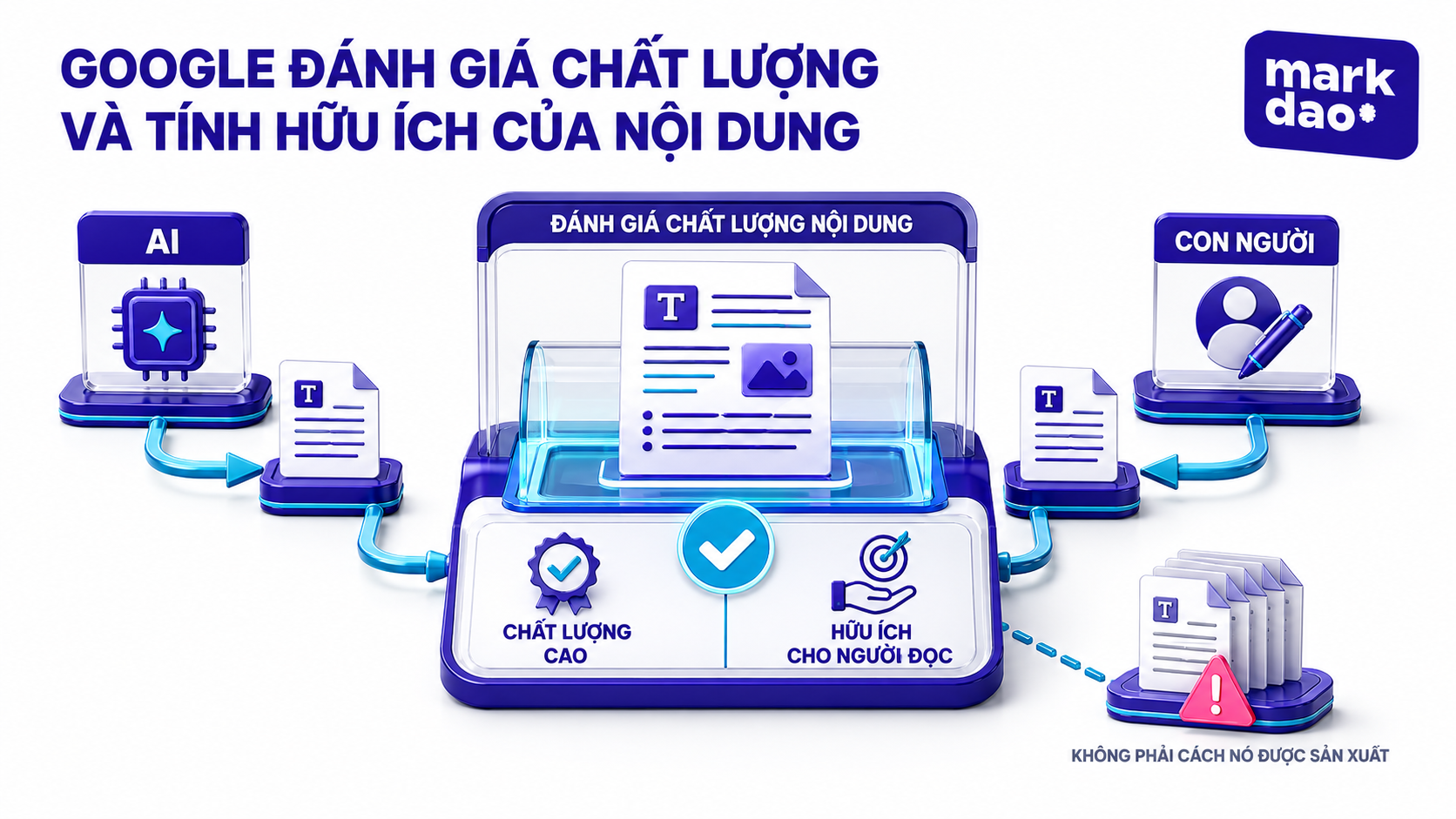
In other words, the line is drawn not by the tool, but by intent and quality.
How to use AI properly in the writing process:
- Good for: research, outlining, drafting, brainstorming headlines, and proofreading
- Requires human input: fact-checking, adding real-world experience, establishing a unique perspective, and final editing
- Avoid: publishing raw AI output without human review
The biggest risk of unedited AI content isn't a penalty; it's that it's bland. It’s accurate and fluent, but it offers nothing that ten other articles don't already have. In an era where AI Overviews are siphoning clicks from exactly that type of content, publishing generic material is the surest way to ensure no one reads it.
Conclusion
Content writing in 2026 isn't harder, but it is more demanding in one respect: every piece must have a reason to exist. If your content only repeats what the first ten search results already say, there is now something that does that faster and for free.
Three things to do right now. Audit your existing articles that have rankings but declining traffic; that is where AI Overviews are stealing clicks and where updates will yield the fastest results. Add at least one unique element to every post, whether it's internal data, a real-world project example, or a clear, distinct opinion. And schedule a follow-up review for 30 days later instead of just hitting publish and forgetting about it.
If you would like someone to help you with this, Markdao's SEO services including content production with a step-by-step approval process, or contact us to discuss the current state of your website's content.
FAQ

Content is intentionally created material designed to convey a message to a specific audience, including text, images, video, and audio. If content isn't aimed at anyone, it isn't really content.
Start by carefully reading the search results for your intended topic to see what the top ten pages are answering and what they are missing. This observation skill is more important than writing style in the early stages. Then, choose a framework like PAS or AIDA and practice until you master it.
There is no fixed number. A reasonable length is one that fully answers the reader's question. A practical reference is to look at the median length of the top three pages for that keyword, then decide based on what you can add to the conversation.
No, but it will significantly shrink the market for generic content. The demand for content featuring real-world experience, unique data, and clear perspectives is actually increasing, as these are things AI cannot generate on its own and must cite from others.
Content involving statistics or tools should be reviewed every 6 months. Content based on principles that rarely change can be left for 12 months. If an article is currently ranking well but traffic is gradually declining, that is a sign it needs an immediate update, regardless of the schedule.