In the world of SEO in 2025, a search-optimized article requires more than just great content; it needs a tight, logical structure that is optimized from the very first step—creating an Outline Content. A clear outline not only makes an article easy to read and understand but also increases its chances of ranking on Google by strategically distributing keywords and meeting user search intent.
So, how do you build an SEO-friendly outline that makes your content both engaging for readers and highly valued by Google? Join Markdao as we explore a 6-step process for creating a detailed, 2026-ready Outline Content in the article below!
What is an Outline Content? Why is it necessary to create an outline before writing?
Outline Content is a detailed blueprint of an article's content before you begin the actual writing process. This is a crucial step that helps define the structure, layout, and clear direction for the piece. A search-optimized outline includes main headings (H1, H2, H3, etc.), a list of points to cover in each section, key keywords, and a logical arrangement of content that is easy to read and understand.
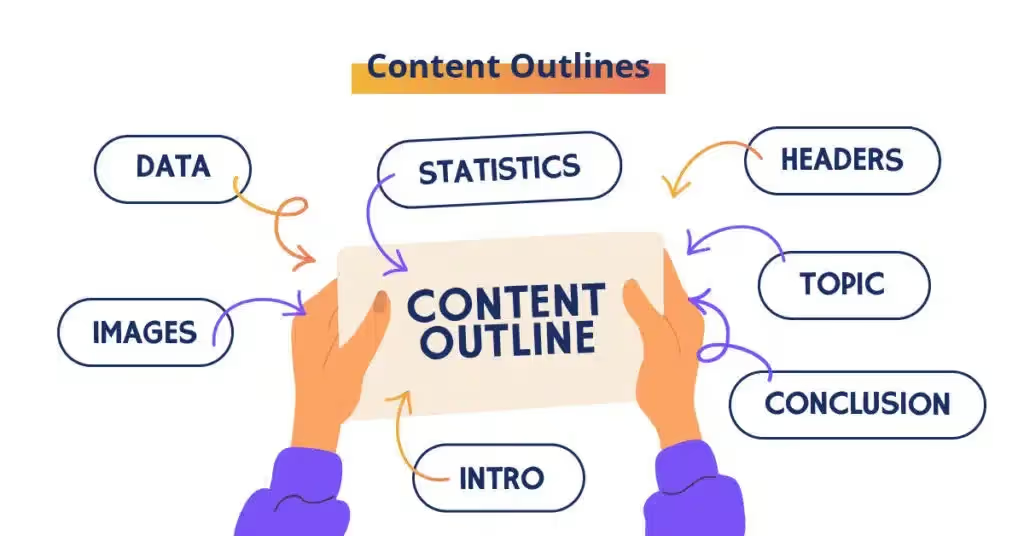
If you think of an article as a building, then the outline content is the detailed architectural plan that ensures the project is completed according to the design, preventing errors, omissions, or aimless rambling.
4 Benefits of creating an Outline Content before writing
1. Ensures a clear, easy-to-understand structure
An article without an outline is prone to being disjointed, lacking cohesion between sections. Creating an outline beforehand helps the author guide the content along a logical flow, ensuring that every part of the article is tightly connected.
This not only helps readers follow along easily but also helps Google better understand the content, thereby improving your search engine rankings.
2. Optimize for SEO from the start
Building an outline content helps pre-determine primary and secondary keywords and how to distribute them logically throughout the article. This prevents keyword stuffing or missing out on important terms, while optimizing titles, headings, and key content sections from the very beginning.
Additionally, outline content helps ensure the article meets the search intent of the user. Without a clear outline, the article can easily lose focus or fail to provide the information readers expect.

3. Save time on writing and editing
Having a detailed outline content before writing ensures a smooth process, minimizing the need for multiple revisions due to lack of logic or insufficient information. Instead of constant writing and editing, a good outline allows the author to focus on content development, avoiding wasted time on unnecessary changes later.
4. Improve content quality and increase reader retention
An article with a clear, coherent structure helps readers grasp information easily, thereby increasing time on page and reducing bounce rate. When readers find content well-organized and accessible, they are more likely to read the entire piece and even explore related content on your website.
Creating an outline content not only makes your article more SEO-friendly but is also key to optimizing the content creation process, improving quality, and ensuring alignment with your overall SEO strategy. A good outline is the essential foundation for content that not only engages readers but also performs well on search engines.
What does an Outline Content include?
A content outline SEO-friendly content outlines are more than just a list of headings; they must incorporate essential elements to optimize both structure and SEO. Below are the fundamental components required for a content outline that is high-quality.
1. Article Title (H1)
- The main title must include the primary keyword and clearly reflect the content covered in the article.
- It should be engaging, easy to understand, and curiosity-inducing to attract readers.
- Ideal length: approximately 55-60 characters for optimal display on Google.
2. Meta Title and Meta Description
- Meta Title: A concise, SEO-optimized title that helps increase click-through rates (CTR).
- Meta Description: A short summary (approximately 150-160 characters) that helps users quickly understand the article's content and improves visibility on Google.
3. Heading system and content structure (H2, H3, H4…)
- Content outlines need to be clear, using a hierarchical heading structure H1 → H2 → H3 → H4 to organize content logically.
- Each main content section should have H2, with H3 and H4 used to branch out into smaller sub-points.

4. Primary keywords, secondary keywords, and distribution
- Primary keywords: Appear in the title, introduction, headings, and are scattered naturally throughout the article.
- Secondary keywords: Related terms that help expand the topic and increase visibility in related searches.
- Long-tail keywords: Help reach the right audience with more specific needs.
5. Main content and highlights for each section
- Each main content section in the outline content needs a specific concept to help develop the article coherently without rambling.
- Key points can be presented as bullet points, tables, or lists to improve readability.
6. Internal Links and External Links
- Internal Links: Link to related articles on the same website to increase time on site and improve user navigation.
- External Link: Link to reputable sources (Google, Wikipedia, research reports, etc.) to increase credibility.
7. Images, videos, and visual elements to support content
- Insert illustrative images, infographics, or videos into your content outline to make the article more vivid and visual.
- Add Alt Text to images to optimize for image SEO.
- Use lightweight image file formats to ensure fast loading speeds and avoid impacting website performance.
8. Conclusion and CTA (Call to Action)
- Summarize the main points and emphasize the benefits of creating a content outline.
- Ask a question or encourage readers to apply the guide to their own work immediately.
A content outline optimized for SEO must include all essential elements, from titles, keywords, and heading structures to links, images, and calls to action. Having a detailed outline from the start makes writing easier, improves SEO effectiveness, and enhances overall content quality.
6-step process for creating a detailed SEO-standard content outline for 2026
To create a high-quality article capable of ranking well on Google, developing a Outline Content SEO-standard outline is an essential step. A scientifically structured outline ensures content is coherent, easy to develop, and fully optimized for search engines. Below is a detailed 6-step process to create an Outline Content effective outline in 2026:
Step 1: Research primary and related keywords
Keywords are the core element that helps your article reach the right target audience. Therefore, before writing an outline, you need to:
- Identify the primary keyword based on the article topic.
- Search for related keywords (LSI Keywords) that users frequently use.
- Analyze search trends using tools like Google Keywords Planner, Ahrefs, or SEMrush to see if the topic is currently trending.
- Check keyword difficulty to assess competition and the article's ranking potential.
Once you have a complete list of keywords, the next step is to research how to develop content to optimize outline content effectively.
Step 2: Analyze competitor content and identify unique selling points
Beyond writing based on personal ideas, analyzing competitor content is a crucial step to determine what is already on the market and how to improve upon it.
- Search for top-ranking articles on Google for the same topic.
- Note the main content of competitors and identify which aspects they focus on.
- Find untapped areas, missing information, or topics that haven't been covered in depth.
- Provide unique value, such as a new presentation style, a more in-depth perspective, or the addition of reliable data.

The goal of this step is to ensure your content is unique and more competitive on search engines.
Step 3: Create a content brief and outline
Once you have gathered all the necessary information from keyword research and competitor analysis, the next step in outline content is to build a Brief Heading, which serves as the preliminary outline for your article:
- Write the main headline (H1): Keep it concise, engaging, and include the primary keyword.
- Define the main headings (H2, H3, H4) in a logical sequence, ensuring the content flows from general to specific.
- Break down each section to avoid wordiness and make the content more accessible to readers.
- Create engaging questions or topics to keep readers interested.
This step helps create a solid framework, allowing the writer to develop the content more coherently.
Step 4: Optimize Meta Title and Meta Description
Meta Title and Meta Description are two critical elements in outline content that determine your ability to attract readers directly from search results.
- Meta Title:
- Maximum 60 characters, including the primary keyword.
- Engaging, clear, and provides real value.
- Meta Description:
- Maximum 160 characters.
- Briefly describe the article content and include keywords naturally.
- Spark curiosity to encourage users to click on the article.
An SEO-optimized meta tag not only helps increase CTR (click-through rate) but also improves search engine rankings.
Step 5: Identify LSI keywords and insert them strategically
In addition to your primary keyword, you should use Latent Semantic Indexing (LSI) keywords to help Google better understand your content.

- List relevant secondary keywords.
- Insert keywords naturally and avoid keyword stuffing.
- Ensure keywords appear in the title, introduction, headings, and main body.
Optimizing keywords effectively helps your content rank higher while maintaining a great user experience.
Step 6: Finalize the content outline and optimize the URL
The final step in outline content is to consolidate all prepared sections and optimize the article URL.
- Review the outline structureto ensure the article is logical and the content is engaging.
- Add credible references to increase authenticity.
- Optimize the URL:
- Keep it short, easy to understand, and free of special characters.
- Include the primary keyword, for example: /seo-content-outline-process-2026.
- Review the content, and check for any missing information that needs to be added before you start writing.
The process of creating an outline content SEO-friendly outline not only ensures a well-structured article but also optimizes search performance. Following these 6 steps will help your content rank higher, attract the right audience, and provide genuine value.
4. Notes and tips for checking SEO-friendly articles after creating a content outline
Creating an outline content SEO-friendly outline is just the beginning. To ensure your article is truly optimized, you need to verify several factors before publishing. Below are important notes and methods to check your article, ensuring the content is SEO-friendly, search engine optimized, and provides the best possible user experience.
1. Check if the article structure is SEO-compliant
After developing the content based on your outline content, you need to review the entire article to ensure the structure is logical and adheres to SEO principles:
- There is only one main title (H1) and it contains the primary keyword.
- Subheadings (H2, H3, H4) are organized in a logical order, not scattered.
- Paragraphs are concise and easy to read, avoiding wordiness.
- Each section of the content is tightly connected and flows logically.
A well-structured article helps Google easily understand your content and improves the reader's experience.
2. Check the optimization level of primary and secondary keywords
Keywords play a crucial role in SEO, but overusing them can be counterproductive. Check the following factors:
- The primary keyword appears naturally in the title, introduction, headings, and body content.
- Secondary keywords (LSI keywords) are distributed reasonably to add variety to the article.
- Avoid keyword stuffing; use them in appropriate contexts instead.
- Maintain a reasonable keyword density (typically 1-2% of the total word count).
If keywords appear too densely or unnaturally within outline content or the article, they should be adjusted to ensure the content flows more smoothly.
3. Check Meta Title and Meta Description tags
Meta tags help Google and users quickly understand the content of your article. Ensure that:
- The Meta Title is concise (under 60 characters), includes the main keyword, and is engaging for readers.
- The Meta Description accurately describes the article content, includes secondary keywords, and is no longer than 155 characters.
- The Meta Title and Meta Description are not duplicated across other pages on the website.
If the Meta tags are not engaging enough or are truncated in search results, optimize them.
4. Check if the article URL is SEO-friendly
URLs play an important role in SEO, so ensure that:
- The URL is short, memorable, and contains the main keyword.
- There are no special characters or unnecessary ID numbers.
- Use hyphens (-) to separate words instead of underscores (_).
If the URL is too long or does not contain the keyword, edit it outline content and the article before publishing.
5. Check Internal Links and External Links
Internal and external links help increase website connectivity and improve SEO.
- Internal Links:
- Insert links to related articles on the website.
- Ensure links appear naturally and are not forced.
- Use anchor text appropriately and avoid keyword stuffing.
- External Links:
- Cite reliable sources when necessary.
- Check that links are still active to avoid broken links.
If the article lacks links or has irrelevant ones, add or adjust them for better optimization.
After creating an outline content and writing the article, reviewing it before publication is crucial. A well-optimized SEO article not only has a solid structure but also features optimized keywords, meta tags, URLs, links, and fast loading speeds. Take the time to review it thoroughly to ensure the highest quality, which will help improve your Google rankings and attract more readers.
Conclusion
Creating a outline content that is detailed and SEO-friendly not only ensures a logical, readable structure but also improves search engine optimization. A well-organized outline saves you time, helps you create quality content, and enhances your competitiveness against rivals.
In the era of SEO 2026, writing is no longer just about keywords; it must focus on user experience, content utility, and visibility across all platforms. Always invest in the outline contentphase, review thoroughly, and optimize continuously to ensure every article achieves maximum effectiveness.
Start today by applying these 6 steps based on Markdao's experience, and you will see a significant difference in both content quality and search rankings!