

In an era where search users want more than just answers—they expect high-quality content— Semantic SEO has become the secret weapon to help your website outperform the competition. Going beyond simple keywords, Semantic SEO focuses on understanding context, user intent, and providing more comprehensive information. So, what is Semantic SEO and how can you implement this strategy effectively? The answers await you in this article from Markdao!
What is Semantic SEO?
Defining Semantic SEO
Semantic SEO is a search engine optimization method that focuses on understanding the meaning and context of content rather than relying solely on specific keywords. Instead of just providing a direct answer, Semantic SEO helps search engines like Google understand the true intent behind user queries and deliver more comprehensive, relevant results.

This is achieved by building content around a central topic, using related keywords, addressing frequently asked questions (FAQs), and implementing structured data like Schema Markup. As a result, Semantic SEO not only helps your website rank higher but also enhances the user experience when searching for information.
For example: When you search for “how to make pizza,” Google doesn’t just show a recipe; it also suggests ingredients, video tutorials, and nearby pizza shops—all thanks to Semantic SEO.
The importance of Semantic SEO
Semantic SEO plays a crucial role in modern SEO strategies for the following 4 reasons:
- Adapting to Google's evolution: Search engines today have evolved far beyond reading simple keywords. With algorithms like Google Hummingbird and BERT, Google is capable of analyzing the context and meaning behind words. Semantic SEO helps make your website more "readable" to these algorithms.
- Improving user experience (UX): When you provide content with clear semantics, users find more useful and comprehensive information. This not only increases the time they spend on the page but also increases the likelihood of them returning to your website in the future.
- Increasing ranking potential for various queries: By optimizing for semantics, your content not only ranks for primary keywords but can also appear for related keywords, helping to increase traffic naturally.
- Creating a competitive advantage: Not all websites apply Semantic SEO correctly. If you implement it well, it will be a major advantage that helps you outperform competitors in the same field.

Comparing traditional SEO and Semantic SEO
1. Content approach
- Traditional SEO: Focuses on the repetitive use of primary keywords to optimize content.
- Semantic SEO: Focuses on the meaning and context surrounding primary keywords. This provides real value to readers and helps search engines better understand the content.
2. Ability to meet user needs
- Traditional SEO: Focuses solely on ranking for specific keywords, often failing to fully address the user's actual questions or intent.
- Semantic SEO: Understands the user's search intent. For example, if a user searches for "how to make pizza," they don't just want a recipe; they may also want to know baking tips, common mistakes to avoid, or necessary tools. Semantic SEO will meet those needs.
3. The role of keywords and semantics
- Traditional SEO: Relies on keyword density and placement within the article. Search engines only understand the content based on the primary keywords.
- Semantic SEO: Goes beyond primary keywords to explore related keywords, entities, and context to convey the full meaning.
4. Use of supporting tools
- Traditional SEO: Rarely uses structured data or advanced supporting tools like Schema Markup.
- Semantic SEO: Leverage Schema Markup and tools like the Google Knowledge Graph to help search engines understand content at a deeper level.
5. Long-term effectiveness
- Traditional SEO: Short-term results; rankings are easily lost if Google's algorithms change.
- Semantic SEO: More sustainable results because content focuses on providing real value to users, thereby building trust with both users and search engines.
Comparison table
Key takeaway
Traditional SEO can be compared to getting straight to the point, while Semantic SEO is like telling a comprehensive story around a topic. This approach not only helps search engines better understand your content but also satisfies users through deeply structured and systematic information.
8 key elements of Semantic SEO
To implement Semantic SEO effectively, you need to focus on key elements that make your content not only search-engine friendly but also aligned with user search intent. Here are the main factors:
1. Understand search intent
Semantic SEO requires you to clearly understand what users are searching for and why. Search intent is typically categorized into four main types:
- Informational: Users want to learn more about a topic.
- Navigational: Users want to access a specific page, for example: "Google Search Console."
- Transactional: Users want to make a purchase or perform a specific action, for example: "Buy cheap hosting."
- Commercial Investigation: Users want to compare products or services, for example: "Compare traditional SEO and Semantic SEO."
.avif)
When you correctly understand search intent, you can create relevant content and increase reader retention.
2. In-depth and comprehensive content
Semantic SEO requires content that not only answers the user's question but also expands into related aspects. To achieve this, you need to:
- Use LSI Keywords: Words or phrases semantically related to the main keyword help Google better understand the context of the article.
- Answer multiple questions: Include questions that users might ask while researching the topic.
- Create Topic Clusters: Link smaller articles within the same topic together to create a logical content system.
Example: When writing about "Semantic SEO," you should not only explain the definition but also cover:
- Google algorithms such as Hummingbird, RankBrain, and BERT.
- The role of related keywords and entities.
- How to optimize content structure.
3. Optimizing structured data (Schema Markup)
Structured data helps Google better understand the content on your page. Using Schema Markup correctly can:
- Help your website appear in Featured Snippets.
- Display detailed information on the SERP such as ratings, product prices, addresses, event times, etc.
- Improve click-through rate (CTR).

For example: If you write an article about "How to make pizza," you can use Recipe Schema to display the recipe directly in search results.
4. Building entities
Semantic SEO focuses on identifying and optimizing entities within content. Entities are specific objects that Google can recognize, for example:
- People (Elon Musk).
- Locations (Hanoi).
- Events (World Cup 2022).
To optimize entities:
- Mention prominent entities relevant to the content.
- Link to reliable sources or related articles on your website to provide more detailed information.
5. Internal and external links
- Internal Links: Create a logical linking system between articles on the same topic to help search engines understand your website's structure.
- External Links: Link to reputable, relevant sources to increase credibility and provide context for your content.

6. User Experience (UX)
Semantic SEO does not just focus on content optimization but also ensures the best possible user experience. Key factors to consider include:
- Page load speed: The website must load quickly to reduce bounce rates.
- Readable content structure: Use headings (H1, H2, H3), bullet points, and short paragraphs to make content easy to understand.
- Image and video formatting: Incorporate multimedia to increase engagement.
7. Google algorithms
Understanding and applying Google's latest algorithms is a crucial factor in Semantic SEO:
- Google Hummingbird: Focuses on semantics and search intent.
- RankBrain: Uses AI to better understand the context and meaning of content.
- BERT: Processes complex queries based on grammar and context.
8. Continuous measurement and optimization
Finally, to ensure your Semantic SEO strategy is effective, you need to regularly measure performance through:
- Google Search Console: Track keywords and traffic.
- Google Analytics: Analyze user behavior on your website.
- SEO tools: Ahrefs, SEMrush to find related keywords or improve content.
6-step guide to implementing Semantic SEO
To implement Semantic SEO effectively, you need to follow a series of steps designed to optimize your website's content and structure so that search engines can clearly understand the semantics and purpose of each page. Below are the key steps in the implementation process Semantic SEO.
1. SEO Audit
An SEO Audit is the first step in implementing Semantic SEO, helping to assess the current state of your website. This is a comprehensive analysis of the factors that influence your site's search engine rankings. An SEO Audit includes elements such as:
- Content quality assessment: Check whether your content effectively addresses user search intent. Articles should be insightful, comprehensive, and semantically accurate.
- URL structure check: Ensure your URLs are clear and intuitive, accurately reflecting the content and purpose of the page.
- Internal and external link evaluation: Verify that your internal linking system is logical and easy to navigate. External links should be used appropriately, pointing to reputable sources.
- Page speed check: Ensure your website loads quickly to avoid compromising the user experience.
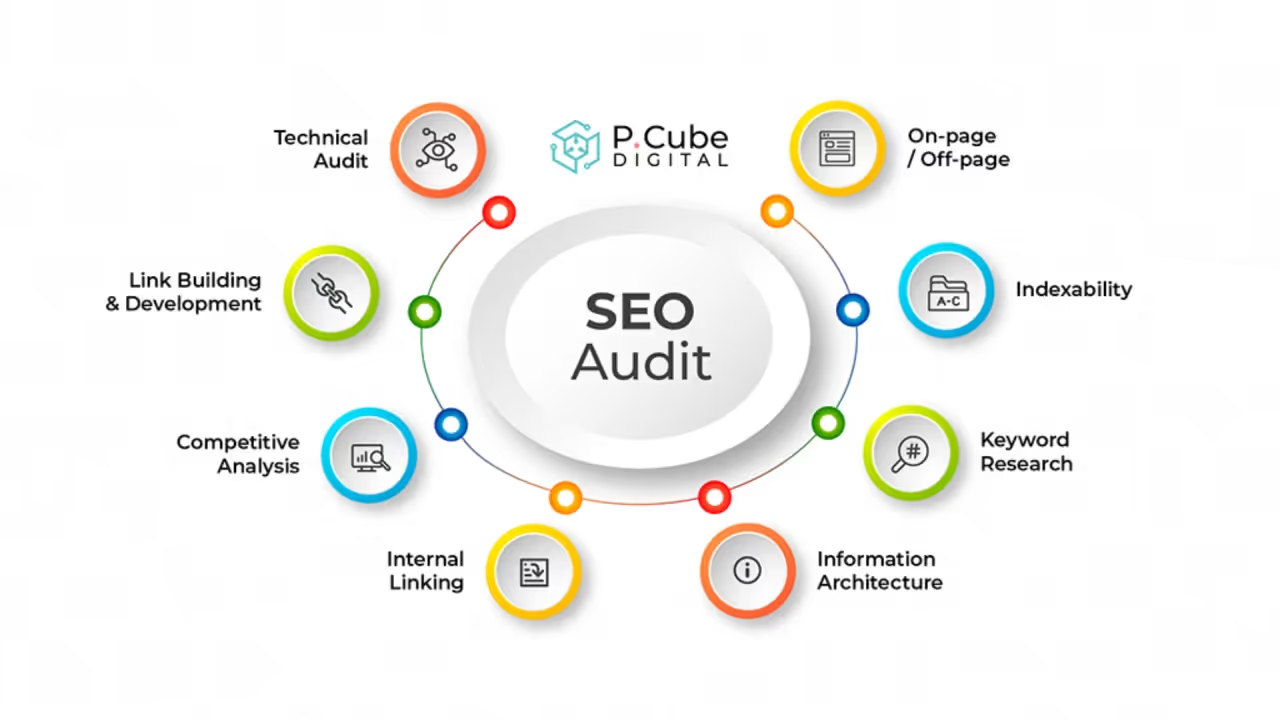
This audit process helps you identify issues and optimize your website comprehensively.
2. Semantic keyword research
After completing the SEO Audit, the next step is semantic keyword research. This involves not only finding primary keywords but also exploring related terms and long-tail keywords with similar semantic meanings.
- Search intent analysis: Understand the user's goal when searching for keywords. This is a crucial factor in Semantic SEO because Google is increasingly focused on accurately understanding the semantics of user queries.
- Use advanced SEO tools: Tools like Google Keyword Planner, Ahrefs, and SEMrush can help you discover related keywords and terms with meanings close to your primary keywords. Use them to expand your keyword range, thereby optimizing content and providing comprehensive information to users.
- Keyword clustering: Create groups of related keywords to build Topic Clusters that help search engines better understand your content structure.

3. Content optimization
After completing your keyword research, the next step is to optimize your content for Semantic SEO. Key factors when optimizing content include:
- Clear article structure: Organize content into readable sections with clear, logically ordered headings (H1, H2, H3). This not only helps search engines understand your content but also makes it easier for users to access information.
- Semantic keyword optimization: Include related keywords in various parts of the article, such as meta descriptions, subheadings, image alt text, and more. This helps Google understand that your content is relevant to a wide range of keywords and entities, rather than just a single primary keyword.
- Focus on content value: Content must meet users' information needs and answer the questions they are searching for. Avoid keyword stuffing that provides no practical value.

4. Build strong internal links
Internal linking plays a crucial role in implementing Semantic SEO. Internal links help search engines understand the relationships between pages on your website, creating a logical site structure. To build strong internal links, you should:
- Create pillar and cluster pages: Pillar articles (main topic pages) should link to cluster articles (supporting pages) to form a tightly connected information system. These articles will support each other and reinforce the main topic.
- Guide users easily: Creating internal links helps readers navigate easily between articles, increasing engagement and reducing bounce rates.
5. Index all content
After optimizing your content and on-site elements, you need to ensure that all content is indexed properly. Indexing helps search engines recognize and store your pages so they can appear in search results.
- Check the robots.txt file: Ensure that no important pages are blocked in this file. The robots.txt file specifies which pages search engines can and cannot access.
- Use a Sitemap: Update your sitemap to ensure that search engines can easily find and index all the pages on your website.
- Resubmit URLs via Google Search Console: After updating or creating new content, submit those URLs via Google Search Console to ensure search engines can quickly identify and index the content.

6. Optimize User Experience (UX)
Ultimately, user experience (UX) is an essential factor when implementing Semantic SEO. Google increasingly prioritizes user satisfaction, so improving UX can help boost your website's rankings. To optimize UX, you should:
- Page load speed: Ensure your website loads quickly on all devices. A fast-loading site helps reduce bounce rates and enhances the user experience.
- User-friendly interface design: Your website should have an intuitive interface that is accessible to all users. A simple, easy-to-navigate structure will help users find information quickly.
- Mobile-friendly design: Optimize your website for mobile devices, as Google prioritizes mobile-friendly sites in search results.
- Create accessible content: Short paragraphs, clear subheadings, and bulleted lists make content easier for readers to digest.
Implementing Semantic SEO is a process that requires patience and attention to detail. However, when done correctly, you will not only improve your site's rankings but also provide real value to users, helping to build a sustainable website for the long term.
Conclusion
Implementing Semantic SEO is a powerful strategy for optimizing a website in a way that allows search engines to clearly understand the meaning and intent of your content. By following steps such as conducting an SEO audit, performing semantic keyword research, optimizing content, building internal links, ensuring all content is indexed, and enhancing user experience, you can improve your SEO performance and create a website that is both user-friendly and search-engine-friendly. Good luck!