
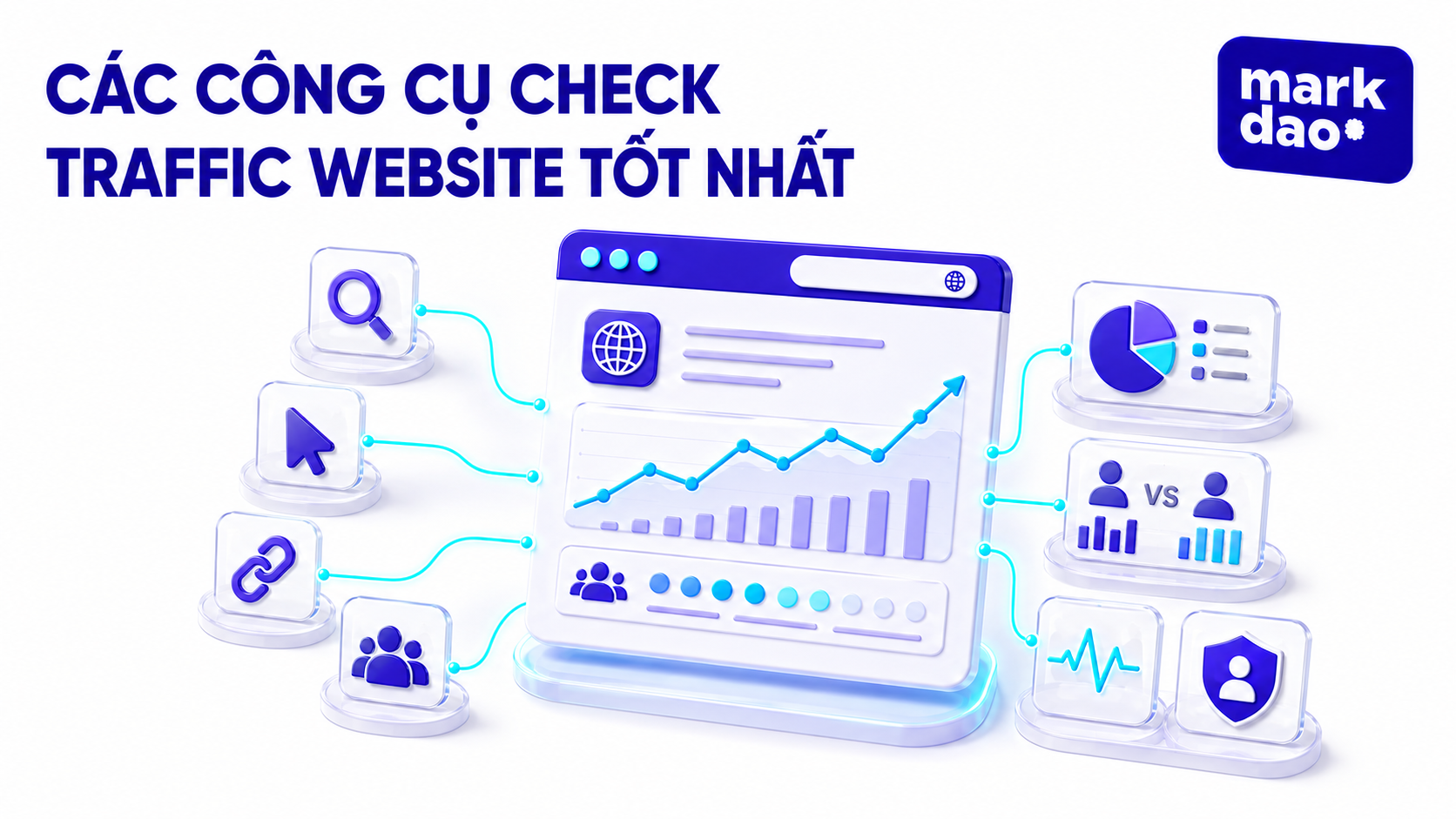

In the digital age, analyzingwebsite trafficis not just a fundamental step but a decisive factor in the success of online marketing and business strategies. Website traffic checker tools have become powerful allies, helping businesses gain deeper insights into user behavior, optimize content, and even research competitors. In this article, Markdao will introduce the Top 7 best website traffic checker tools for 2025, ranging from free platforms like Google Analytics to comprehensive solutions such as SEMrush or Ahrefs.
What is website traffic?
Website traffic refers to the number of users visiting a website over a specific period. This traffic reflects the level of user interest in the content, products, or services provided by the site. Website traffic is more than just a number; it is a critical metric for evaluating the effectiveness of marketing, SEO, and UX/UI strategies.
Common sources of website traffic include:
- Organic traffic: Traffic coming from search engines like Google.
- Direct traffic: Users accessing the site directly by entering the URL.
- Referral traffic: Traffic coming from links on other websites.
- Social traffic: Traffic coming from social media platforms like Facebook and Instagram.
Top 7 best website traffic checker tools for 2025
Choosing the right website traffic checker not only helps you understand your traffic situation but also supports building more effective growth strategies. Below is a detailed analysis of each tool, including features, pros, cons, and ideal users.
Google Analytics
Key features: Google Analytics is the most powerful free tool available today, allowing for in-depth analysis of website traffic, including user behavior, traffic sources, bounce rates, and conversion rates.
- Tracks the entire user journey on your website.
- Analyzes the performance of individual marketing campaigns.
Pros:
- Completely free for most basic features.
- Integrates with other Google tools like Google Ads and Google Search Console.
- Provides detailed, real-time data.
Cons:
- Requires complex tracking code installation for non-technical users.
- Has a learning curve to use effectively.
Target audience: All types of websites, from personal blogs to large enterprises, that need a free and detailed analytics tool.
.avif)
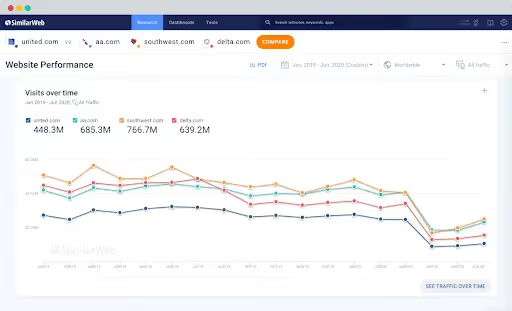
SimilarWeb
Key features: SimilarWeb focuses on analyzing website traffic of competitors, helping you gain a clear understanding of the market and your competition. This tool estimates traffic from sources such as Organic Search, Social Media, Referral, and Paid Traffic.
Pros:
- Provides rich market data, including specific industries and sectors.
- Useful for researching trends and competitor performance.
Cons:
- The free version limits information and only displays general data.
- Accuracy depends on the industry and region.
Target audience: Businesses looking to analyze competitors or understand their target market.
Ahrefs
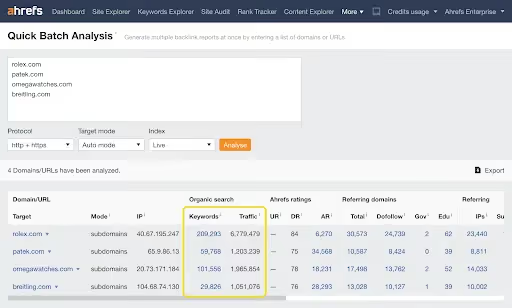
Key Features: Ahrefs is a specialized SEO tool that helps analyze backlinks, keywords, and website traffic of competitors. This tool also displays pages with the highest traffic and potential keywords.
Pros:
- Large, frequently updated database.
- In-depth analysis of SEO, keywords, and backlinks.
- Supports the development of effective, data-driven content strategies.
Cons: High cost, not suitable for individuals or small businesses.
Target Audience: SEO professionals and large enterprises in need of powerful analytical tools.
SEMrush
Key Features: SEMrush is a comprehensive digital marketing tool that integrates SEO, PPC, Content Marketing, and Social Media. This tool analyzes keywords, paid advertising, and website traffic of competitors.
Pros:
- Supports comprehensive strategies for SEO and PPC.
- Provides detailed and easy-to-understand reports.
- Useful for building content and advertising strategies.
Cons:
- Complex interface that requires experienced users.
- High cost for full-featured plans.
Target audience: Professional businesses and marketers in need of comprehensive analysis.
.avif)
Ubersuggest
Key features: Ubersuggest is an affordable tool that provides basic insights into keywords, content, and website traffic. Additionally, it helps analyze new keyword and content ideas.
Pros:
- Simple, user-friendly interface for beginners.
- Offers several free or low-cost features.
Cons: Data is not as detailed or accurate as premium tools like Ahrefs or SEMrush.
Target audience: Bloggers and small businesses that do not require in-depth analysis.
.avif)
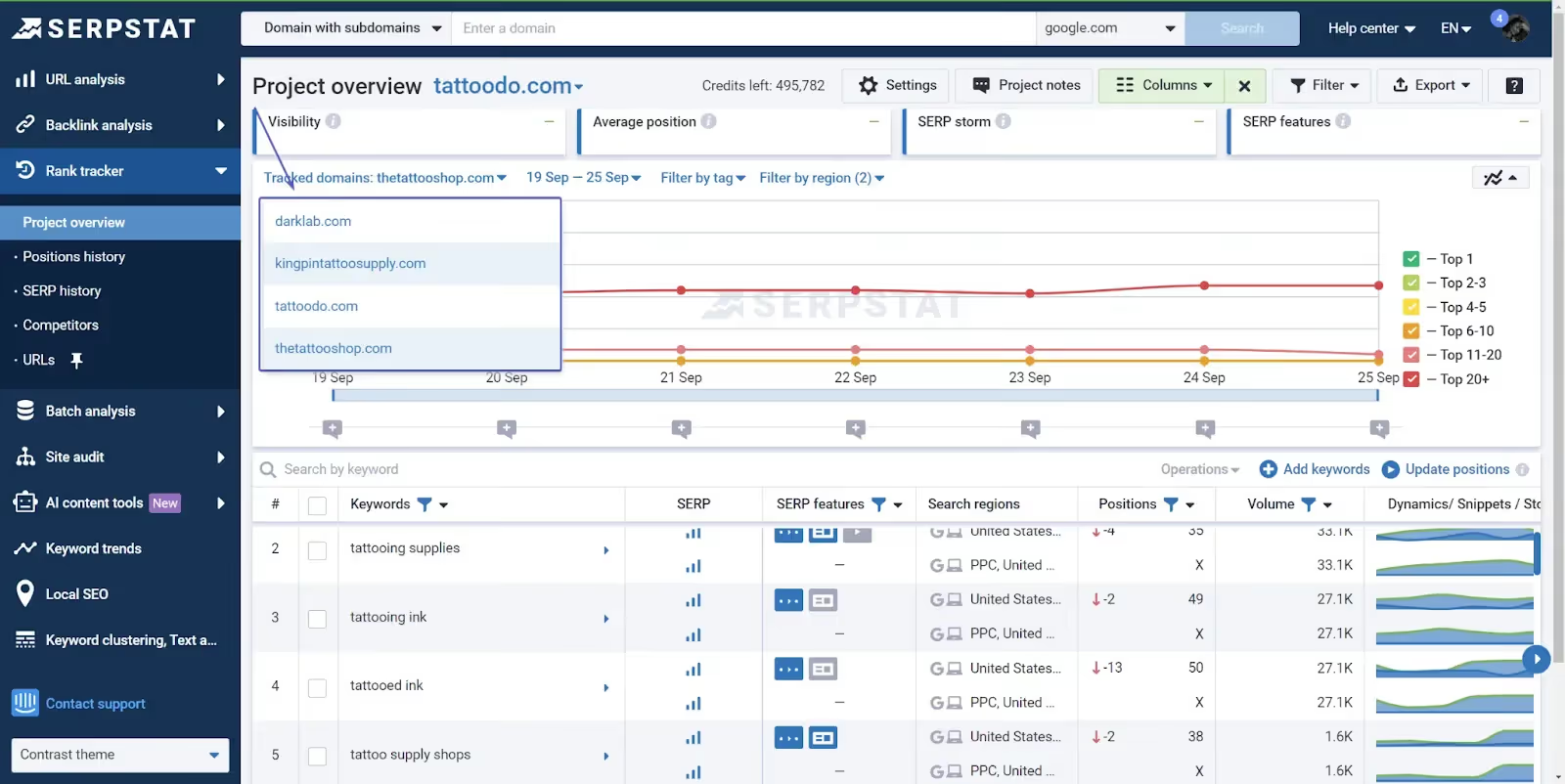
Serpstat
Key features: Serpstat is an all-in-one tool focused on SEO and traffic analysis. It supports keyword research, competitor analysis, and content strategy optimization.
Pros:
- Affordable pricing for the features provided.
- Supports a wide range of detailed reports on keywords and website traffic.
Cons: Not as popular as Ahrefs or SEMrush, with fewer integrations with other platforms.
Target audience: Small and medium-sized businesses looking to save costs.
Matomo (formerly Piwik)
Key features: Matomo focuses on privacy, providing an analytics solution for website traffic with data stored on the user's own server. This is a perfect alternative to Google Analytics if you prioritize security.
Pros:
- Complete control over data with no sharing with third parties.
- Helps businesses comply with international security standards such as GDPR.
Cons:
- Complex installation requiring advanced technical skills.
- Higher costs compared to Google Analytics.
Target audience: Businesses or organizations sensitive to data security.
Comparison table of website traffic analysis tools

Depending on your goals and budget, you can choose the most suitable tool:
- Google Analytics: Ideal for everyone due to being free and comprehensive.
- SimilarWeb: Analyzing competitors and market trends.
- Ahrefs and SEMrush: Specialized in SEO and marketing strategy.
- Ubersuggest: Suitable for individuals and small businesses.
- Serpstat: A budget-friendly choice with essential features.
- MatomoDesigned for organizations that prioritize data security.
Identify your needs to unlock the full potential of this website traffic checker !
4 Criteria for choosing an effective website traffic checker
To choose a suitable website traffic checker , you need to consider the following criteria:
- Data accuracy and detail
An effective website traffic checker must provide accurate and detailed data. This includes:
- Number of visitors.
- Traffic sources (search, social, direct, referral).
- Time on page and bounce rate.
Tools like Google Analytics or SimilarWeb are often highly rated for their accuracy.
- User-friendly, intuitive interface
Not everyone is a tech expert, so an intuitive, user-friendly interface is essential. A great tool should display data visually and make it easy to track.
- Integration with other platforms
If you are already using other marketing or website management tools like Google Ads, WordPress, or HubSpot, choose a website traffic checker that integrates with them. This saves time and boosts your productivity.
- Budget-friendly
There are many website traffic checkertools available, ranging from free options like Google Analyticsto paid ones like Ahrefs or SEMrush. You should consider your budget and goals when choosing the right tool. Free tools are often sufficient for small websites, while paid tools are necessary for larger businesses or more in-depth analysis.
Recommendation:
When choosing a website traffic checker, focus on your goals: competitor analysis, SEO optimization, or evaluating advertising effectiveness. The right tool will help you maximize your website traffic potential, allowing you to develop more effective and precise improvement strategies.
Conclusion
Choosing the right website traffic checker is a crucial factor in optimizing your online business and marketing strategies. Each tool has its own strengths, from Google Analytics , which is free yet powerful, to SEMrush or Ahrefs for in-depth analysis. For individuals or small businesses, Ubersuggest and Serpstat are cost-effective yet efficient options. If you prioritize data privacy, Matomo is the ideal solution.
Carefully consider your needs and budget to select the right tool, enabling you to seize growth opportunities and optimize your website performance in 2025.
FAQ

Not completely. It is an estimate based on indirect data sources. According to a SparkToro study of 641 websites, even the most reliable tools can have a margin of error of around 30% or more compared with actual traffic, with wider confidence intervals for some websites.
For your own website, the combination of Google Analytics 4, Google Search Console, and Microsoft Clarity is a free trio that covers almost all your needs. For third-party websites, the free versions are very limited and should only be used for quick reference.
There are two reasons for this. Google Analytics only records visits where the tracking code executes successfully, meaning data is lost due to ad blockers and users declining cookies. Additionally, third-party tools provide estimates rather than exact counts, and these estimates can often be higher than the actual figures.
If your focus is on backlink analysis and identifying content opportunities through organic search, Ahrefs is the stronger choice. If you need a platform that covers SEO, paid advertising, and visibility tracking across AI search engines, Semrush is a better fit. Both start at around $130 to $140 per month.
There is no universal benchmark, as the numbers depend on your industry, market size, and business model. The better question is whether that traffic is actually converting into customers. A website with 2,000 visits per month and 40 inquiries is performing better than one with 50,000 visits and zero leads.