


In the digital age, content is not just a tool for attracting customers; it is a deciding factor in a brand's success or failure. However, creating quality content without a clear strategy is like "shooting in the dark"—it consumes time and effort without delivering real results.
So, what is Content Strategy and how do you build a structured content strategy that helps your business reach the right customers and optimize profits? This article by Markdao will guide you step-by-step through creating an effective content strategy, from defining goals and keyword research to content distribution and optimization.
What is Content Strategy?
Content Strategy is the process of planning, developing, managing, and optimizing content to achieve business goals. A well-structured content strategy does not just focus on creating content; it ensures that the content is relevant to the target audience, consistent with the brand, and provides genuine value.
In other words, Content Strategy is like a detailed roadmap that helps businesses determine what content to create, for whom, when, and on which channels to distribute it for maximum impact. A good content strategy not only helps increase brand awareness but also builds trust, attracts potential customers, and drives sales.
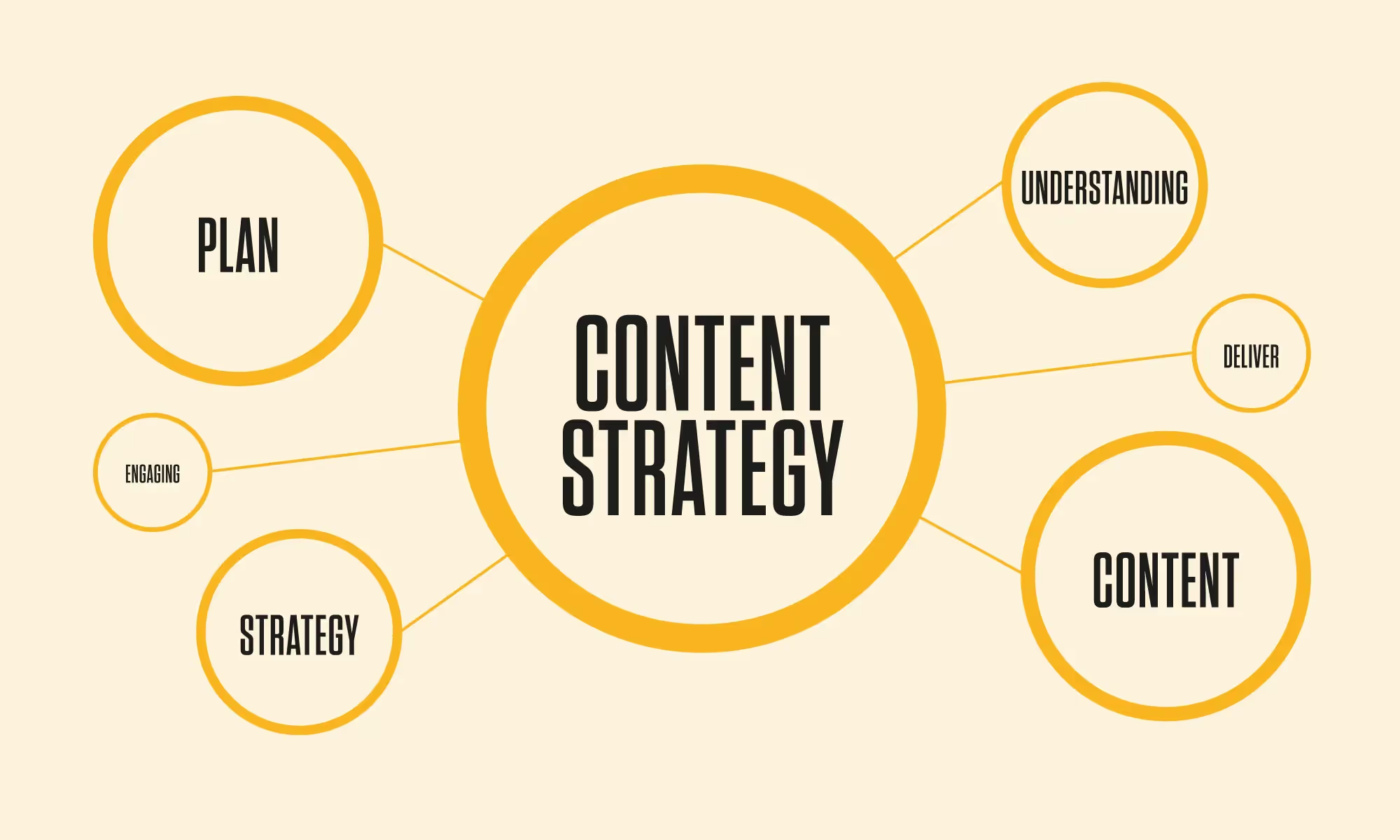
The difference between Content Strategy and Content Marketing
Many people often confuse Content Strategy and Content Marketing, but these are two distinct concepts:
Simply put, Content Strategy is the foundation—the master plan—while Content Marketing is the execution of that plan through specific activities. A content marketing campaign cannot succeed without a well-structured content strategy as its base.

Understanding this distinction helps businesses not only create engaging content but also ensure that it is truly effective, delivering long-term value rather than just chasing fleeting trends.
The benefits of an effective Content Strategy
A well-structured content strategy not only helps businesses reach customers intelligently but also optimizes marketing performance, enhances brand value, and increases profitability. Below are the key benefits that Content Strategy provides:
- Increase brand awareness: A tightly built content strategy helps a brand appear consistent, professional, and trustworthy. Instead of focusing solely on advertising, valuable content helps businesses leave a lasting impression in the minds of customers, keeping the brand top-of-mind even before they have a need for the product or service.
- Attract and retain customers: Today's customers are not just looking for products; they want useful information that provides real value. A good Content Strategy helps businesses understand customer needs and behaviors, providing relevant content at every stage of their buying journey. This not only attracts new customers but also retains existing ones, building long-term loyalty.
- Optimize SEO & increase traffic: SEO-standardized content not only helps businesses appear in search results but also helps reach the right potential customers. With a clear content strategy, businesses can focus on key keywords, build in-depth content, and improve Google rankings, thereby attracting a large volume of organic traffic without spending heavily on advertising.
- Increase conversion rates and revenue: A compelling Content Strategy that hits the mark on customer needs will guide them from the research phase to the point of purchase. Rather than just providing information, goal-oriented content helps persuade customers to make decisions quickly, thereby increasing conversion rates and generating sustainable revenue for the business.
- Cost savings and marketing budget optimization: Without a Content Strategy in place, businesses can easily waste their budget on ineffective content or invest in the wrong channels. A clear strategy helps businesses maximize their resources, focus on content that truly delivers value, and avoid marketing waste.
- Building brand credibility and differentiation: The market is becoming increasingly competitive, and content is the weapon that helps businesses stand out. A smart content strategy helps a brand establish its position as an expert, provide in-depth information, and build trust with customers, thereby enhancing its reputation and influence in the industry.
- Creating a solid foundation for other marketing campaigns: Content Strategy does not just serve content marketing; it also provides strong support for other campaigns such as advertising, email marketing, social media marketing, and omnichannel marketing. With a solid content foundation, businesses can easily adapt and scale their marketing activities effectively.
An effective content strategy not only helps businesses reach customers the right way but also optimizes long-term business performance. Investing in a Content Strategy not only brings immediate benefits but also creates sustainable value, helping the brand grow strongly and steadily in the digital environment.
6 steps to create an effective Content Strategy
A well-structured content strategy not only helps businesses create engaging content but also ensures that it reaches the right audience, delivers value, and optimizes profits. To achieve this, follow these 6 essential steps to build an effective and sustainable content strategy.

Step 1: Define the goals of your Content Strategy
Before you start creating content, you need to define the core objectives that your business wants to achieve. A content strategy cannot succeed without a clear direction. Common goals may include:
- Increase brand awareness: Build a professional image and establish your market position.
- Attract potential customers: Provide valuable content to reach your target audience effectively.
- Increase conversion rates: Guide customers from the discovery phase to the final purchase decision.
- Improve SEO & boost traffic: Optimize content for SEO to improve search engine rankings.
- Build customer loyalty: Retain customers with useful and personalized content.
Once your goals are defined, you will have a clear roadmap to build a Content Strategy that is relevant and accurately measurable.
Step 2: Understand your target audience
Content is only truly effective when it addresses the needs and interests of your customers. Therefore, understanding your target audience is a critical factor in any content strategy.
Answer the following questions to define your ideal customer profile:
- Who are they? (age, gender, occupation, income, etc.)
- What do they care about? (their pain points, desires, and challenges)
- Where do they look for information? (Google, social media, blogs, forums, etc.)
- What type of content do they prefer? (in-depth articles, videos, infographics, podcasts, etc.)
A useful tool for creating Content Strategy at this stage is building a buyer persona – a detailed customer profile that helps you understand their behaviors and preferences. Having a clear picture of your target audience makes it easier to create more engaging and relevant content.
Step 3: Keyword research and content planning
Keyword research is a crucial step that helps your Content Strategy rank in Google search results and reach the right potential customers.
Effective steps for keyword research:
1. Find primary & secondary keywords: Use tools like Google Keyword Planner, Ahrefs, and SEMrush to find keywords relevant to your industry.
2. Analyze competition & search intent: Identify the search intent (informational, transactional, comparison, etc.) to create relevant content.
3. Plan your content: Build a content calendar with topics revolving around your researched keywords, ensuring content is diverse and cohesive.
Note: Don't just write for keywords! Combine SEO with valuable content creation to attract and retain readers.
Step 4: Schedule and produce content
An effective content strategy requires consistency. This means you need a specific plan for producing and publishing your content.
- Build a content calendar: Decide on your posting frequency (daily, weekly, monthly) and content formats (blog posts, videos, infographics, etc.).
- Content production process: Who will write? Who will edit? Who is responsible for graphic design? Establish a clear workflow to optimize productivity.
- Ensuring content quality: Content must be valuable, aligned with your brand identity, and engaging for readers. Don't forget to proofread before publishing to avoid errors.
A key tip: Repurpose old content by updating information or changing formats (e.g., turning a blog post into a video or infographic) to maximize performance without creating new content from scratch.
Step 5: Distribute content through the right channels
Content in a Content Strategy is meaningless if it isn't distributed in the right place at the right time. Identify the distribution channels that suit your target audience:
- Website & Blog: The most important platform for building in-depth content and optimizing SEO.
- Social Media: Facebook, LinkedIn, TikTok, YouTube… choose the channels that best fit your customer base.
- Email Marketing: Send newsletters with useful content to help maintain relationships with customers.
- Forums & Community Groups: Participate in industry-specific groups to share content and increase brand awareness.
- Paid advertising: Combine Google Ads and Facebook Ads for faster reach if necessary.
Note: Each channel has its own unique characteristics, so do not just copy-paste content from your Content Strategy ; instead, tailor it to suit each specific platform.
Step 6: Measure and optimize your content strategy
No strategy is perfect from the start. To ensure effectiveness, you need to regularly measure and adjust your content strategy based on key metrics:
- Traffic & SEO Performance: Check traffic volume, keyword rankings, and bounce rates using Google Analytics and Ahrefs.
- Engagement rate: Likes, shares, and comments on social media indicate the level of customer interest.
- Conversion Rate: How many customers take action after reading the content? (signing up, purchasing, contacting, etc.).
- Effectiveness of each distribution channel: Evaluate which channels perform best so you can focus your investment there.
Based on the data collected, you can optimize the content in your Content Strategy, improve your SEO strategy, and test new formats to enhance performance.
Conclusion
Building an Content Strategy that is effective requires thorough investment, from research and planning to execution and optimization. By following these 6 steps, businesses can not only reach the right customers but also optimize costs, enhance their brand, and sustainably increase profits.
Remember that Content Strategy is more than just a marketing tool—it is a vital asset for long-term business growth. So, rather than chasing short-term trends, focus on building a solid content strategy to achieve success in the digital age.