

Have you ever heard of subdomain but aren't quite sure what it is or why it's so important? Think of a subdomain as a small "branch" of your website "business"—a place where you can develop independent, creative ideas while staying connected to your main brand. In this article, Markdao will help you explore subdomain from A to Z: from how to create and manage them, to the secrets of maximizing their power for SEO and business strategy.
What is a subdomain?
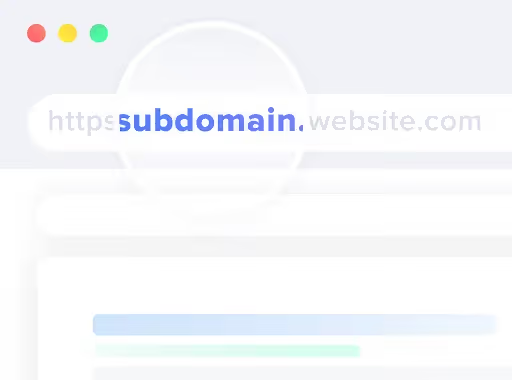
A subdomain, also known as a sub-domain, is an extension of your primary domain (domain) that functions as an independent entity within the same domain system. It is created by adding a prefix before the main domain, separated by a dot. For example, if "domain.com" is the main domain, then "blog.domain.com" or "shop.domain.com" are subdomains.
Technically, subdomains allow you to divide your website space into distinct sections, helping you organize and manage content effectively. However, they remain linked to the main domain, inheriting the same DNS structure and maintaining a direct connection to your brand.
The role of subdomains in a website system
Subdomain play a crucial role in supporting website management and operations. Here are some of the key roles:
- Content segmentation: Subdomain is used to separate different types of content on the same website. For example, a business might use "blog.domain.com" for blog posts, "store.domain.com" for an online shop, or "support.domain.com" for a customer support center.
- Creating independent environments: Subdomains allow for the creation of separate areas for testing or development, such as "dev.domain.com" for a development environment or "beta.domain.com" for testing versions before they go live.
- Supporting international strategies: Many businesses use subdomains to serve customers in different countries, such as "us.domain.com" for the United States or "vn.domain.com" for Vietnam. This helps optimize the user experience based on geographic location.
- Enhancing professionalism: Using subdomain helps categorize content clearly, creating a professional feel and making it easier for users to navigate.
Why are subdomains important?
Subdomain is not just a technical tool; it also provides significant value for website management and development. Here is why it plays such an important role:
- Optimizing content management: Instead of grouping all content under one main domain, subdomains allow you to separate different areas, helping you manage content more effectively. This is especially useful when you want to develop new features or services.
- Improving SEO: When optimized correctly, subdomain can improve search rankings on Google. It allows you to focus on specific keywords for each piece of content without affecting the entire website.
- Enhance user experience: A well-designed subdomain provides users with a smooth and consistent experience. Customers can easily navigate to different areas of the website without confusion.
- Support business strategy: For businesses, subdomains help implement marketing campaigns, e-commerce, or independent projects without impacting the main domain. For example, a brand can use a subdomain to launch a new product or host an online event.
- Scalability: This sub-domain helps businesses scale their operations more easily without needing to purchase new domains.
A subdomain is the "key" to expanding and optimizing your website system. It not only helps manage content effectively but also supports you in executing business and SEO strategies in a flexible and creative way.
Distinguishing between Domain and Subdomain
To understand the difference between a domain and a subdomain , we will compare them based on the following key aspects:

.avif)
Guide on how to create and manage a subdomain
Creating and managing subdomains is a crucial part of building and scaling your website infrastructure. Below is a detailed guide to help you complete these steps easily and effectively:
1. How to create a subdomain
Creating a subdomain can be done easily through your DNS management tool or cPanel. The basic steps include:
Step 1: Log in to your management dashboard
- Log in to cPanel or the hosting management system you are using. This is where you can make changes related to your domain and subdomains.

Step 2: Locate the subdomain settings
- In cPanel, look for the Subdomains section or something similar. This is the area that allows you to add and manage subdomains.
.avif)
Step 3: Enter the information
- Enter the name subdomain you want to create (e.g., blog, shop, or any suitable name).
- Select the primary domain that the subdomain will belong to (if you have multiple domains on the same account).
- The system will automatically create a folder on the server to store the subdomain's content.
.avif)
Step 4: Finalize and verify
- Click the Create or Create button to finish adding the subdomain.
- Once created, you can access the subdomain via its corresponding URL (e.g., blog.domain.com).
- Verify the subdomain by accessing it from your browser to ensure it is working.
.avif)
2. How to manage subdomains
Managing subdomains ensure efficiency and consistency across aspects such as content, configuration, and security. Below are the key management steps:
Content management
Clear content segmentation: Each subdomain typically serves a specific function or purpose (such as a blog, online store, or support page). Ensure that content on these domains does not duplicate or conflict with the main domain.
Dedicated SEO optimization: Since subdomain can be treated as an independent website, you need to optimize keywords, titles, and content for each individual subdomain.
DNS configuration
Ensure that DNS (Domain Name System) records are configured correctly so that the subdomain functions reliably. The most common records are CNAME or A record, which link the subdomain to the hosting server.
Update your DNS records if you switch hosting providers.
Subdomain security
SSL certificate installation: To protect data in transit, ensure subdomain is also configured with an SSL certificate, just like the primary domain (e.g., from HTTP to HTTPS). Many hosting providers offer free SSL certificates for subdomains.
Access control: If the subdomain is intended for internal use or testing only, restrict access using passwords or other security tools.
Performance monitoring
Use analytics tools like Google Analytics to track traffic and user behavior on the subdomain. This helps you evaluate performance and make improvements as needed.
Ensure the subdomain does not negatively impact the loading speed of the primary domain by optimizing content and server configuration.
Data backup: Regularly back up data on the subdomain to prevent data loss in the event of a technical issue.
Summary: Key considerations for creating and managing
- Creating a subdomain: Perform this via cPanel or your domain provider's DNS system.
- Content management: Ensure content does not conflict and is individually optimized.
- DNS configuration: Check and update DNS records as needed.
- Security: Install SSL and manage access control for subdomains.
- Monitoring and improvement: Use analytics tools to evaluate performance.
- Backup: Regularly store data to ensure safety.
Effective management of subdomains not only helps the website system operate efficiently but also enhances user experience and scalability for the future.
Pros and cons of using subdomains
Using subdomains offers many benefits for website management, but it also comes with some drawbacks that you should consider. Here is a detailed analysis:
Benefits
Clear content segmentation
- Subdomain helps you separate different content sections or functions on your website. For example, a blog, online store, or technical support page can operate independently on their own subdomains.
- This improves organization and makes it easier to manage each part of the system.
Increased scalability
- As your business grows, subdomains allow you to expand your services or products without affecting the structure of your main website.
- Subdomain can be used to test or launch new projects without posing risks to your main domain.
Optimized for specific goals
- Subdomains act as independent entities, allowing you to optimize SEO and marketing strategies specifically for each one.
- This is a major advantage when you want to target different customer segments or optimize content for specific keywords.
Easy multilingual support
- For international businesses, subdomain is an ideal solution for deploying different language versions of your website (e.g., en.example.com, fr.example.com). This helps meet the needs of users in different regions.
Cost-effective
- You don't need to purchase new domains, as subdomains are created for free based on your main domain.
- Many hosting providers support an unlimited number of subdomains.
Supports testing and development
- Subdomain is an ideal environment for testing new features, designs, or technologies before deploying them to your main domain.
- This helps reduce the risk of negatively impacting the user experience on your main website.

Cons
Management overhead: Because subdomains operate independently, you need to manage content, security, and SEO optimization separately for each one. This can increase your workload if you have multiple subdomains.
SEO challenges
- Google treats subdomains as separate websites, so you must optimize SEO for each one individually rather than leveraging the authority of your main domain.
- If not optimized correctly, subdomains can negatively impact your brand's overall search engine rankings.
Diluted brand authority
- If subdomains are not used strategically, separating content from your main domain can reduce brand focus and recognition.
- Users may find it difficult to associate subdomains with the primary brand.
More complex technical configuration
- Setting up and configuring subdomains sometimes requires technical expertise, especially when dealing with DNS, SSL, or CNAME records.
- If configured incorrectly, subdomains may experience access errors or suffer from performance issues.
Dependency on the main domain: Subdomains only functions when the main domain is active. If the main domain fails or expires, all associated subdomains will also be affected.
Can cause user confusion: Too many subdomains can confuse users, especially when there is a lack of consistency in design or content structure between the subdomain and the main domain.
Conclusion
Subdomains are a powerful tool that allows you to expand and optimize your website system flexibly. With the ability to segment content, support distinct SEO strategies, and save costs, subdomains are an ideal choice for both individuals and businesses looking to grow online. However, using them also comes with management and technical challenges.
To maximize the benefits of subdomains, you need to clearly define your goals, create a specific plan, and ensure that factors such as security, performance, and SEO are optimized. With the right understanding and application, subdomains not only help you improve operational efficiency but also lay the foundation for the sustainable growth of your brand in the digital environment.