


Imagine your website as a library where every piece of information is scientifically organized, allowing readers to find answers in seconds. That is exactly how Topic Cluster works! This is not just a passing trend, but a comprehensive content optimization method that helps you connect information more coherently and effectively. Let's join Markdao to learn how to build Topic Cluster to turn your website into a reliable "information hub" right in this article!
What Is a Topic Cluster?
Defining Topic Clusters
Topic Cluster, or topic clusters, is a strategic content organization method that links related articles together around a major theme. Instead of optimizing individual posts, Topic Cluster focuses on building a content network consisting of:
- Pillar Page: This is the main, comprehensive article that provides core content on a broad topic.
- Cluster Content: These are sub-articles that dive deep into specific aspects of the main topic and link closely back to the Pillar Page.
- Internal Links: These connect the Pillar Page and Cluster Content, creating a synchronized, logical, and easy-to-navigate content system.

This method not only helps organize content coherently but also improves search engine visibility while enhancing the user experience when exploring information on your website.
Benefits of Topic Clusters
Boost SEO efficiency:
- Internal links help Google better understand your content structure and the relationships between your articles.
- Improve rankings for both primary and long-tail keywords.
Improve user experience:
- Readers can easily find related articles without having to search elsewhere.
- Create a seamless flow of information, helping to keep users on your website longer.
Build website authority:
- A website with scientifically organized content is generally viewed as more trustworthy by both users and search engines.
- Help elevate the business's standing in the industry.
The core structure of a Topic Cluster
Topic Cluster is built upon a tightly structured and logical content system, consisting of three main components:
Pillar Page: This is the central article that acts as the "backbone" of the topic cluster, covering the entire scope of a broad subject.
- Characteristics:
- Provides an overview and answers fundamental questions related to the main topic.
- Typically ranges from 2,000 to 3,000 words to cover a wide breadth of content.
- SEO-optimized for the main keyword of the topic cluster.
- Role:
- Links to Cluster Content to provide more detailed information.
- Serves as a guide for readers to explore the entire content cluster.

Cluster Content: Related articles revolving around the Pillar Page, focusing on specific aspects or niche issues within the broader topic.
- Characteristics:
- In-depth and detailed content focusing on a specific sub-topic.
- Typically shorter than a Pillar Page (800–1,500 words).
- Optimized for long-tail keywords.
- Role:
- Supports the Pillar Page by providing supplementary details.
- Backlinks to the Pillar Page to create a cohesive content flow.
Internal Links: A linking system between the Pillar Page and Cluster Content, connecting articles within the topic cluster.
- Characteristics:
- Links from the Pillar Page to individual Cluster Content articles so users can easily find more detailed information.
- Cluster Content articles also link back to the Pillar Page to create logical cohesion.
- Role:
- Helps search engines better understand the website's content structure.
- Improves user experience by providing effective navigation between articles.
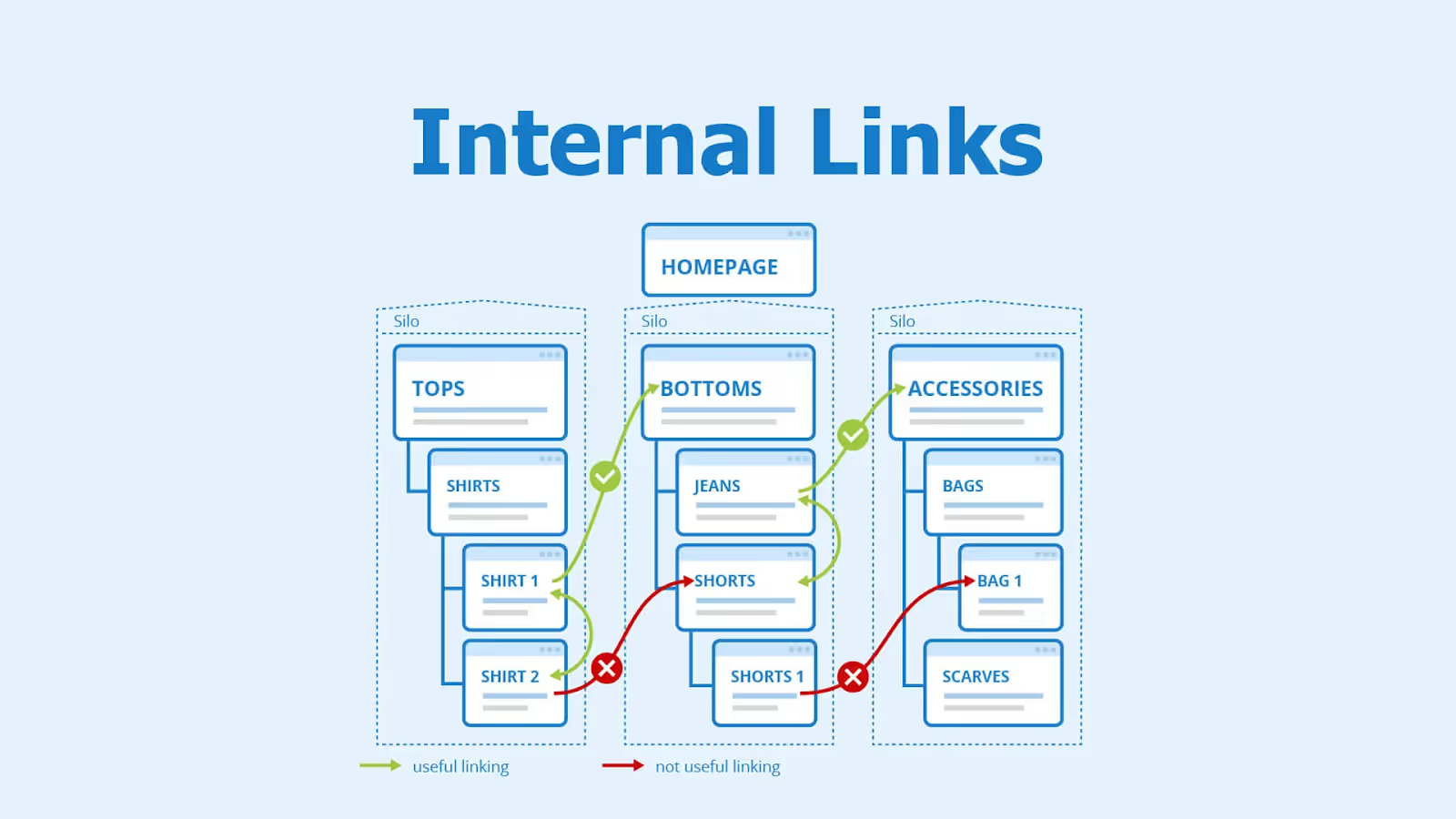
This structure not only supports SEO optimization but also helps build a professional content system that is easy to navigate and highly valuable to both readers and search engines.
Why implement Topic Clusters?
For websites:
- Increase visibility on Google: Topic Cluster helps Google clearly understand your content structure, thereby increasing the likelihood of appearing in search queries.
- Increase user dwell time: When content is coherently connected, readers will spend more time exploring related articles.
- Build a sustainable content system: Topic Cluster helps your content scale without losing focus.
For users:
- Improve search experience: Readers can find comprehensive and in-depth answers without having to leave your website.
- Increase trust: A website with logically organized content feels more credible and professional to users.
Topic Cluster is not just an SEO trend, but a tool to help you build content that delivers real value to both readers and search engines. Implementing it correctly will help your website stand out and grow sustainably.
5 steps to implement Topic Clusters
Step 1: Keyword research and pillar topic identification
Detailed description: The first step in implementing Topic Cluster is to identify a broad, valuable topic that is closely aligned with your business goals. This topic must be broad enough to cover many related aspects and attract significant interest from your readers.

How to execute:
- Ask yourself: "What are the common pain points or interests of my target audience in this field?"
- Use tools such as Google Trends, AnswerThePublic, or BuzzSumo to identify the most popular topics today.
- Ensure the core topic aligns with your business's products, services, or long-term content strategy.
For example:
- For an SEO service provider, the core topic could be: "What is SEO? How to implement an effective SEO strategy."
- For the finance sector, the core topic could be: "How to manage personal finances for beginners."
Step 2: Build a Pillar Page
Detailed description: Research keywords to understand how customers search for information related to the core topic. Then, group keywords by specific aspects to develop cluster articles.

How to execute:
Step 1: Use keyword research tools:
- Ahrefs: Find keywords with high search volume and analyze competition levels.
- SEMrush: Explore long-tail keywords to develop specific content.
- Keyword Planner: Measure search volume and suggest related keywords.
Step 2: Determine user search intent:
- Informational: Users want to learn about a concept or gain knowledge.
- Comparison: Users are comparing different options.
- Transactional: Users want to take action, such as making a purchase or using a service.
Step 3: Keyword grouping:
- Choose primary keywords for the Pillar Page (e.g., “What is SEO”).
- Choose secondary keywords for Cluster Content (e.g., “How to optimize On-page SEO”, “What is Off-page SEO?”).
Step 3: Write Cluster Content
Detailed description: The Pillar Page is the central article in a topic cluster, providing an overview and answering the most fundamental questions about the main topic. It serves as the foundation for Topic Cluster surrounding links.
How to execute:
- Pillar Page structure:
- Topic introduction: Provide an overview of the main topic.
- Main content sections: Answer common questions about the topic (based on keyword research).
- Link to cluster articles: Include internal links to Cluster Content to provide more detailed information.
- SEO optimization:
- Use the main keyword in the title, meta description, and heading tags.
- Ensure the article is long (approximately 2,000–3,000 words) and covers the entire topic comprehensively.
- Integrate images, videos, or charts to enhance visual appeal.
Example:
- Pillar Page: "What is SEO? A comprehensive guide for beginners."
- Link to Cluster Content articles such as: "What is On-page SEO?", "What is Off-page SEO?", "Effective free SEO tools".
Step 4: Build an internal linking system
Detailed description: Cluster Content consists of sub-articles that delve into specific aspects of the main topic. They support the Pillar Page by providing more detailed content.

How to implement:
Focus on secondary keywords: Each cluster article targets a long-tail keyword to address a specific search intent.
Article structure:
- Introduce the specific problem.
- Provide solutions or detailed information.
- Include a backlink to the Pillar Page so readers can return to the comprehensive overview.
Article length: 800–1,500 words, depending on the level of detail required for the topic.
Examples: Cluster content for the pillar page “What is SEO?”:
- “How to optimize On-page SEO in 5 basic steps.”
- “What is Off-page SEO? How to build quality backlinks.”
- “Free SEO tools and how to use them.”
Step 5: Monitor, measure, and optimize
Detailed description: Create logical connections between the Pillar Page and Cluster Content to optimize the experience for both users and search engines.

How to execute:
- Linking from the Pillar Page to Cluster Content: Place links directly within the content or at the end of each section, using anchor text relevant to the secondary keywords.
- Linking back from Cluster Content to the Pillar Page: Each cluster article must link back to the pillar page.
- Cross-linking between Cluster Content articles: If cluster content is related, add links to enhance the value of the information.
Benefits:
- Increase user dwell time on the website.
- Help search engines understand the structure and relationships between articles.
- Boost the ranking of the Pillar Page through link equity from cluster articles.
Implementation Topic Cluster not only helps optimize SEO but also builds a professional, easy-to-navigate content system that enhances user experience. Following the 5 steps above will help your website stand out in search results and attract significant traffic.
Conclusion
Implementation Topic Cluster not only helps improve SEO but also creates a coherent content system that is easy for readers to understand. By linking articles together, you will create an accessible website that helps users find what they need quickly. Apply this strategy to help your website grow stronger!