


In SEO, Dwell Time is a key metric for gauging user satisfaction with your website content. It represents the duration a user spends on a page after clicking a search result before returning to the search engine results page (SERP). This metric not only reflects content quality but also directly impacts your website's Google ranking. So, What is Dwell Time? How can you optimize Dwell Time to boost your website's ranking? Let's join Markdao as we explore this in today's article!
What is Dwell Time?
What is Dwell Time? This is an SEO term referring to the amount of time a user spends on a webpage after clicking a search result before returning to the search engine results page (SERP). In other words, Dwell Time reflects how engaged users are with your website's content.
Example: If a user searches Google for "how to optimize on-page SEO," clicks on your page, and spends 3 minutes reading the content before returning to the SERP, that 3-minute duration is your Dwell Time.
What defines a good Dwell Time?
A good Dwell Time is determined by several factors. Below are the key criteria for evaluating the effectiveness of Dwell Time on your website:
- Relevance: The content on the page must be directly related to the user's search intent.
- Content Quality: Engaging, valuable, and informative content will keep users on the page longer.
- Search Query: The keywords users employ to reach your site influence Dwell Time. If the content matches their search intent, they will spend more time on the page.
- Hot Trends: Content that taps into current trends can capture user interest, encouraging them to stay on the page longer.
To optimize Dwell Time, you should focus on improving website quality by optimizing content, increasing page load speed, and enhancing the user experience.

The difference between Dwell Time, Bounce Rate, and Time on Page
The importance of Dwell Time in SEO
How Dwell Time reflects user satisfaction
Dwell Time is an indirect metric that indicates how useful and engaging your website content is. If a user visits your page and quickly returns to the SERP after just a few seconds, it may indicate that:
- The content did not meet their expectations.
- The page loaded too slowly, making them unwilling to wait.
- The user experience was poor or the interface was not user-friendly.
Conversely, if a user spends a significant amount of time reading the article, scrolling down, and interacting with the content, it proves that the website provides valuable information and meets their search intent.
The impact of Dwell Time on search engine rankings
Although Google has not confirmed Dwell Time as an official ranking factor, many SEO experts believe it is a key signal for evaluating content quality. This is because:
- If many users have a high Dwell Time on a page, Google may interpret that the content is high-quality, useful, and relevant to the search query.
- Conversely, if the Dwell Time is too low, the page may not be providing enough value or meeting user expectations, which reduces its credibility in the eyes of Google.
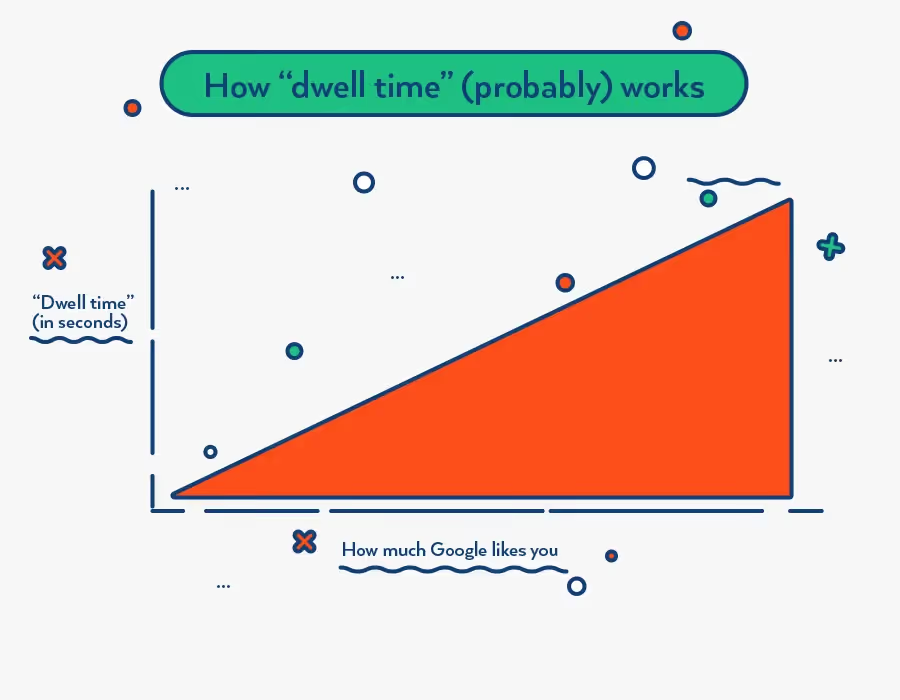
Therefore, optimizing Dwell Time for SEO is a strategy that helps enhance content quality, improve user experience, and increase the chances of ranking higher in search results.
How to optimize factors affecting Dwell Time
What is Dwell Time and what factors influence this metric? Dwell Time does not just reflect user satisfaction; it is also influenced by various other factors. Below are the key factors affecting Dwell Time in SEO that you need to optimize to keep users on your site longer.
Page load speed
Page load speed is one of the most critical factors directly affecting Dwell Time. Users often lack the patience to wait for a slow-loading website. Statistics show that if a page takes more than 3 seconds to load, up to 53% of users will leave immediately.
How to optimize page load speed to improve SEO Dwell Time:
- Use high-quality hosting services to ensure fast loading speeds.
- Optimize images by compressing file sizes without sacrificing quality.
- Use caching to increase page load speeds for returning visitors.
- Limit the use of excessive plugins or unnecessary JavaScript code.

Mobile-friendliness
Today, the majority of users access the internet via mobile devices. If your website is not optimized for mobile display, users will quickly leave the page, leading to a decrease in Dwell Time.
How to optimize the mobile experience:
- Use responsive design to ensure content displays well on all screens.
- Improve font sizes, button sizes, and spacing between elements for easier interaction.
- Test your website using the Google Mobile-Friendly Test to detect and fix mobile display issues.
Content quality and relevance
Content is the core factor that determines whether users stay on your website. If the content provides no value, is unengaging, or is irrelevant to the search intent, users will quickly return to the SERP.
How to improve content to increase Dwell Time:
- Write high-quality content: Meet search intent, provide useful information, and include specific evidence.
- Clear article structure: Use headings (H2, H3), bulleted lists, and concise paragraphs to improve readability.
- Add interactive elements: Use images, videos, and infographics to engage readers and keep them on the page longer.
User Interface (UI/UX) Design
Website layout and interface significantly impact user experience, which in turn affects Dwell Time. A cluttered website with difficult navigation will cause users to leave quickly.
How to optimize UI design to increase Dwell Time:
- Ensure the website layout is clear, readable, and easy to navigate.
- Keep menus and navigation links intuitive so users can easily find the information they need.
- Use readable fonts and harmonious colors that are not too bright or difficult to look at.
.avif)
To increase Dwell Time, you need to optimize key factors such as page load speed, mobile-friendliness, content quality, and UI design. When users stay on your site longer, your chances of improving search engine rankings also increase.
How to measure and track Dwell Time on your website?
You often ask: What is Dwell Time and how can you track this metric? Although Google does not provide a direct metric to measure Dwell Time, you can estimate it using tools like Google Analytics and Google Search Console. Here is how to effectively track SEO Dwell Time.
Using Google Analytics to estimate Dwell Time
Google Analytics does not have a specific Dwell Time metric, but you can use two key metrics to evaluate it indirectly:
Average Time on Page
- This metric indicates the average amount of time users spend on a webpage before taking another action.
- If the average time on page is high, it suggests that users are spending more time reading the content, which helps increase Dwell Time.
Bounce Rate
- Bounce Rate represents the percentage of users who leave the site without further interaction.
- If the Bounce Rate is high and the average time on page is low, Dwell Time is likely low as well, meaning the content is not engaging enough to retain users.
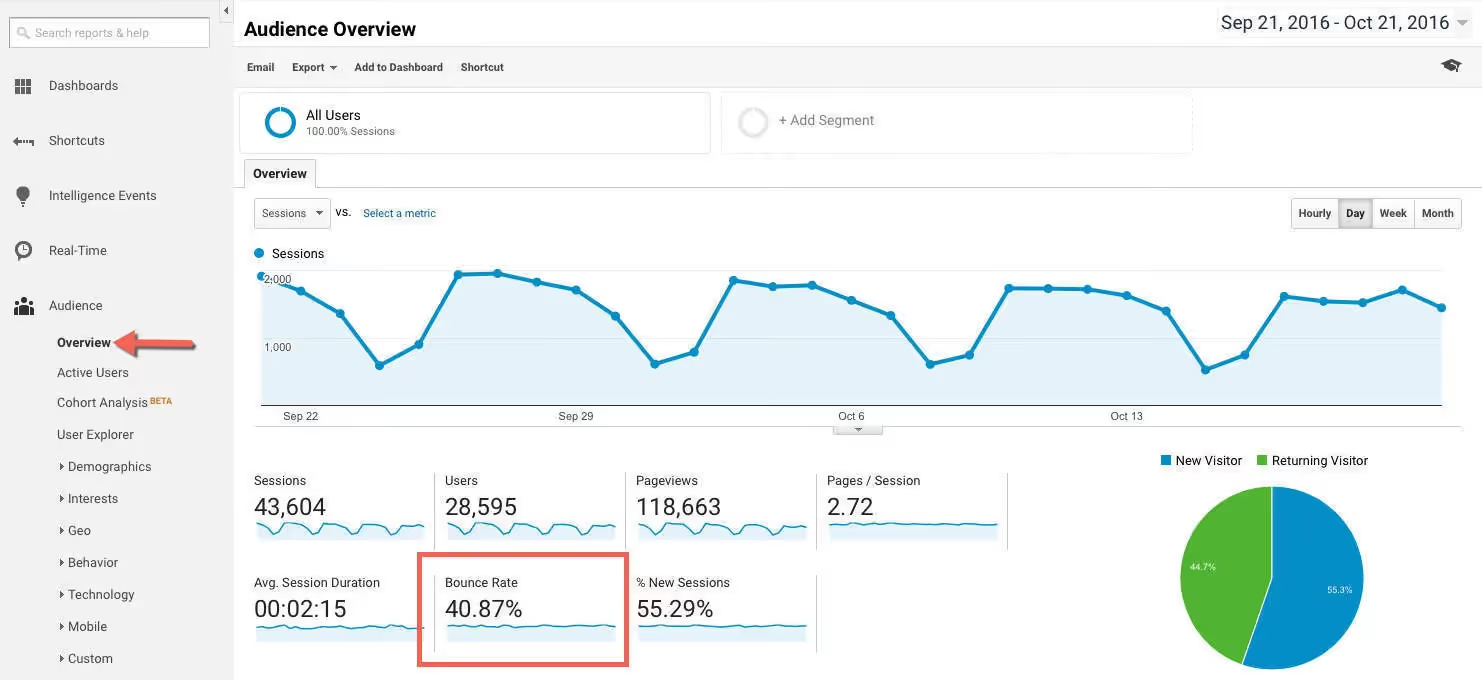
How to check in Google Analytics:
- Access Google Analytics.
- Select Behavior > Site Content > All Pages.
- View Average Time on Page and Bounce Rate to evaluate user retention levels.
Using Google Search Console to track SEO Dwell Time
Google Search Console does not directly measure Dwell Time, but it can help you evaluate SEO performance through:
Click-Through Rate (CTR)
- A high CTR indicates that your page title and description are compelling and effectively encourage users to click.
- If the CTR is high but the Dwell Time is low, the content on the page may not be meeting user expectations.
Average Session Duration
- This metric helps you assess the average amount of time users spend on your website.
- If the session duration is long, it suggests that users are engaging deeply with your content, which helps improve SEO Dwell Time.
How to check in Google Search Console:
- Go to Google Search Console.
- Navigate to Performance to view the CTR for each page.
- Combine this data with Google Analytics to evaluate how long users stay on your pages.
Other tools to help evaluate Dwell Time
In addition to Google Analytics and Google Search Console, you can use other tools such as Semrush, Microsoft Clarity, Hotjar, or Crazy Egg to analyze user behavior. Some key metrics include:
- Session Duration – The total amount of time a user spends on the website.
- Scroll Depth – Tracks how far users scroll down a page to gauge their level of interest in the content.
- User Engagement – Monitors user actions on the page, such as clicking links, watching videos, or reading content.

Conclusion
Dwell Time plays a crucial role in evaluating user experience and influencing your website's SEO performance. To optimize Dwell Time, focus on enhancing content quality, improving page load speeds, refining the user interface, and ensuring your site is mobile-friendly. When users stay on your page longer, Google views your content more favorably, which helps boost your website's search engine rankings. Apply these tips to optimize your Dwell Time and attract more high-quality traffic!