

In the digital age, internet security is not just a priority but a vital necessity for every website. One of the most important solutions for protecting user data and enhancing website credibility is an SSL certificate.
Have you ever wondered why some websites display a green padlock icon in the address bar, while others show a "Not Secure" warning? That is the difference SSL makes! Join Markdao as we explore what SSL is, why it matters, and how to install it on your website to ensure data security and boost your SEO rankings today!
What is SSL?
SSL (Secure Sockets Layer) is a standard security protocol that encrypts data transmitted between a user's browser and a web server. In other words, SSL acts as a protective shield, ensuring that sensitive information like passwords, credit card numbers, and personal data cannot be intercepted by hackers during transmission.
When a website has an SSL certificate installed, outgoing data is encrypted into a complex string of characters that can only be decrypted by the destination server. This helps prevent Man-in-the-Middle attacks—a common method hackers use to steal data online.
.avif)
Initially, SSL was developed to protect online transactions, particularly in e-commerce and banking. Today, however, SSL has become a mandatory standard for almost every website, not only to enhance security but also to build trust with users.
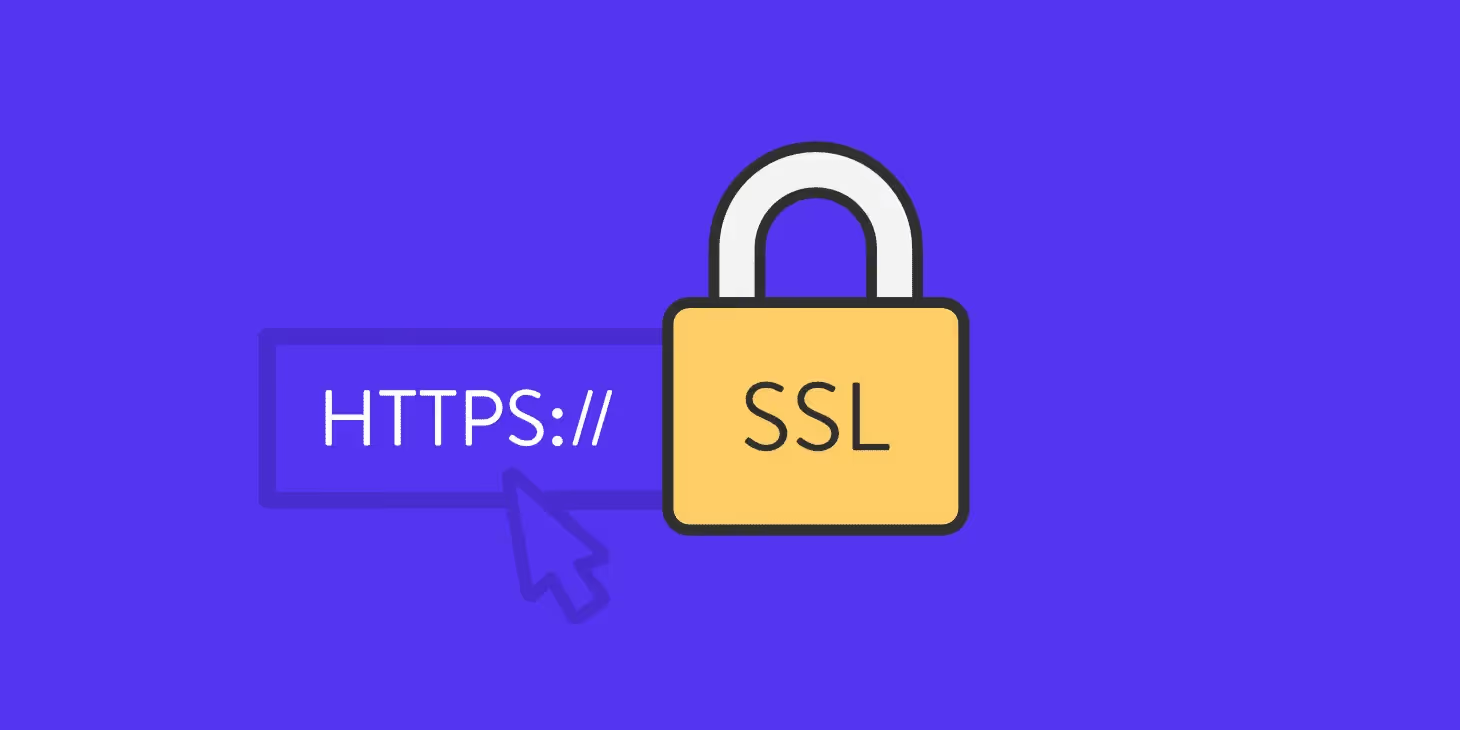
A website with an SSL certificate will use the prefix "https://" instead of "http://", accompanied by a padlock icon in the browser's address bar. This indicates that the website is securely encrypted, giving users peace of mind when visiting. Conversely, if a site lacks SSL, browsers like Chrome or Firefox may display a "Not Secure" warning, making visitors hesitant to enter personal information or conduct transactions.
Common types of SSL certificates
Not all SSL certificates are the same. Depending on their specific security needs, businesses can choose the SSL certificate that best fits their requirements. Below are the most common types of SSL certificates, categorized by their level of validation and scope of protection.
Classification by validation level
1. Domain Validation (DV SSL)
- This is the entry-level SSL certificate, requiring only verification of domain ownership.
- The issuance process is rapid, typically taking anywhere from a few minutes to a few hours.
- Ideal for personal websites, blogs, or sites that do not process financial transactions.
- The website displays a security padlock in the browser, but does not show business identity information.
%20%E2%80%93%20Ch%E1%BB%A9ng%20ch%E1%BB%89%20x%C3%A1c%20th%E1%BB%B1c%20t%C3%AAn%20mi%E1%BB%81n.avif)
2. Organization Validation (OV SSL)
- OV SSL requires verification of business details, including company name, address, and phone number.
- Provides a higher level of security than DV SSL, helping customers identify the legitimate business behind the website.
- Suitable for companies, organizations, or websites that collect customer information.
- Displays a security padlock and provides additional business information when the SSL certificate is clicked.
3. Extended Validation (EV SSL)
- This is the premium SSL certificate, requiring businesses to provide comprehensive legal documentation for validation.
- When using EV SSL, the browser displays the company name next to the address bar, helping users instantly recognize the brand.
- The highest level of security, suitable for banks, financial institutions, and websites requiring a high degree of trust.
- The issuance process takes longer, potentially requiring several days to a few weeks to complete the verification.
%20%E2%80%93%20Ch%E1%BB%A9ng%20ch%E1%BB%89%20x%C3%A1c%20th%E1%BB%B1c%20m%E1%BB%9F%20r%E1%BB%99ng.avif)
Classification by scope of protection
1. Wildcard SSL – Multi-subdomain protection certificate
- If a website has multiple subdomains (e.g., blog.example.com, shop.example.com, support.example.com), Wildcard SSL protects all of them with a single certificate.
- Helps save costs and simplifies security management.
- Suitable for businesses with multiple subdomains under the same domain.
2. Multi-Domain SSL (SAN SSL) – Certificates for multiple domains
- Multi-Domain SSL, also known as SAN (Subject Alternative Name) SSL, allows you to secure multiple different domains with a single certificate.
- Instead of purchasing individual SSL certificates for each domain, SAN SSL helps reduce costs and streamline management.
- Suitable for businesses that own multiple different websites.
Which type of SSL certificate should you choose?
- If you only need basic security and do not require business verification: Domain Validation (DV SSL).
- If you need to build business credibility with customers: Organization Validation (OV SSL).
- If you require the highest level of trust, especially for financial transactions: Extended Validation (EV SSL).
- If you have multiple subdomains that need securing: Wildcard SSL.
- If you own multiple different websites: Multi-Domain SSL (SAN SSL).
Choosing the right SSL certificate will help secure your website, improve SEO rankings, and build customer trust. If you haven't installed SSL yet, now is the time to start!
Benefits of SSL for businesses and SEO
Installing an SSL certificate not only helps protect data but also brings many important benefits to businesses and websites. Below are the key benefits that SSL provides.
Protecting data and enhancing security for businesses
1. Data encryption, preventing hackers
SSL helps encryption data transmitted between the browser and the server, preventing hackers from stealing sensitive information such as:
- Login passwords
- Credit card information
- Customer personal data

This is especially important for e-commerce websites, banks, or any platforms that require account logins.
2. Prevent Man-in-the-Middle attacks
One of the most common forms of internet attacks is the Man-in-the-Middle (MITM) attack, where hackers intercept data being transmitted between the user and the server. SSL helps completely prevent this type of attack, ensuring that data is not tampered with.
3. Build customer trust
A website with an SSL certificate will display a padlock icon in the browser's address bar, indicating that it is a secure site. Conversely, without SSL, browsers will display a “Not Secure” warning, making customers hesitant to visit or conduct transactions.
Improve SEO and Google rankings
Google has confirmed that SSL is a ranking factor in its search algorithm. Websites using HTTPS have an advantage over those using only HTTP.

1. HTTPS is a Google ranking signal
Google prioritizes HTTPS websites over HTTP in search results. This means that if two websites have similar content, the one with SSL will rank higher, helping to increase organic traffic.
2. Improve user experience (UX)
Users tend to avoid visiting websites that display a “Not Secure” warning in their browser. Installing SSL removes these warnings, improves user experience, and consequently reduces bounce rates while increasing time on site.
3. Increase conversion rates
For online retail websites, SSL gives customers peace of mind when entering personal information, thereby increasing the rate of completed transactions. A secure website can significantly boost your conversion rate.
Support for advertising and digital marketing campaigns
1. SSL is required to run Google Ads
Google requires websites that collect customer data to have an SSL certificate to run Google Ads. If a website lacks SSL, ads may be disapproved or perform poorly.
2. Support for remarketing strategies
Many advertising platforms, such as Facebook Ads and Google Ads, require websites to have SSL to run remarketing campaigns. This helps businesses easily re-engage potential customers who have previously visited their site.
Meeting security and legal standards
Many countries and organizations require websites that collect user data to have an SSL certificate to comply with security regulations such as:
- GDPR (European Union) – General Data Protection Regulation
- PCI DSS – Security standard for credit card transactions
- HIPAA – Security standards in the healthcare sector
Failure to install SSL can lead to non-compliance with security standards and expose businesses to legal risks.
An SSL certificate not only helps protect data and build customer trust, but it also improves SEO, supports advertising, and meets security standards. If you operate a website, especially in e-commerce, finance, or online services, installing SSL is mandatory.
4 Ways to check if your website has SSL
You can quickly check if your website has SSL using the following methods:

- Check the browser address bar:
- If there is a padlock icon and the URL begins with "https://", the website has SSL installed.
- If you see a "Not Secure" warning or are using "http://", the website does not have SSL.
- Use an online SSL checker tool:
- SSL Shopper
- Qualys SSL Labs
- Check the SSL certificate in your browser:
- Click the padlock icon in the address bar → Select Certificate to view SSL details.
- Check via command line (for technicians):
Enter the following command on Command Prompt or Terminal:
openssl s_client -connect yourwebsite.com:443
If your website does not have SSL, you should install it immediately to enhance security, improve SEO, and build user trust.
How to install an SSL certificate for your website
Installing an SSL certificate helps protect data, improve SEO, and increase website credibility. Below is a step-by-step guide to help you install SSL easily.
Choose the right type of SSL certificate
Before installing, you need to determine which type of SSL certificate is suitable for your website:
- Free SSL: Use Let’s Encrypt (suitable for personal blogs and small websites).
- Paid SSL: Purchase from providers such as DigiCert, GlobalSign, Sectigo (for business and e-commerce websites).
- Wildcard SSL: Protects all subdomains of your website.
- EV SSL (Extended Validation SSL): Displays the business name in the address bar, increasing credibility.
Registering and purchasing an SSL certificate
If you choose free SSL, you can activate it directly on your hosting. If you choose paid SSL, follow these steps:
- Select a certificate provider (DigiCert, GlobalSign, Sectigo, Comodo, GoDaddy, Namecheap, etc.)
- Purchase the appropriate SSL certificate.
- Generate a CSR (Certificate Signing Request) on your hosting to submit the certificate request.
- Verify domain ownership via email or DNS.
- Receive the SSL certificate from your provider.
3 ways to install an SSL certificate on hosting
1. Install SSL on cPanel
If you are using cPanel, you can easily install SSL by following these steps:
- Log in to cPanel → Select SSL/TLS.
- Go to Manage SSL Sites → Select the domain you want to install the SSL for.
- Paste the content of the Certificate (CRT), Private Key (KEY), and CA Bundle (CABUNDLE).
- Click Install Certificate and wait for confirmation.
Some hosting providers like Hostinger, HawkHost, A2 Hosting offer an AutoSSL feature that lets you install a free Let’s Encrypt SSL certificate with just one click.
2. Installing SSL on Plesk
If you are using Plesk, follow these steps:
- Log in to your Plesk Panel.
- Go to Websites & Domains → Select SSL/TLS Certificates.
- Enter your SSL certificate details → Click Install Certificate.
3. Install SSL on Cloudflare (Free)
If you use Cloudflare, you can enable free SSL:
- Log in to Cloudflare → Select your website.
- Go to SSL/TLS → Select Flexible SSL or Full SSL.
- Wait a few minutes for the SSL to be activated.
Note: If your website has a Mixed Contenterror, update your URLs from http:// to https://.
Switch your entire website to HTTPS
After installing SSL, you need to switch your entire website to HTTPS to avoid security errors:
1. Update URLs in WordPress (If using WordPress)
- Go to Settings → General.
- Update the WordPress Address (URL) and Site Address (URL) from http:// to https://.
- Save your changes and check your website.
2. Edit the .htaccess file to redirect HTTP to HTTPS
Open the .htaccess file on your hosting and add the following code to enable automatic redirection:
RewriteEngine On
RewriteCond %{HTTPS} !=on
RewriteRule ^(.*)$ https://%{HTTP_HOST}%{REQUEST_URI} [L,R=301]
Verify that SSL is active
Once installed, you should verify that your SSL certificate is working correctly:
- Using a browser: Check if your website has a padlock icon in the address bar.
- Using online tools:
- SSL Checker
- Qualys SSL Labs
Installing SSL is a crucial step to protect data, build trust, and boost your SEO. You can easily enable free SSL through your hosting provider or purchase a certificate from a reputable provider. Once installed, don't forget to redirect HTTP to HTTPS to ensure your website runs securely and effectively!
Conclusion
An SSL certificate is more than just a shield for customer data; it is a key factor in enhancing your website's credibility, improving SEO, and gaining a competitive edge. Installing SSL is straightforward and provides long-term value for both your business and your users. If your website doesn't have SSL yet, don't wait—implement it today to ensure optimal security, speed, and user experience!