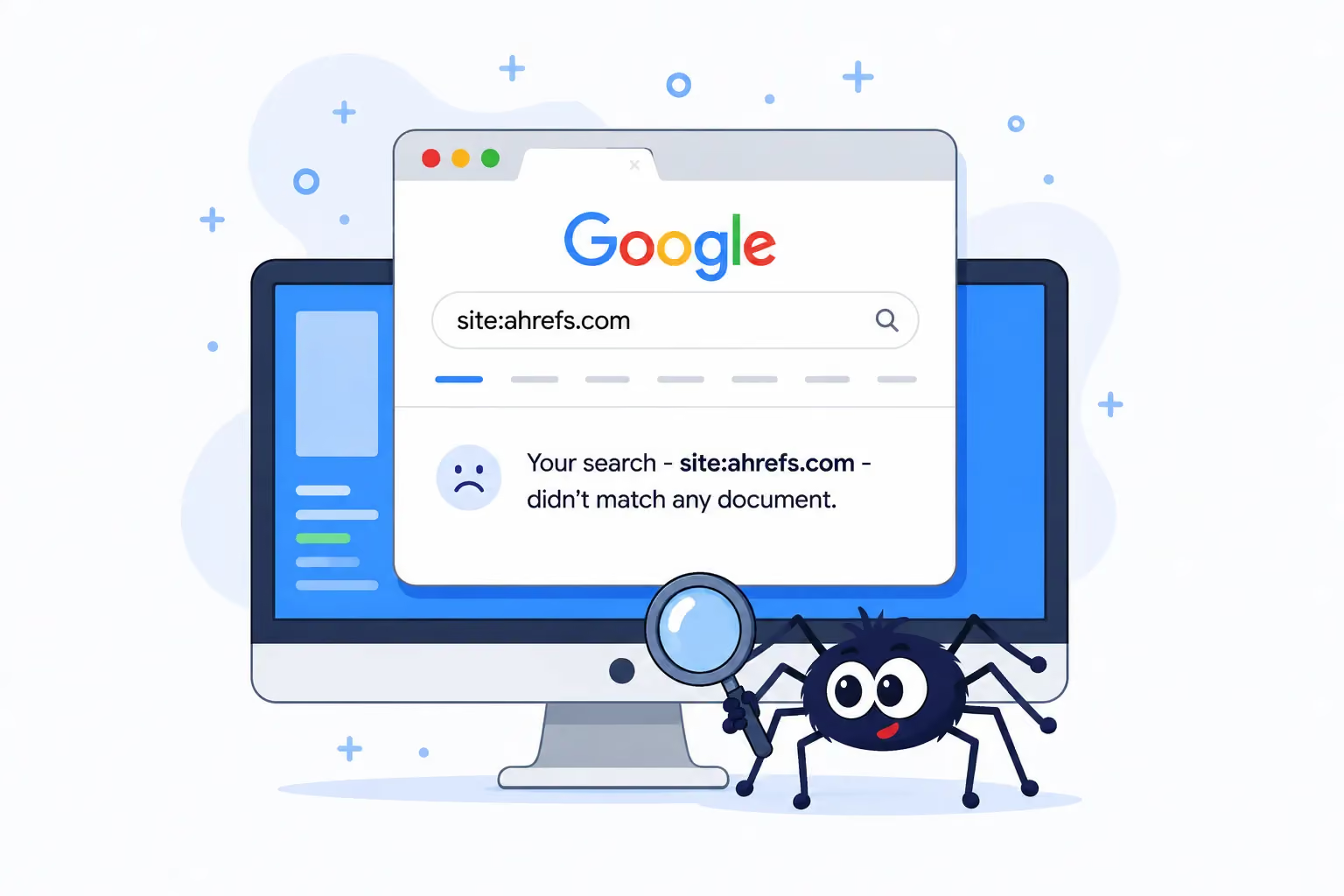


When building and developing a new website, many administrators are often puzzled to find that their site does not achieve the expected rankings despite careful SEO optimization. One of the most common reasons is the phenomenon of Google Sandbox. This is an unofficial term used to describe the situation where new websites have their rankings "restricted" on Google for a certain period of time.
Understanding what Google Sandbox is, how to identify it, and how to overcome it will help you optimize your SEO strategy and increase your chances of successfully improving your website's rankings.
What is Google Sandbox?
Understanding the concept
Google Sandbox is an unofficial term used by SEO experts to describe the phenomenon where new websites are "held back" from ranking highly in Google search results. Even if a site is well-optimized and contains quality content, its rankings may not improve significantly during the initial period. This makes it difficult for web administrators to gain organic traffic immediately after the site launches.
History of the term
The concept of Google Sandbox first appeared around 2004-2005, when SEO experts noticed that new websites, despite being well-optimized, were not achieving high rankings. Since then, the term has been used to describe a mechanism that Google appears to apply to test and evaluate new websites before allowing them to "escape" this state.
Characteristics of Google Sandbox
1. Preventing spam and SEO manipulation: Google wants to ensure that untrustworthy sites, created solely for spam or using fraudulent SEO tactics, cannot climb search results quickly.
2. Ensuring content quality: During the time the Google Sandbox is in effect, Google has more time to analyze content, backlinks, and user signals to determine the true value of the website.
3. Building trust: By limiting the rankings of new websites, Google allows established, trustworthy sites to maintain their dominance in search results.
The moderation function of the Google Sandbox
Google Sandbox, while not officially confirmed, acts as an initial "moderation system" for new websites. It not only ensures fairness in rankings but also enhances the user experience by prioritizing high-quality search results.
If you are launching a new website, using tools like the GG Sandbox Checker can help you determine if your site is being affected by this mechanism.
Why does Google apply the Sandbox to new websites?
New websites often face unique challenges when being evaluated and ranked by Google. Here are some of the main reasons why Google might apply Google Sandbox to new websites:
Lack of historical data leads to a lack of trust signals from Google
One of the key factors Google uses to evaluate and rank a website is historical data regarding its performance and reliability. New websites lack a long-term history and cannot provide Google with enough information to assess their trustworthiness and value. This makes it difficult for Google to decide whether a site should be allowed to climb to high positions in search results.
New websites do not yet have many backlinks from reputable sources and have not generated significant social signals (such as social media shares). Google relies on factors like backlinks and user engagement to determine a site's credibility. If a site lacks these signals, Google may "place" it in a holding pattern (the Sandbox) for further evaluation.
Verifying whether a new website truly provides value to users
Google is constantly working to prevent SEO manipulation and search spam. New websites are more prone to suspicion, especially if they:
- Show an unnatural growth in backlinks.
- Over-optimize keywords to achieve high rankings artificially.
Google Sandbox helps Google's systems filter out these sites, protecting users from low-quality or untrustworthy content.
Evaluating content quality and backlinks
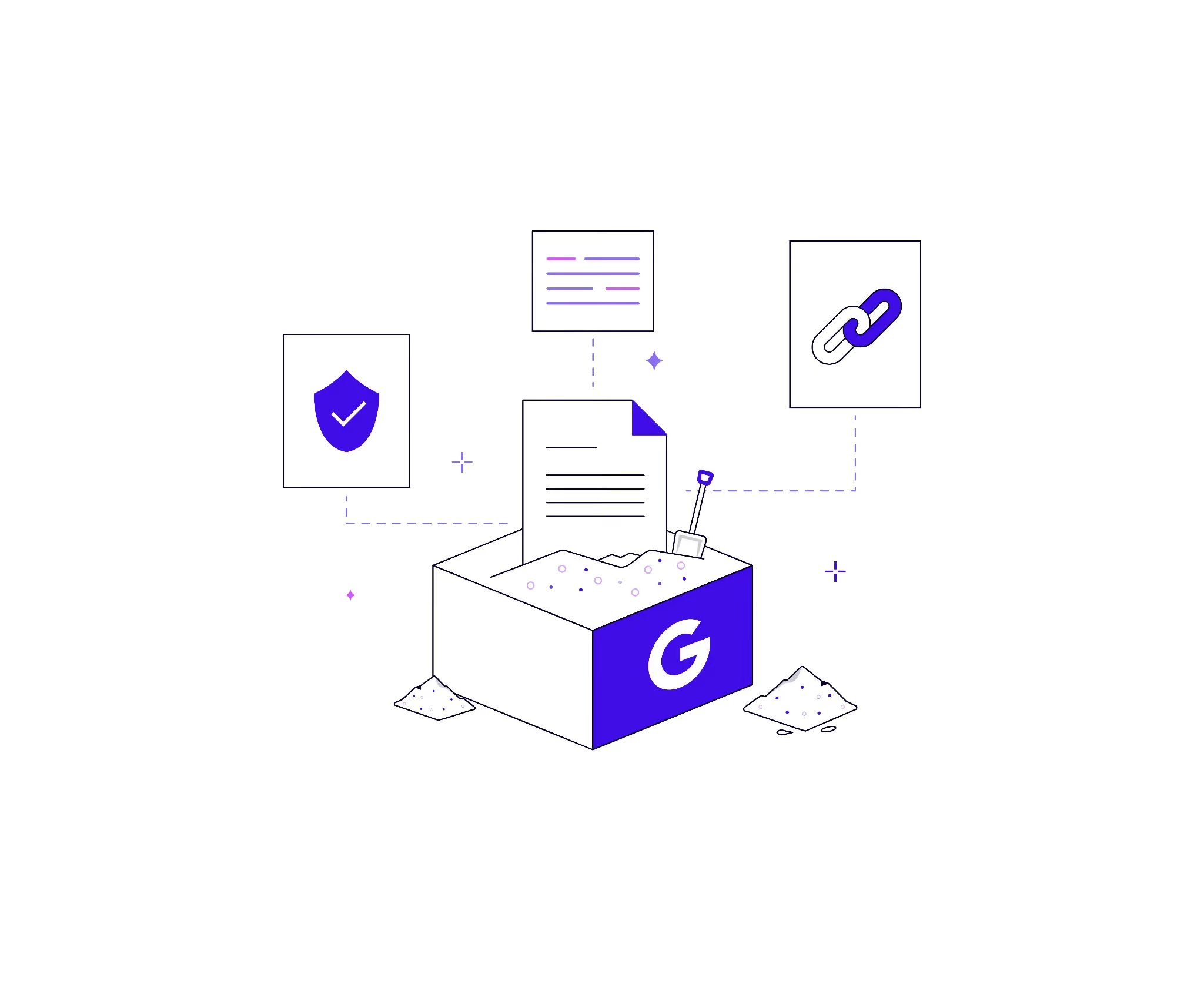
When a new website is launched, Google needs time to evaluate the quality of its content and the links pointing to it. This process involves verifying whether the content is truly useful, high-quality, and relevant to the keywords the site is targeting. Additionally, Google must review the backlinks to ensure they originate from reputable sources rather than spammy or low-quality sites. Consequently, Google may "place" the website in a Sandbox during this period to conduct a thorough assessment.
How to tell if your website is in the Google Sandbox
4 key signs appearing on your website
When a new website struggles to rank or grow its traffic, it is very likely being affected by Google Sandbox. Below are some key signs to help you identify it:
1. Main keywords are not ranking:
Even though you have optimized your content and targeted your main keywords, they do not appear in the top 100 search results when checked. This indicates that Google is not yet ready to prioritize showing your content to users.
2. Low traffic:
Organic traffic from search engines is much lower than expected, especially when you have invested in building quality content and SEO.
3. Backlinks do not improve rankings:
Despite having some quality backlinks from reputable websites, the rankings for your main keywords do not improve significantly. This is a sign that your website may be restricted within the Google Sandbox.
4. No clear penalties:
Your website does not violate any Google policies and has not received any penalty notifications in Google Search Console, yet it still fails to rank well. This differs from a Google Penalty, where issues are usually clear and specifically communicated.
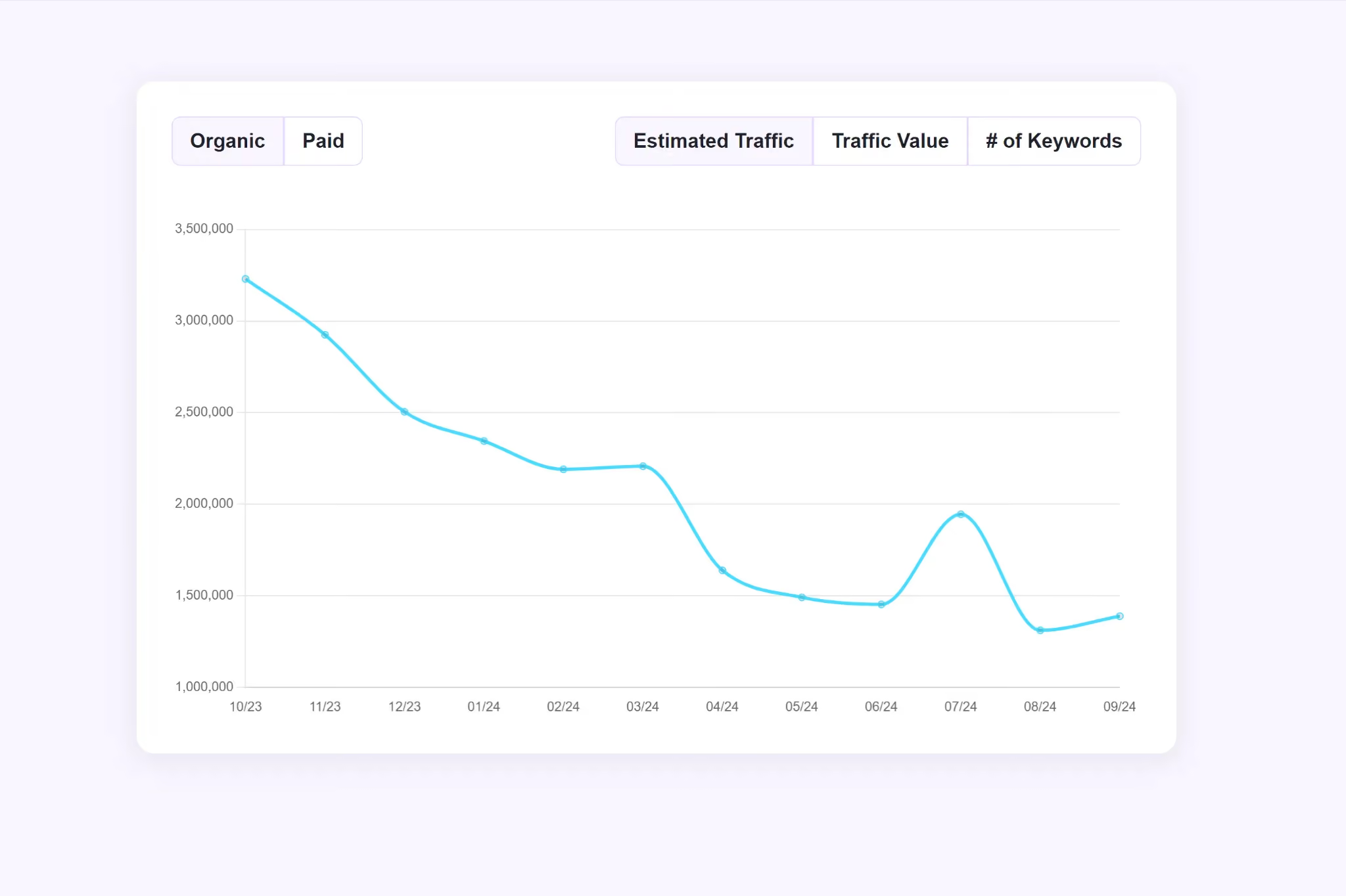
Identification through tool analysis
To determine more clearly whether your website is being affected by Google Sandbox , you can use SEO analysis tools.
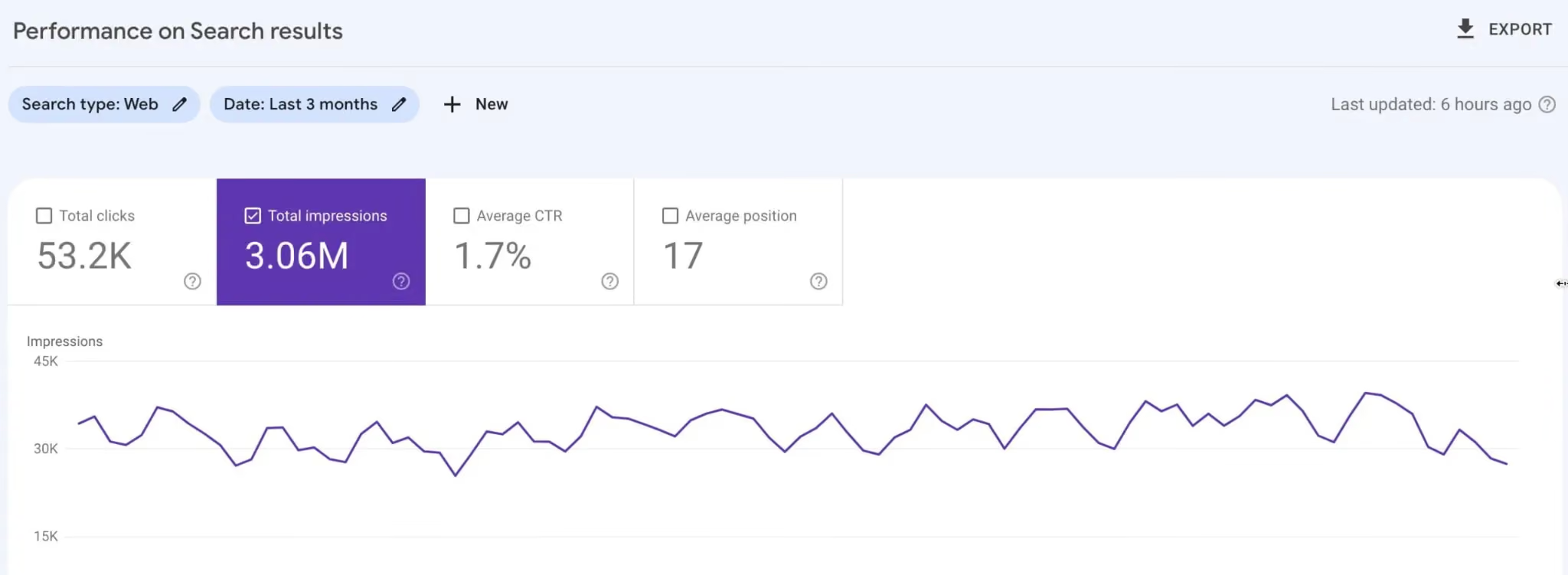
Google Search Console:
- Check the keywords appearing in your performance report. If many keywords have no or very few impressions despite being optimized, this could be a sign of the Google Sandbox.
- Analyze organic traffic growth over time.
SEO tools like Ahrefs, SEMrush, and Moz:
- Monitor keyword rankings to identify those that are underperforming.
- Evaluate your organic traffic compared to industry competitors.
- Review your backlink profile to ensure links are coming from reputable sources.
How to get out of the Google Sandbox?
When your website is affected by Google Sandbox, it is important to implement strategies to build authority and improve SEO performance naturally. Here are effective ways to help your website recover:
Create quality content
- Publish unique, useful content that is relevant to user search intent.
- Ensure content is updated regularly to keep the website fresh and useful.
- Focus on solving specific problems or providing valuable information that competitors are not addressing well.
Build natural backlinks
- Promote links from reputable websites that are relevant to your industry.
- Avoid buying backlinks or using low-quality link-building techniques.
- Create high-value content to attract natural links from trusted sources.
Boost social media signals
- Share your content on social media platforms like Facebook, Twitter, and LinkedIn to increase reach and engagement.
- Encourage users to share your articles, leave reviews, or provide positive feedback on your content.
- Strengthen your brand presence on social platforms to generate more positive signals for Google.
Optimize technical SEO
- Improve page load speed to enhance user experience and reduce bounce rates.
- Ensure your website is mobile-friendly and adheres to basic technical SEO guidelines.
- Fix issues such as crawl errors, broken links, or duplicate content so Google can easily crawl and evaluate your site.
Be patient and stay consistent
- Understand that time is a key factor for Google to evaluate and verify the quality of your website.
- Maintain your SEO strategies consistently and do not seek instant results.
- Focus on building your website as a reliable and long-term resource.

Helpful tips
Use SEO analysis tools or Google Sandbox Checker Tool to track your website's progress. Remember, escaping the Google Sandbox does not happen overnight, but with the right strategies and patience, you will achieve the results you expect.
Conclusion
Google Sandbox can be a major hurdle for new websites, but it is also an opportunity to build a solid foundation for long-term growth. By recognizing the signs of being affected, using analytical tools, and applying the right strategies—such as creating quality content, building natural backlinks, and optimizing technical SEO—you can successfully overcome this situation. Be patient and focus on long-term value, because a reliable, high-quality website will always earn recognition from Google.