


Trust Flow is a key metric used to evaluate a website's trustworthiness. Developed by Majestic, Trust Flow reflects the quality of backlinks pointing to a site, which directly influences its Google search rankings. A high Trust Flow score indicates that a website has earned quality backlinks from reputable sources, thereby enhancing its credibility and competitiveness on the SERP. So, what is Trust Flow? How can you improve your Trust Flow and leverage it to boost SEO performance? Let's Markdao explore this in detail in this article.
What is Trust Flow?
What is Trust Flow? Trust Flow (TF) is a vital SEO metric that assesses a website's reliability based on the quality of its incoming backlinks. If a site receives links from authoritative sources, its Trust Flow score will be higher, signaling to search engines that the page is more trustworthy.
For example: If your website has backlinks from well-known sites like BBC, Wikipedia, or Forbes, your Trust Flow will increase, which signals to Google that your page is of high quality.
The Origin of Trust Flow
The Trust Flow metric was developed by Majestic, a company specializing in backlink analysis and SEO. Majestic SEO is one of the most powerful tools available for SEO professionals to audit link quality and measure a website's authority.
Unlike other SEO metrics such as Moz's Domain Authority (DA) or Google's PageRank, Trust Flow focuses on evaluating the quality of links rather than just the quantity.

Trust Flow Scoring Scale
Trust Flow is measured on a scale from 0 to 100.
- TF from 0 - 10: Low reliability; may contain many spammy links.
- TF from 10 - 30: Average level; the website has some quality backlinks.
- TF from 30 - 50: The website has a good reputation and receives links from trustworthy sources.
- TF above 50: Highly trustworthy website, likely belonging to major brands or top-tier news outlets.
Note: Trust Flow can be negatively impacted if a website has many backlinks from low-quality sites. Therefore, it is essential to regularly audit and disavow toxic links to maintain the best possible Majestic Trust Flow.
What is Topical Trust Flow?
Topical Trust Flow is a variation of Trust Flow that evaluates a website's authority within specific niches. It allows you to determine how much expertise your site has in a particular industry.
For example: If a health-focused website receives too many backlinks from gambling or entertainment sites, its Topical Trust Flow will be low because the links are irrelevant to the main topic.
How Topical Trust Flow works
Majestic categorizes Topical Trust Flow into various categories, such as:
- Business/Marketing
- Health/Medicine
- Technology/Computers
- Education
- News/Media
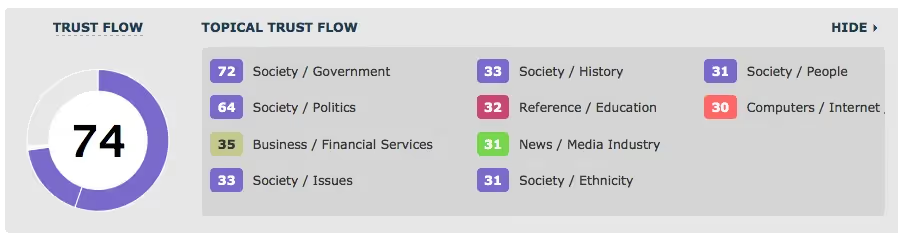
When a website receives backlinks from sites within the same industry, its Topical Trust Flow score increases, signaling to Google that the site possesses genuine expertise in that field.
For example: If a travel website receives many backlinks from travel blogs, booking sites, and travel guides, its Topical Trust Flow for the travel category will be higher.
How does Trust Flow affect SEO?
1. Improving search engine rankings
Google considers backlink quality one of the most important ranking factors. If a website has backlinks from authoritative sources, its Trust Flow will be high, demonstrating that the site's content is trustworthy. This helps Google evaluate the website more favorably and can improve keyword rankings on the SERP.
→ A high Trust Flow helps a website achieve better rankings on Google.
For example:
- A technology website that receives backlinks from reputable sites like TechCrunch, Wired, or Mashable will have a higher Majestic Trust Flow than a website receiving links from obscure, unknown blogs.
- With a high Trust Flow, a website has a better chance of competing in search rankings, thereby attracting more organic traffic.
2. Building authority and credibility
When users visit a website with a high Trust Flow score, they are more likely to trust its content and products or services. Some benefits of a high Trust Flow include:
- Increased conversion rates: Users are more willing to make purchases or sign up for services on websites they perceive as trustworthy.
- Attract partnership opportunities: Potential businesses or partners prefer to work with highly reputable websites.
- Improve user retention rates: When a website has backlinks from quality sources, its content is generally more valuable, which helps keep users engaged for longer.
→ A high Trust Flow not only aids SEO but also helps the website build trust with users and partners.
Example:
- An e-commerce site with a high Trust Flow will attract customers more easily than a new site that lacks quality backlinks.
- If you run an SEO blog, a high Trust Flow makes it easier to collaborate with industry experts, expand your reach, and increase the value of your content.
3. Reduce the risk of Google penalties
Google is becoming increasingly strict about handling unnatural link-building strategies, such as:
- Buying and selling backlinks from untrustworthy websites.
- Excessive use of private blog networks (PBNs) to manipulate rankings.
- Receiving backlinks from spammy or low-quality websites.
When a website has a low Trust Flow, Google may view it as a sign of black-hat SEO, risking ranking drops or deindexing. Conversely, a high Trust Flow indicates that backlinks come from reliable sources, helping to mitigate the risk of penalties.
→ Websites with many low-quality backlinks are prone to Google penalties, but a high Trust Flow helps minimize this risk.
Example:
- A newly established website might receive many backlinks from spam forums or irrelevant sites. Without proper monitoring, Google may penalize the site's rankings.
- A business using black-hat SEO services to rapidly increase backlinks may see its Trust Flow decline, leading to negative consequences for its search rankings.
Guide to effectively leveraging and using Trust Flow
Trust Flow is a key metric for evaluating backlink quality and optimizing SEO strategies. To maximize this metric, follow these steps to ensure your website maintains a high-quality and reliable link profile.
3 steps to effectively leverage Trust Flow
Step 1: Analyze your competitors
Analyzing your competitors' Trust Flow helps you understand the backlink strategies they are using. This allows you to:
- Compare your website's authority against your competitors.
- Identify high-quality backlink sources that your competitors are utilizing.
- Discover your competitors' SEO tactics to adjust your own strategy.
How to do it:
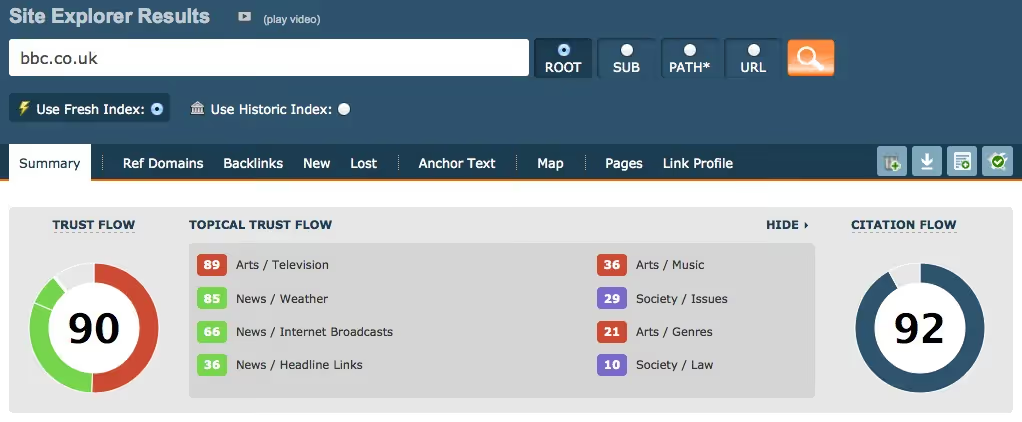
- Use the Majestic SEO tool to enter your competitor's domain.
- Check their Majestic Trust Flow, Citation Flow, and Topical Trust Flow.
- Analyze the list of high-TF backlinks to find opportunities for building similar links.
Step 2: Evaluate backlink opportunities
Not all backlinks are created equal. Choosing the right websites for your links helps you increase your Trust Flow without the risk of being penalized by Google.
- Select backlinks from sites with high TF that are in the same niche.
- Avoid placing backlinks on websites with low TF or those that are spammy.
- Leverage reputable news sites, blogs, or industry-specific forums.
How to do it:
- Use Majestic to check a website's TF before placing a backlink.
- Prioritize sites where Trust Flow is higher than Citation Flow to ensure high-quality backlinks.
Step 3: Identify and remove toxic links
Links from low-quality websites can negatively impact your Trust Flow and SEO rankings. Therefore, you should regularly audit and remove toxic backlinks.
How to do it:
- Use Majestic SEO or Google Search Console to identify backlinks with low Trust Flow.
- Check if the backlinks originate from spam sites, PBNs, or irrelevant sources.
- If you discover toxic links, use the Google Disavow Tool to disavow them.
Pro tip: Maintaining a clean backlink profile helps protect your website from Google penalties and improves your Majestic Trust Flow score.
5 steps to using Majestic Trust Flow
Step 1: Analyze competitors using Majestic
Using Majestic SEO to research competitor Trust Flow helps you:
- Understand the competitor's backlink structure.
- Identify high-TF websites that link to your competitors.
- Pinpoint potential websites for your own link-building efforts.
Note:
- Select competitors with high Trust Flow for your research.
- Review the Referring Domains list to find backlink opportunities.
Step 2: Link Audit
Auditing your current backlinks helps you determine which links are boosting your Trust Flow and which ones need to be removed.
How to do it:
- Use Majestic to analyze the TF and CF of each backlink.
- Find backlinks from websites with low TF or irrelevant content.
- Remove bad links by sending removal requests or using the Google Disavow Tool.
Step 3: Link Prospecting
Use Trust Flow to identify websites with backlink potential.
- Prioritize websites with a Trust Flow higher than 30.
- Select sites with a Topical Trust Flow relevant to your industry.
- Avoid sites with high Citation Flow but low Trust Flow, as they may be spam.
How to do it:
- Find high-TF websites in the same niche.
- Reach out and propose guest posts or content collaborations.
- Place backlinks from reputable news outlets, blogs, or industry-specific forums.
Step 4: Blocking Majestic bots
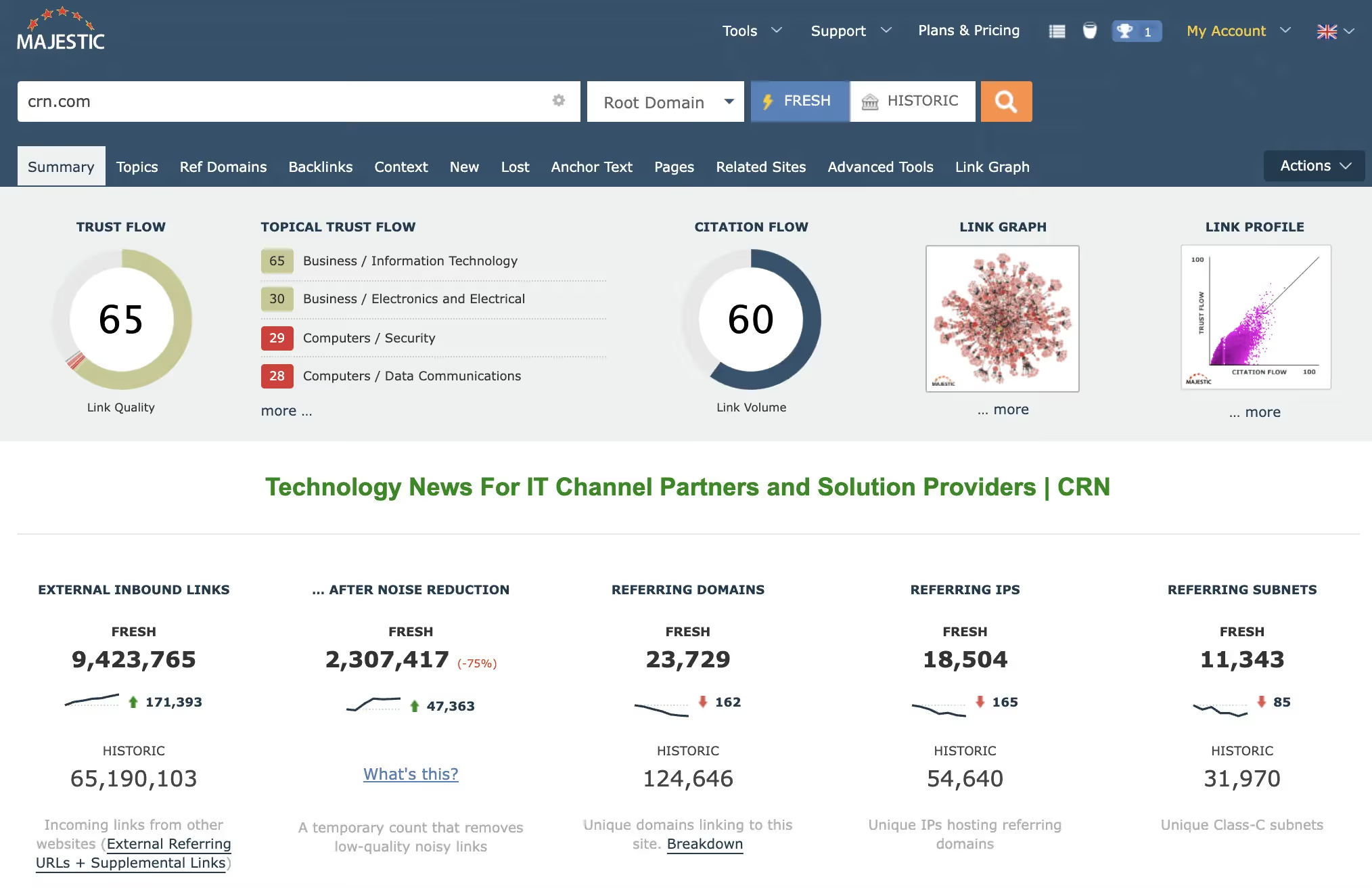
Some websites block Majestic bots, which prevents Trust Flow metrics from displaying accurately. This can make backlink analysis difficult.
Tip:
- If you see a website with backlinks pointing to it but no TF, it may have blocked Majestic's bot.
- Check the website using other tools like Ahrefs, SEMrush to verify backlink data.
Step 5: PBN deindexing
Private Blog Networks (PBNs) are often deindexed by Google if they lack clear relevance in Topical Trust Flow.
How to identify deindexed PBNs:
- The website has low TF but high CF.
- Links come from many irrelevant domains.
- There is no actual traffic from Google.
Tip:
- Avoid placing backlinks on low-quality PBNs to prevent negative impacts on your TF.
- If you are using PBNs, ensure they have quality content and link to relevant pages.
Effective tips for increasing website Trust Flow from Markdao
To increase Trust Flow sustainably, you need to focus on backlink quality and a sound SEO strategy. Here are some tips to help you improve your Majestic Trust Flow quickly:
1. Build high-quality backlinks
- Only place links on websites with high Trust Flow and strong authority.
- Avoid backlinks from spammy or irrelevant websites.
2. Guest Posting & PBNs
- Write articles for high-quality websites to earn natural backlinks.
- If using PBNs, ensure the sites have good content and high TF.
3. Build a network of trust
- Connect with bloggers and reputable websites in your industry to exchange backlinks.
- Collaborate with news outlets and industry-specific forums to boost credibility.
4. Blog commenting
- Choose blogs within your niche to comment on and include relevant links.
- Ensure your comments provide value and are not spam.
5. Competitor backlink analysis
- Analyze your competitors' backlinks using Majestic SEO.
- Identify and reach out to sites linking to your competitors to secure your own backlinks.

6. Use professional SEO services
- Partner with reputable SEO agencies to develop a sustainable link-building strategy.
- Avoid cheap backlink services, as they can easily lower your TF.
7. Maintain relevance
- Only build backlinks from websites in the same niche to increase credibility.
- Ensure content is aligned with the website's topic.
8. Use internal links strategically
- Optimize your internal link structure to improve user experience.
- Link between articles with related topics to boost TF.
9. Connect with influencers
- Collaborate with influencers and industry experts to gain high-quality backlinks.
- Appear on podcasts, videos, or professional articles to increase authority.
Conclusion
So, what is Trust Flow? Trust Flow is not just a metric for evaluating backlink quality; it is a crucial factor in helping your website achieve high search engine rankings. Building a strong Trust Flow requires a sustainable SEO strategy that focuses on quality backlinks, optimized internal linking, and relevant content. Monitor and improve your Trust Flow regularly to ensure your website maintains high authority, thereby increasing customer reach and optimizing SEO performance.