In the digital world, SEO (Search Engine Optimization) is not just a tool, but a vital strategy that helps businesses stand out among millions of competitors. To succeed with SEO, mastering basic terms and concepts is key, from elements like keywords and links to Google's complex algorithms. This article aims to help you explore all the SEO terms that matter most, serving as an indispensable guide for every SEOer, whether you are a beginner or an experienced professional!
Overview of SEO
SEO (Search Engine Optimization) is the process of optimizing a website to improve its ranking on search engines, especially Google. In a landscape where millions of websites compete for user attention, SEO acts as a crucial bridge between businesses and potential customers.

The goal of SEO is not just to increase traffic, but to ensure that traffic comes from the right target audience, helping to increase conversion opportunities and optimize revenue.
SEO encompasses many different aspects, from content optimization (On-page SEO) and link building (Off-page SEO) to improving website technical performance (Technical SEO). Understanding and correctly applying these concepts and SEO terms is the first step toward successful website optimization, whether you are working for a business or developing a personal brand.
In the following sections, this article by Markdao will provide details on the important terms that every SEOer needs to master to build an effective strategy.
Essential SEO terms for SEOers

SEO Basics
SEO (Search Engine Optimization): SEO, or Search Engine Optimization, is the process of improving website content and structure to increase rankings on search engine results pages. The primary goal of SEO is to attract organic traffic from users, providing long-term value without the need for paid advertising.
Organic Search Results: Organic search results are links displayed on search pages that are not paid advertisements. They are ranked based on relevance, content quality, and other factors according to search engine algorithms.
Search Engines: Search engines like Google, Bing, and Yahoo are platforms that users rely on to find information online. These tools work by crawling, indexing, and ranking internet content to provide the most relevant results for a user's search query.
Keyword-related terms

Keyword Density: Keyword density is the ratio of a keyword's occurrences compared to the total word count of the content. This is a key factor that helps search engines understand the topic of an article. However, keyword density should be kept natural, typically around 3%, to avoid being flagged as spam.
Keyword Stuffing: Keyword stuffing is the practice of using keywords unnaturally or excessively within content. This behavior not only degrades the reader's experience but can also lead to search engine penalties, resulting in lower website rankings.
Search Intent: Search intent is the goal a user aims to achieve when entering a keyword into a search engine. This intent generally falls into four main categories:
- Informational: Searching for information.
- Navigational: Searching for a specific website.
- Transactional: Searching to make a purchase or complete a transaction.
- Commercial: Searching for information before making a purchase decision.
Focus Keyword: A focus keyword is the word or phrase that an article is optimized for. It helps search engines identify the content of the article and rank it in relevant search results.
Latent Semantic Indexing (LSI): LSI keywords are terms semantically related to your primary keyword. Using LSI in your content enriches the text, increases relevance, and improves your chances of ranking on search engines.
On-page SEO
Heading Tags (H1, H2, H3...): Heading tags help structure on-page content, clarify topics, and establish a hierarchy of information. The H1 tag is typically used for the main title, while H2 and H3 tags are used to break content into clear sections, helping search engines better understand your article.
Image Optimization: Image optimization includes:
- Alt Text: Adding alternative text descriptions to help search engines understand the content of your images.
- Image Compression: Reducing image file size to improve page loading speed.
- Format: Using appropriate image formats such as JPEG, PNG, or WebP to optimize performance.
Content-Length: Content length is a key factor affecting SEO. Long-form, detailed content (typically over 1,000 words) tends to provide more value to readers and is ranked higher by search engines, provided the information is high-quality and not repetitive.
URL Optimization: URLs should be concise, contain the primary keyword, and avoid special characters. A well-structured URL is not only easy for users to remember but also improves search engine rankings.
Internal Links: Internal links guide readers to other pages on the same website, helping to increase time on page and reduce bounce rates. Additionally, internal links help search engines easily index content and distribute SEO value across your entire website.
Off-page SEO
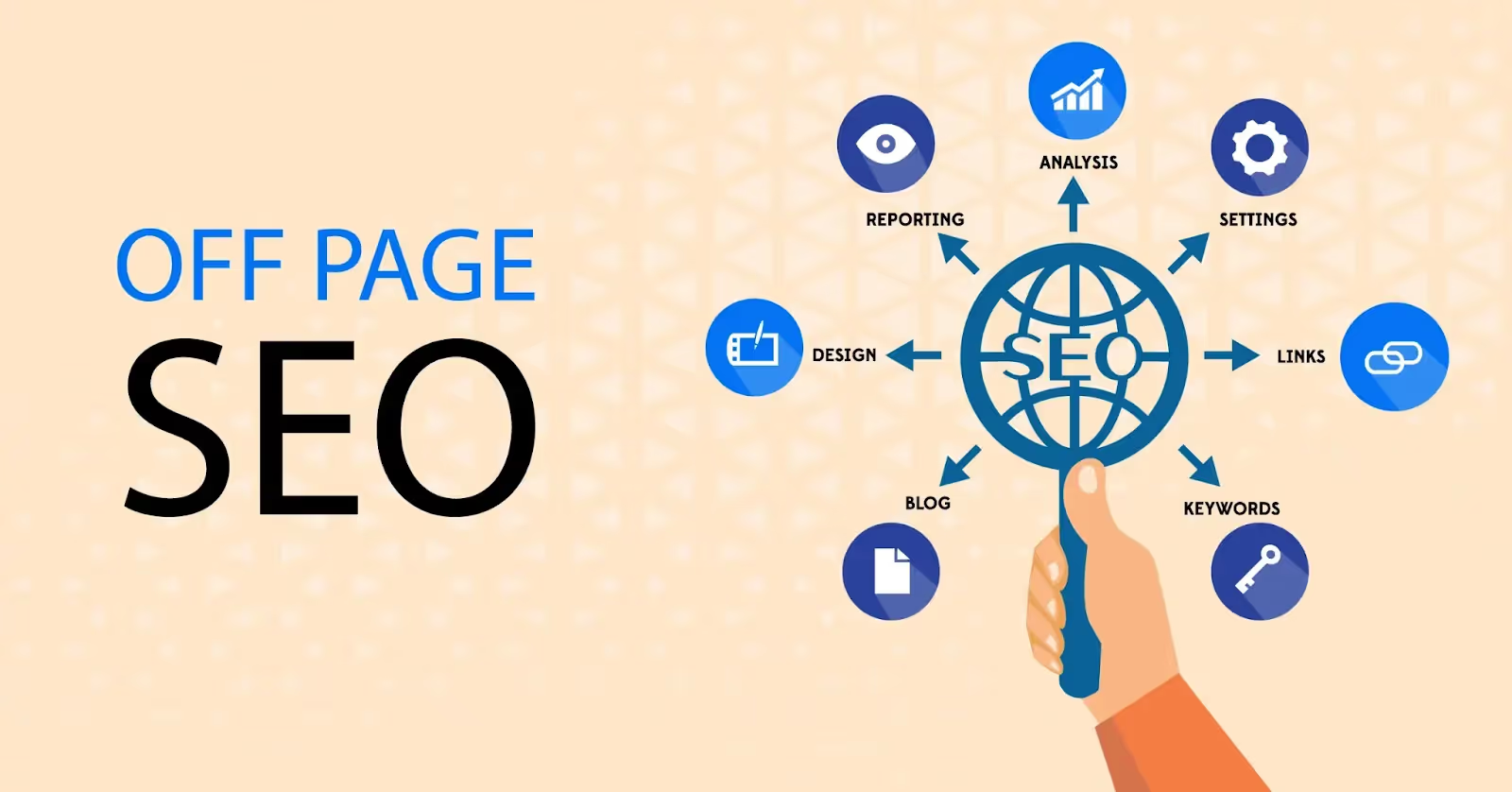
Link Building: Link Building is the process of acquiring backlinks from other reputable websites to your own. High-quality backlinks are crucial for improving search engine rankings, as they act as "votes" that signal the credibility and value of your content.
Anchor Text: Anchor Text is the clickable text used in a hyperlink. Effective anchor text should include relevant keywords related to the linked content, helping search engines understand the context and boosting rankings for those specific terms. However, overusing or stuffing keywords into anchor text can lead to penalties.
Social Signals: Social signals such as likes, shares, and comments on platforms like Facebook, Twitter, and LinkedIn have an indirect impact on SEO. These signals help increase brand awareness and traffic while signaling the popularity of your content to search engines.
Guest Posting: Guest Posting is a strategy of writing content for other websites to share value and build backlinks to your own site. When done correctly, guest posting not only drives traffic but also enhances your authority and builds relationships within your industry.
Technical SEO

Crawl Budget: Crawl Budget refers to the number of pages on your website that search engine bots, such as Googlebot, can crawl within a given timeframe. Optimizing your crawl budget by removing unnecessary content and improving page load speed helps bots focus on your most important pages.
Mobile-first Indexing: Mobile-first Indexing is Google's policy of prioritizing the mobile version of a website for indexing and ranking. Ensuring your site is mobile-friendly, with a responsive design and fast loading speeds, is essential for improving your search rankings.
Canonical URL: A canonical URL is an HTML tag that specifies the preferred version of a page when content appears on multiple URLs. Using this tag helps resolve duplicate content issues, preserves SEO value, and prevents search engine penalties.
Hreflang: Hreflang is a tag used to inform search engines about the language and geographical targeting of your content. This is vital for multilingual websites, ensuring that users are directed to the version most appropriate for them.
404 Errors: A 404 error occurs when a user or search bot visits a URL that does not exist. To avoid losing SEO value, set up a custom 404 error page that guides users back to the homepage or provides other helpful links. Additionally, regularly check for and fix broken links to maintain a positive experience for both users and search bots.
Key SEO Metrics

CTR (Click-Through Rate): CTR, or Click-Through Rate, is the ratio of users who click on a link in search results compared to the total number of impressions. A high CTR indicates that your content is engaging and relevant to searchers, which helps improve your SEO rankings.
Impressions: Impressions represent the number of times a website appears in search results, regardless of whether a user clicks on it. This is a key metric for evaluating your website's search engine presence and determining if your SEO strategy is moving in the right direction.
Conversion Rate (CR): The Conversion Rate (CR) is the percentage of visitors who complete a desired action on your website, such as making a purchase, signing up for a newsletter, or filling out a form. This is a vital metric for measuring the actual effectiveness of your website and SEO campaigns in achieving business goals.
Time on Page: Time on Page is the average amount of time users spend on a specific page. This metric helps assess how engaging and valuable your content is to users. A longer duration often indicates that your content is useful and that users are interested in exploring it further.
Bounce Rate: Bounce Rate is the percentage of users who leave your website immediately after arriving without taking any action. A high bounce rate may indicate that your content is not engaging or that the user experience is not optimized, which can negatively impact your SEO results.
Search Engine Terminology

Algorithm: Google's algorithm is the set of rules that search engines use to rank websites in search results. Notable algorithms include:
- Panda: Focuses on content quality and lowers the rankings of websites with low-quality content.
- Penguin: Combats websites that use unnatural link-building tactics (spammy backlinks).
- Hummingbird: Improves the understanding of search query semantics and intent, enhancing the user experience.
Google Search Console: Google Search Console is a free tool from Google that helps webmasters monitor and maintain their website's presence in search results. It provides data on keywords, clicks, crawl errors, and technical issues that need to be addressed for SEO optimization.
Google Analytics: Google Analytics is a free tool from Google used to track and analyze website traffic, user behavior, traffic sources, and many other key metrics. Using Google Analytics helps you better understand your users and improve your SEO strategy.
Rich Snippets: Rich Snippets are highlighted pieces of information that Google displays on the search engine results page (SERP) to provide extra value to users, such as star ratings, product prices, recipes, events, and more. Rich snippets can help increase the click-through rate (CTR) for your website.
Featured Snippets: Featured Snippets are special information blocks that appear at position zero in Google search results, right above the organic listings. This information typically provides a direct answer to a user's query, such as a concise summary, a list, a table, or an excerpt from a webpage.
Factors affecting SEO

E-A-T (Expertise, Authoritativeness, Trustworthiness): E-A-T represents the three factors Google uses to evaluate the quality of content and the credibility of a website:
- Expertise: Content must be created by individuals with in-depth knowledge in the relevant field.
- Authoritativeness: The website or author must have industry standing and be recognized as a reliable source.
- Trustworthiness: Websites must secure user information and provide accurate, non-misleading content.
E-A-T is a critical factor in ranking and evaluating content quality, especially for websites related to health, finance, and other sensitive topics.
Core Web Vitals: Core Web Vitals are a set of metrics that measure user experience on a website, including:
- LCP (Largest Contentful Paint): The loading time of the largest content element on the page, used to evaluate page loading speed.
- FID (First Input Delay): The response time between a user's action (clicking, typing) and the website's reaction.
- CLS (Cumulative Layout Shift): Measures the visual stability of a page during loading, as layout shifts can negatively impact user experience.
These factors directly influence user experience and, consequently, affect SEO rankings.
Page Speed: Page speed is a crucial factor not only for user experience but also for direct impact on Google search rankings. Fast-loading websites help reduce bounce rates and keep users engaged longer. Google favors pages that load in under 3 seconds.
SSL/HTTPS: SSL (Secure Socket Layer) and HTTPS (Hypertext Transfer Protocol Secure) are security protocols that protect data transmitted between users and the website. Google considers the use of SSL/HTTPS an important SEO factor, and secure websites may have a better chance of ranking higher in search results.
Advanced SEO Concepts

Duplicate Content: Duplicate Content occurs when content on a website is repeated across multiple pages, whether due to copying from other sources or structural URL duplication. This can negatively impact SEO because Google may struggle to determine which page to rank. To address this, you can use the tag rel="canonical" to specify the original page or ensure that each page has unique, high-quality content.
Cloaking: Cloaking is a deceptive SEO technique where a website displays different content to search engine bots than it does to actual users. The goal is to trick search engines into boosting rankings, but this is a tactic prohibited by Google and can lead to a penalty if detected.
Penalty: A penalty is a sanction applied by Google to websites that violate its SEO guidelines, such as using deceptive techniques like cloaking, keyword stuffing, or buying and selling backlinks. When penalized, a website will see a significant drop in rankings or may even be removed from search results entirely. To avoid penalties, websites must adhere to Google's principles and policies.
Redirects (301, 302): Redirects are a technique used to send users from an old URL to a new one. The two most common types are:
- 301 Redirect: A permanent redirect that helps pass SEO value from the old page to the new one.
- 302 Redirect: A temporary redirect that does not pass SEO value. Using redirects correctly helps protect your SEO rankings when you change your URL structure or move content.
Negative SEO: Negative SEO is a malicious strategy that competitors may use to damage another website's rankings. Negative SEO techniques can include building toxic backlinks, scraping content, or attacking a site by creating elements harmful to its SEO. To protect your website from negative SEO, you should regularly monitor your backlinks, maintain high-quality content, and use robust security tools.
The importance of understanding SEO terms
Understanding and correctly using SEO terms is a crucial factor that helps SEO professionals optimize their strategies effectively and improve website rankings on search engines. Below are some reasons why mastering these SEO terminology matters:
1. More effective content optimization: By understanding terms like keyword density, on-page SEO, or backlink, you can apply the right methods to optimize each on-page element, thereby enhancing content quality and improving your ranking potential.
2. Understanding how search engines work: Mastering terms like algorithm, crawling, or indexing helps you understand how search engines like Google operate and how they evaluate websites. This allows you to optimize your site based on the factors that search engines actually care about.
3. Managing SEO campaigns effectively: Understanding terms like E-A-T, Core Web Vitals, or CTR help you track and evaluate SEO results more accurately. This allows you to make more effective strategic decisions and make timely adjustments when necessary.
4. Create a sustainable SEO strategy: Knowing how to apply proper SEO techniques such as 301 redirects, canonical tags, or avoiding duplicate content will help you build a sustainable SEO strategy that complies with Google's guidelines, minimizing the risk of penalties.
5. Increase competitiveness: In a highly competitive SEO landscape, having a deep understanding of advanced SEO terms and methods will help you outperform your competitors while optimizing your website so you don't fall behind in Google rankings.
In summary, clearly understanding SEO terms not only helps you optimize your website more effectively but also enables you to develop accurate, long-term SEO strategies, thereby improving business performance and competitiveness in your field.