Did you know that Google has its own "brain" for evaluating and ranking websites? Without SEO optimization, your site could remain hidden in the shadows, invisible to everyone! But don't worry, SEO isn't overly complicated or just for experts. In this article, Markdao will guide you through SEO for your website quickly, easily, and effectively, helping you conquer Google without pulling your hair out. Ready? Let's get started!
An overview of how to rank on Google
Before diving into the detailed SEO guide , to get your website on the first page of Google, you need to clearly understand how Google evaluates and ranks content. Ranking isn't about luck or some mysterious secret; it's a combination of algorithms, quality content, and user experience.

How does Google work?
Google uses bots (Googlebot) to crawl data from millions of websites every day. This data is then stored and analyzed based on hundreds of different ranking factors. When a user performs a search, Google displays the pages with the most relevant content for that query.
Core factors for ranking your website
Google evaluates websites based on these three key factors:
- Relevance: Your content must be relevant to the keywords users are searching for.
- Authority: Websites with many quality backlinks from reputable sources will rank higher.
- User Experience: Websites must load quickly, be mobile-friendly, and provide useful content.
Is SEO the only way to reach the top?
Besides SEO (Search Engine Optimization), you can use Google Ads to get your website on the first page immediately. However, SEO offers more long-term and sustainable benefits, whereas advertising only works as long as you have the budget.
Is it hard to rank on Google?
The answer is not hard, but it requires the right strategy. If you know how to optimize your content, build quality backlinks, and continuously improve your website, reaching the top is just a matter of time.
In the next section, we will dive deep into key factors in website SEO and a guide to doing SEO, helping you understand the best ways to achieve results as quickly as possible.
3 Key Factors in Website SEO
For your website to rank on Google quickly and sustainably, you need to optimize it comprehensively based on three main categories: On-page SEO, Off-page SEO, and Technical SEO. Below are the details for each factor and how to optimize them effectively.
1. On-page SEO – Optimizing directly on your website
On-page SEO involves everything you can directly control on your website to improve user experience and help Google understand your content.
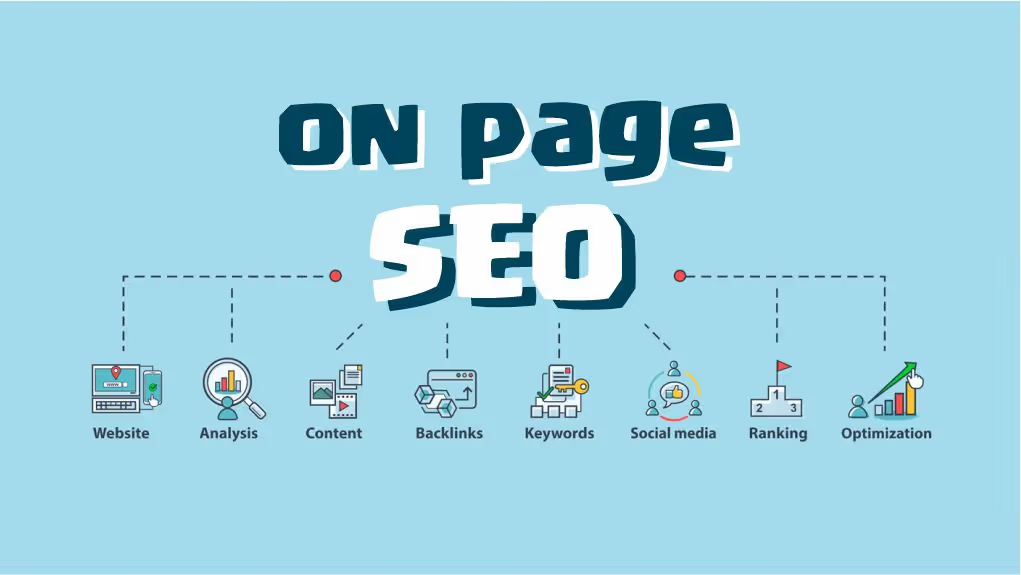
Content Optimization
- Write high-quality, useful content that provides value to readers.
- Naturally incorporate keywords into titles, headings, body content, and URLs.
- Optimize article length (typically 1,000 - 2,000 words) to increase your chances of ranking higher.
>> See more: What is content?
Meta & Heading Optimization
- Page Title: Concise (50-60 characters), includes main keywords, and engages readers.
- Meta description: Summarize page content (150-160 characters) to entice clicks and improve CTR.
- Heading (H1, H2, H3…): Clear structure to help Google better understand your content.
URL Optimization
- Short and includes main keywords (e.g., domain.com/website-seo-guide).
- Avoid overly long URLs or those containing special characters.
Image Optimization
- Use descriptive filenames (e.g., website-seo.jpg instead of image123.jpg).
- Use the ALT tag to describe images, helping Google understand their content.
- Compress images to improve page loading speed.
Internal & External Links
- Internal links: Link to other articles on your site to keep readers engaged.
- External links: Link to reputable websites to increase credibility.
2. Off-page SEO – Building authority outside your website
Off-page SEO helps increase domain authority of your website during the SEO implementation process by building links from external sources.
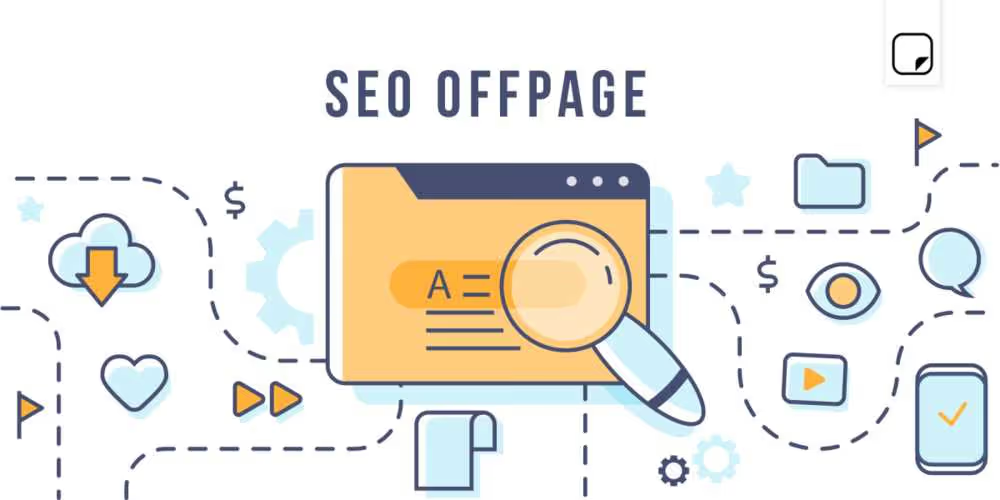
Quality backlinks
- Prioritize backlinks from reputable websites within the same industry.
- Avoid backlinks from spammy sites or link farms.
Social Signals
- Share articles on Facebook, LinkedIn, and Twitter to boost engagement.
- Google values content that is widely shared across social media.
Guest Blogging & PR
- Write for major websites to earn high-quality backlinks.
- Mentions in press and major blogs help increase website authority.
3. Technical SEO – The foundation for your website
Technical SEO helps Google crawl data faster and understand content better while providing the best user experience.

Page load speed
- Use Google PageSpeed Insights to check and optimize speed.
- Use a CDN, compress images, and optimize code to boost performance.
Mobile-Friendly
- Google prioritizes pages with a mobile-friendly interface.
- Use responsive design to ensure a great display on all screen sizes.
Website structure and Sitemap
- Build a clear, easy-to-navigate website structure.
- Update Sitemap.xml to help Google index content faster.
Security & HTTPS
- The website must use an SSL certificate (HTTPS) to ensure security.
- Google prioritizes ranking websites with better security.
Effective SEO guidance for websites does not depend on a single factor, but rather on a combination of On-page, Off-page, and Technical SEO. By optimizing all these aspects effectively, your website will have the opportunity to rank on Google quickly and sustainably.
Next, we will explore the detailed steps to perform website SEO in the fastest and easiest way!
A Guide to Website SEO in 8 Effective Steps
SEO is not just about writing content and waiting for Google to rank it. For a website to rank quickly and maintain a solid position, it requires a comprehensive strategy, a specific plan, and optimization of every key aspect. Below are 8 fundamental steps for SEO to help you conquer Google step-by-step in a systematic and effective way:
Step 1: Analyze your industry and competitors – Understand the playing field before entering the battle
SEO cannot succeed without a clear understanding of your industry and competitors. Before optimizing your website, you need to answer the following questions:
- What are the characteristics of your industry in the online market?
- How do your target customers typically search for information?
- What are the top competitors in the industry doing to maintain their rankings?
How to analyze competitors effectively:
- Use Ahrefs, SEMrush, and Google Search Console to analyze your competitors' backlinks, keywords, and traffic.
- Content research: How are your competitors writing their content? What are their strengths? Which of their pieces of content are shared the most?
- Find competitive opportunities: Identify keywords that competitors haven't optimized for, and content gaps you can exploit.

Thorough competitor analysis helps you develop a suitable strategy, avoid repeating their mistakes, and find ways to create your own advantage.
Step 2: Effective keyword research – Choose the right "door" for customers to find you
The next step in Markdao's SEO guide is keyword research. Keywords are not just the most searched phrases; they also reflect the actual needs of your customers. If you choose the wrong keywords, no matter how good your content is, your website will struggle to reach the right audience.
Effective keyword research strategy:
- Find primary keywords: Use Google Keyword Planner and Ahrefs to find keywords with high search volume that are relevant to your industry.
- Expand to secondary and long-tail keywords: Focus on keywords with clear search intent, with low competition but high conversion rates.
- Competitor keyword analysis: See which keywords your competitors are ranking for and which of their content pieces attract the most traffic.
- Group keywords by search intent:
- Informational keywords: Help customers learn about products/services.
- Commercial keywords: Users are comparing and considering before making a purchase.
- Transactional keywords: Users have the intent to buy immediately.

Choosing the right keywords helps you create content that hits the mark for customer needs, increasing traffic and conversion rates.
Step 3: Website structure – Building a solid foundation for SEO
The next step in Markdao's SEO guide is website structure. Google always prioritizes websites with a clear, crawlable structureA well-organized website not only makes SEO easier but also improves the user experience.
Key principles for building a website structure:
- Use the Silo model: Create tightly linked topic groups so Google understands the overall content of your website.
- Design user-friendly URLs: Keep them short, include keywords, and avoid special characters. For example: domain.com/website-seo-guide.
- Create internal links: Help users navigate between pages easily while increasing the connectivity between articles.
- Set up Sitemap.xml and Robots.txt: Help Google crawl data faster and avoid indexing unnecessary pages.
A logical website structure helps Google understand content faster, improves rankings, and enhances the user experience.
Step 4: Plan your SEO implementation – A detailed roadmap to stay on track
The next step in Markdao's SEO guide is to plan your SEO implementation. SEO cannot be done spontaneously; it requires a clear plan with a specific roadmap.

Essential elements of an SEO plan:
- SEO goals: Are you looking to increase traffic, boost conversions, or build brand awareness?
- Target keywords: A list of researched keywords and your implementation strategy.
- Content roadmap: How many articles are needed? Which content should be prioritized for optimization?
- Link-building strategy: How many backlinks are required? Where will they come from?
- Performance measurement: Which tools will you use to track SEO performance?
A well-structured SEO plan helps you focus on what matters most, avoiding wasted time and resources.
Step 5: Website On-page – Optimizing every detail on your site
The next step in Markdao's SEO guide is On-page optimization. On-page is a core factor that helps Google rank your content highly. Key elements to optimize include:
- Title: Include the main keyword, make it engaging, and keep it under 60 characters.
- Meta Description: Write an engaging description that includes keywords to help increase your click-through rate (CTR).
- Headings (H1, H2, H3…): Use a logical structure to help Google easily understand your content.
- Image Optimization: Use ALT text to describe images and compress files to improve page loading speed.
- Internal & External Links: Help create a more tightly connected website structure.
Effective On-page SEO helps your website achieve sustainable rankings without relying too heavily on backlinks.
Step 6: Build a social media network – Increase signals for Google
The next step in the SEO guide from Markdao is Social. Google highly values websites with social media signals. This indicates that your content is being widely engaged with and shared by others..
Social media strategy:
- Create Facebook pages, groups, LinkedIn, Twitter, etc. to share content.
- Build a loyal community of followersand increase post engagement.
- Share posts across multiple platformsto help Google recognize the website as high-value.
A strong social media system helps the website increase credibility and improve Google rankings.
Step 7: Content Implementation – The Soul of SEO
The next step in Markdao's SEO guide is Content. Without quality content, every SEO strategy is meaningless. Google always prioritizes articles that provide value and solve problems for users.

How to implement content effectively:
- Write content based on search intent, not just focusing on keywords.
- Create diverse content: Blog posts, infographics, videos, case studies…
- Update old content, ensuring content remains fresh and relevant to current trends.
Quality content not only helps boost rankings but also keeps readers engaged longer, reducing bounce rates.
Step 8: Data analysis & continuous optimization for top rankings
The final step in Markdao's SEO guide is analysis and optimization. SEO is a process of continuous measurement, analysis, and optimization. Monitor key metrics such as:
- Traffic volume & conversion rates (Google Analytics)
- Keyword rankings (Ahrefs, SEMrush)
- Website performance (Google PageSpeed Insights)
Based on the data, you can adjust your strategy for the best results.
SEO isn't difficult if you have a clear roadmap. Start by analyzing competitors and researching keywords, optimizing your website, and developing high-quality content. With persistence and the right optimization strategy, you will see your website achieve sustainable growth and rank highly on Google.
5 SEO mistakes to avoid
SEO is not just about applying optimization techniques; it is also about avoiding common pitfalls that can render your efforts useless or even lead to Google penalties. Here are the serious mistakes you must avoid to ensure your SEO strategy is as effective as possible.
1. Keyword Stuffing
This is a classic mistake that many SEO beginners often make. Repeating keywords too many times within your content not only fails to improve rankings but can also cause your website to be penalized by Google.
Consequences:
- Content becomes unnatural and frustrating for readers.
- Google can easily detect this and will lower your website's ranking.
How to fix it:
- Use keywords naturally, accounting for only about 1-2% of the total word count in the article.
- Leverage synonyms and related keywords to diversify your content.
2. Duplicate Content
Google is extremely strict with websites that have duplicate content, whether it is copied from another site or repeated within your own website.
Consequences:
- The website is perceived as lacking creativity, failing to provide new value to users.
- Search rankings drop, or worse, the site is de-indexed by Google.
How to fix it:
- Create original, unique, and valuable content yourself.
- Use tools like Copyscape or Siteliner to check for and remove duplicate content.
3. Mobile Unfriendly
In an era where over 50% of search traffic comes from mobile devices, failing to optimize your website for mobile is a major mistake.
Consequences:
- Google will give lower rankings to websites that are not mobile-friendly.
- Poor user experience, leading to high bounce rates.
How to fix:
- Use a responsive design to ensure your website displays well on all devices.
- Check compatibility with Google Mobile-Friendly Test.
4. Ignoring Page Speed
Page speed is a critical factor in SEO guide, which directly impacts user experience and Google rankings.
Consequences:
- Users will leave the site if they have to wait too long, increasing the bounce rate.
- Google penalizes pages with slow loading speeds.
How to fix it:
- Use the Google PageSpeed Insights tool to measure and optimize speed.
- Compress images, use a CDN (Content Delivery Network) and enable caching.
5. Not updating content regularly
Google favors websites with fresh, frequently updated content. Neglecting old content can cause your website to gradually lose traffic.
Consequences:
- The website becomes outdated, no longer appealing to users and search engines.
- Keyword rankings gradually decline over time.
How to fix it:
- Periodically update and add new information to old articles.
- Create a consistent content production schedule to always have fresh content.
SEO requires persistence, knowledge, and avoiding common mistakes. Invest time in understanding how Google works, stay updated with the latest trends, and always follow sustainable SEO principles. Avoiding these errors will help your website grow strongly and maintain a solid position on Google.
Professional website SEO services from Markdao
Markdao provides professional website SEO services , helping businesses optimize their Google rankings sustainably. With a methodical SEO strategy, our team of experts handles everything from market analysis, keyword research, and on-page optimization to link building and continuous performance measurement and improvement.
Committed to delivering organic traffic growth, increasing brand awareness, and driving conversions. Let Markdao accompany you on your journey to conquering the top of Google!
Conclusion
SEO is an ongoing process that requires a clear strategy to achieve sustainable results. By taking the right steps, such as following the SEO guide above and avoiding common mistakes, you will improve your Google rankings and attract a large number of potential customers. Don't hesitate—start optimizing your website today to achieve online success!