Do you ever feel like short keywords just aren't enough to dominate Google? If so, it's time to try long tail keywords, which are longer, more specific phrases that are incredibly powerful at attracting the right audience. Though often overlooked, these keywords are the key to helping you overcome fierce competition on search engines. Join Markdao to discover how to find long tail keywords and leverage them to make your website SEO more effective than ever!
What are long tail keywords?
When it comes to SEO, people often think of short, punchy keywords. However, there is a type of keyword that gets less attention but is extremely effective at attracting more precise customers: long tail keywords , which are longer and more specific search terms.
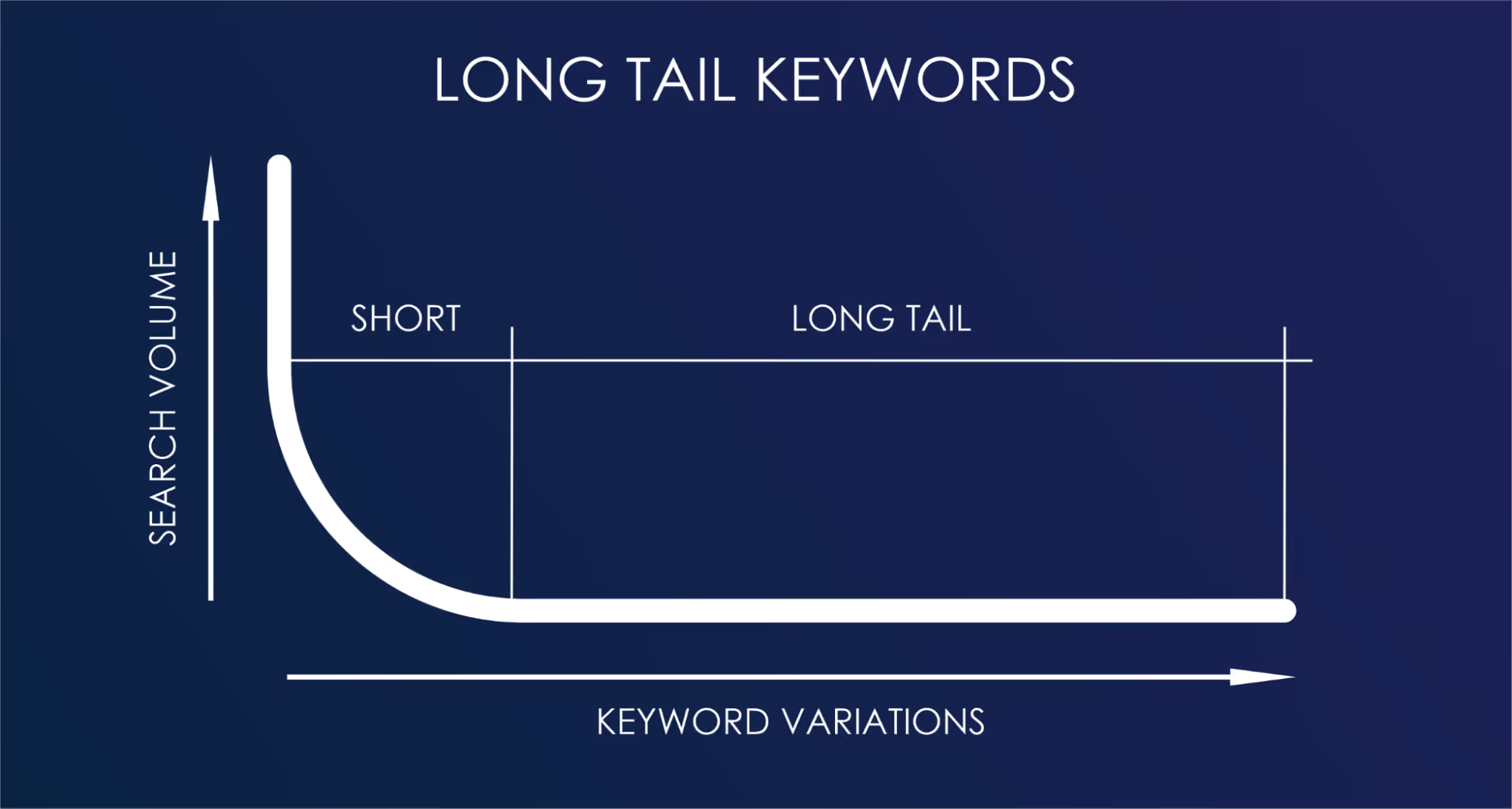
Long tail keywords are search phrases consisting of three or more words, such as "affordable men's Adidas sneakers" or "anti-aging cosmetics for sensitive skin." Although they aren't searched as frequently as short keywords, long tail keywords offer greater opportunities for SEO optimization.
So why are long tail keywords so important in SEO? The answer lies in their ability to target the right audience. These keywords act as a "bridge" between businesses and potential customers, helping you not only achieve higher rankings but also easily connect with people who have clear needs and are ready to take action.
4 Benefits of long tail keywords in SEO
In SEO, using long tail keywords Long-tail keywords offer benefits that aren't always immediately obvious. While they may have lower search volumes than shorter keywords, they possess unique characteristics that make them an essential part of any website's SEO strategy. Here is why they are so important:
- Low competition, high ranking potential: One of the biggest challenges in SEO is dealing with the fierce competition from major websites, especially when you are trying to rank for short-tail keywords. Long-tail keywords help solve this problem by placing you in specific niches where there is less competition. This makes it easier for you to achieve high rankings on search engines without having to go head-to-head with industry giants.
- Higher conversion rates and reaching the right audience: When users search for a long, specific keyword, it means they have a clear and precise need for the product or service you offer. Therefore, people searching via long-tail keywords are more likely to take action (such as making a purchase, signing up for a service, or getting in touch) compared to those searching with short, generic keywords.
- Creating quality content that meets user needs: By optimizing content for specific keywords, you can provide detailed, useful information to your readers. This not only increases your visibility but also builds trust and credibility with potential customers.
- Building a long-term SEO strategy: These keywords help you build a sustainable SEO strategy, where your website consistently ranks for many small but specific keywords, rather than just focusing on a few large, competitive ones. This drives sustainable growth for your website and delivers steady traffic over time.

For the reasons mentioned above, it is clear that long tail keywords are not only important but also extremely powerful for boosting the effectiveness of your SEO strategy. By leveraging them correctly, you can not only achieve higher rankings but also reach the right target audience and improve conversion rates for your website.
6 Effective Ways to Find Long Tail Keywords
Finding effective long-tail keywords is not a difficult task if you have the right tools and strategies. Below are specific methods to help you easily discover long tail keywords suitable for optimizing your website's SEO:
1. Use keyword research tools
Keyword research tools are one of the fastest and most effective ways to find long tail keywords. These tools provide keyword suggestions, helping you discover the long search phrases that users are actually interested in. Some popular tools include:
- Google Keyword Planner: This is a free tool from Google that helps you find keywords, including long-tail ones. It provides relevant keywords and common search phrases that users frequently enter into Google.
- Answer The Public: This is an excellent tool for discovering the questions users are asking related to your field. You will receive suggestions for long tail keywords in the form of questions, which you can then use to develop content and optimize your SEO.
- SEMrush and Ahrefs: These are powerful paid tools for keyword research, including long-tail keywords. Both provide detailed data on search volume, competition, and related keywords that you can leverage.

2. Search directly on Google
A simple yet effective way to search for long tail keywords is by searching directly on Google. Simply start typing a keyword into the search bar, and Google will automatically suggest long-tail phrases that other users frequently search for. This is a great way to identify long-tail keywords relevant to your niche.
Additionally, pay attention to the “People also ask” or “Related searches” sections at the bottom of the search results. These are highly useful phrases that you can use to build content or optimize for SEO.

3. Explore forums and community groups
Forums and community groups like Quora, Reddit, or Facebook groups are places where people share questions and discuss the issues they face. Here, you will find many potential long tail keywords , as users often ask specific, detailed questions.
By joining these communities or simply searching for relevant discussion topics, you can discover long-tail keywords that users are genuinely interested in and are seeking solutions for.
4. Competitor analysis
Another way to find long tail keywords is competitor analysis. You can use tools like SEMrush, Ahrefs, or Moz to research the keywords your competitors are ranking for. This will help you identify the long-tail keywords they are optimizing for, which you can then apply to your own SEO strategy.

5. Leverage common questions and trending topics
Common questions or trending topics in your industry are a rich source of long tail keywords . For example, you can search for questions like “How to…?” or “How to choose…?” on search engines, forums, or Q&A platforms like Quora.
6. Pay attention to related keywords and variations
Once you have found a long-tail keyword, don't forget to explore its variations. You can try adding words like "new," "best," "cheap," "guide," "how-to," "review," etc., to create other long-tail keywords . This will help you expand your keyword options and optimize your content for multiple related terms.

How to use long-tail keywords to optimize content
To optimize content with long-tail keywords, you need to focus on the following factors:
- Include long-tail keywords in the title: The article title must include the long-tail keyword naturally to easily attract readers and search engines.
- Use in the meta description: Integrating long-tail keywords into the meta description helps increase the click-through rate, even though it does not directly affect SEO rankings.
- Use in the article body: Long-tail keywords should appear naturally within the main content. Ensure you do not stuff too many keywords, which makes the content feel unnatural.
- Optimize the URL: The article URL should contain the long-tail keyword, helping search engines understand the content and improving ranking potential.
- Optimize heading tags: Use long-tail keywords in heading tags helps make articles more readable and helps search engines understand the content structure.
Conclusion
Search long tail keywords effectiveness is a crucial part of an overall SEO strategy. By using keyword research tools, analyzing competitors, and leveraging community data sources, you can easily find long-tail keywords that align with your SEO goals. Not only do they help improve search engine rankings, but long-tail keywords also help you reach the right target audience and drive higher conversion rates.