SEO (Search Engine Optimization) and SEM (Search Engine Marketing) are two essential concepts in Digital Marketing, frequently mentioned in search optimization strategies. However, many people still confuse these two terms or do not fully understand how to leverage them for maximum effectiveness.
In this article, Markdao will help you clearly distinguish between SEO and SEM, while exploring how to combine them intelligently to enhance marketing performance, increase conversion rates, and optimize advertising costs.
What are SEO and SEM?
SEO and SEM: Two marketing strategies that were once one, now independent but always side-by-side
Initially, SEO (Search Engine Optimization) was considered a subset of SEM (Search Engine Marketing). SEM encompassed all tactics aimed at optimizing rankings on search engines, from organic results to paid advertising.
However, with the rapid evolution of Digital Marketing, SEO and SEM have gradually been defined as two distinct, clear concepts that still complement each other to deliver superior results.
According to the definition from Search Engine Land:
- SEM is "the process of increasing website traffic by purchasing ads on search engines."
- Meanwhile, SEO is understood as "the process of getting traffic from free, organic, or natural search results."

Key differences between SEO and SEM
- SEO is a tactic to optimize website rankings by improving content and structure to gain organic, cost-free traffic.
- SEM is a tactic that uses paid advertising to appear immediately on search engine results pages, targeting the right audience in a short amount of time.
Why do businesses need to understand and leverage both SEO and SEM?
Whether free or paid, both SEO and SEM play an indispensable role in an online marketing strategy.
- SEO helps build a sustainable foundation and increases brand credibility.
- SEM is an acceleration tool that delivers immediate results.
When combined effectively, SEO and SEM help businesses conquer the online market comprehensively, not only by reaching customers but also by building lasting trust.
Overview of SEO (Search Engine Optimization)
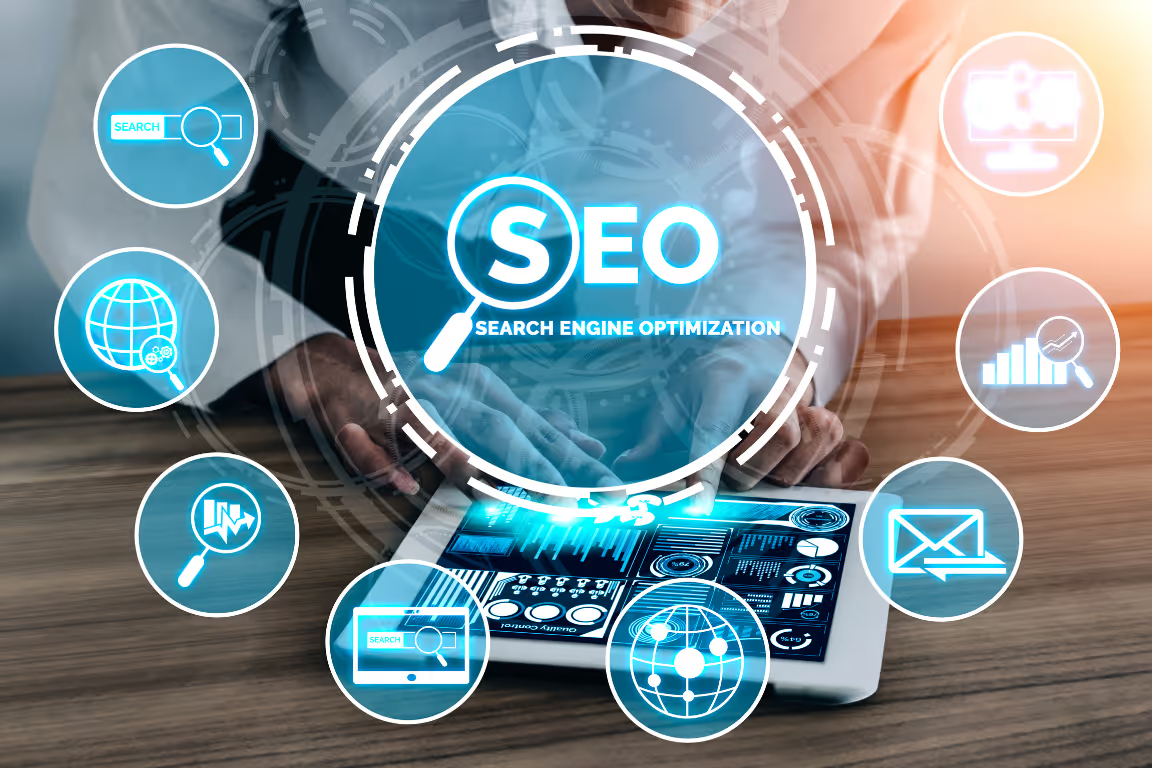
SEO (Search Engine Optimization) is a strategy for optimizing website content, structure, and performance to improve rankings on search engines like Google, Bing, or Yahoo. The goal of SEO is to attract organic traffic without paid advertising, increasing visibility and reaching the right target audience.
How does SEO work?
SEO focuses on optimizing websites according to search engine algorithms. These algorithms evaluate the relevance and quality of content to rank websites in search results. SEO consists of three main pillars:
- On-page SEO:
- Content optimization (quality, keywords, meta descriptions, headings).
- HTML tag optimization (titles, image alt text).
- Improving user experience (UX/UI).
>> See more: On-page SEO: 7 strategic keys for effortless results
- Off-page SEO:
- Building quality backlinks.
- Boost brand credibility across social media and online channels.
- Develop highly shareable content.
>> Read more: Off-page SEO: It's not just about building backlinks and hoping for the best
- Technical SEO:
- Improve page load speed.
- Optimize crawlability and indexing.
- Ensure the website is mobile-friendly.
Benefits of SEO for businesses
- Increased visibility: SEO helps your website appear at the top of search results, increasing opportunities to reach users.
- Cost-effective: Unlike paid advertising, traffic from SEO is free and sustainable over the long term.
- Build brand authority: Websites with high rankings are generally perceived by users as more trustworthy.
- Support customer conversion: SEO not only drives traffic but also targets the right audience, increasing conversion rates.
Who is SEO for?
SEO is an essential tool for most businesses and individuals, especially:
- Small and medium-sized enterprises: Leverage SEO to compete with larger rivals without needing a massive advertising budget.
- E-commerce companies: Increase reach to potential customers and drive sales.
- Bloggers and content creators: Attract readers and boost content engagement.
Challenges in implementing SEO
- Time: SEO does not yield immediate results; it requires a long-term commitment to build and improve.
- Algorithm changes: Search engines constantly update their algorithms, requiring marketers to stay adaptable.
- High competition: With millions of websites on the market, achieving high rankings requires serious investment in content quality and technical optimization.
SEO is not just a marketing tactic but a long-term investment in your business's growth. By optimizing effectively, SEO helps you build a solid foundation, increase organic traffic, and enhance brand credibility in the eyes of users.
If you want to better understand or apply professional SEO to your business, consider partnering with experienced SEO experts to achieve optimal results!
To better understand SEO and SEM, we will explore the details and an overview of SEM (Search Engine Marketing)
Overview of SEM (Search Engine Marketing)
SEM (Search Engine Marketing) is an online marketing strategy that uses search engines to promote products or services, with the goal of increasing paid traffic to a website. SEM combines paid advertising (PPC - Pay-Per-Click) with optimization strategies to quickly reach potential customers.

How does SEM work?
SEM works by displaying ads on search engine results pages (SERPs) through an ad auction system, such as Google Ads or Microsoft Advertising. The basic steps in an SEM campaign include:
- Keyword research: Finding and selecting keywords related to products or services that customers frequently search for.
- Ad setup: Creating compelling ad content, including headlines, descriptions, display URLs, and using relevant keywords.
- Keyword bidding: An auction-based advertising system where businesses bid on target keywords to have their ads appear in search results.
- Budget allocation: Planning the campaign budget, determining daily spending or maximum cost-per-click (CPC).
- Monitoring and optimization: Analyzing data (CTR, CPC, conversion rates) to adjust the campaign, improve performance, and reduce costs.
Common types of SEM
- PPC (Pay-Per-Click): Advertising where you only pay when someone clicks. This is the most common form of SEM.
- CPC (Cost-Per-Click): The cost you pay for each click on your ad.
- CPM (Cost-Per-Thousand Impressions): An advertising model that charges based on the number of impressions, typically used for brand awareness goals.
- PLA (Product Listing Ads): Product listing ads, popular in e-commerce, which display images, prices, and product information on SERPs.
Benefits of SEM for businesses
- Rapid reach: SEM helps businesses appear on the first page of search results immediately, without the wait required by SEO.
- Targeting the right audience: SEM tools allow for ad customization based on geographic location, language, age, and even user behavior.
- Increased competitiveness: With SEM, even small businesses can compete with major brands by targeting the right keywords and customers.
- Easy performance measurement: SEM provides detailed analytics tools like Google Analytics or Google Ads, helping businesses easily track performance and optimize campaigns.
Challenges in implementing SEM
- Cost: SEM requires a significant budget, especially when bidding on competitive keywords.
- Professional skill requirements: Setting up and optimizing SEM campaigns requires in-depth knowledge of keywords, ad copywriting, and data analysis.
- Dependency: SEM results drop significantly if the advertising budget is cut, so it is not a long-term strategy like SEO.
- Comparing SEO and SEM

SEM is a powerful tool in an online marketing strategy, especially suitable for businesses that want to reach customers immediately and enhance brand awareness. However, for optimal effectiveness, SEM should be combined with long-term strategies like SEO to create a comprehensive marketing ecosystem.
How to effectively combine SEO and SEM in a marketing strategy
In the increasingly fierce environment of Digital Marketing, combining SEO (Search Engine Optimization) and SEM (Search Engine Marketing) is a powerful strategy to optimize customer reach. When implemented correctly, SEO and SEM not only complement but also optimize each other, helping businesses achieve both short-term and long-term results.
Why combine SEO and SEM?
Leverage both traffic sources: SEO helps you build sustainable organic traffic, while SEM delivers quick results through paid advertising.
Diversify your outreach strategy: SEO focuses on quality content and user experience, while SEM ensures your ads appear before your target audience immediately.
Increase brand coverage: When both SEO and SEM are working well, your website can appear multiple times on search results pages, increasing brand visibility and click-through rates (CTR).

Steps to effectively combine SEO and SEM
Research and select strategic keywords
- Use tools like Google Keyword Planner, Ahrefs, or SEMrush to find keywords with high search volume and low competition.
- SEO: Choose long-tail keywords to optimize organic content and attract target customers.
- SEM: Focus on high-conversion keywords that align with your products/services to run effective ads.
Combine data from SEO and SEM
- Analyze SEM ad performance: Use data from PPC campaigns to identify high-converting keywords, then apply them to your SEO strategy.
- Use SEO data: Keywords that perform well in SEO can also be leveraged in SEM to optimize advertising costs.
Optimize landing pages
- SEO: Create useful content that provides real value to users, and optimize on-page elements such as title tags, meta descriptions, and images.
- SEM: Ensure your landing page is compatible with your ads and contains relevant content to increase conversion rates.
Continuously monitor and measure performance
- SEM: Use tools like Google Ads to analyze CPC (Cost-Per-Click), CTR (Click-Through-Rate), and conversion rates.
- SEO: Measure performance using Google Analytics and Google Search Console to track traffic, keyword rankings, and average time on page.
Run SEM campaigns when you need to boost SEO
- During the initial stages of SEO implementation (which often takes time to show results), run SEM to generate immediate traffic.
- Once SEO becomes effective, gradually reduce SEM spending to optimize your budget.
Tips for combining SEO and SEM

Optimize advertising budget: Leverage high-performing SEO keywords to reduce keyword bidding costs in SEM.
Categorize your goals: Use SEM for short-term campaigns (such as promotions or product launches), and SEO for long-term brand-building strategies.
Synchronize messaging: Ensure consistency between SEM ad copy and website content (SEO) to enhance user experience and build credibility.
Focus on quality over quantity: Instead of targeting every keyword, focus on those that provide the highest value for both SEM and SEO.
Conclusion
Combining SEO and SEM not only delivers comprehensive marketing results but also helps businesses maximize the benefits of search engines. However, to succeed, you need a clear plan, a solid understanding of your goals at each stage, and a commitment to continuous monitoring and optimization.
SEO and SEM are both powerful marketing tools, each with its own unique advantages and roles. SEO provides sustainability and long-term results through organic traffic, while SEM helps businesses achieve quick wins with paid advertising campaigns. However, when combined effectively, SEO and SEM not only optimize search performance but also help businesses save costs, increase brand awareness, and boost conversion rates.
With the constant evolution of the digital market, understanding the differences and how to effectively combine SEO and SEM is the key to achieving sustainable business success. Invest in a well-structured strategy that harmoniously integrates both methods to secure a leading position in this highly competitive market!