In the world of SEO and Digital Marketing, keyword selection is not just an art but a critical strategy that determines success or failure. But how do you know if the keywords you've chosen are truly effective and have potential? This is where Search Volume —the search volume—becomes a key factor in helping you analyze and optimize your content.
So, what is Search Volume, why is it important, and what are the best tools to check this metric? Let’s join Markdao to explore the details in the article below!
What is Search Volume?
Search Volume , also known as search volume, is a metric representing the number of times a keyword or phrase is searched on search engines like Google or Bing within a specific timeframe, typically on a monthly basis.
This is considered a vital benchmark that helps SEO professionals, marketers, and businesses gauge user interest in a specific topic, product, or service.

For example: If the keyword "buy a car on installment" has an SV of 10,000, it means that there are approximately 10,000 searches from users related to this keyword on search engines each month.
Search Volume is more than just a number; it reflects the actual demand of users in the market. From there, businesses can use this information to build content, products, or outreach strategies accordingly.
Why should you care about search volume?
Search Volume is one of the fundamental factors that helps you understand user behavior in the online environment. Paying attention to this metric offers many significant benefits, especially in the fields of SEO and content marketing. Here are the specific reasons:
Identify keyword potential
When starting to plan keywords for an SEO campaign, analyzing Search Volume will help you:
- Identify which keywords are being searched for the most.
- Evaluate the popularity of a keyword compared to others in the same field.
- Select potential keywords capable of attracting a large volume of traffic.
For example: If you compare the two keywords "how to lose weight" (SV: 50,000) and "tips for fast weight loss" (SV: 5,000), you will know that the first keyword has a broader search scope.

Support the development of an effective content strategy
Understanding Search Volume helps you optimize website content:
- Focus on creating content around high-SV keywords to attract more users.
- Ensure content meets the needs and search trends of your target audience.
- Incorporate medium or low-SV keywords to increase competitiveness.
Optimize advertising costs (Google Ads)
In Google Ads campaigns, Search Volume helps you determine which keywords are worth investing in. With high-SV keywords relevant to your products/services, you can easily optimize your budget and avoid wasting money on ineffective keywords.
Predict market trends
Search Volume not only helps you identify which keywords are being searched for the most, but also allows you to forecast future search trends.
- Track changes in SV based on seasons or events (e.g., "Black Friday discounts" typically spike in November).
- Plan ahead to capitalize on opportunities from rising search trends.
Evaluate industry competition
Beyond assessing user demand, Search Volume also helps you:
- Understand the level of keyword competition.
- Select keywords that align with your business's competitive capacity, avoiding a focus on overly popular terms that are difficult to rank for.
Understanding and analyzing Search Volume is an essential step in any SEO or marketing strategy. This metric not only helps you reach the right target audience but also supports the optimization of content, costs, and market competitiveness.
6 most reliable Search Volume check tools
Using Search Volume analysis tools plays a crucial role in SEO and online advertising strategies. Below are the most reputable and effective tools that help you check SV accurately, complete with advanced features to support keyword planning and content strategy.
1. Google Keyword Planner (GKP)
Google Keyword Planner is a free tool developed by Google, specifically for advertisers using Google Ads. It is the most popular tool for checking Search Volume thanks to its accuracy and direct data source from Google.
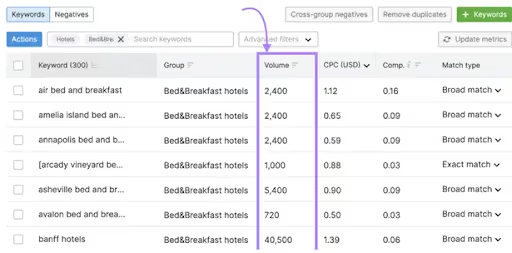
Key features:
- Displays Search Volume for keywords on a monthly average.
- Suggests related keywords based on the topics you enter.
- Provides information on competition levels (high, medium, low) and estimated ad bids for each keyword.
- Supports Google Ads campaign planning directly on the platform.
Cons:
- The Search Volume data is displayed in broad ranges (e.g., 1K – 10K) and is not perfectly precise unless you are running Google Ads campaigns.
- The interface can be slightly complex for new users.
Best for: Businesses or individuals looking to integrate SEO and Google Ads into their strategy.
2. Ahrefs Keyword Explorer
Ahrefs is one of the most comprehensive SEO tools on the market today, and its feature Keyword Explorer helps you analyze Search Volume for keywords in a detailed and effective way.
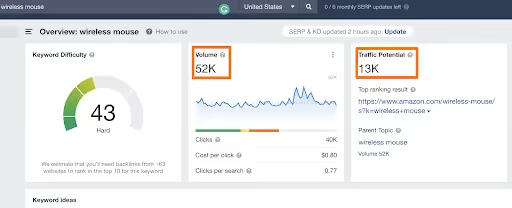
Key features:
- Provides Search Volume accurately for each country or region.
- Displays additional metrics such as Keyword Difficulty , Click-through rate , and search volume trends over time.
- Suggests a wide range of related keywords, including long-tail keywords to help optimize your content.
- Data is updated continuously to ensure high accuracy.
Cons: It is a paid tool, and the cost is relatively high for individual users or small businesses.
Best for: SEO professionals, agencies, or businesses with a significant budget that require in-depth and comprehensive keyword analysis.
3. SEMrush
SEMrush is an all-in-one SEO tool that provides more than just Search Volume ; it also offers comprehensive analysis of keywords, competitors, and website performance.
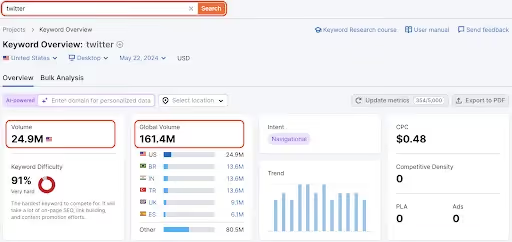
Key features:
- Displays Search Volume accurately by country and language.
- Suggests related keywords, question-based keywords, and trending keywords.
- Includes competitor analysis features, helping you discover the keywords your competitors are ranking for.
- Provides SERP (Search Engine Results Page) data to help you evaluate competition levels and SEO opportunities.
Cons:
- High cost, making it better suited for businesses or professional teams.
- The data can be somewhat complex for beginners.
Best for: Businesses looking to optimize both SEO and other digital marketing campaigns while tracking competitor keyword performance.
4. Ubersuggest
Ubersuggest, developed by Neil Patel, is a tool for checking Search Volume that is user-friendly and affordable. It is a popular choice for individuals or small businesses.
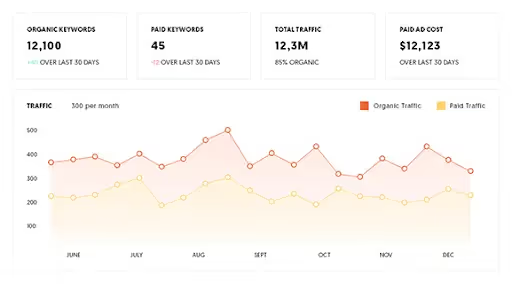
Key features:
- Displays monthly Search Volume along with SEO difficulty and CPC (cost per click).
- Suggests related keywords and analyzes competitor keywords.
- Simple interface, easy for beginners to use.
- Offers a free plan with basic features and paid plans that are more affordable than other tools.
Cons: Data may not be as detailed or updated as frequently as Ahrefs or SEMrush.
Best for: SEO beginners or small businesses needing a basic tool to get started.
5. KeywordTool.io
KeywordTool.io is a specialized tool for generating keyword suggestions based on various search engines and platforms such as Google, YouTube, Amazon, and Bing.
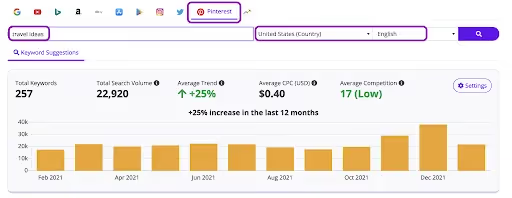
Key features:
- Provides Search Volume details for each keyword.
- Suggests long-tail and related keywords based on specific platforms.
- Offers a free version for basic features, while the paid version provides more comprehensive data.
Cons: Does not provide as much competitive data or detailed insights as Ahrefs and SEMrush.
Best for: Content creators looking to focus on keyword optimization across various platforms beyond Google.
6. Moz Keyword Explorer
Moz is a long-standing, reputable SEO tool, and its Keyword Explorer supports Search Volume analysis and effective keyword planning.
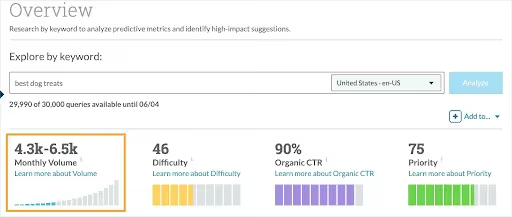
Key features:
- Displays Search Volume, Keyword Difficulty, and estimated CTR.
- Suggest related keywords and analyze ranking opportunities for each.
- Provides visual, easy-to-understand data suitable even for beginners.
Cons: It is a paid tool and does not provide as much detailed data as Ahrefs or SEMrush.
Best for: Small and medium-sized businesses looking for basic, accessible keyword analysis.
Each Search Volume tool has its own pros and cons, catering to different users and needs. If you require high accuracy and in-depth analysis, Ahrefs or SEMrush are the top choices. Meanwhile, Google Keyword Planner and Ubersuggest are cost-effective options suitable for beginners or small businesses.
7 Factors Affecting Search Volume
Search Volume is not a fixed number; it can change over time and is influenced by various factors. Below are the key factors that determine fluctuations in SV:
1. Seasonality
Search Volume for a keyword can change depending on the time of year, especially for seasonal products or services.
- Example:
- The keyword "Valentine's Day gifts" typically sees a spike in SV during January and February, but drops significantly during the rest of the year.
- "Black Friday sale" will have a surge in SV in November, coinciding with major discount events.
Understanding seasonality helps businesses prepare content, advertising strategies, and SEO optimizations at the right time for maximum effectiveness.
2. Trends and Events
Social trends, special events, or shifts in consumer behavior can significantly impact the Search Volume of a keyword.
- For example:
- When the COVID-19 pandemic broke out, keywords like "medical masks," "remote work," or "online learning" saw a massive spike in search volume.
- A popular movie or a major sporting event can also drive up the search volume for related keywords.
Monitoring hot trends helps businesses quickly seize opportunities and promote content that aligns with user needs.
3. Specific Industries and Sectors
Search Volume also depends on the level of user interest within specific industries or sectors.
- For example:
- In the tech industry, keywords related to new products (such as "iPhone 15") typically have high search volume around their launch date.
- In the fashion industry, keywords like "summer fashion trends" will have higher search volume during spring or early summer.
Understanding the specifics of your industry helps businesses choose the right keywords to reach their target audience effectively.
4. Geographic Location
Search Volume for a keyword can vary depending on the region or country.
- Example:
- The keyword "learn English" has a high SV in Vietnam, where English is a popular foreign language, but it may not be searched as frequently in countries where English is the primary language.
- Specific products or services (such as "Da Nang tourism") will have a higher SV in areas near Da Nang or within the tourism industry.
Analyzing Search Volume by region helps optimize local SEO strategies, increasing visibility in target markets.
5. Keyword competition level
Search Volume for keywords is also influenced by the level of competition in the industry.
- Example:
- Highly competitive keywords like "buy a car" or "life insurance" often have a large SV but also come with high SEO difficulty.
- Meanwhile, niche or long-tail keywords like "buy a car with low-interest installments" have a lower SV but are easier to optimize.
Choosing keywords that align with your business's competitive capacity is a crucial factor in optimizing SEO campaigns.
6. Search engine algorithm changes
Google and other search engines frequently update their algorithms, which can change how users search and consequently affect the Search Volume of keywords.
- Example:
- Since Google began prioritizing question-based search results, the search volume for "how-to" keywords and questions has increased significantly.
Staying updated on algorithm changes helps you anticipate and adapt to shifts in search trends.
7. Brand or product popularity
The popularity of a brand or product can also increase or decrease Search Volume for related keywords.
- Example:
- When a well-known brand launches a new product, keywords related to that brand and product will have a higher-than-average search volume.
- A less popular or outdated product will see a gradual decline in search volume.
Marketing and promotional campaigns can directly influence user interest and search behavior.
Search Volume is a dynamic metric influenced by various factors such as timing, trends, industry, geography, and competition. Understanding these factors will help you predict and effectively leverage Search Volume in your SEO campaigns, thereby optimizing your content and strategy for reaching your target audience.
Should you ignore low search volume keywords in SEO?
When implementing an SEO strategy, many people often wonder whether they should focus on keywords with low search volume (low Search Volume ) or only target high-volume keywords to drive more traffic. Below is a detailed analysis from Markdao to help you make the right decision.
Are low search volume keywords actually worthless?
Low search volume isn't always a bad sign: Keywords with low SV are often niche and relevant to a specific audience. This helps you reach the right users with high intent, rather than targeting a large volume of irrelevant searchers.
Lower competition: Low SV keywords typically have lower SEO competition, making it easier for you to rank higher on search engines without investing excessive resources.
Higher conversion rates: People searching for long-tail keywords or specific terms with low SV usually have clear intent. They know what they want, which leads to a higher likelihood of conversion.
When should you prioritize low search volume keywords?
If you are targeting a niche market: If your business operates in a specialized field, niche keywords with low SV can help you build a strong presence and stand out from competitors.
When your SEO budget is limited: Low SV keywords are often ignored by major competitors, allowing you to achieve high rankings at a lower cost compared to popular keywords.
Long-term growth: Low SV keywords can create a rich content database, helping to build steady traffic and support your main keywords in an overall SEO strategy.
When should you avoid low search volume keywords?
Irrelevant to your content or goals: If a low SV keyword doesn't align with your products, services, or content, optimizing for it won't provide value, even if competition is low.
Outdated keywords: Some low-search-volume keywords may no longer align with current trends, especially if they relate to outdated technologies or past events.
When rapid growth is needed: If you need to quickly increase traffic or sales, focusing on low-SV keywords may not be enough to meet your short-term goals.
Combining high and low SV keywords – The optimal strategy
Instead of focusing solely on high or low SV keywords, a strategy that combines both will yield the best results:
High SV keywords: Help increase traffic and brand awareness, but come with higher competition and greater costs.
Low SV keywords: Increase conversion rates, are easier to rank for, and are well-suited for specific target audiences.
Conclusion
According to Markdao, you should not overlook keywords with low Search Volume in your SEO strategy. Instead, view them as a vital part of building content and comprehensive optimization. While they may not bring massive traffic immediately, they offer high conversion potential and help businesses reach the right target audience.
An effective SEO strategy is a harmonious blend of high and low SV keywords, tailored to your business goals and budget.