

In today's digital age, building and designing a website is no longer a difficult task. If you are exploring your options and don't know where to start, this article is for you. You will be introduced to 4 popular website platforms along with recommendations for the best choices.
1. The most popular free open-source website platform in the world
Open source is perhaps the website platform that is the largest, free, and most popular in the world today. It is not only free but also easy to use, and the quality of the websites produced is excellent.
a. What is an open-source CMS?
A CMS (Content Management System) is a system that allows users to create, manage, and edit content on a website without requiring extensive programming knowledge.
And "open source" refers to software with source code that is made available to the public. These types of have source code that is publicly released and can be freely used, modified, or shared by anyone. Importantly, you can use them for free, which significantly saves costs in developing and maintaining a website, especially for individual users.
One of the main benefits of open-source CMS is that they often have a massive community of developers. This means these CMS platforms never stand still and are constantly being improved to keep up with user needs.
Below are the most popular open-source website platforms that you can consider:
b. WordPress
WordPress is an open-source website platform that is currently the most popular and beloved in the world. WordPress is used by millions of websites, ranging from personal blogs to large corporate sites. Here are the reasons why you should prioritize choosing WordPress:
- Easy to use: WordPress is a website design platform that is very user-friendly, allowing beginners to easily set up and manage a website without needing extensive programming knowledge. The intuitive management interface helps you easily add posts, pages, and perform many other activities.
- Highly customizable: WordPress offers thousands of available themes and plugins, allowing users to customize the interface and functionality of their website without having to write code.
- An incredibly large and strong support community: With the largest community of users and developers among all website design platforms and CMS, WordPress has a wealth of support resources ranging from forums and blogs to webinars and conferences (WordCamps) worldwide. Users can easily find help, learning resources, and tips for using WordPress.
- Many useful plugins: Plugins are created to serve various purposes when designing a website. For example, with the WooCommerce plugin, you can turn a regular website into an online store very simply.
- SEO friendly: WordPress is known for being very SEO-friendly. SEO standards are built into the platform, and there are many plugins like Yoast SEO and All in One SEO Pack that help optimize websites effectively.
c. Drupal
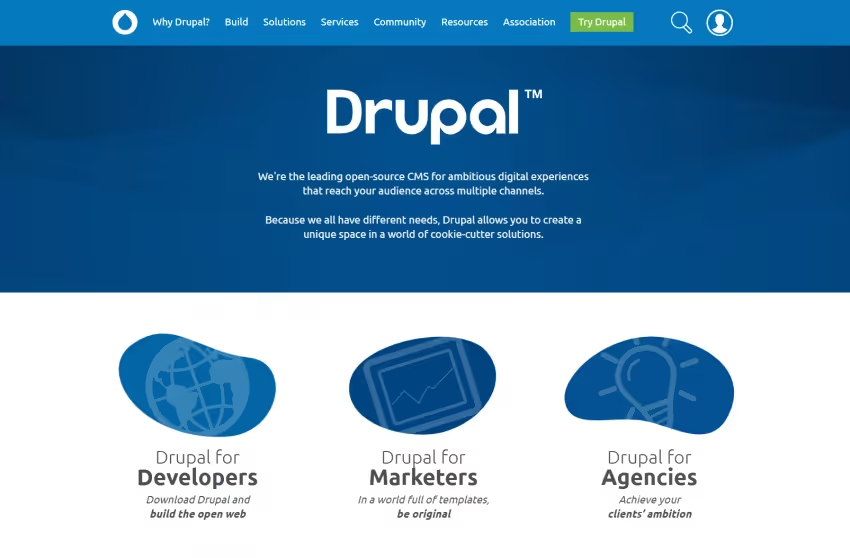
Drupal is one of the website platforms that is open-source, powerful, and flexible, often used for websites with high technical requirements and complex structures. Below is some key information about Drupal:
- Modular structure: Drupal is built on a modular system, where features can be easily added or removed. This allows for high customizability and scalability, making it well-suited to the diverse needs of organizations.
- High performance: Drupal is known for its robust ability to handle large amounts of data. It is ideal for high-traffic websites with complex structures, such as those for government, education, and large organizations.
- Strong security: Drupal is renowned for its safety and security. The Drupal community places a high priority on security issues and provides frequent updates to address the latest threats.
Compared to WordPress, the website platform Drupal is better suited for those with technical expertise or the support of a web developer.
d. Joomla
Another familiar name you might consider is Joomla. Designing a website with Joomla is enjoyable because of the many available themes and extensions. Although it has a user-friendly interface, Joomla is slightly more complex than WordPress, requiring users to have a certain level of technical knowledge to use this website platform effectively.
Joomla offers more customization options than WordPress, but it requires users to have deeper technical knowledge to fully leverage these features. Joomla is considered one of the website platforms suitable for web projects with complex requirements and multi-layered structures.
e. Typo3
Typo3 is designed to handle large-scale, multi-functional website projects. It offers significantly higher levels of customization and scalability compared to WordPress. Website platform that provides robust support for managing multiple sites from a single interface and offers extensive options for advanced customization. However, Typo3 features a more complex management interface and requires users to have technical expertise.
Furthermore, Typo3 offers strong security, making it suitable for large projects with high security requirements, such as those in business, manufacturing, tourism, or education.
f. Grav
Grav is one of the website platforms known as a modern CMS recognized for its simplicity, high performance, and ease of use. A standout feature of Grav is that it is a flat-file CMS, meaning it stores data in simple text files rather than using a traditional database like MySQL. This makes it lightweight and fast, simplifying the process of backing up and restoring websites while increasing overall site performance.
Similar to WordPress, Grav features a user-friendly administrative interface that makes content management easy. Additionally, Grav supports Markdown for content editing, allowing users to create and manage content without needing extensive HTML knowledge. Grav is suitable for both small personal websites and larger projects where features and performance are top priorities.
2. Headless CMS website platforms
This is an advanced web model that requires users to have programming skills. Headless CMS is secure, fast, and omnichannel. Due to its technical nature, choosing this type of CMS can be costly.
a. Headless CMS
A Headless CMS is a website design platform that does not have a fixed front-end interface for displaying content. While traditional CMS platforms like WordPress provide both back-end content management and front-end display, a Headless CMS focuses solely on the back-end, where you create and manage content. The content is then delivered via API to any type of front-end interface, such as web apps, mobile apps, or Internet of Things (IoT) devices.
b. Contentful
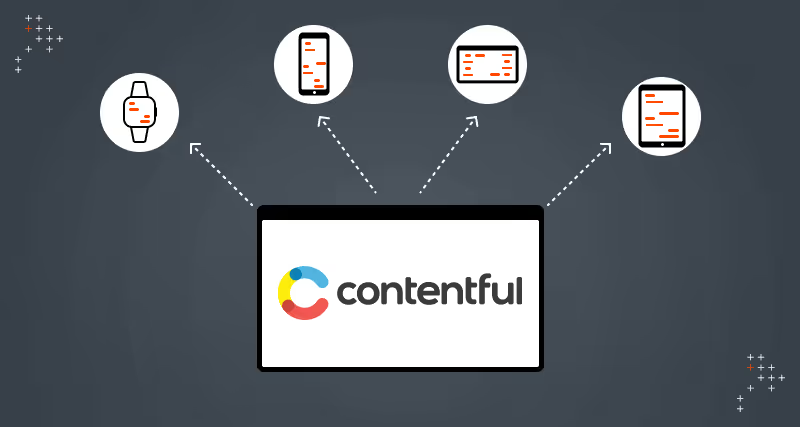
Contentful is one of the website platforms that is a leading Headless CMS widely used in the web development community. The platform supports a variety of APIs, including RESTful, GraphQL, Content Delivery API, and Content Preview API. Contentful enables seamless content delivery across multiple channels and devices, such as websites, applications, and IoT devices.
Contentful features an intuitive, user-friendly interface and provides various tools to support teamwork, such as Workflow, Compose, and Launch. Additionally, Contentful includes features to support website content creation, such as a WYSIWYG editor and a library of themes. This CMS also supports SEO and bulk management features, helping to save time and costs.
c. Contentstack
Contentstack is a website design solution that is excellent for those seeking an omnichannel content management platform, especially when they need the freedom to design user experiences. Contentstack also allows you to organize your content flexibly and create content models that can scale according to project requirements.
Additionally, Contentstack provides workflow management tools, enabling content and technical teams to collaborate effectively. You can also better protect your content and manage access thanks to robust security options and advanced user permission support.
d. Prismic
The website platform Prismic features a highlight called "Slices," which allows users to easily design website layouts with flexibility. Compared to Contentful, Prismic's interface is more user-friendly, especially for those without advanced technical skills.
While Contentful is powerful for creating complex and highly customizable content models, Prismic focuses on simplifying workflows with features like content approval and publishing schedules. Prismic is suitable for organizations that need a website design solution that is fast and easy.
e. Sanity
A standout feature of the website platform Sanity is its direct integration with static site generators, connecting directly to the user interface to simplify content management. The ability to preview any content stored by the application allows for seamless front-end delivery.
Not only that, you can also manage and edit content from anywhere simply, based on a website design platform that works in the cloud. Advanced data analytics support also helps optimize content development quickly and conveniently.
f. Strapi
Strapi is one of the website platforms A leading Headless CMS with an intuitive, simple interface, as well as full customization capabilities that truly shine. This 100% JavaScript-based platform delivers a content-rich experience, easily transitioning from the presentation layer to the final channels where the content will be displayed.
If you choose Strapi for website design, you will have an active community of developers and users who are always providing up-to-date insights on the tool as well as Headless CMS solutions in general.
3. E-commerce website platforms
And one website platform that is indispensable in today's era of online shopping is E-commerce. This type of CMS is specifically designed to help users easily create, manage, and operate an online store. This website design platform provides the necessary tools to handle every aspect of online sales operations, from listing products and processing orders to managing inventory and payment methods.
a. Shopify

This is one of the leading website platforms for E-commerce, designed to allow anyone to easily set up their own online store without requiring extensive technical skills. Shopify offers an intuitive user interface with a simple, easy-to-use workflow suitable for both small and large businesses.
Shopify supports integrated multi-channel selling on platforms like Facebook, Instagram, Amazon, and eBay. In particular, you can use Shopify with peace of mind due to its high security and reliable payment integration.
b. Woo-commerce
Woo-commerce is a free E-commerce plugin for WordPress that allows you to turn any WordPress site into a powerful online store. The great thing here is that you can start website design for free. Costs only arise for hosting, themes, and extension plugins. And because it is a WordPress plugin, you gain a significant advantage by being part of the WordPress community.
Therefore, if you are using WordPress and want to integrate e-commerce into your existing website, WooCommerce is the best choice.
c. BigCommerce

This is a website platform based on the cloud, providing a comprehensive solution for all stages of business growth. BigCommerce is designed to be suitable for both technical and non-technical users.
BigCommerce is also highly regarded for having a wide range of essential features and tools built-in. This helps you rely less on third-party apps or plugins, thereby reducing additional costs. Regardless of your industry or your website design needs, BigCommerce can accommodate them.
d. Haravan
For users in Vietnam, Haravan is a popular choice for boosting online business. Haravan supports omnichannel selling across platforms like Facebook, Tiki, Shopee, and Lazada. Currently, Haravan provides free hosting with fast loading speeds and unlimited bandwidth. Additionally, Haravan offers free SSL security to better protect your website.
This website platform has an intuitive interface that is user-friendly for Vietnamese users and integrates with both domestic and international payment gateways. You will also receive active support from a large community of users in Vietnam whenever you need assistance.
4. No-code website building platforms
The final platform introduced in this article is the No-code website design platform. True to its name, this platform allows users to create and manage websites without any programming knowledge.
a. What is a no-code website
No-code website design platforms provides an intuitive interface, typically drag-and-drop, allowing users to design and customize website elements without writing code. No-code platforms offer a wide range of professional design templates that users can choose from to get started website design without having to design from scratch. Additionally, the platform provides tools to support search engine optimization (SEO) and other marketing strategies.
b. Webflow
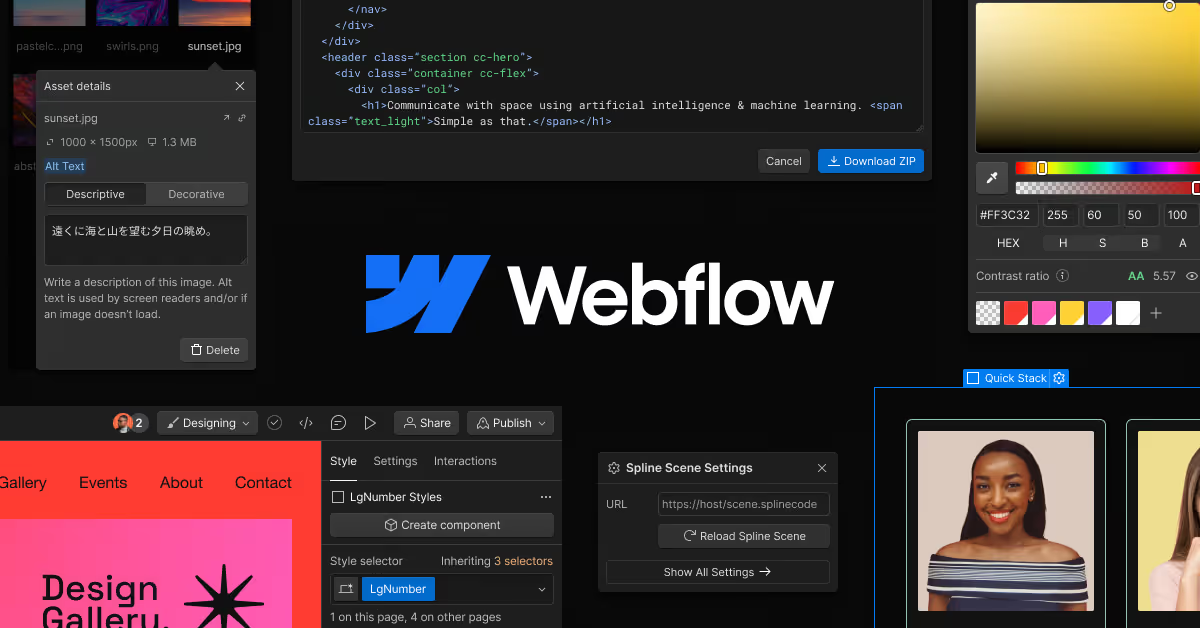
Webflow is a familiar name in website design platforms . Webflow is highly flexible, allowing for in-depth design without writing a single line of code. The platform features an incredibly rich library of pre-made themes, making it easy for both new and inexperienced users to design and customize. Notably, Webflow also integrates a CMS and SEO support features to make the process of creating and managing content easier and more efficient.
c. Wix
Wix is a no-code website design platform that launched in 2006 with a drag-and-drop interface that is very easy for any user to navigate. Furthermore, Wix features an excellent image editor, making it easier for you to build and design your website. Wix offers hundreds of pre-made design templates suitable for a wide variety of industries and personal preferences.
A key strength of Wix is that it is not just for creating sales websites; users can utilize Wix for many different purposes. Another advantage of Wix is its multilingual support. This platform allows users to switch their website to their preferred language quickly and conveniently.
d. Squarespace
If you are a blogger, you should consider using this no-code website design platform . Squarespace features beautiful, modern, and professional designs that are on-trend. Additionally, its powerful blogging tools and SEO optimization features will provide maximum support for your blogging and content editing needs. And of course, it includes E-commerce integration so you can easily add sales functionality and manage your products.
e. EditorX
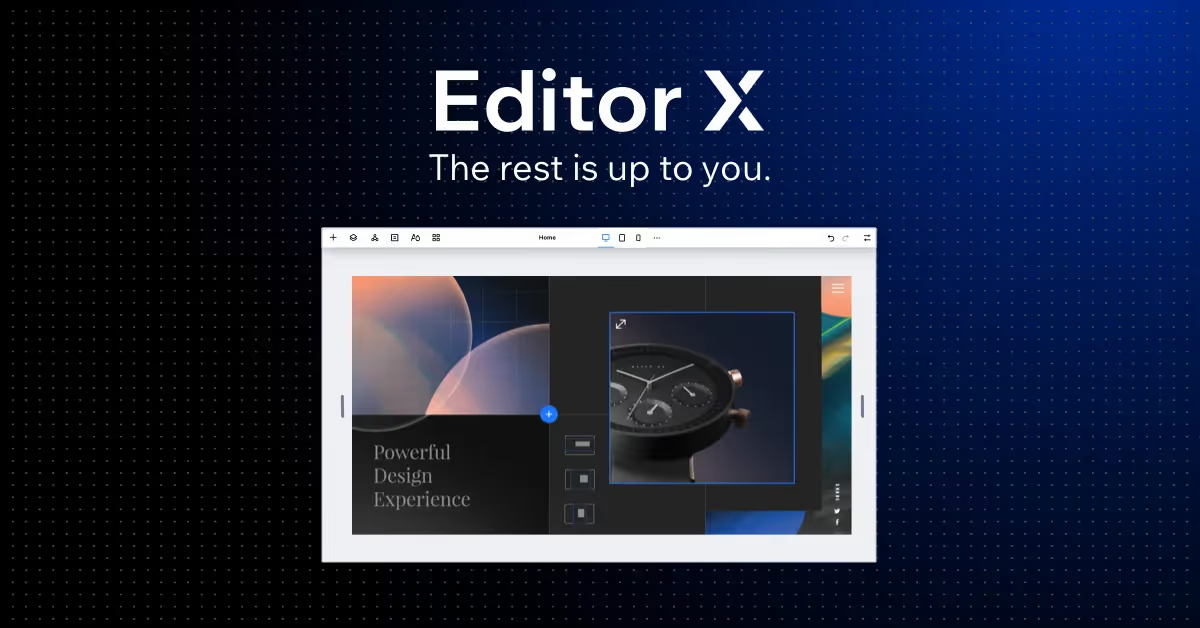
If you are a designer looking to build a website with stunning aesthetics, you will love website design platform . EditorX is a website builder powered by Wix, featuring professional design tools tailored for those familiar with graphic design software.
The platform's standout feature is its powerful toolkit for creating websites that are perfectly responsive across all devices. It also offers a rich set of e-commerce functions, making it easy to build an online store.
f. Framer
Framer is a no-code website design platform that launched in 2016. It is an excellent no-code platform for website design. Framer uses its own hosting to store your website and provides a free domain name when you build your site.
Framer also integrates CMS and SEO tools, making it easy to customize, design, and create high-quality content. Notably, Framer supports 3D interaction integration, a key feature for modern design, especially when building highly interactive apps and websites.
You can use 3D components and effects to create dynamic, visually engaging interactions. This enhances the user experience and makes your interface feel more vibrant and compelling.
g. Dorik
This is the website platform that is currently the most affordable AI-powered option. With Dorik, anyone can easily create a beautiful website in just a few minutes, regardless of their design or coding experience.
You can design websites in any language and easily generate content (text and images) with the help of AI. All you need to do is choose your favorite template, drag and drop elements, and customize until you have the perfect interface.
We have just explored the top 20 website platforms of 2024. Depending on your goals, experience, expertise, and budget, you can choose the platform that best suits your needs.