

In today's competitive business world, an effective marketing strategy does more than just attract customers; it guides them from the awareness stage all the way to purchase. That is exactly why a marketing funnel was created!
Using the AIDA model (Awareness - Interest - Desire - Action), businesses can optimize every step of the customer journey, turning strangers into loyal customers. So, how do you build an effective marketing funnel ? Join Markdao as we explore the secrets to boosting your business revenue in this article!
What is a Marketing Funnel?
In the modern business landscape, attracting customers goes beyond simple advertising or product introductions. To convert a stranger into a loyal customer, businesses need a structured strategy that guides them through every stage of the buying process. This is where the marketing funnel plays its role.
A marketing funnel is a model that describes the customer journey from the moment they discover a brand until they make a purchase decision. Designed like a funnel, this model reflects the reality that while the number of people reached at the initial stage is often very large, the number of potential customers gradually decreases as they move deeper into the decision-making process.
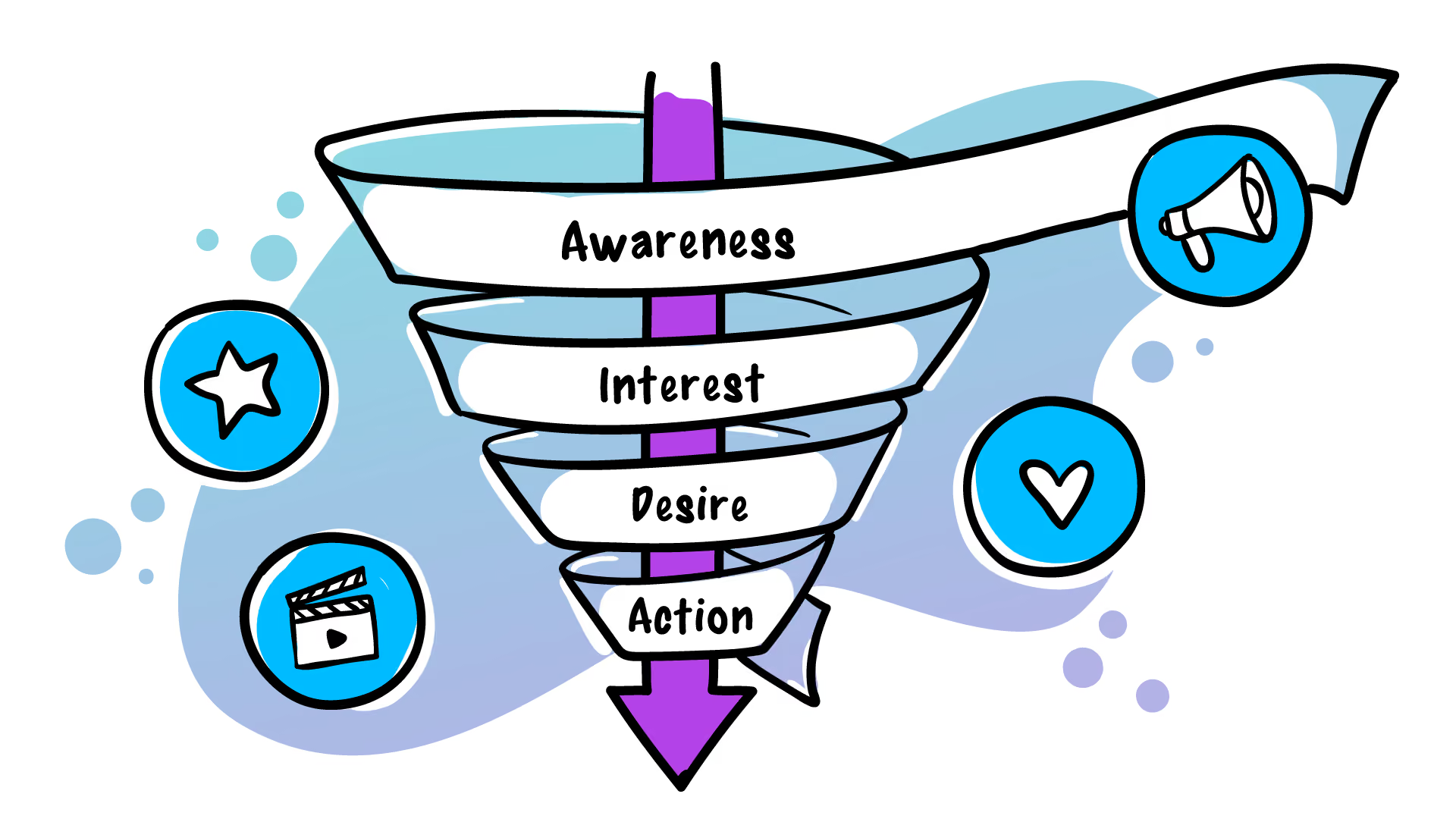
The goal of a marketing funnel is to help businesses understand customer behavior, thereby optimizing every step of the process of reaching, nurturing, and converting customers. An effective marketing funnel not only helps increase conversion rates but also builds loyalty, drives revenue, and creates a sustainable sales system.
4 popular marketing funnel models today
Although AIDA is a marketing funnel model that is classic and widely used, over time, many new models have emerged to better align with changes in customer purchasing behavior. Below are some marketing funnel models that businesses can apply.
1. AIDA Model – The traditional marketing funnel
AIDA is the oldest model and is still widely used, consisting of four stages:
- Awareness: Customers become aware of the brand or product.
- Interest: Customers begin to seek more information.
- Desire: Customers develop a preference and a desire to own the product.
- Action: Customers make the decision to purchase.
This model is effective for building brand awareness and creating guidance throughout the customer journey.

2. TOFU - MOFU - BOFU Model (Top, Middle, Bottom of Funnel)
This is a popular approach in digital marketing, specifically inbound marketing. The model divides the funnel into three main parts:
- TOFU (Top of Funnel): The awareness stage, typically utilizing SEO, blogs, videos, and advertising to build brand recognition.
- MOFU (Middle of Funnel): The consideration stage, where leads are nurtured through in-depth content, email marketing, and webinars.
- BOFU (Bottom of Funnel): The conversion stage, where customers make purchasing decisions, often supported by product demos, personalized consultations, or special offers.
3. The Flywheel Model - A cyclical approach to customers
The Flywheel is an evolution of the marketing funnel, focusing on retaining existing customers and turning them into brand advocates. This model consists of three stages:
- Attract: Using content and advertising to draw in customers.
- Engage: Providing value, building relationships, and nurturing customers.
- Delight: Providing post-purchase support and encouraging brand referrals.
Unlike the traditional funnel, the Flywheel helps businesses maximize their existing customer base to expand their market through satisfaction and organic referrals.
4. The Hourglass Model - Expanding the post-purchase funnel
This model expands the marketing funnel by focusing on the post-purchase experience, consisting of the following stages:
- Awareness → Interest → Consideration → Purchase (similar to the traditional funnel).
- Experience → Loyalty → Advocacy (post-purchase expansion).
This model is particularly well-suited for businesses looking to build customer loyalty and thrive through word-of-mouth marketing.
Each marketing funnel model has its own pros and cons. Businesses need to choose the model that aligns with their industry specifics, customer behavior, and business goals to optimize their marketing strategy, thereby enhancing conversion efficiency and sustainable growth.
Stages of the Marketing Funnel according to the AIDA model
The AIDA (Awareness - Interest - Desire - Action) model is a classic yet highly effective marketing framework. It describes the customer journey from the moment they become aware of a brand to the point of making a purchase decision. Each stage of AIDA requires businesses to implement appropriate engagement strategies to optimize conversion rates.
1. Awareness – The attention-grabbing stage
This is the first step in the customer journey, where they first encounter a brand, product, or service. The goal of this stage is to build brand awareness and ensure potential customers know the business exists.
%20-%20Giai%20%C4%91o%E1%BA%A1n%20thu%20h%C3%BAt%20s%E1%BB%B1%20ch%C3%BA%20%C3%BD.avif)
How to implement:
- Use advertising on digital platforms like Facebook Ads and Google Ads to reach your target audience.
- Develop an SEO to optimize content for search engine visibility.
- Create valuable content through blogs, videos, and infographics to attract organic interest.
- Participate in events, workshops, and webinars to increase brand awareness.
At this stage, businesses should not focus on immediate sales, but rather provide useful value to capture customer interest.
2. Interest – The stage of stimulating curiosity
The second stage of the marketing funnel is Interest. Once customers are aware of the brand, they begin to research further to see if the product or service meets their needs. This stage requires businesses to retain potential customers and build relationships with them.
%20-%20Giai%20%C4%91o%E1%BA%A1n%20k%C3%ADch%20th%C3%ADch%20s%E1%BB%B1%20h%E1%BB%A9ng%20th%C3%BA.avif)
How to execute:
- Provide in-depth content, such as instructional blog posts, free eBooks, and real-world case studies.
- Use email marketing to reach customers, sending information about products, promotions, or sharing valuable content.
- Invest in social media marketing to interact directly with customers through comments, livestreams, and community groups.
- Offer resources such as demos, webinars, or free consultations to boost interest.
This is the stage where businesses need to assert their value and differentiation, helping customers feel intrigued and eager to learn more.
3. Desire – The stage of driving demand
The third stage of the marketing funnel is Desire. Once customers have developed an interest, the next step is to convert that interest into desire. They need a reason to believe that the business's product or service is the best choice.
How to execute:
- Build your brand story, emphasizing your values, vision, and unique selling points.
- Provide social proof, such as customer testimonials, video reviews, and successful case studies.
- Create compelling offers like discounts, bundled gifts, or free trials.
- Personalize content via email or chatbots, recommending products tailored to each customer's needs.
- Use retargeting strategies to remind customers of the products or services they have previously shown interest in.
The goal at this stage is to help customers feel confident and ready to take action.
4. Action – The conversion stage
This is the final stage of the marketing funnel AIDA, where customers make a purchase decision or take a desired action (signing up, booking an appointment, contacting for a consultation, etc.).
%20-%20Giai%20%C4%91o%E1%BA%A1n%20chuy%E1%BB%83n%20%C4%91%E1%BB%95i%20th%C3%A0nh%20kh%C3%A1ch%20h%C3%A0ng.avif)
How to execute:
- Create clear CTAs (Call-to-Action) on your website, emails, and advertisements to guide customers toward the next step.
- Provide convenient payment options to minimize friction during the checkout process.
- Offer guarantees, warranties, or money-back commitments to build customer trust.
- Use chatbots or live support agents to provide timely assistance to customers.
- Leverage scarcity strategies, such as "Only 5 items left at this price," to trigger immediate action.
Once a customer has taken action, businesses should not stop there; continue with post-purchase care to turn new customers into loyal advocates and brand ambassadors.
The AIDA model not only helps businesses attract customers but also optimizes the conversion process. By understanding each stage, businesses can build tailored marketing strategies, increase efficiency, and create lasting connections with their customers.
A 5-step guide to building an effective marketing funnel
Building an effective marketing funnel helps businesses attract potential customers, guide them through the stages from awareness to action, and optimize conversion rates. Below are the key steps to creating a complete marketing funnel .
1. Define your target customer persona
Before building a marketing funnel, businesses need to clearly understand their ideal customer profile. This helps optimize content and outreach strategies.

Key factors to identify:
- Demographics: Age, gender, income, geographic location
- Behavior: Interests, shopping habits, preferred communication channels
- Needs and pain points: What solutions are customers looking for?
Support tools: Surveys, Google Analytics, Facebook Insights, CRM.
2. Attract customers into the funnel (Awareness)
This is the first stage, where businesses need to grab attention and attract potential customers.
Common strategies:
- SEO & Content Marketing: Write blogs, guides, videos, and infographics to help customers understand their pain points.
- Online Advertising: Use Google Ads, Facebook Ads, and TikTok Ads to reach the right audience.
- Social Media Marketing: Share useful content on Facebook, LinkedIn, Instagram, and more.
- Lead Magnets: Offer free eBooks or webinars to collect customer emails.
Tip: Use catchy headlines and educational content instead of hard-selling from the start.
3. Nurturing Interest & Desire
Once customers are aware of your brand, the next step in the marketing funnel is to retain them and build trust.
.avif)
How to do it:
- Email Marketing Automation: Send a series of valuable emails, provide helpful content, and offer product demos.
- Case Studies & Reviews: Share customer success stories to build credibility.
- Create in-depth content: Write analytical articles, host webinars, and provide guides to help customers clearly understand product benefits.
- Chatbots & Personalized Consulting: Use chatbots or customer support staff via live chat.
Tip: Use automated email funnels to segment customers based on their level of interest and deliver relevant content.
4. Action
This is the stage where customers decide to make a purchase or take the desired action within the marketing funnel.
How to optimize conversion rates:
- Clear & compelling CTAs: "Buy Now," "Sign Up Now," or "Free Trial" placed in prominent positions.
- Promotional offers: Discounts, gifts, and free trials to encourage purchasing decisions.
- Social proof: Display ratings and reviews from previous customers.
- Create a sense of urgency: "Only 5 spots left," or "Offer ends in 24 hours" to help customers make faster decisions.
Tip: Use A/B testing to determine which CTAs, email subject lines, and landing pages perform best.
5. Post-purchase care & Increasing customer lifetime value
The marketing funnel does not end after a purchase. Businesses must continue to nurture relationships to turn new customers into loyal ones.

Effective customer care strategies:
- Post-purchase emails: Send user guides, technical support, and offers for future purchases.
- Loyalty programs: Reward points and discounts for returning customers.
- Upselling & Cross-selling: Suggest complementary products or services based on customer needs.
- Referral programs: Create referral incentives to encourage customers to recommend your brand.
Tip: Use a CRM to track and personalize customer interactions.
Building a marketing funnel effectiveness not only helps attract customers but also optimizes conversion rates and increases customer lifetime value. Businesses need to continuously measure and optimize each stage to achieve the best results.
Applying the marketing funnel to your business
Marketing funnel is not just a theoretical model but a practical tool that helps businesses optimize their outreach and conversion strategies. Here is how businesses can apply the marketing funnel to real-world scenarios to boost business performance.
1. Application in B2C Businesses (Business-to-Consumer)
Retailers, e-commerce businesses, and consumer goods companies often use the marketing funnel to attract customers and optimize revenue.
Example: An online fashion store wants to apply the marketing funnel:
- Awareness Stage: Run Facebook Ads and TikTok Ads to reach potential customers.
- Interest Stage: Create blog content about fashion trends and send emails about new collections.
- Desire Stage: Display customer reviews and use influencers to build credibility.
- Action Stage: Offer discounts and free shipping to encourage purchases.
Optimization tips:
- Use chatbots to provide 24/7 customer support.
- Create a loyalty program to increase repeat purchase rates.
2. Applications in B2B (Business-to-Business)
B2B businesses typically have longer sales cycles, so the marketing funnel needs to focus on building trust and relationships with clients.
Example: A SaaS software company looking to implement a marketing funnel:
- Awareness Stage: Write in-depth blog posts about software solutions and run Google Ads targeting businesses.
- Interest Stage: Offer free eBooks and webinars on how to optimize performance using the software.
- Desire Stage: Send case studies of clients who have successfully used the software.
- Action Stage: Offer a 14-day free trial and provide early-bird registration incentives.
Optimization tips:
- Use email marketing automation to nurture leads.
- Personalize content by industry to increase conversion rates.
3. Applications in Digital Marketing & Advertising
Marketing funnel helps optimize advertising costs and improve customer reach across digital platforms.
Example:
- Google Ads: Target awareness keywords (top funnel) for new customers, and use remarketing (bottom funnel) for those already interested.
- Facebook Ads: Run brand awareness video ads, followed by conversion ads for those who have engaged.
- Email Marketing: Send helpful content to potential customers before pitching products.
Optimization tips:
- Use A/B testing to identify the highest-performing ads and emails.
- Create a remarketing strategy to target visitors who have visited your website but haven't made a purchase.
4. Applications in Revenue Growth & Customer Care
Beyond attracting new customers, marketing funnel also helps businesses increase revenue from existing customers.
How to apply:
- Upsell & Cross-sell: Suggest related products/services after a customer has made a purchase.
- Loyalty programs: Earn reward points and discounts for future purchases.
- After-sales service: Send follow-up emails after purchase, request feedback, and provide technical support.
Optimization tips:
- Personalize content based on the customer's purchase history.
- Use SMS or chatbots to remind customers about special offers.
Conclusion
A marketing funnel is a powerful tool that helps businesses optimize their outreach strategies, convert customers, and grow revenue. Depending on the business model (B2B, B2C), companies can adjust their implementation for the best results. Continuously monitoring, measuring, and optimizing the marketing funnel will help businesses increase conversion rates and maintain a competitive edge.