
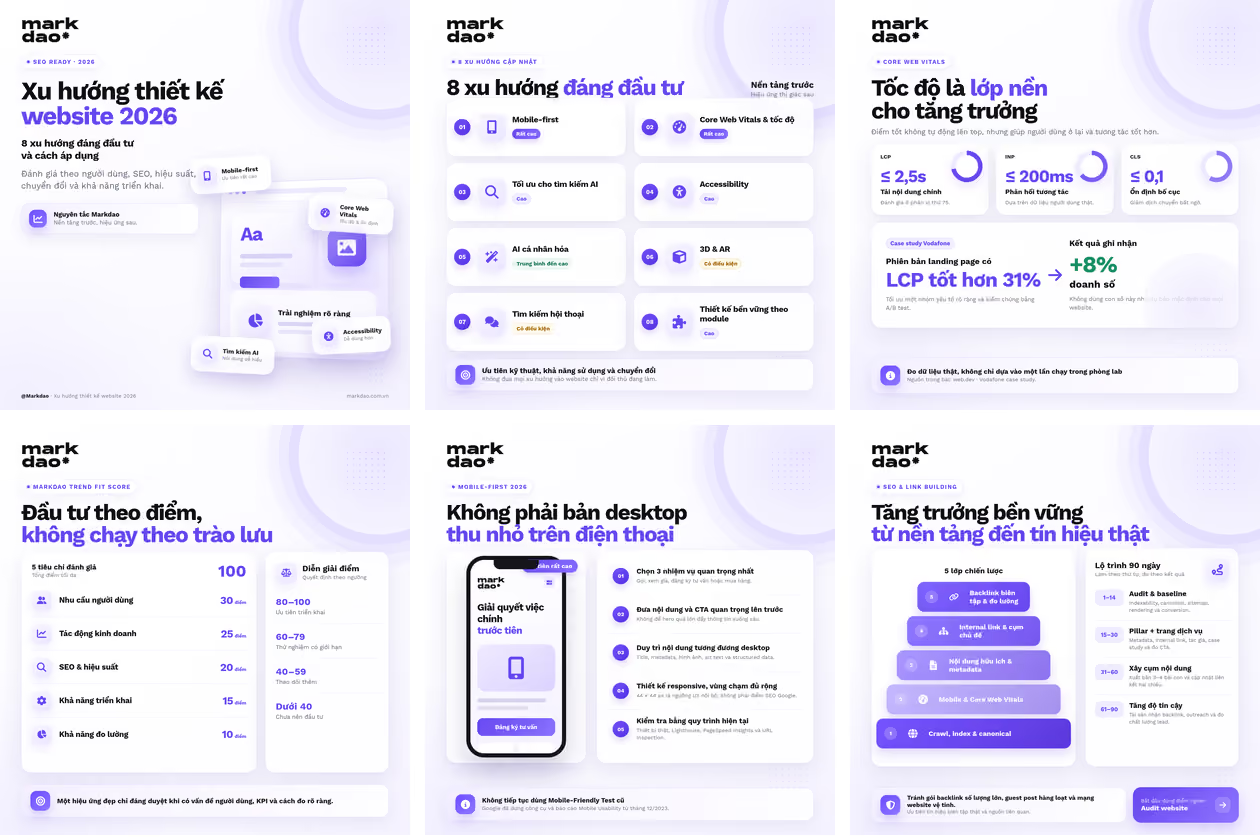

2026 Website Design Trends focus on eight key areas: mobile-first, Core Web Vitals, AI search optimization, accessibility, AI personalization, 3D and AR, conversational search, and sustainable modular design. Businesses should prioritize technical foundations, usability, and conversion before investing in visual effects.
Many articles on design trends stop at listing new effects. However, those responsible for a website need to answer three more practical questions: which trends are worth investing in, how to apply them, and what must be perfected first so that the website is not only beautiful but also crawlable by Google, correctly understood, and capable of driving business results.
Article by Markdao – A website design agency with over 9 years of experience will help businesses approach trends based on the principle of “Foundation first, effects later”. Each trend is evaluated based on its actual impact on user experience, SEO, website performance, conversion potential, and implementation feasibility.
At the end of the article, Markdao provides a comprehensive checklist for technical SEO, content structure, and link building, along with a 90-day implementation roadmap, helping businesses clearly identify priority items and execute them in an effective, sustainable order.
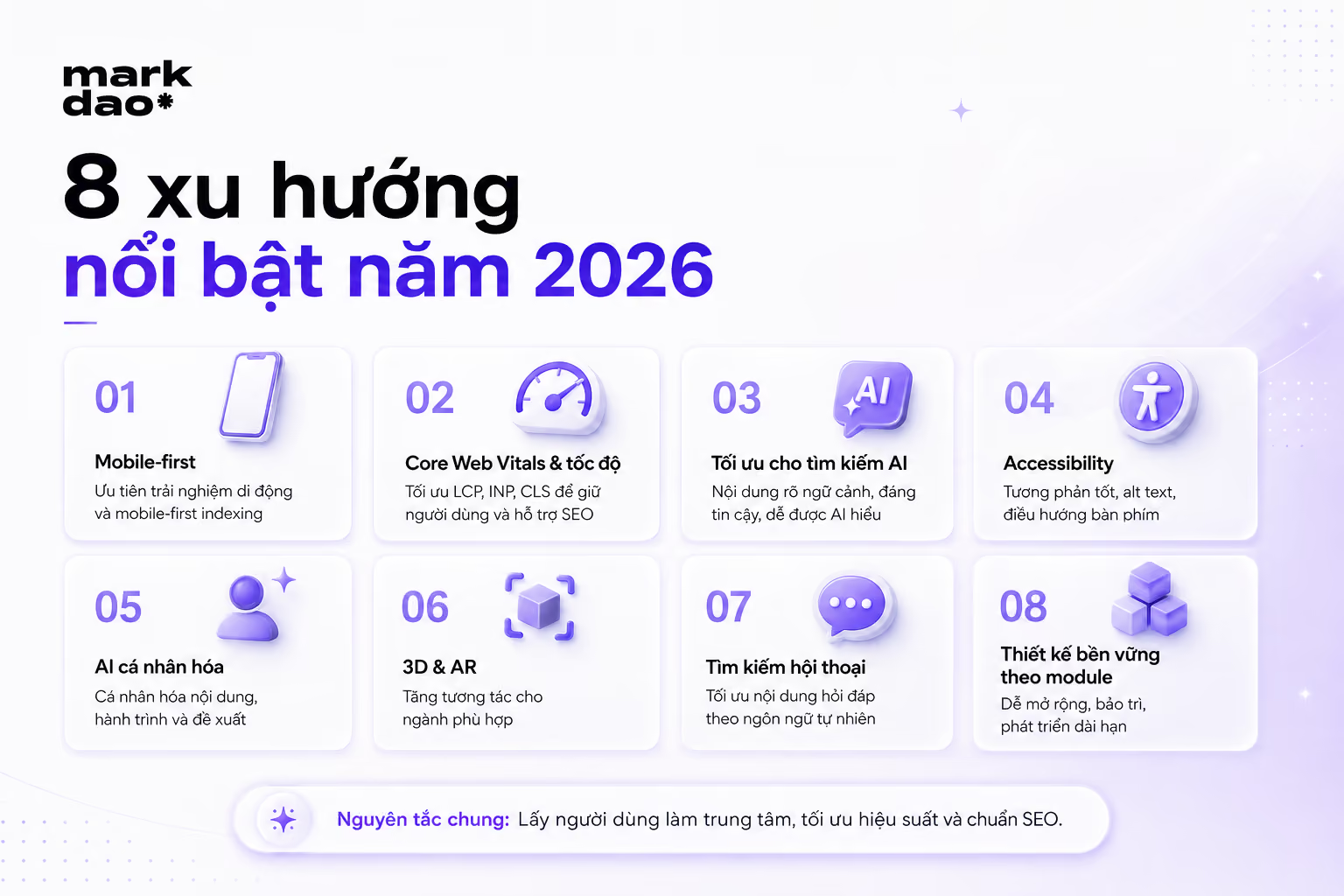
Quick summary of 8 website design trends for 2026
Markdao Trend Fit Score Framework: evaluating your website before investing
Not every trend is suitable for every business. Markdao suggests scoring each trend on a 100-point scale:
- User needs, 30 points: what problem does the trend solve in the customer journey?
- Business impact, 25 points: can it improve leads, revenue, or operating costs?
- SEO and performance, 20 points: does it slow down the page, obscure content, or cause crawling errors?
- Implementation feasibility, 15 points: do the team, budget, data, and systems support it?
- Measurability, 10 points: are there clear baselines, KPIs, and a method for before-and-after testing?
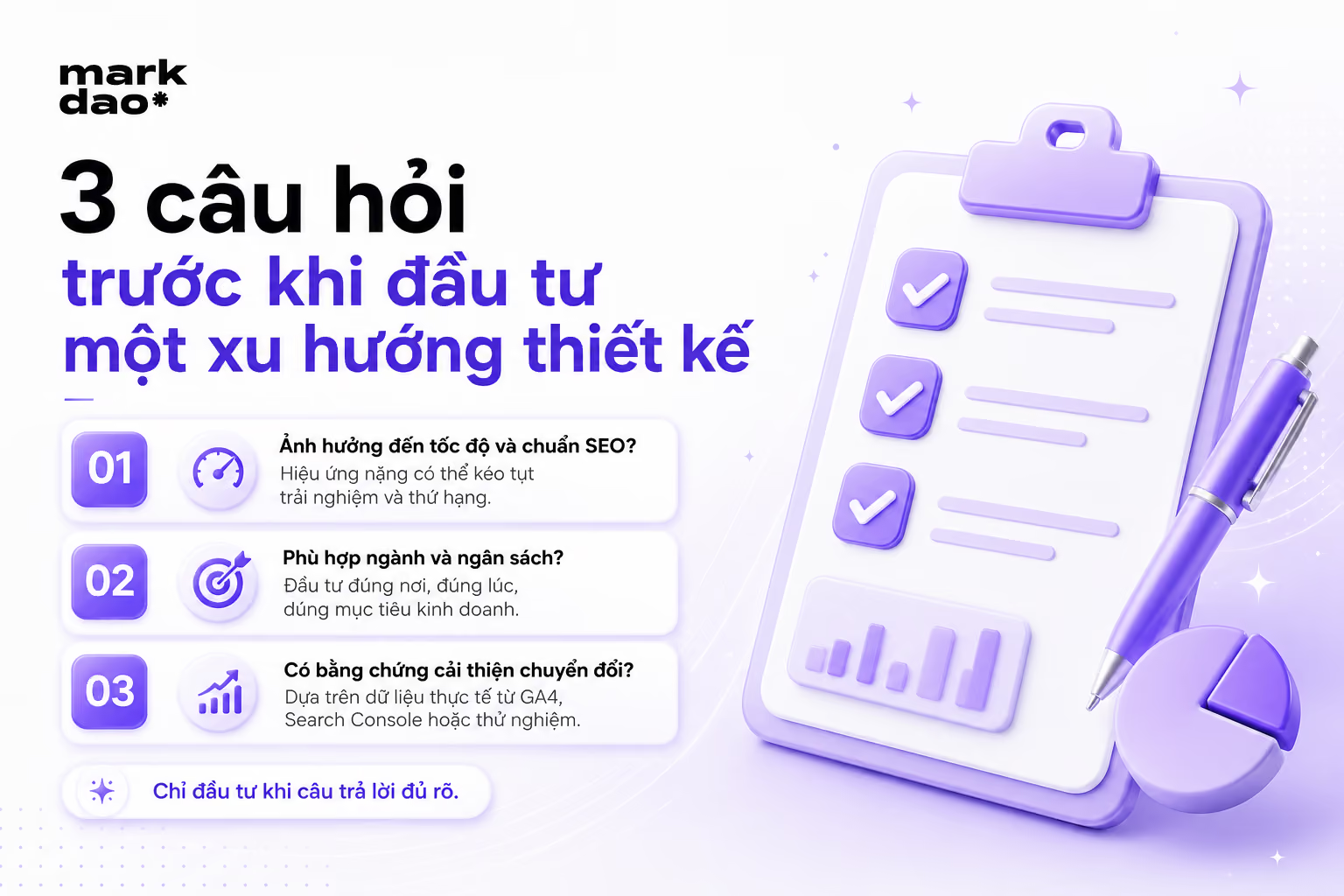
Scores from 80 to 100 should be prioritized for implementation. Scores from 60 to 79 should be tested on a limited basis. Scores from 40 to 59 should be monitored further. Scores below 40 should not be invested in yet. This framework helps businesses avoid chasing competitors or approving a visually appealing effect that lacks data-backed performance.
1. Mobile-first is no longer just an option for trending website design
Mobile-first is not about shrinking a desktop version to fit a phone screen. It is a design approach that starts with the needs, content, and interactions on a small screen, then scales up to desktop.
Google uses the mobile version as the primary basis for crawling and indexing. Therefore, the main content, titles, meta descriptions, images, alt text, structured data, and important links on mobile must be equivalent to those on desktop. An overly simplified mobile version may cause Google to see less content.
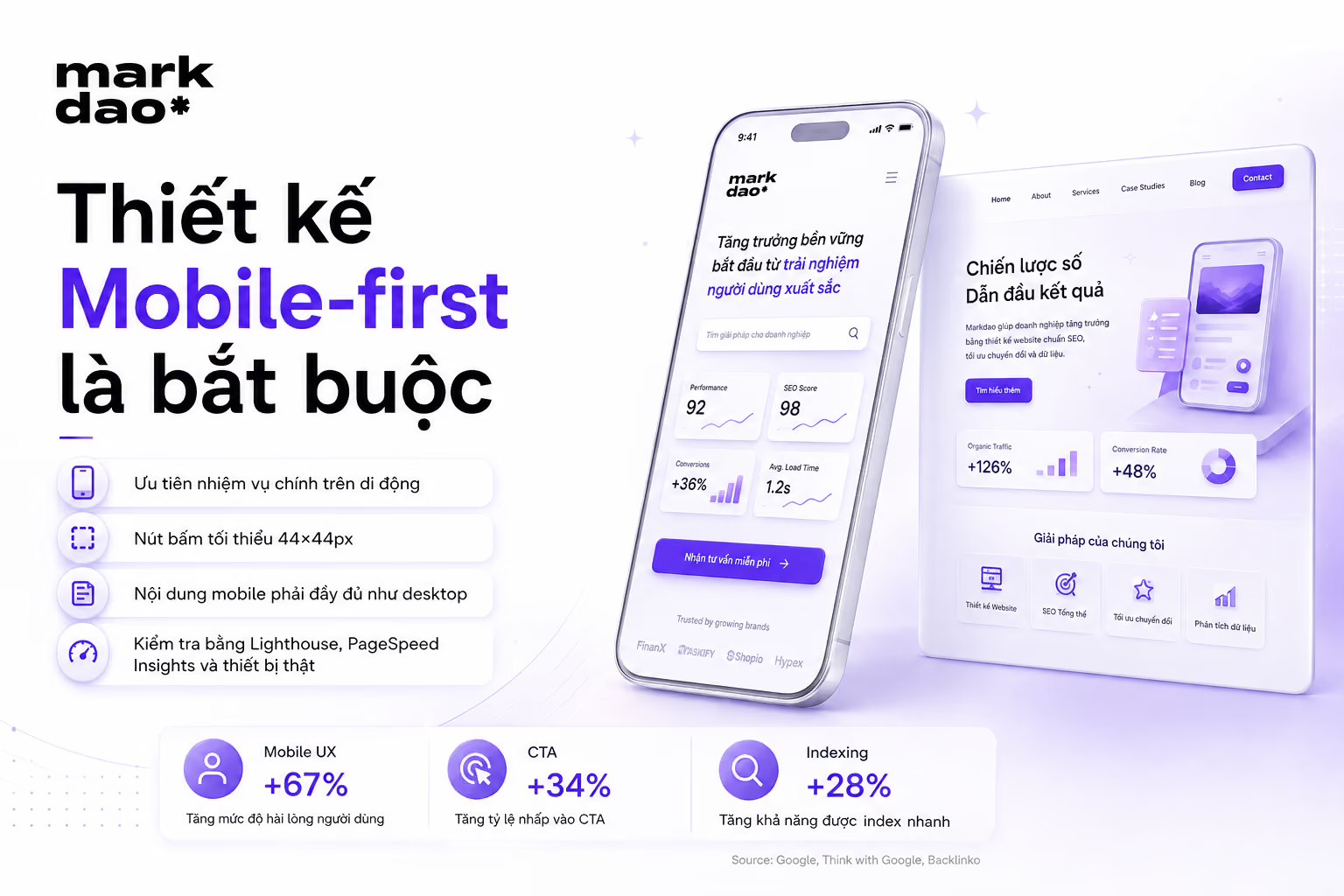
How to apply the latest website design trends
- Identify the three most important tasks on mobile, such as calling, viewing prices, signing up for consultations, or making a purchase.
- Prioritize key information and CTAs; do not let an oversized hero image push content too far down.
- Use responsive design and maintain equivalent content across all devices.
- Use sufficiently large touch targets. Markdao may use 44 x 44 px as an internal UX threshold, but this is not a specific SEO ranking factor for Google.
- Test using real devices, Lighthouse, PageSpeed Insights, and the URL Inspection tool in Search Console.
Google discontinued the Mobile-Friendly Test and Mobile Usability report in December 2023. Consequently, legacy content instructing users to utilize these tools must be updated to reflect current testing procedures.
Testing on actual devices, Google Lighthouse, PageSpeed Insights, and the URL Inspection tool in Search Console.
2. Core Web Vitals and speed are the mandatory foundation for 2026-standard website design
Google uses Core Web Vitals in its ranking systems, but achieving a good score does not automatically guarantee a top ranking. Relevant, helpful, and trustworthy content remains the primary requirement.
The three current good thresholds are:
- LCP: no more than 2.5 seconds
- INP: no more than 200 milliseconds
- CLS: no more than 0.1
Metrics should be evaluated at the 75th percentile based on real-user data, rather than relying solely on a single lab test.
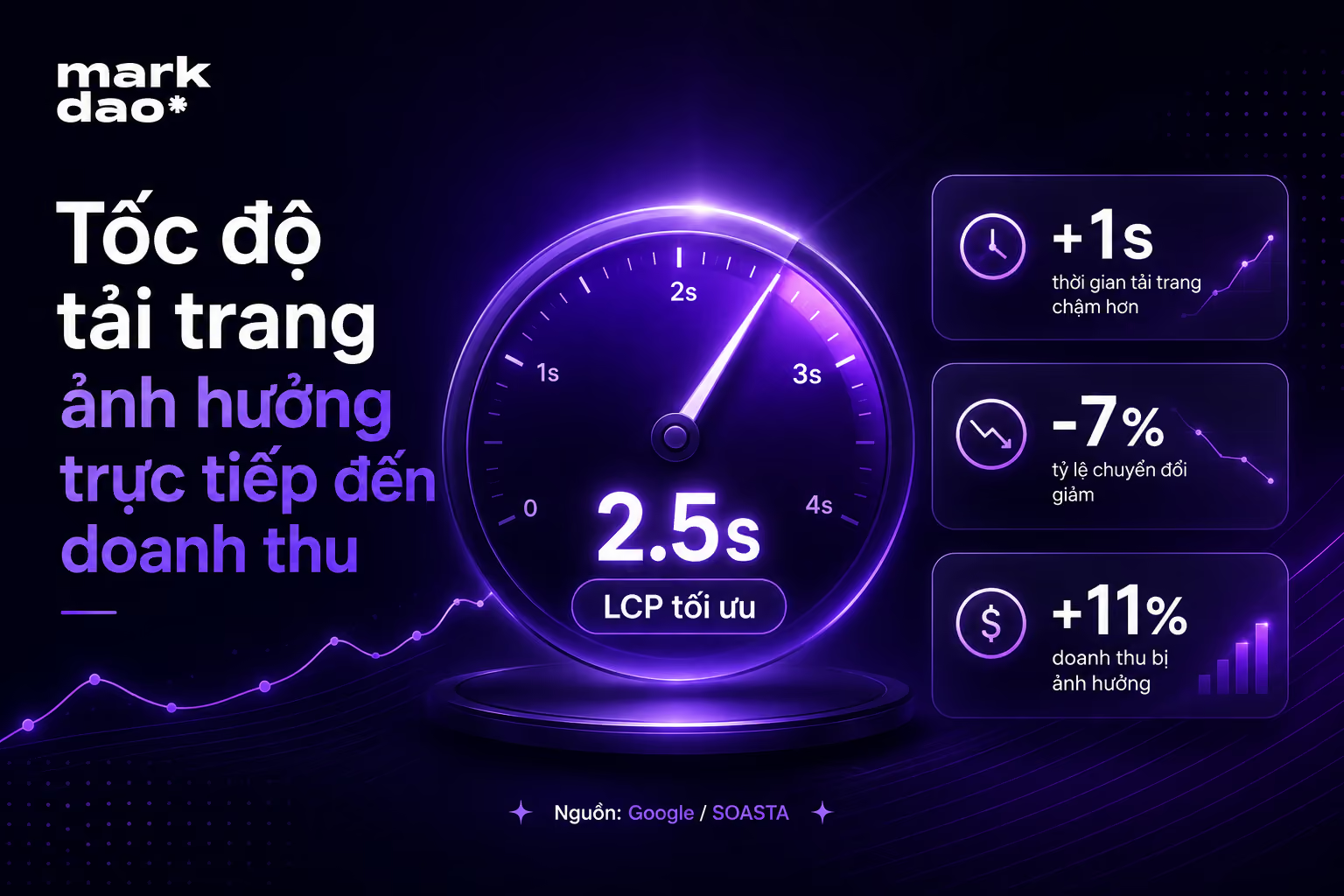
How to apply these to build the latest website design trends
- Convert images to WebP or AVIF where appropriate.
- Declare width and height attributes to reduce CLS.
- Do not lazy-load hero images or elements likely to be the LCP.
- Lazy-load images, videos, and components below the fold.
- Reduce unnecessary JavaScript and defer third-party scripts.
- Reduce the number of fonts, preload critical resources, and remove unused font weights.
- Track real-world data using Search Console, CrUX, or Real User Monitoring.
In the Vodafone case study, a landing page version with a 31% better LCP resulted in an 8% increase in sales. Businesses should not copy this figure as a forecast for themselves. The value of the case study lies in the methodology: select a page with sufficient traffic, establish a baseline, optimize a clear set of factors, and verify with A/B testing.
For websites serving users in multiple regions, businesses should also evaluate whether a CDN is necessary for the website to reduce latency when delivering images, CSS, and JavaScript.
3. Optimize website design for AI Overviews and user-intent-based search
AI search does not create an entirely new set of SEO rules. According to Google's guidelines, AI Overviews and AI Mode still rely on core search, indexing, and quality evaluation systems. Therefore, optimizing for AI search first and foremost means doing SEO right at the foundation.
An article that only synthesizes what has already appeared on dozens of other websites will struggle to give the system or readers a reason to choose Markdao. Content needs to offer a unique perspective, implementation experience, real-world data, or specific evaluation and decision-making frameworks.
How to apply the latest website design trends
- Start each section with a direct answer, then provide explanations and evidence.
- Clearly display the author, reviewer, and last updated date.
- Add content that is difficult to replicate, such as Trend Fit Scores, implementation case studies, or acceptance checklists.
- Use clear headings, comparison tables, and images and videos with substantive content.
- Ensure the page is indexed, eligible for snippets, and not blocked from crawling.
- Monitor generative search reports in Search Console once your account has access.
Google has also clarified that there is no need to create an llms.txt file, no need to break content into extremely short snippets, and no special schema that guarantees inclusion in AI Overviews. What matters more is that content is unique, useful, crawlable, and clearly presented.
4. Accessibility becomes a fundamental website design standard for 2026
Accessibility is the ability for a website to be used by a wider range of people, including those with visual, motor, auditory, or cognitive impairments. An interface that is easy to read, clearly navigable, and well-structured also benefits mobile users, older adults, and users in poor lighting or low-bandwidth conditions.
How to apply the latest website design trends
- Ensure color contrast meets WCAG AA standards for all key elements.
- Provide clear focus states for keyboard navigation.
- Do not use color as the sole indicator for errors or status updates.
- Write alt text based on the function and context of the image.
- Use clear labels for inputs and provide easy-to-understand error messages.
- Add captions to videos with dialogue.
- Combine automated testing tools with manual checks using keyboards and screen readers.
Accessibility should be integrated into the design system from the start, rather than addressed at the end of a project. This reduces rework costs and ensures consistency across pages.
5. AI personalization in web design should start with small-scale problems
AI personalization can adapt banners, products, content, or CTAs based on user behavior. However, many businesses implement it too early without sufficient traffic, clean data, or clear conversion hypotheses.
Implementation should follow three levels. The first level involves simple segmentation based on traffic source, device, or viewed content. The second level uses analytics and CRM to suggest content or next steps. Real-time personalization should only be applied once data, privacy, infrastructure, and testing capabilities are robust.
Prerequisites include significant traffic, clear consent, fallback options for missing data, ensuring core content remains crawlable by Google, and pairing every change with KPIs and a control group. AI cannot replace a weak content strategy. If a business does not understand its users' needs, personalization only serves to distribute subpar content in a more complex way.
6. 3D and AR experiences in web design are only effective when they drive decisions
3D and AR are well-suited for products that customers need to visualize before purchasing, such as furniture, real estate, fashion, or automobiles. For consulting or professional service websites, 3D effects may create an impression but do not necessarily generate more leads.
How to apply the latest website design trends
- Use only on product pages, projects, or touchpoints that influence decision-making.
- Prioritize lightweight formats like glTF or GLB.
- Load models after user interaction whenever possible.
- Always provide a static image or video as a fallback.
- Set a performance budget for 3D assets.
- Ensure effects do not obscure primary content or push CTAs too far down the page.
- Measure engagement rates, add-to-cart actions, leads, and revenue, rather than just time on page.
A successful 3D experiment must demonstrate that users understand the product faster or make better decisions. "Looking modern" is not a sufficient KPI to justify a budget.
When combining 3D with motion, teams must adhere to animation principles in web design so that effects serve a purpose, do not hinder interactions, and do not weigh down the page.
7. Conversational search requires natural content in web design
Users are increasingly searching with full questions rather than short keyword strings. This is evident in voice search, chatbots, AI modes, and longer traditional search queries.
Businesses should gather real questions from customers, sales teams, Search Console, and internal site searches. Each section should answer directly in the first one or two sentences, followed by conditions, examples, and limitations. For local businesses, it is essential to optimize for address, opening hours, service areas, and contact methods.
Do not force every answer into a fixed length. Google does not require voice search answers to be exactly 40 to 60 words. The goal is a clear, accurate, and contextually relevant answer.
8. Sustainable modular design supports long-term website growth
Sustainable design is not just about hosting energy sources. From an operational perspective, it means a website that uses fewer redundant resources, is easy to maintain, and does not require a complete rebuild every time the brand wants to refresh its look.
Build a design system with reusable components, use flexible CMS solutions where appropriate, set performance budgets for JavaScript, images, fonts, and third-party scripts, and remove plugins or tracking tools that no longer provide value. URL structures and taxonomy should be stable to avoid creating multiple near-duplicate pages.
The secondary benefits include reduced development time, fewer regression errors, and the ability for content teams to publish faster without total reliance on developers.
Applying 2026 web design trends by industry in Vietnam
DataReportal recorded approximately 85.6 million internet users and 137 million mobile connections in Vietnam by the end of 2025. Consequently, websites in Vietnam must be designed for mobile environments and omnichannel contact behaviors from the start.
Do not default to adding Zalo, chatbots, or any specific channel just because it is popular. Check your CRM, lead data, and customer behavior to identify which channels are actually used before giving them a prominent position.
SEO-standard web design checklist for 2026
Website crawlability and indexability
- Important pages return a 200 status code and are not blocked by robots.txt or unintended noindex tags.
- Do not use robots.txt to prevent a page from appearing on Google. Use noindex when you need to exclude it from the index.
- Ensure correct canonical tags; sitemaps should only contain canonical and indexable URLs.
- Check rendered HTML using the URL Inspection tool after publishing or making major edits.
Content structure and metadata must be included in the website design.
- Each page should have a clear, primary topic.
- Use unique titles and meta descriptions that accurately describe the content rather than stuffing them with keywords.
- H1 should be the main heading; H2 and H3 should reflect the information structure.
- URLs should be short, descriptive, and use hyphens.
- Include author information, publication dates, update dates, and editorial processes where appropriate.
- Avoid creating multiple near-identical pages just to cover keyword variations.
Mobile responsiveness, performance, and images must be optimized during the website design process.
- Content, metadata, and structured data should be equivalent between mobile and desktop versions.
- The website must use HTTPS and avoid popups that cover most of the content upon access.
- LCP should be no more than 2.5 seconds, INP no more than 200 milliseconds, and CLS no more than 0.1 at the 75th percentile.
- Images should have declared dimensions, appropriate formats, descriptive filenames, and contextually accurate alt text.
Structured data on the website should be SEO-compliant.
- Use Article or BlogPosting for articles.
- Use BreadcrumbList if breadcrumbs are displayed on the page.
- Use Organization to provide accurate brand information at the website level.
- Do not use FAQPage with the expectation of getting FAQ rich results. Google discontinued this feature in May 2026.
Keyword research based on the user journey is essential before designing a website.
For a pillar page to generate traffic and leads, it must cover multiple search stages, but avoiding the mix of different search intents on a single page is a prerequisite for building a website according to the latest trends.
Content clusters to develop around this topic include: Core Web Vitals optimization, mobile-first checklists, AI personalization, the impact of 3D on speed, technical SEO before launch, internal linking, B2B link building, and how to measure the effectiveness of a website redesign.
Each sub-topic article should link back to the pillar page and the relevant service page. The pillar page must also link down to in-depth content so readers can continue solving their problems, rather than just for "passing SEO authority."
Internal linking and link building to increase authority before starting web design.
Google uses links to discover new pages and understand the relationships between content. Every important page should have at least one crawlable link from another page on the website. Anchor text should accurately describe the destination page, for example, "optimize Core Web Vitals" instead of "read more."
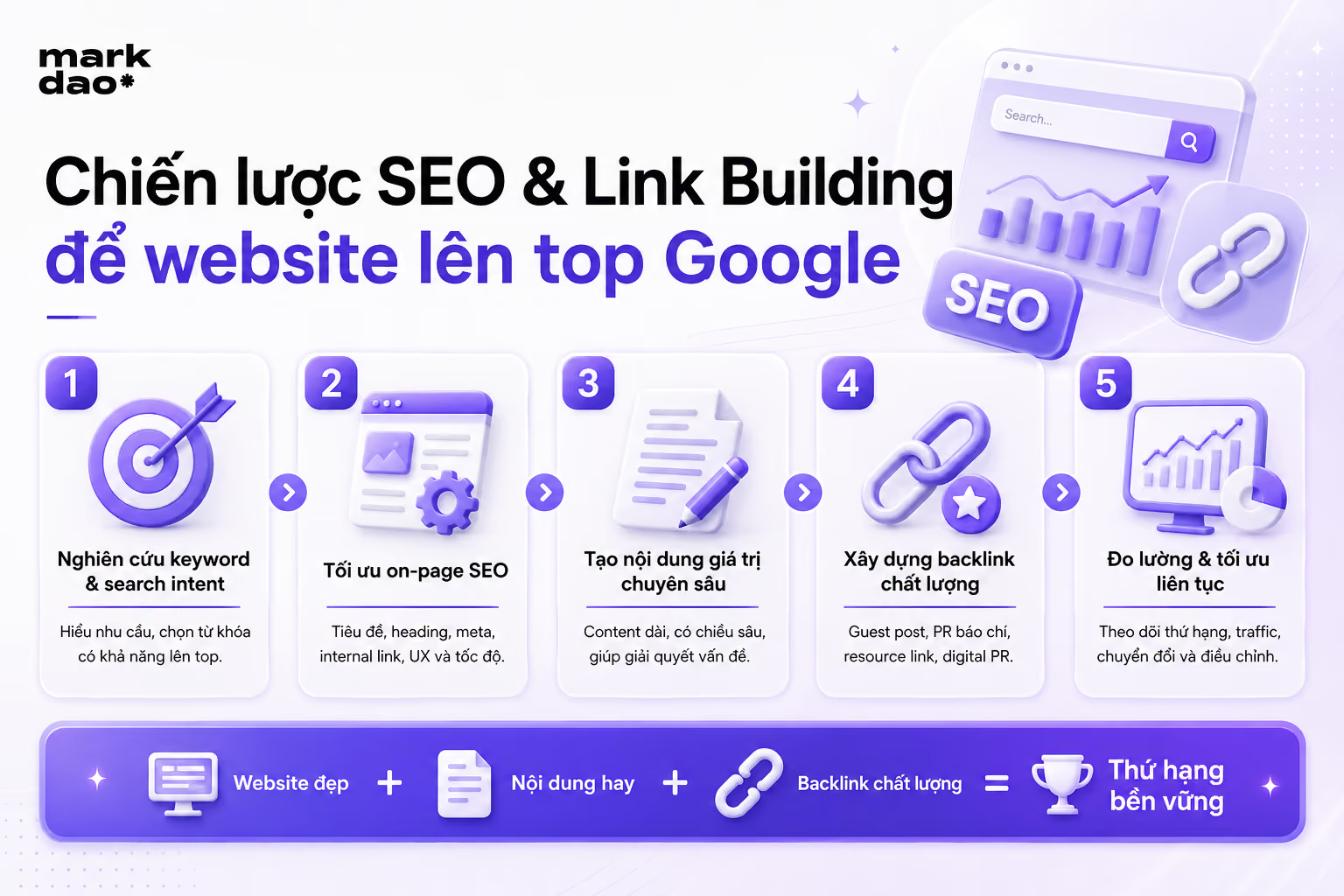
There is no mandatory number of internal links for every article. This article can include four to six internal links if Markdao already has enough quality destination pages.
Backlinks should come from real case studies, original data reports, professional articles, partner citations, digital PR, or useful tools. Avoid bulk backlink packages, mass guest posting just for link insertion, private blog networks (PBNs), irrelevant link exchanges, and over-optimized commercial anchor text. Paid links should be properly declared using rel="sponsored" or nofollow when necessary.
The goal is not to create a pretty backlink chart, but to build genuine editorial signals showing that Markdao has content and expertise worth referencing.
Businesses can learn more about how to optimize Link Juice through internal linking to properly distribute authority to pillar pages, cluster articles, and important landing pages.
A 90-day roadmap for implementing and designing a website according to the latest trends.
Days 1 to 14: establish a baseline and fix issues hindering website growth.
Audit indexability, canonical tags, sitemaps, robots.txt, JavaScript rendering, and redirects. Record baselines for Search Console, GA4, Core Web Vitals, and conversions. Select 5 to 10 high-business-value URLs to address first.
Days 15 to 30: finalize the pillar page and service pages.
Publish the pillar page after checking sources, metadata, and internal links. Update SEO-standard website design service pages, adding author details, case studies, processes, and proof of competence. Set up tracking for CTAs, forms, and contact clicks.
Update page SEO-friendly website design services, adding author details, case studies, processes, and proof of expertise.
Days 31 to 60: building content clusters
Publish 3 to 4 sub-topic articles with clear search intent and business value. Update existing content to link into the cluster. Add images, tables, templates, or Markdao’s proprietary checklists.
Days 61 to 90: increasing authority and measuring results
Create a linkable asset, such as a data report, benchmark, or template. Reach out to partners, industry publications, and professional communities. Measure impressions, clicks, rankings, conversions, lead quality, and Core Web Vitals performance.
If you lack a team to synchronize technical SEO, content, and link building, businesses can consider comprehensive SEO services from Markdao
Frequently asked questions about website design for 2026
Does an old website need a redesign to keep up with 2026 trends?
Not necessarily. First, check your indexability, mobile performance, Core Web Vitals, content structure, and conversion capabilities. If the foundation is still solid, you can upgrade individual components instead of rebuilding the entire site.
Does achieving good Core Web Vitals guarantee a top Google ranking?
No. Core Web Vitals are part of the ranking system but do not replace relevance, content quality, authority, or backlinks. A good score helps provide a better user experience, not a guaranteed ticket to the number one spot.
Should I invest in 3D or AI personalization first?
Real estate, interior design, and products requiring visualization should experiment with 3D or AR. E-commerce sites with high traffic and robust data can prioritize AI personalization. If your website is not yet optimized for mobile and speed, both should take a backseat to technical foundations.
How many backlinks are enough to reach the top?
There is no fixed number. The need for backlinks depends on competition, content quality, domain authority, and the relevance of the linking sources. A few high-quality editorial backlinks can be more valuable than hundreds of weak ones.
Should I implement FAQPage schema?
You should not implement it with the expectation of getting FAQ rich results. Google discontinued this feature in May 2026. You should still keep the FAQ section to assist your readers.
Do I need to create an llms.txt file to appear in AI Overviews?
No. Google has stated that Google Search does not use llms.txt to determine visibility or ranking. Websites should focus on unique content, crawlability, technical structure, and user experience.
How long does it take for a new article to improve its ranking?
There is no fixed timeframe. Google needs to crawl, index, and evaluate the page within the context of the entire website and its competitors. Markdao recommends tracking progress in 28-day cycles rather than promising a specific deadline.
Conclusion on the latest 2026 website design trends
2026 website design trends are not a checklist of effects to include on every site. The four foundational priorities are mobile-first, Core Web Vitals, accessibility, and content that provides unique value for both traditional and AI search. AI personalization, 3D, and AR should only be implemented once a business has sufficient data, budget, and a clear conversion hypothesis.
A sustainably growing website requires a combination of three layers: useful content, a clear technical foundation, and genuine trust signals. The interface creates the first impression, but SEO structure, user experience, and the ability to effectively address needs are what determine whether a website
FAQ

There is no single trend that fits every business. In 2026, businesses should prioritize mobile-first, speed and Core Web Vitals, accessibility, AI-search-friendly content structure, and user experience. Effects like 3D, AR, or animations should only be implemented when they truly support conversion goals.
Yes, if the trends are implemented correctly from a technical standpoint. Mobile-first, loading speed, Core Web Vitals, accessibility, clear content structure, and crawlability can all support user experience and SEO. However, a beautiful website or one that follows trends does not automatically guarantee a top spot on Google.
Not necessarily. Businesses should consider a redesign when their current website faces issues with UX, speed, mobile responsiveness, SEO, accessibility, or conversion rates. Rather than chasing every new trend, evaluate each item based on its impact on users, business goals, SEO, feasibility, and measurability.
AI is currently being applied to personalize content, CTAs, product recommendations, and user experiences based on behavior. At the same time, websites must be built with clear, in-depth content that is easily understood by AI search systems. AI implementation should start with a specific problem and measurable KPIs, rather than being adopted just for the sake of a trend.
Yes, but not every website needs them. 3D and AR are particularly well-suited for interior design, real estate, fashion, automotive, or products that require visual representation before purchase. For service-based websites, effects should only be used if they help users understand the product, increase engagement, or improve conversions without slowing down the site.