
When optimizing a website for SEO, understanding what a root domain is plays a crucial role in building an effective optimization strategy. The root domain is not only the foundation that defines your website's identity but also directly impacts your search rankings. So, how can you optimize your root domain to improve credibility and enhance user experience? Let's explore this with Markdao in the article below!
What Is a Root Domain?
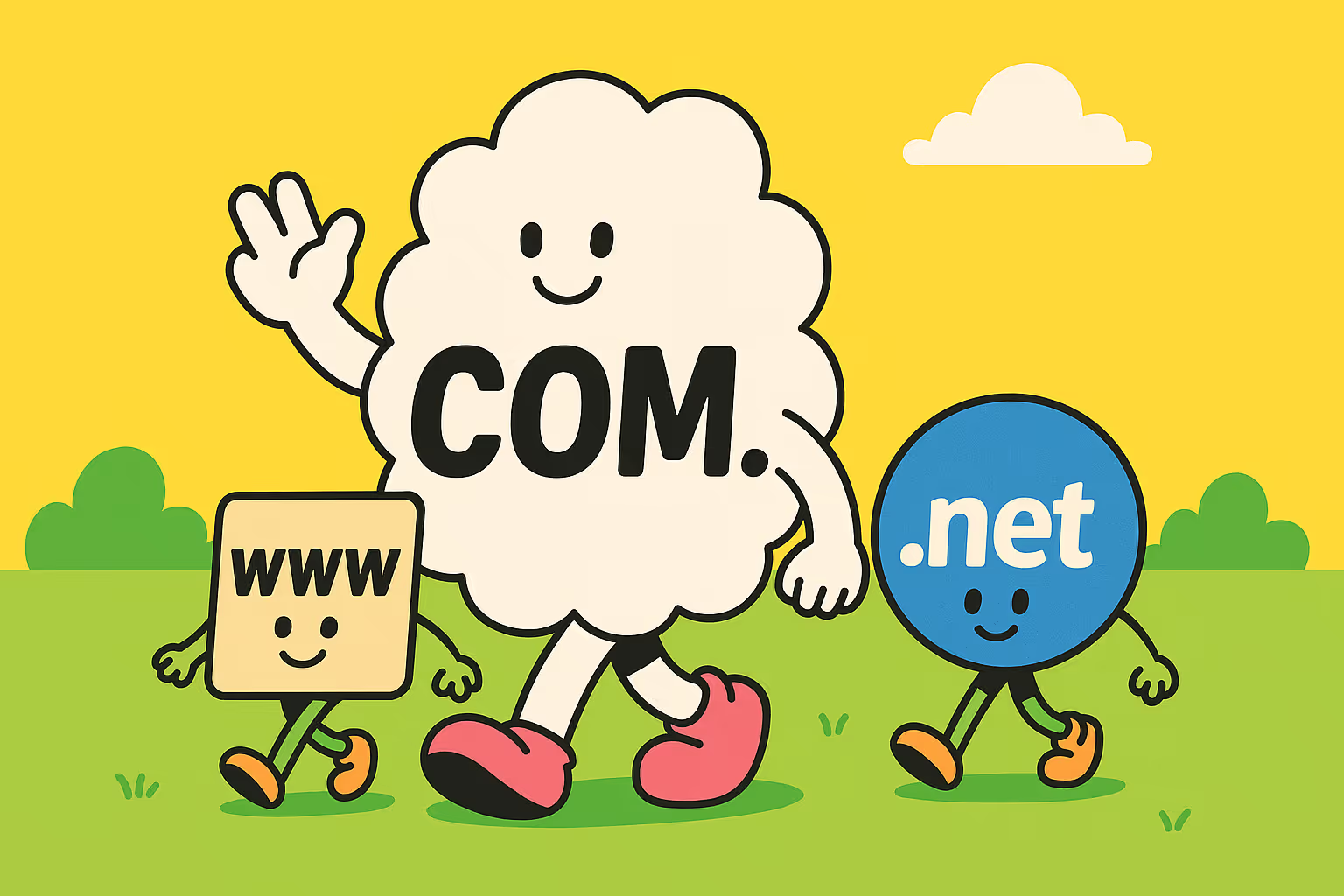
A root domain is the core part of a web address, excluding prefixes like "www" or other subdomains. It is the highest level in the domain structure used by users and search engines to identify a website. The root domain is also the component that defines your website's unique name on the internet. Each root domain consists of the domain name plus the top-level domain (TLD) extension.
Detailed structure and naming of URL components
To better understand domains, let's analyze the components of a URL:
- Protocol: "Https://" The Hypertext Transfer Protocol Secure used for data transmission.
- Subdomain: "www." An extension of the main domain, typically defaulting to "www," though it can be changed (e.g., blog., shop.).
- Domain name: "markdao" This is your brand name or the primary identifier for your website.
- Top-Level Domain (TLD): "com.vn" This is the top-level domain. In this case, it is a second-level country-code TLD: com.vn (Vietnam).
- Root Domain: "markdao.com.vn" This is the main domain, consisting of the domain name plus the TLD.
- Path: "/blog/root-domain-la-gi" This is the path to a specific resource on the website (in this case, a blog post).

When you enter www.domain.com and the browser automatically redirects to domain.com, it is because the website has been configured to consolidate these two addresses into a single version, usually via server-side redirects. Although www.domain.com is technically a subdomain of domain.com, for users and SEO purposes, these two should be treated as one to avoid duplicate content. Website owners typically choose an official version (with or without "www") and configure the system so that all traffic leads to that version. This helps consolidate SEO value, improves user experience, and ensures consistency across the domain system.
Domain naming conventions
Below are the general standards and regulations for choosing a domain name according to international (ICANN) and Vietnamese (VNNIC) standards:
- Use only valid characters:
- Consisting of letters (a–z), numbers (0–9), and hyphens (-)
- Do not use special characters such as: ! @ # $ % ^ & * ( )...
- Do not start or end with a hyphen (-)
- Do not contain spaces
- Valid length:
- Minimum 1 character, maximum 63 characters for each part of the domain name (e.g., markdao)
- The total length of the entire domain (including the TLD) must not exceed 253 characters
- Case-insensitive:
- Markdao.com and markdao.com are considered the same
- Markdao.com and markdao.com are considered the same
- Must not be identical to a previously registered domain name
Distinguish between Top-level Domains
A Top-Level Domain (TLD) is the final part of a website address, appearing after the dot, such as .com, .vn, or .edu. Based on their function and target audience, TLDs are divided into various categories. Below are the most common types of TLDs today:

Generic Top-Level Domains (gTLD) – Generic Top-Level Domains
These are the most popular domain names, are not restricted by country, and are commonly used for a variety of purposes.
Examples:
.com: short for “commercial,” intended for commercial use, popular globally..org: intended for non-profit organizations..net: originally for network technology, now used widely..info,.biz,.name: provides information, for businesses, or personal names.- New domain names like
.xyz,.online,.tech,.store: for brands or creative purposes.
Features:
- Open registration with no documentation required.
- Suitable for individuals and organizations worldwide.

Country Code Top-Level Domains (ccTLD) – Country Code Top-Level Domains
These are two-character domains assigned to each country according to the ISO-3166 standard.
Examples:
.vn: Vietnam.us: United States.jp: Japan.de: Germany.fr: France
Features:
- Some ccTLDs require registrants to have a local presence or representative in that country.
- Some ccTLDs have become popular outside their home countries due to their unique meanings, such as
.iooften used by tech companies.

Sponsored Top-Level Domains (sTLD) – Sponsored Top-Level Domains
Reserved for specific organizations, industries, or sectors, subject to clear conditions and criteria.
Examples:
.edu: for educational institutions (primarily in the United States)..gov: exclusively for United States government agencies..mil: for the U.S. military..int: for international organizations..museum,.coop,.aero: for specific sectors (museums, cooperatives, aviation, etc.).
Characteristics:
- Requires verification of eligibility before issuance.
- Each TLD type has its own governing organization.

New gTLDs – New generic top-level domains (post-2013)
Expanded by ICANN to serve diverse needs and increase brand creativity.
Examples:
.tech,.shop,.app,.blog,.design: associated with specific industries or purposes..google,.brandname: TLDs reserved for specific brands (brand TLDs).
Characteristics:
- Allows businesses to register domain names based on their own brand.
- Highly personalized and recognizable.
How does a root domain affect SEO rankings?
Choosing a domain name and root domain is not just a simple step in building brand identity, but a core factor that directly determines the success or failure of a long-term SEO strategy. A good domain will help a website rank quickly, whereas a low-quality domain or one that has previously violated Google's policies will render all SEO efforts futile.
Below are analyses and real-world case studies to help you better understand the importance of choosing the right domain name from the start:
The positive impact of choosing the right domain name

Increase credibility and CTR with a domain that fits your brand and industry:
- A 2023 study from Moz shows that a brandable domain can help increase click-through rates (CTR) by up to 25–30%, leading to a significant improvement in traffic and search rankings.
- Typical Case Study: Website
booking.comandhotels.comwith a short, memorable domain helps direct traffic account for 50–60%, creating a major advantage in competitive SEO.
Keyword-rich domains still offer an advantage:
- According to a 2023 study from Ahrefs, Exact Match Domains (EMD) can improve ranking potential, especially for low-to-medium competition queries.
- For example, a domain like
muabanoto.com.vncurrently has a clear SEO advantage, leading relevant queries thanks to easy recognition by both users and Google.
Risks of choosing the wrong domain name and accidentally purchasing a Google-penalized domain
Domains previously used for spam or in violation of Google algorithms:
- When buying an aged domain, if you don't carefully check its history, you may end up with one that has been penalized by Google (due to spam links, malicious content, or violations of Panda and Penguin algorithms).
- Research from SEMrush (2023) indicates that: penalized domains can take anywhere from 6 months to a year to recover their rankings, or may even never fully recover despite significant investment in SEO.
Real-world Case Study:
- In 2022, an e-commerce business in Ho Chi Minh City invested over 150 million VND to purchase a domain that previously had high traffic, hoping to leverage its existing authority. However, after just two months, the website's rankings plummeted, and traffic dropped by more than 85%. After a thorough check using Google Search Console, they discovered the domain had previously been penalized by Google for spam backlinks. This forced them to abandon the domain and start over, resulting in significant losses of time and money.
Google cracks down on Domain Authority Manipulation
Google intensifies action against websites that buy authoritative domains and change their content:
- Since 2022, Google has been taking a particularly firm stance against websites that exploit the purchase of authoritative domains (typically educational, government, or non-profit sites) and then repurpose the content for sectors like gambling, cryptocurrency, or payday loans.
- Statistics from the Google Transparency Report (2023) show that over 45% of cases where websites were deindexed (removed from search results) were due to domain and content manipulation..
A notable example from Vietnam:
- In 2023, an online financial company purchased an expired domain that had belonged to a defunct university. Initially, the domain had high authority (Domain Authority over 50). After changing the content to focus on quick consumer loans, the website was detected by Google and completely removed from search indices after just three weeks of operation. The company lost their entire investment of hundreds of millions of VND.
Domain age & history

Long-standing, authoritative domains make SEO easier:
- Domains over five years old with a clean history are generally favored by Google. According to research from Search Engine Journal (2023), long-standing websites typically achieve higher levels of trust and better rankings compared to new domains.
Domains with a history of spam or penalties create significant SEO obstacles:
- Recovering a domain that has been penalized by Google algorithms (especially Penguin, which relates to link spam) is extremely difficult. According to an Ahrefs survey (2022), only about 20% of penalized websites fully recover their previous rankings, while the remaining 80% take anywhere from six months to over a year just to reach a basic level of stability.
Common mistakes in root domain management and how to fix them
When managing a root domain, there are several common mistakes to avoid for optimal SEO. First, incorrect redirects (301/302) can cause a loss of SEO value. Always use a 301 redirect for permanent changes, such as moving from http://markdao.com to https://markdao.com.
Second, using too many unnecessary subdomains can dilute your domain's authority. Instead, use subdirectories (e.g., markdao.com/blog) to consolidate your SEO value.
Finally, failing to optimize for mobile and page load speed degrades the user experience. Implement responsive design and compress images to improve speed, ensuring your website is friendly to all devices. Fixing these issues will help boost the SEO effectiveness of your root domain.
4 steps to safely check a Root Domain before purchasing
Choosing a Root Domain that fits your needs not only helps businesses build a strong brand but also prevents serious risks when implementing SEO. Below is a step-by-step guide to checking and selecting the right root domain, helping you avoid dangers such as duplicate content, purchasing a domain penalized by Google, or using a domain that confuses customers.

Step 1: Check the Root Domain history
Before purchasing a Root Domain new or used, businesses should use specialized tools to analyze the domain's history:
- Ahrefs, SEMrush: Check backlink history, Domain Rating, and detect signs of spam.
- Wayback Machine: Review previous content on the domain and detect unusual content changes.
- Google Search Console: After purchasing, immediately register and check if the domain has ever received a penalty from Google.
Markdao suggests:
You should choose a brand-new domain or a clean one with a clear history. Markdao provides SEO services and website design, supporting businesses in checking history and providing specific advice before deciding to purchase a domain.
Step 2: Check for brand and domain duplication
Make sure the domain you choose does not duplicate or cause confusion with another brand:
- Search for the domain on Google, the Intellectual Property Office, or WHOIS to ensure it does not infringe on any trademarks.
- Choose a domain that is short, memorable, and accurately reflects your brand or business sector.
Markdao partners with businesses:
We support businesses from the moment a domain name is just an idea, helping you avoid unnecessary legal and SEO risks in the future.
Step 3: Choose a Root Domain based on your industry
Depending on your business type (brand-focused or retail), the approach to choosing a domain name will differ:
- Brand-focused businesses:
Prioritize using your brand name as the domain. For example:vinamilk.com.vn,samsung.com. A branded domain helps increase recognition and build long-term credibility. - Retail or keyword-driven businesses:
Choose a domain that contains primary keywords related to your products or sales niche to improve SEO and increase click-through rates (CTR). For example:muadienthoai.vn,donghore.vn.
Step 4: Select and set up your Canonical Domain to avoid duplicate content
After purchasing a domain, businesses must ensure that only one version of the domain is active (either www or non-www):
- Identify the official version (usually non-www, such as
markdao.com). - Set up a 301 redirect from the secondary version (e.g.,
www.markdao.com) to the official version. - Configure a clear canonical URL in your HTML source code (the
<link rel="canonical">).
Example of a standard configuration:
<link rel="canonical" href="https://markdao.com/">
This will completely prevent duplicate content issues, which can severely damage your SEO performance.
Conclusion on the importance and considerations for choosing a Root Domain

In summary, understanding what a root domain is. Choosing the right domain name not only helps businesses build a strong brand but is also a core factor in the success of a long-term SEO strategy. From avoiding common technical pitfalls like duplicate content and checking a domain's history before purchase, to selecting a top-level domain that aligns with your industry, every step contributes significantly to SEO performance and sustainable growth.
To avoid risks and optimize from the very start, let Markdao be your partner. With deep expertise in website design and SEO services, the Markdao team will provide consultation and support from the moment your domain is just an idea, ensuring every step your business takes is as secure, effective, and sustainable as possible in the digital space.