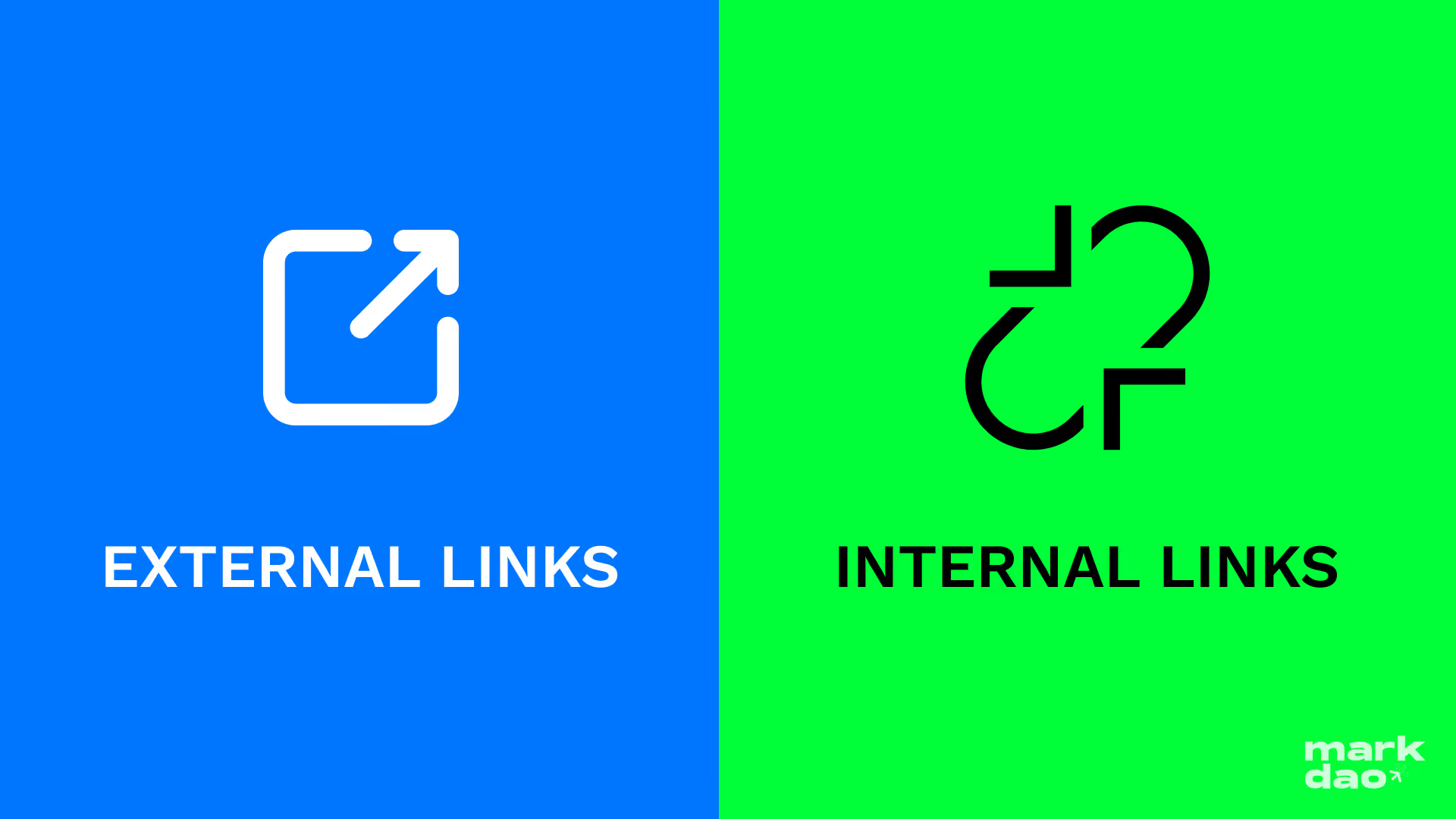

SEO is a vast field that continues to expand, with its definition constantly being reshaped through countless different interpretations. One way to understand what SEO is in this article will be explained through two lenses: Internal and External links. Are you ready to explore
Discover what SEO is through Internal Links
Since internal links are a fairly important part of SEO, they will also help us define what SEO is. It is a sad truth that internal linking is often overlooked in SEO, especially On-page SEO, even though it is actually easy to manage and implement. Internal links are undervalued compared to the great potential, utility, and conversion capabilities they can offer.
But if you have also underestimated internal links, don't be too hard on yourself; it is really just due to a lack of structured, professional guidance on this type of link. But now you know how important they are, right? And Markdao will help you get a clear understanding of this magical SEO tool.
What are Internal Links in SEO? How do they impact your SEO efforts?
What are internal links and how do they work?
Simply put, internal links are links that go from one page to another on the same domain. Internal links usually connect content within the site and are often used in primary navigation. To visualize it, an internal link is like a shortcut, helping users "teleport" to another area of the website without needing to navigate manually.
A basic code sample for this type of link is as follows:
<a href="http://www.same-domain.com/" title="Keyword Text"> Keyword Text </a>
So, what are the benefits that internal links bring to SEO?
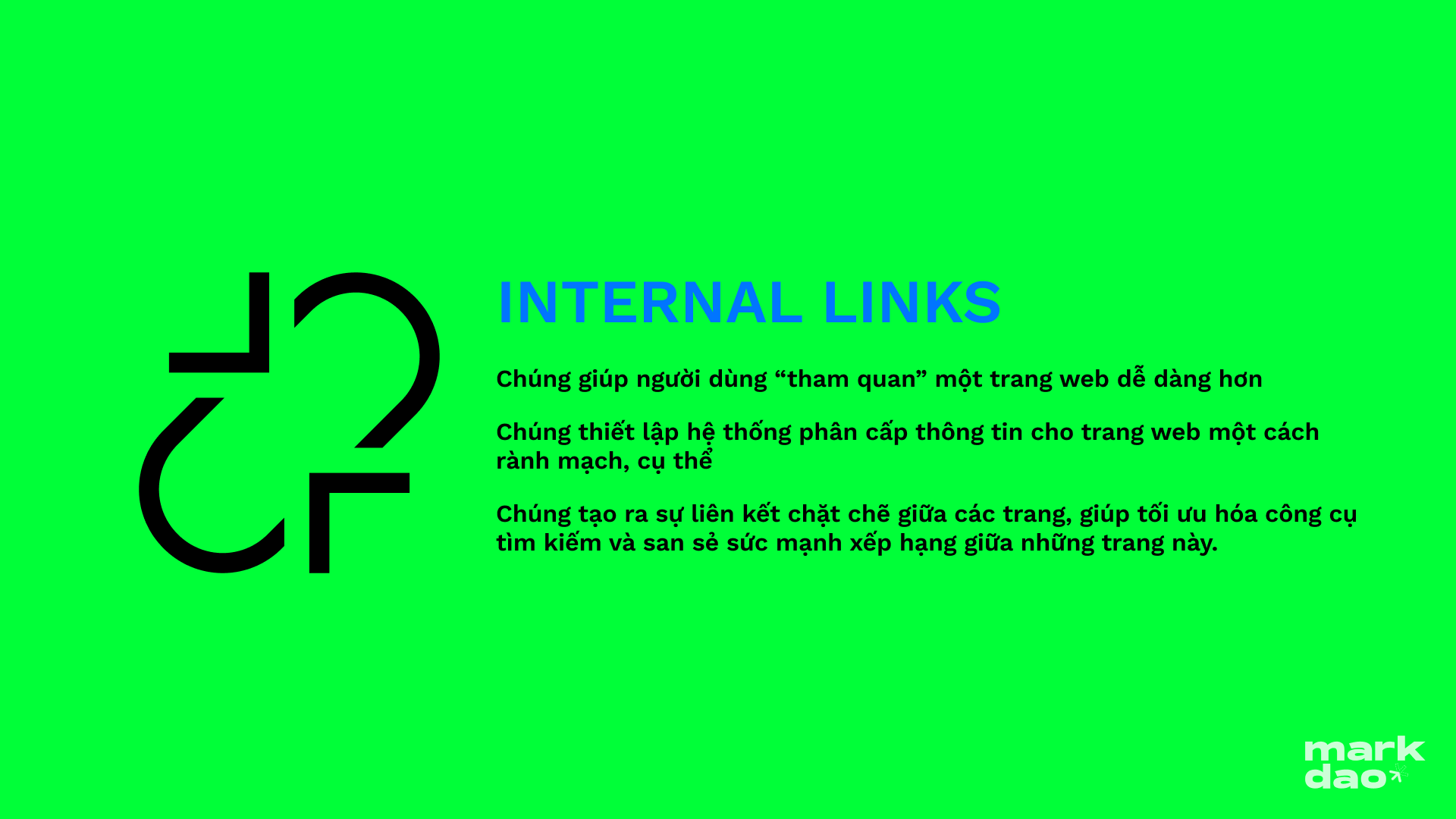
- They help users "tour" a website more easily
- They establish a clear and specific information hierarchy for the website
- They create strong connections between pages, helping to optimize for search engines and distribute ranking power among these pages. This means that if a page with a good ranking is linked to another page, the connected page will also receive authority to help it "climb the ranks" faster.
Internal Links and their impact on SEO
First, internal links are most useful for establishing website structure and spreading link equity. For this reason, they help build a search-engine-friendly website, boosting SEO performance without requiring too much effort on your part.
For individual pages, search engines like Google need to "examine" the content to index them within their massive keyword databases. Search engines also require access to the link structure to crawl the site. A common and very serious mistake is hiding the main navigation links, making them inaccessible to search engines. This puts these websites at risk of becoming "invisible" in search engine results pages.
To mitigate this, we use internal links to connect pages within the same domain. This structure ensures a minimal number of links between the homepage and any given page. This is highly beneficial as it allows link equity (ranking power) to flow throughout the site, from top to bottom, thereby increasing the ranking potential for each page. This structure is common on high-performing websites (like Amazon.com) in the form of category and sub-category systems.
In short, internal links connect other pages within the same website that are relevant to the topic at hand. Using internal links helps Google recognize that your website is truly useful due to its ability to navigate from one page to another, encouraging users to interact more across multiple pages. This makes internal linking a critical SEO criterion, providing practitioners with a clearer view of how to operate What is SEO and improve activities to support On-page SEO.
External links help you better understand what SEO is and its specific impact on SEO
Besides internal links, external links are also an essential part of SEO. They play a crucial role in the process of optimizing search engine rankings. So, let's find out what external links are!
What are external links and what benefits do they bring to SEO?
External links are hyperlinks that point to any domain other than the one on which the link exists. In other words, if internal links connect to pages within the same domain, external links cross boundaries to point to other domains.
External link code samples and their advantages
External links use the following code sample:
<a href="http://www.external-domain.com/">Link Anchor Text</a>
It uses descriptive keywords in the anchor text that reflect the same topic or keywords the page is trying to target. However, in practice, you do not necessarily have to use the same keyword every time; in fact, you should avoid doing so, as this could be flagged as spam by Google. Instead, try to create a variety of anchor text to help diversify the context and usage scenarios for both users and search engines.
3 characteristics of external links that help you distinguish them from their "sibling," internal links
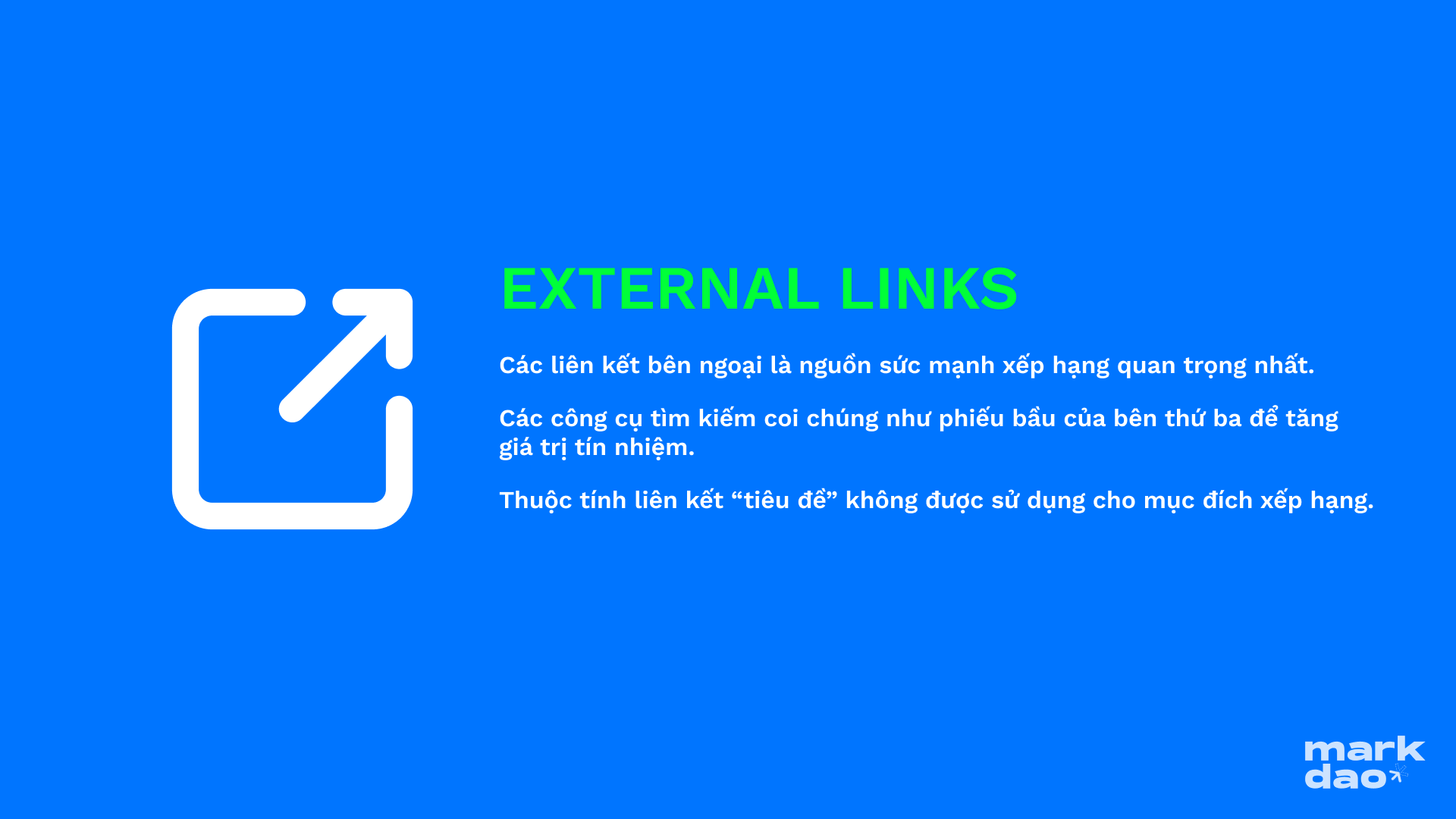
- External links are the most important source of ranking power.
- Search engines view them as third-party votes to increase credibility.
- The "title" link attribute is not used for ranking purposes.
According to specific surveys on search engine ranking factors, obtaining external links is a paramount goal for achieving high rankings. This stems from the idea that external links are one of the best ways for search engines to determine the popularity of a given website.
You can read about the history of What is SEO to learn more about the emergence and significant impact of external links. Here, we briefly summarize this "legend": Google made waves when it introduced PageRank. This algorithm counts hyperlinks as votes for the popularity of each website: pages with the most incoming links are considered the most popular. When they are deemed relevant to a specific query, the most popular and relevant pages become the first ones listed in Google's results. Although this algorithm has become much more complex today, its core utility remains the same as it was in the beginning.
Today, major search engines use a variety of metrics to determine the value of external links. Some typical indicators include: the authority of the linking domain, the popularity of the linking page, the topical relevance between the source and destination pages, the anchor text used, and more.
Beyond these metrics, external links are crucial for two main reasons:
- Popularity
While traffic is a rather "messy" metric that is difficult for search engines to calculate accurately, external links are a more stable and measurable option. This is because they are publicly visible and easy to index.
- Relevance
External links provide highly valuable correlations for search engines. The text used in links often reflects the content of the page being linked to. An article about sweaters that includes an external link to a page about wool fabric, with the anchor text "wool material," helps readers find useful, expanded information they need. This helps search engines establish knowledge hubs on the Internet, which they then use to determine the importance of a given web document.
Expanding the definition of SEO through what Internal and External Links have done for SEO
In the past, when asked what is SEO, most people only thought of writing articles and stuffing them with keywords to get to the top of Google. As technology advances, Google's algorithms have also become more sophisticated. This creates significant pressure on SEO efforts, requiring us to adapt or be left behind.
In an environment where standing still means falling behind, SEO is gradually being redefined and expanded. Internal and external links have proven this. Nowadays, SEO practitioners do more than just write articles and insert keywords. Behind an article that ranks #1 on Google is the tireless effort of an entire team: from content creation to image optimization, off-page SEO on forums and other communities, and building backlinks. Throughout this long-term process, internal and external links play a significant role in strengthening SEO.
Therefore, no matter how difficult it may seem, you should strive to leverage these two powerful tools. Markdao believes that if used correctly, they will help you improve your SEO results in unexpected ways. If you don't know where to start or need a partner to lend a hand, contact Markdao today!