

What is website interface design?
Website interface design (also known as UI/UX design) is the process of creating the user interface (UI) for a website or web application. It encompasses everything that appears on the site, including:
- Visuals: Images, logos, icons, and more.
- Information: Content, articles, product descriptions, and more.
- Video: Promotional videos, tutorials, and more.
- Layout: Designing the website structure and arranging elements on the page.
- Color: The primary color scheme of the website.
- Typography: The fonts used throughout the website.
- Navigation: Menus, buttons, links, and other elements that help users navigate the site.
The goal of website interface design is to create a visually appealing, user-friendly site that makes it easy to find information and perform desired actions, ultimately providing the best possible user experience. A beautiful interface attracts users and encourages them to spend more time on your website.
Website interface design is a crucial part of building a successful site. A website with a beautiful, easy-to-use interface attracts more users, helping to increase revenue and profits for the business.
However, designing a web interface is time-consuming and requires significant expertise, meaning businesses must invest appropriately to ensure a polished web theme that resonates with users. Beyond designing an interface from scratch, there are many solutions on the market today to serve diverse needs. Here are some interface solutions:
- Purpose-built website templates: These are interfaces designed specifically for services or products with highly specialized requirements. These designs are typically practical for industry-specific needs and are well-suited for startups that need a polished website for their launch.
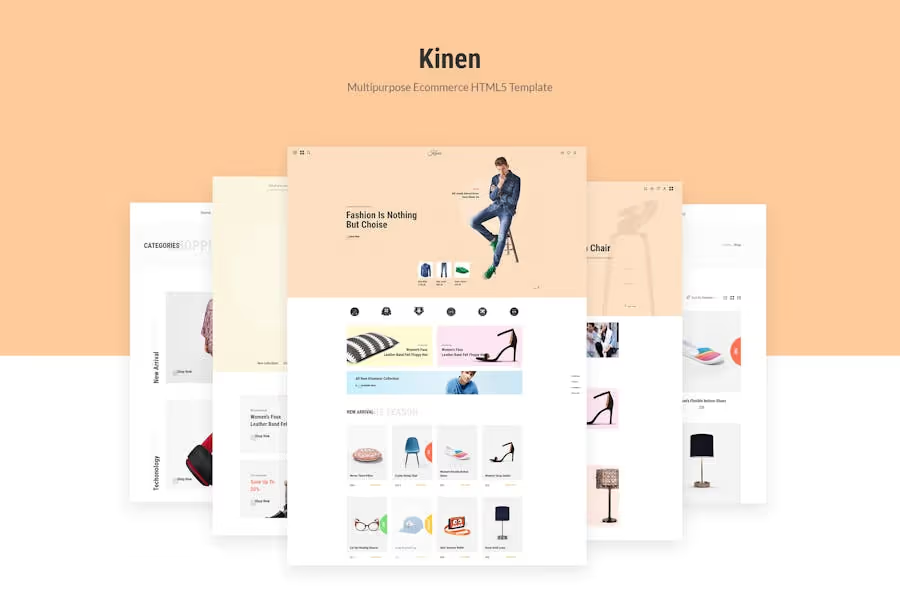
- Multi-purpose website templates: Based on existing theme concepts, developers aim to serve a broader audience and increase sales by creating layouts that are as easy to use as possible, using neutral colors so that anyone can use them regardless of their content or industry. The downside is that the layout can feel generic, and users may not find it particularly memorable.
- AI-generated website interfaces: This is a new model that emerged in 2023 as ChatGPT matured. Users simply enter their requirements, and the system automatically finds purpose-built or multi-purpose templates to suggest, which can then be customized. However, everything is still in its early stages and has limited practical application.
- UI Components: This is a group of interfaces often favored by web developers for their flexibility. These are not templates for a complete page; instead, each block on the page is called a component, which the developer can call upon as needed. However, to use them effectively, the developer must have a good eye for aesthetics or work closely with an experienced web designer.
- Custom-designed interfaces: This is simply a fancy term for designing an interface from scratch. With this solution, the brand identity, content, and design intent are carefully calculated and executed by a designer. The results depend heavily on the designer's skill level. The drawbacks are the time and financial investment required, as well as a heavy reliance on the designer's expertise.
What is a template? What role do templates play in web interface design?
Website template (also known as website interface template) is a pre-designed set of elements that allows you to create a website quickly and easily without needing to know how to code. A website template includes the following elements:
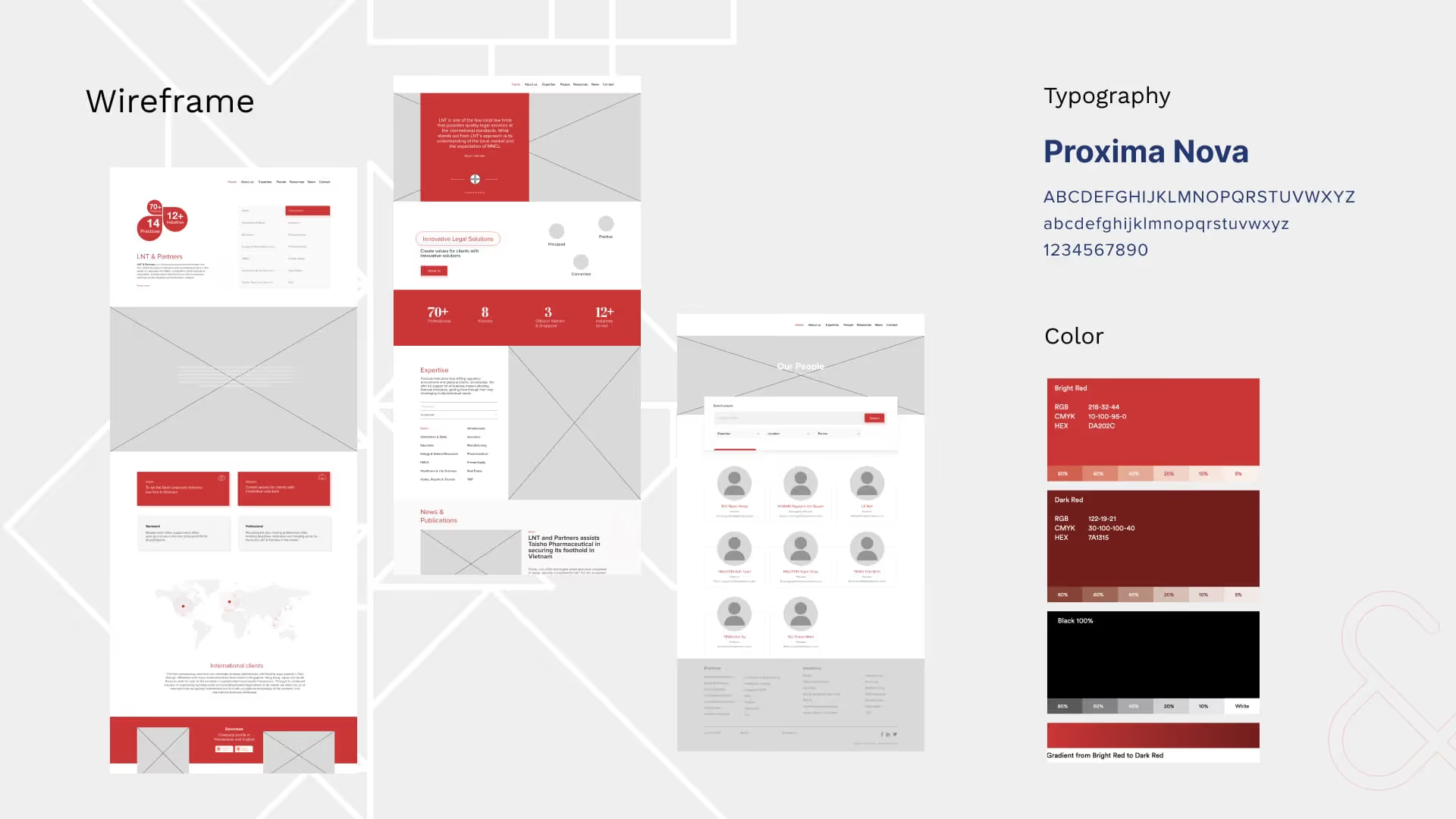
- Page layout: The arrangement of elements on the webpage, including menus, content, images, and more.
- Typography: The typography used on the website.
- Colors: The primary colors of the website.
- Images: Images used on the website.
- HTML and CSS code: The HTML and CSS code that builds the website interface. (Some website templates do not include HTML/CSS, providing only design files. Users must code these interfaces themselves on different platforms.)
Using a pre-made template for your website interface is a highly recommended solution when you need a website quickly that still meets aesthetic requirements. However, this solution must be the right fit; below, Markdao analyzes the pros and cons to help you make an informed decision.
What are the benefits of designing a website interface from a template?
TIME SAVINGS:
For many website projects, time is a critical factor for business objectives. With pre-made templates, users simply need to adjust the interface design to fit their content and replace the images and text to get started. Having a pre-built layout and animations saves a significant amount of time.
Currently, popular open-source website platforms like WordPress and Joomla feature visual, no-code builders. Additionally, popular no-code builders such as Squarespace, Webflow, and Framer offer a wide variety of pre-built templates, making adjustments faster and often eliminating the need for developer intervention.
COST SAVINGS:
Because minimal adjustments are required, marketing staff or personnel with a technical background can modify the template interface themselves, helping businesses avoid the costs of hiring external agencies. This gives businesses more autonomy and the ability to easily adapt to changing needs.
In cases where a business lacks internal resources and must hire a digital agency, the combination of pre-built platform interfaces and professional expertise allows for a website to be completed much faster—often within 3 to 5 days (provided the content is ready)—ensuring a quick launch.
EASY UPDATES:
A library of pre-existing page layouts makes it faster and more efficient to deploy new pages for new content. Using no-code builder platforms allows marketing teams to handle this without needing to hire additional staff. If you need to conduct A/B testing, you already have many interface options available to choose the best one for your website.
If your templates come from reputable providers that offer post-purchase support, you will always have access to the latest interface updates. Simply clicking "Update" can add new components and screens with similar designs, helping to diversify your site and keep it looking fresh to surprise your users.
Potential for fewer errors:
To design an SEO-friendly web interface, remember that you shouldn't just focus on the "facade" of the website; you also need to be proficient in the technical aspects "under the hood," specifically the code. Compared to writing code from scratch, using a template with pre-built code allows you to make adjustments more accurately.
Nowadays, there are many templates that support SEO-friendly web design, so you don't need to write much code unless you need to make deep customizations. The less you write, the fewer errors you'll have, which in turn makes your website more optimized.
3 limitations of using website templates
LACK OF UNIQUENESS:
Designing a web interface with a pre-made template offers many conveniences, but you must also accept the limitations of this approach. A template that can be purchased with a single click cannot convey your Brand Essence.
The primary purpose of a website is to convey content and messages through text and images. If content comes first and design follows to serve that content, the effectiveness of the message is much clearer. If content comes after the layout and design, we are essentially trying to force the message into a pre-existing structure. The message's impact may not be as effective as it would be with a fully custom-designed website.
Therefore, to achieve optimal results, content should come first, aligned with your brand style, and then you can select the most suitable templates based on those two criteria. However, making adjustments is not easy if you lack design knowledge.
For this reason, you can invest a small amount in Markdao's affordable website design service. Despite the budget-friendly price, the quality can reach 70% of a completely custom-designed web interface.
WEBSITE OPTIMIZATION IS MORE DIFFICULT:
The main goal of current templates is to provide an attractive interface to help users make a decision, with SEO being a secondary priority. Consequently, the interface optimizations sometimes don't fully meet strict SEO requirements. Of course, these can be adjusted, but if the interface is designed and customized for SEO from the start, it will be much more effective.
Sometimes these templates have unoptimized page load speeds on Google PageSpeed Insights, requiring deep theme customization to improve. This is not simple and could potentially cause your website to go offline at any time. While not a primary SEO factor, optimizing GPSI can be the deciding factor in competitive rankings against rivals with similar potential.
During the SEO process, improving the website's UX is crucial for increasing conversion rates. In this context, even small, unachievable tweaks can become significant obstacles.
SECURITY ISSUES:
Using generic code for a web interface design can make your site vulnerable to hacking by malicious competitors. Additionally, pre-made templates may contain hidden ads from the theme designer or, in some cases, malicious code that lowers your website's search engine ranking. Fortunately, Markdao Vietnam has anticipated this limitation and offers a dedicated website protection program to help you maintain your site for the long term.
Analyzing the Custom UI Design approach
Custom website design: A website designed and programmed from scratch according to the client's specific requirements. This method is more expensive but allows for the creation of a unique website that meets all of the client's needs.
Custom website design is the process of creating a website on the internet. It involves various tasks, including:
- Planning: Define the website's goals, target audience, and necessary functionality.
- UI Design: Create an attractive, user-friendly interface that aligns with the website's goals.
- Content Development: Write articles, create images and videos, and gather other content for the website.
- Programming: Write HTML, CSS, and JavaScript code to build the website's functionality.
- Testing and Quality Assurance: Ensure the website functions correctly and is free of errors.
- Launch and Maintenance: Publish the website to the internet and update content and functionality over time.
The advantages of custom website design
BUILD A UNIQUE BRAND IDENTITY:
To breathe life into a custom interface tailored specifically to your brand, a comprehensive Brand Guideline is essential. This allows your Web Designer to craft a website that leaves a lasting brand impression. By utilizing specific shapes, fonts, and colors, they can create a perfect combination for your interface.
Beyond just imagery and content, custom design allows for deep control over headers, footers, buttons, typography, background blocks, and most importantly, animations. This level of customization, aligned precisely with your brand identity, is the ultimate weapon that makes your interface inimitable. If competitors try to replicate it, they are only helping to make your brand more famous online.
SEO OPTIMIZATION:
When keywords are identified in advance and an SEO strategy is carefully calculated, elements like breadcrumbs, keyword distribution, and headings gain a solid structure that won't need future changes. If you hand this over to any SEO agency, they will save significant time on adjusting on-page SEO for your existing website interface.
By limiting the use of plugins and removing unused CSS and layouts, the overall website becomes lighter than those built on templates. Faster speeds provide a competitive edge. For mobile devices, images are loaded at much smaller sizes than on desktop, which serves as a key competitive advantage in challenging markets.
GREATER COST-EFFICIENCY:
Consulting, strategic planning, identifying target audiences, and mapping out the Customer Journey are steps that are difficult to fit into templates, even if you try. With this information in place, your website will be designed with a polished interface built for long-term use, eliminating the need for time-consuming changes after the design is finalized.
EASY TO EDIT:
Once you have 100% ownership of your website, you can edit it freely without any copyright or security concerns. This is highly beneficial when you need to make in-depth changes to specific effects or technical elements that require "accessing" the backend of the site. A unique design allows for the addition of unlimited page types.
What are the limitations of custom interface design?
TIME-CONSUMING:
Choosing a unique design means you need to give us a little more time to perfect your website. The template design phase is crucial; it must be meticulously planned from the very first steps to ensure the website has the most solid foundation possible. Additionally, understanding your company's ethos and identifying what truly makes you stand out requires extra time.
RISK OF WORKING WITH INEXPERIENCED PROVIDERS:
There are many providers on the market that lack the capacity to deliver a complete website interface design, often due to two main reasons:
- Using inexperienced personnel: This keeps the cost of building the website nearly as low as a template-based site. However, the quality is often worse than using a template. When coding these interfaces, even more issues arise if the designer lacks programming experience.
- Using developers for interface design, skipping the design phase and moving straight to front-end coding from sketches. In the early 2010s, this was common when there were fewer professional web designers, so programmers took on the task. While this is less common today, it still exists in the market.
HIGH COST:
The initial cost of a unique design approach will be higher than choosing a pre-made template. Choosing a unique design means you are utilizing 100% of the expertise of the Markdao web design team. Therefore, a higher cost is understandable. In return, you receive a one-of-a-kind website with your own distinct style that belongs exclusively to you.
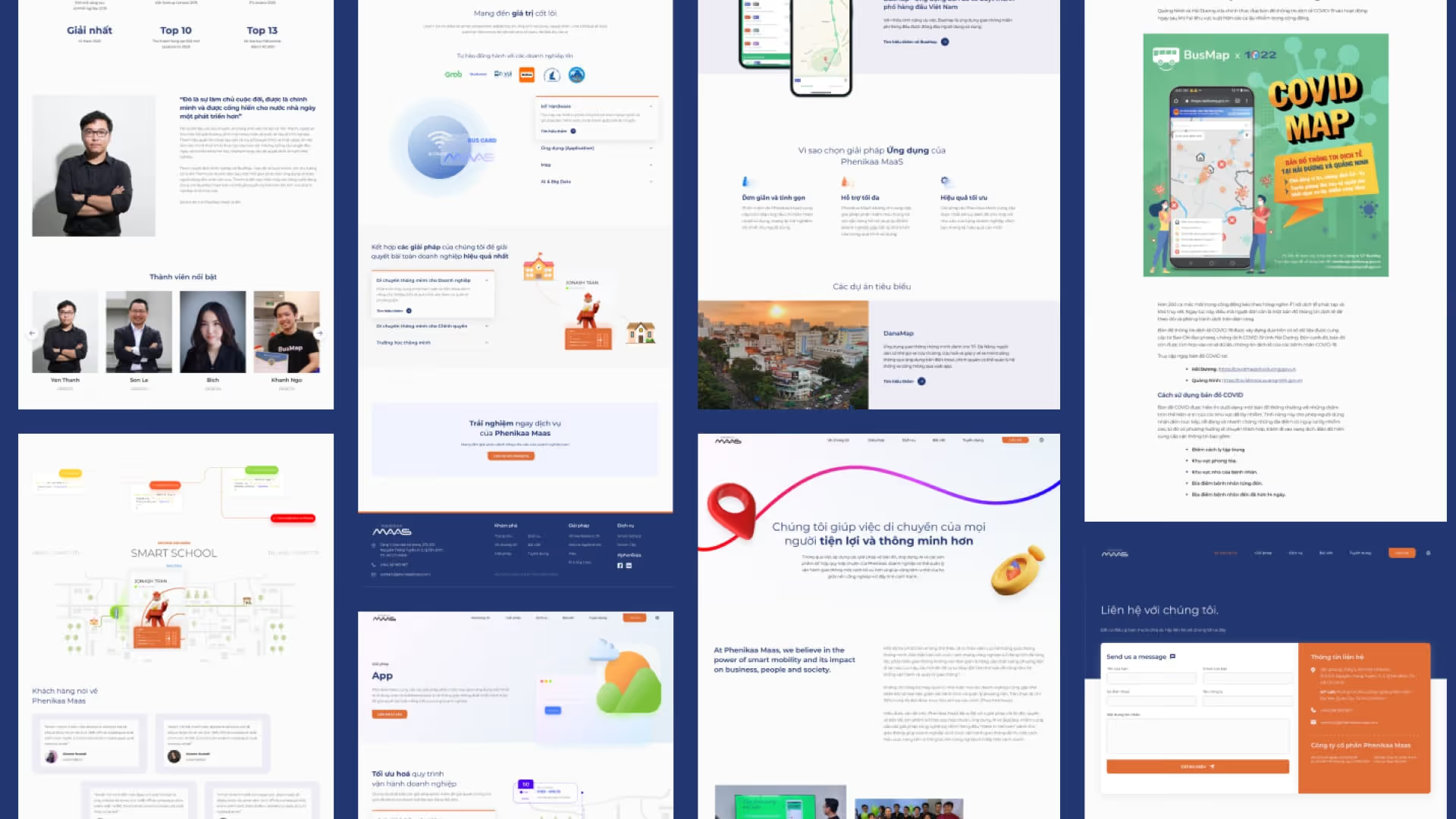
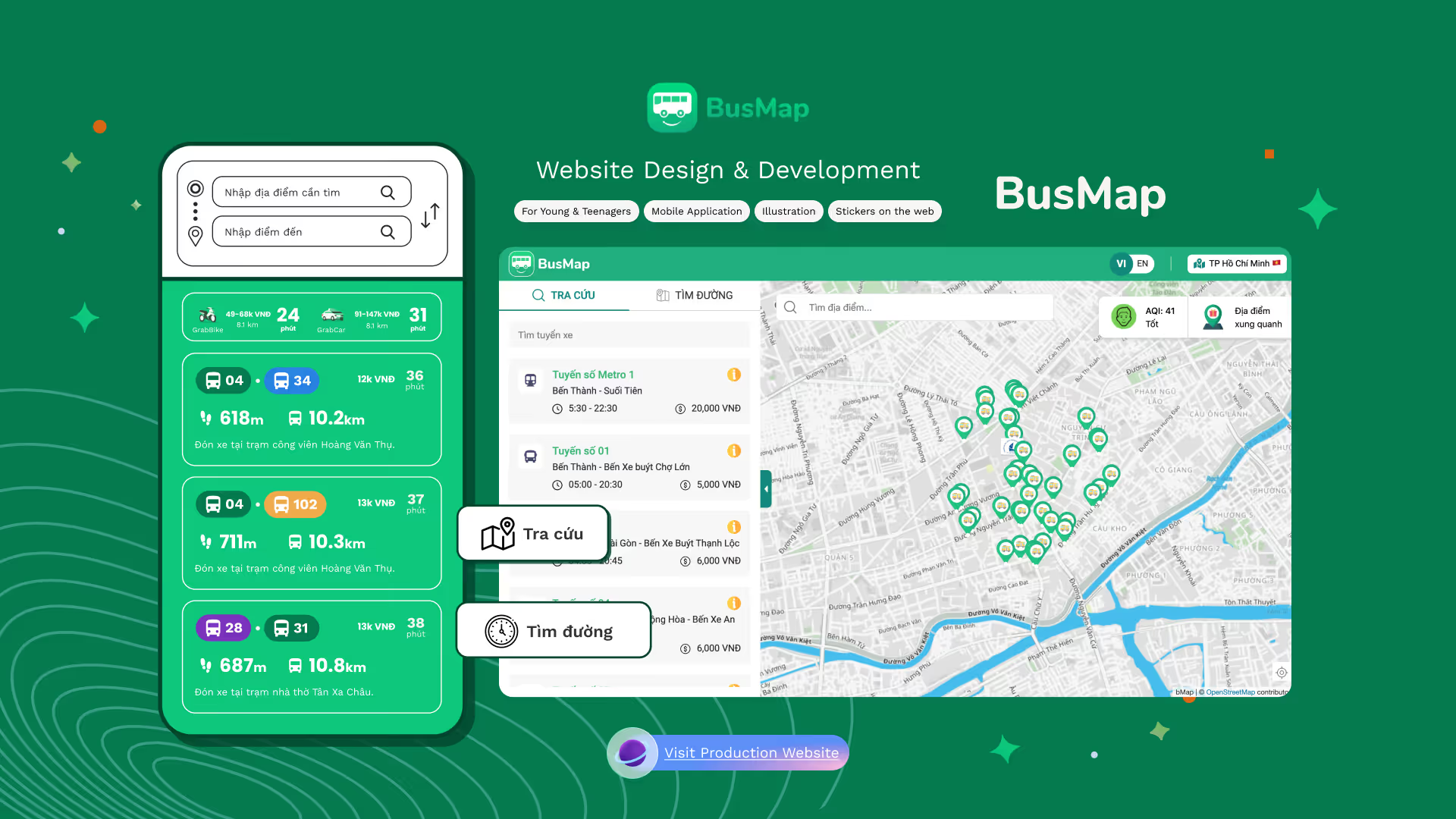
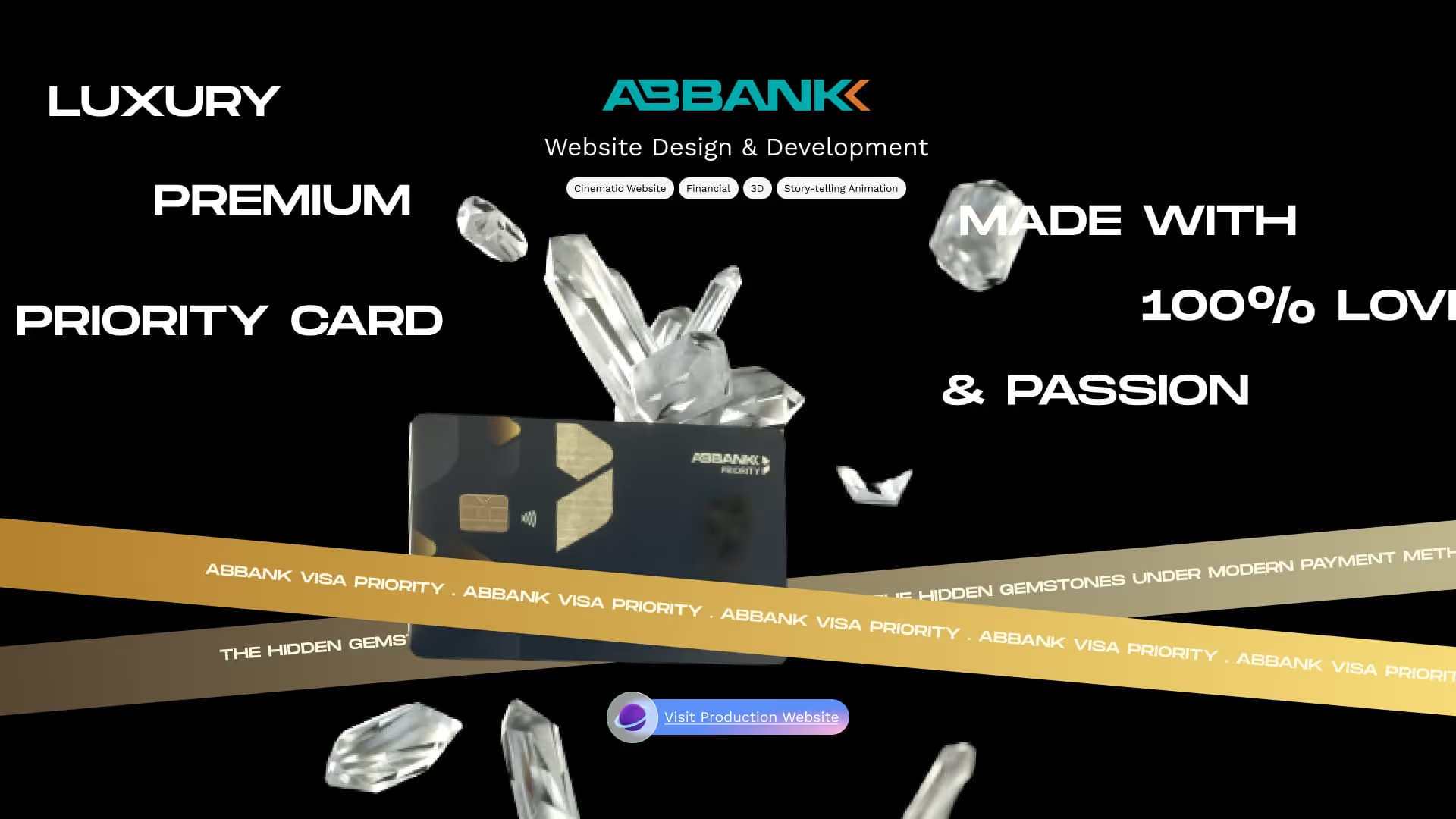
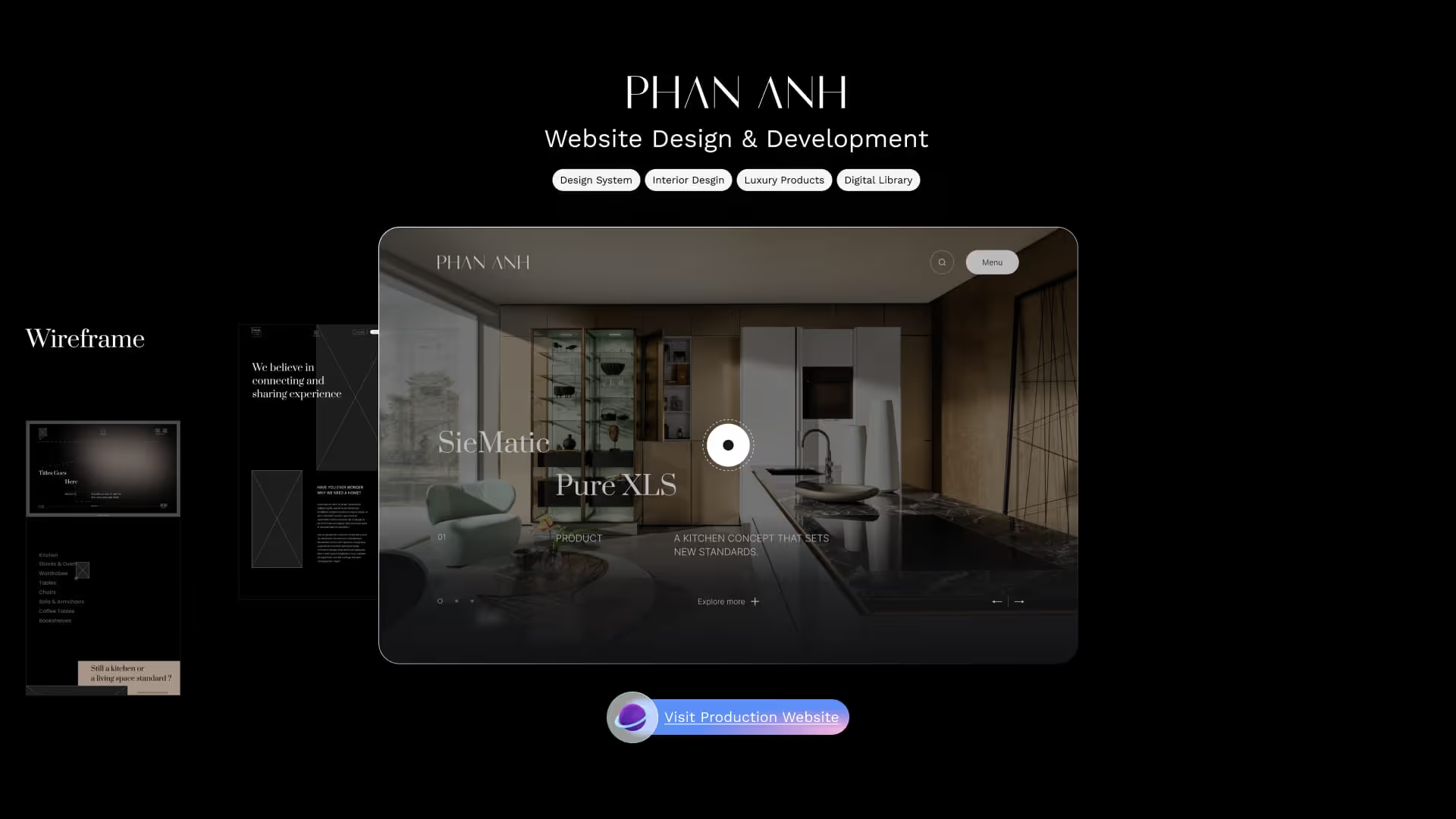
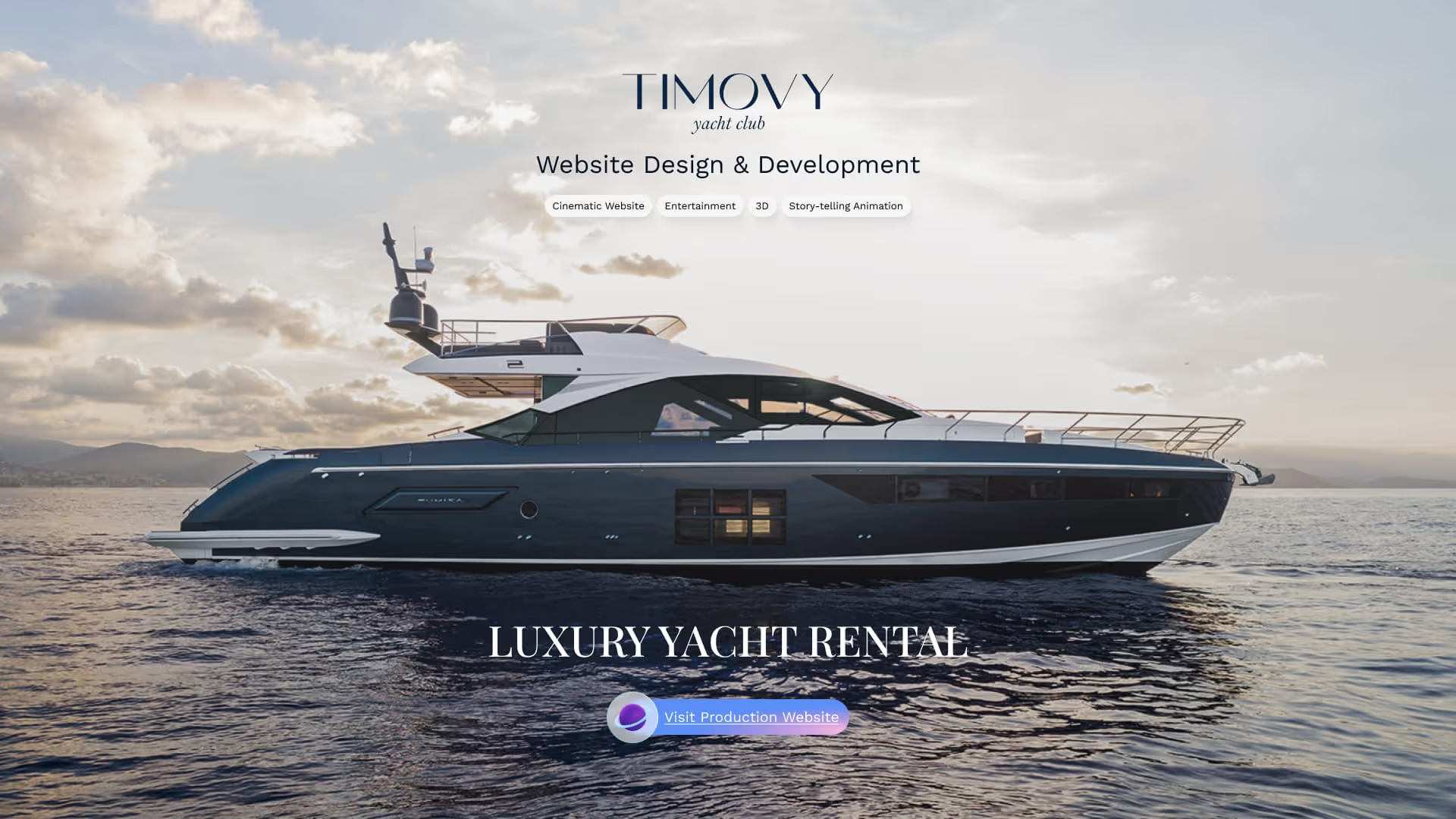
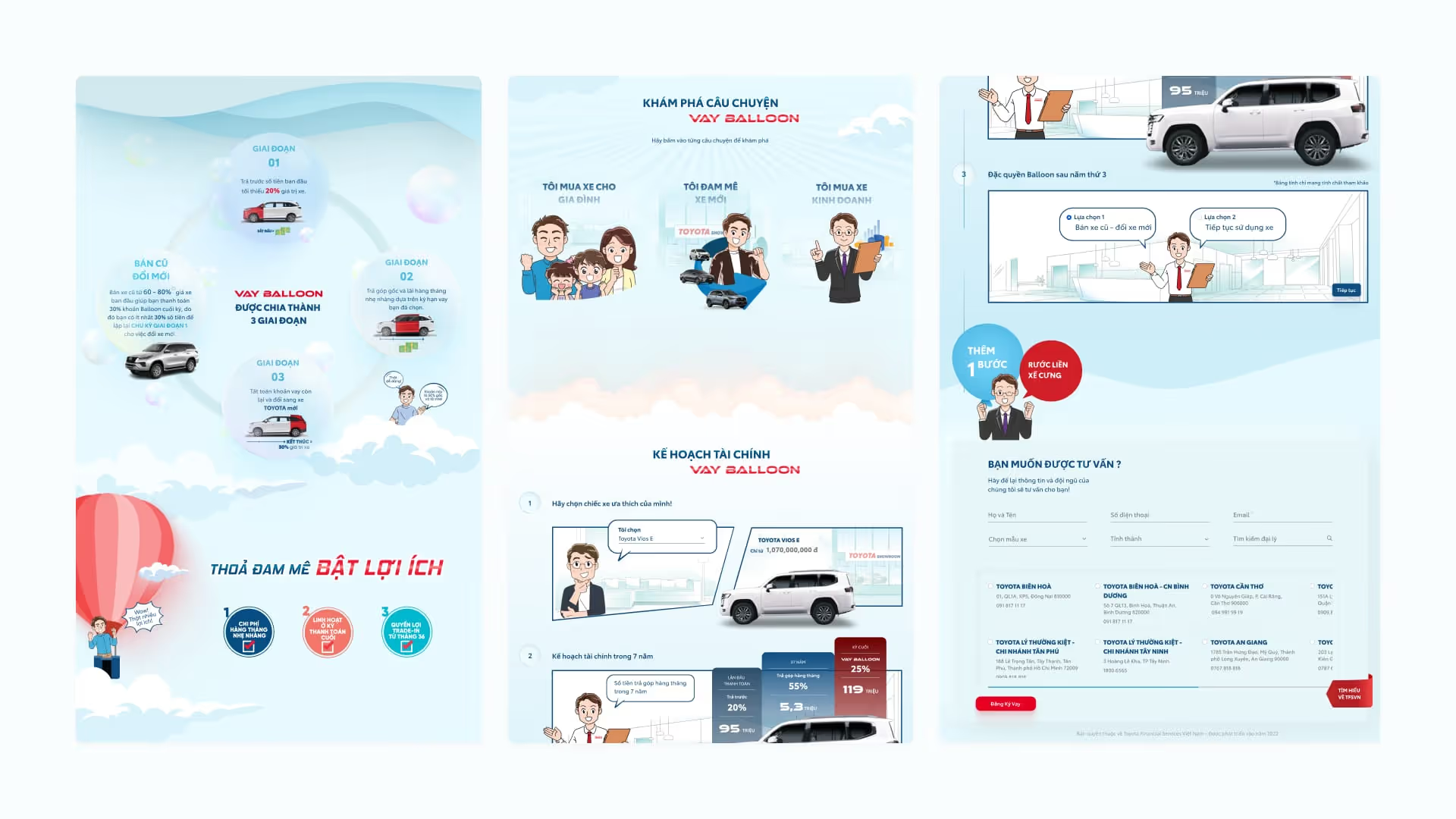
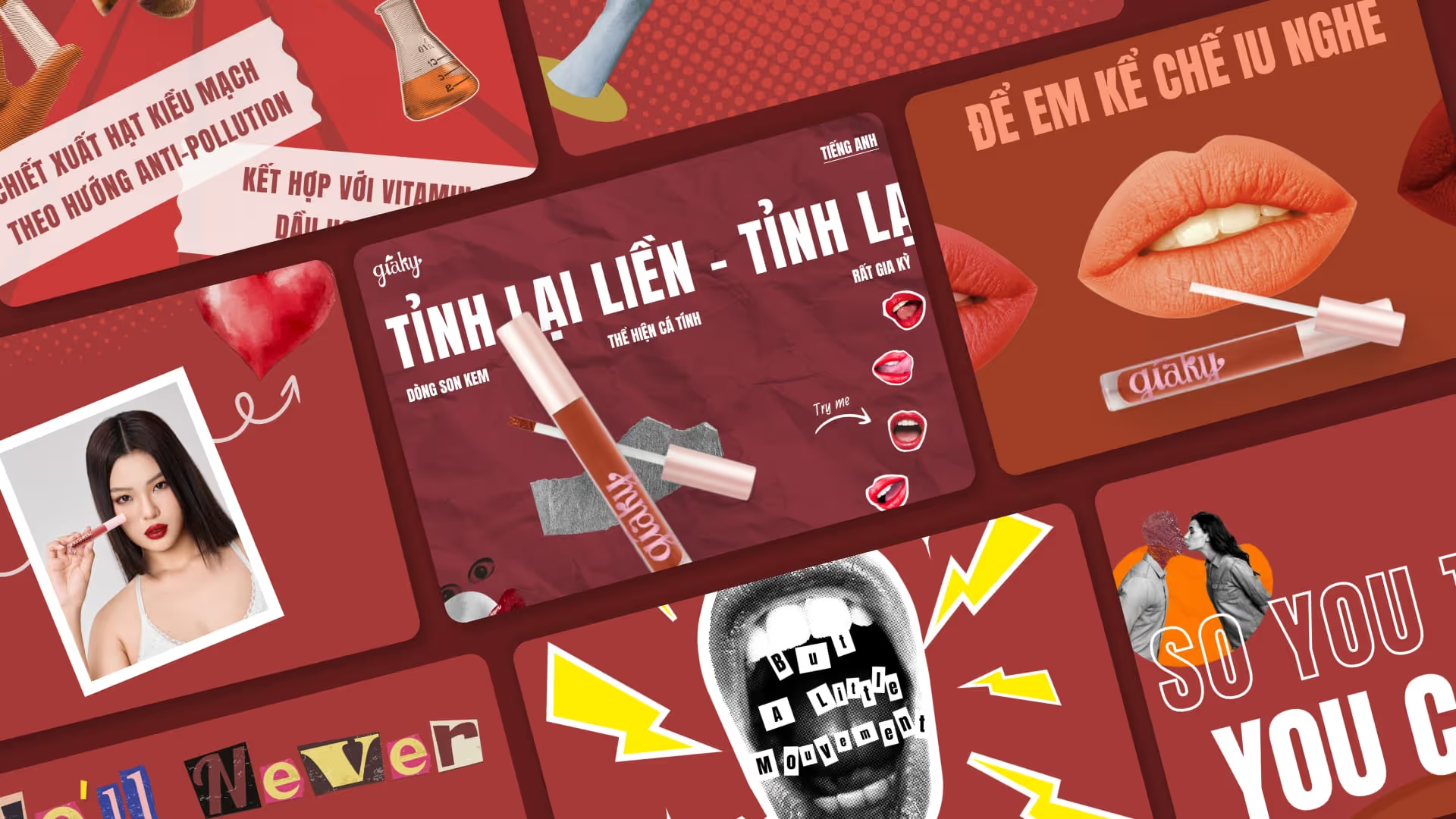
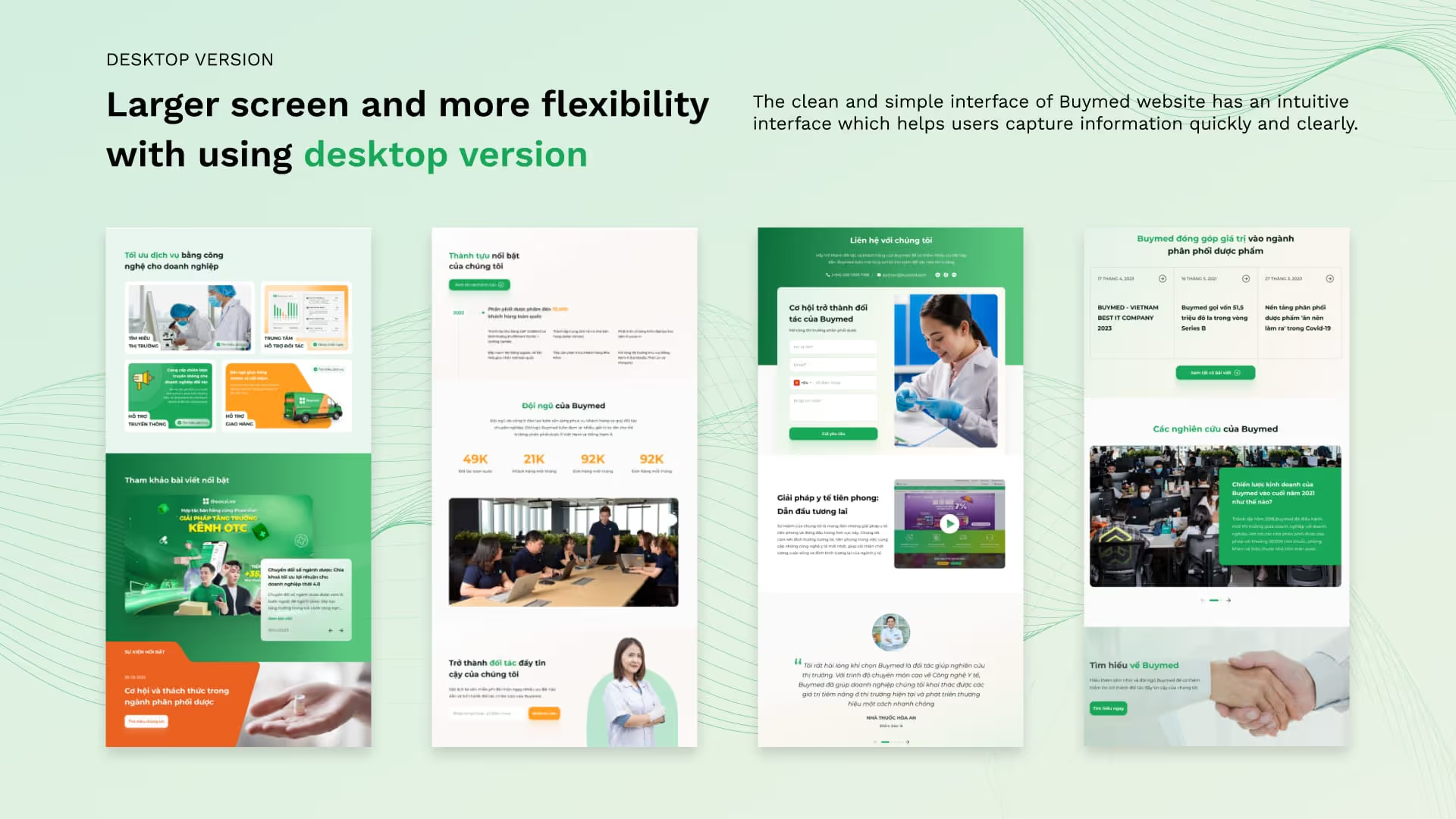
Below are some typical website design projects that the Markdao design team has completed:
Which interface design method is right for you?
Ultimately, your choice should not revolve solely around price. Budget is just one reflection of the project. The most important thing is that your decision aligns with your business goals and the best means to achieve them. Focusing too much on price is a trap that many managers fall into.
Therefore, before making a choice, it is important to understand your own needs. Markdao Vietnam is a partner that can help you identify your requirements, goals, and the right type of website, saving you time and money. We will support you in making informed decisions about the technology used for your web interface design.
With years of experience in full-service graphic design, we know the best practices, understand what needs to be done, and know how to best leverage your business message for success.
Elevate your website interface design quality with Markdao Agency
Markdao Vietnam has over 6 years of experience in the internet design and advertising industry, and over 10 years in multi-platform programming. We clearly understand the limitations of custom UI design and have worked to overcome all of these drawbacks.
Markdao currently provides both template-based and fully custom website design services. Although we are relatively new to the template market, we believe that the meticulousness of our traditional design approach will help us quickly reach the top of this market.
Contact Markdao Vietnam today for expert advice on web design and to choose the service that best fits your needs: