
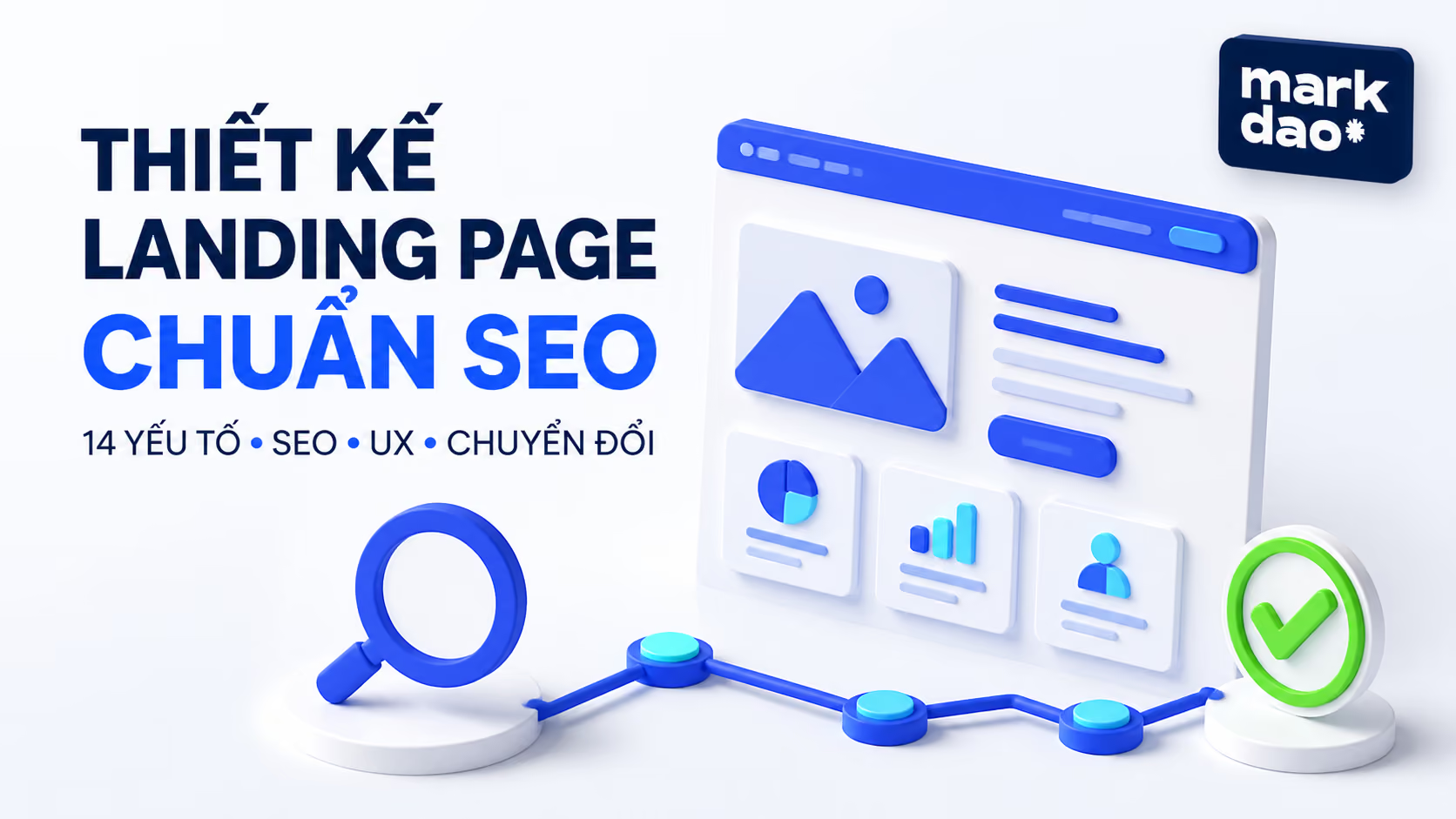

A landing page can be beautiful, load quickly, and contain the right keywords, yet still fail to generate leads. The reason is often that the page is either optimized solely for Google or focused exclusively on selling, whereas users need both clear answers and sufficient evidence to make a decision.
Designing an SEO-friendly landing page means integrating four layers into a single experience: matching search intent, clear content, a solid technical foundation, and a clear conversion path. An article by Markdao - Agency Website and professional SEO services with 9+ years of experience help you audit 14 critical elements, prioritize what matters most, and validate results with data rather than intuition.
Quick summary: Start with search intent, then clarify your message, add social proof, refine your CTA and forms, improve mobile experience, and optimize for crawlability and Core Web Vitals. Only add effects if they don't hinder comprehension or action.
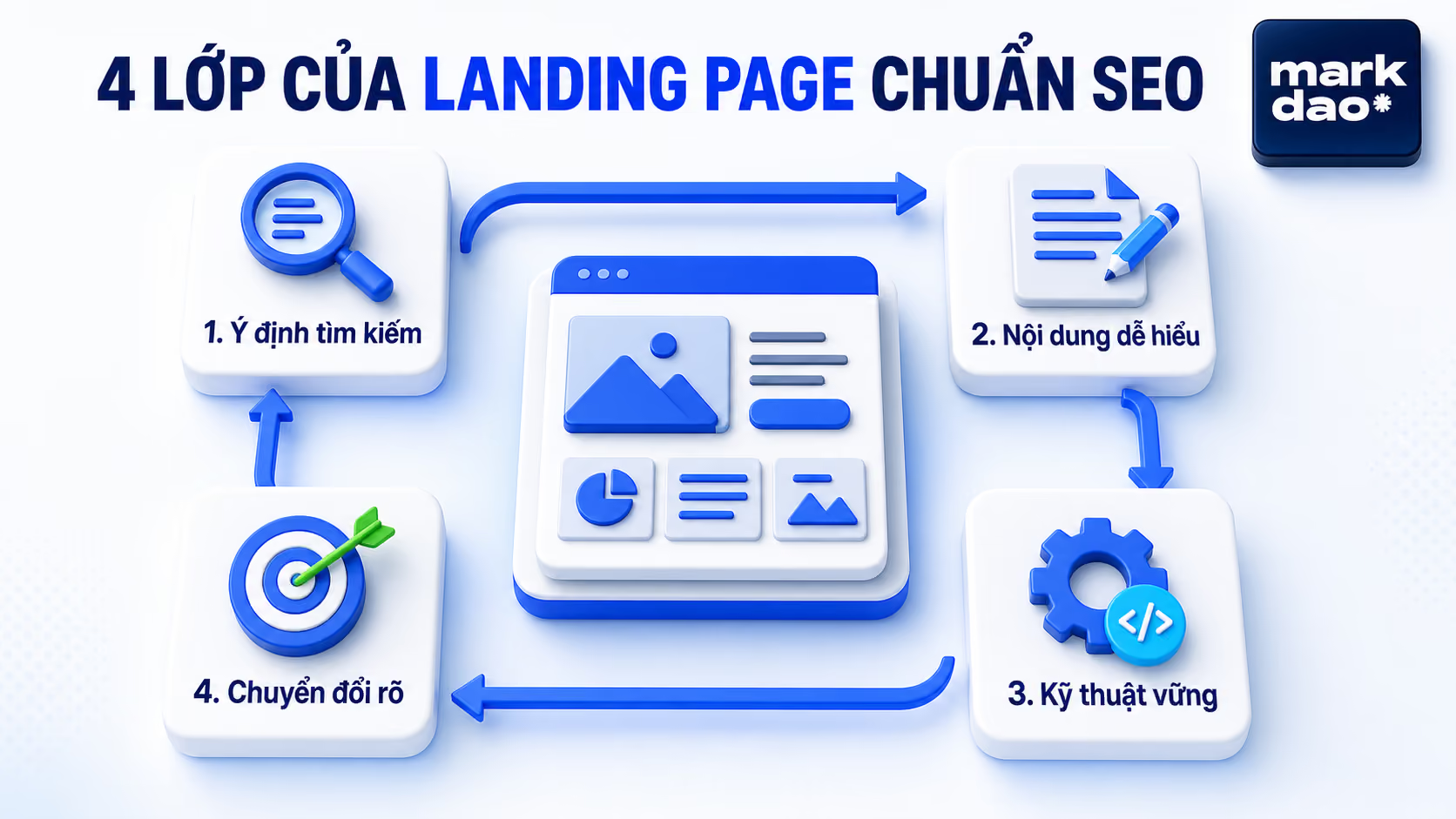
What is an SEO-friendly landing page?
An SEO-friendly landing page is a destination page built to satisfy a specific set of search needs, capable of being crawled and indexed by Google, while guiding users toward a primary conversion goal. That goal could be requesting a consultation, getting a quote, starting a trial, downloading a resource, or booking an appointment.
It is important to distinguish between two types of pages often lumped together as landing pages:

Both types of pages require a primary action. However, having "one main CTA" does not mean removing all useful links. A page aiming for organic growth still needs contextual links to help Google and users discover related content.
Designing an SEO-friendly landing page at Markdao goes beyond surface-level criteria like On-page SEO, Technical SEO, UX/UI & CRO, or website platforms. Markdao has built a detailed checklist that spans from search intent to post-publication measurement. We have compiled a 100-point checklist covering 6 stages, 12 "blocker" errors, a pre-launch test suite, and a 30-day monitoring schedule. The checklist focuses on conversion potential, lead quality, and identifying exact areas for improvement. All criteria are derived from and updated based on projects Markdao has directly implemented.
Download the checklist to audit and approve your landing page before it goes live.
How is a landing page different from a website?
A website is a multi-page system that helps users explore a brand, products, and content from various angles. A landing page focuses on a specific set of needs and one primary action, such as getting a quote, booking an appointment, or requesting a consultation.
Businesses should use their website as an information hub and landing pages as destination pages for specific campaigns or keyword groups. When these two are linked contextually, the website reinforces credibility while the landing page focuses on conversion without being isolated.
Designing an SEO-friendly landing page goes beyond surface-level criteria like On-page SEO, Technical SEO, UX/UI & CRO, or website platforms. Markdao has built a detailed 6-stage checklist that spans from search intent to post-publication measurement. We have compiled a 100-point checklist covering 6 stages, 12 "blocker" errors, a pre-launch test suite, and a 30-day monitoring schedule.
The checklist focuses on conversion potential, lead quality, and identifying exact areas for improvement. All criteria are derived from and updated based on projects Markdao has directly implemented.
Download the checklist to audit and approve your landing page before it goes live.
What is a good landing page conversion rate?
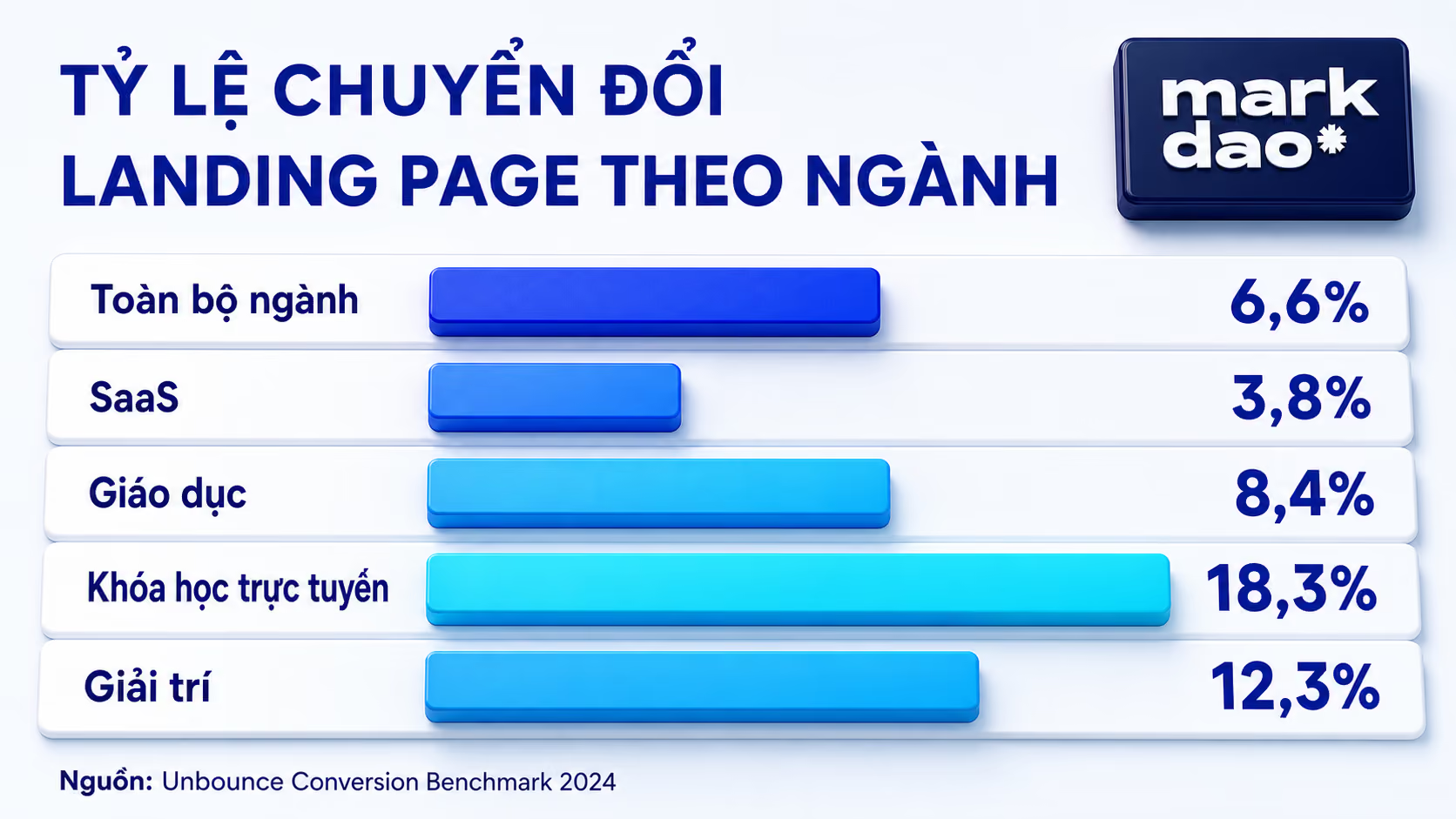
There is no one-size-fits-all rate for every industry. The Unbounce 2024 Conversion Benchmark report analyzed over 41,000 landing pages, 464 million visits, and 57 million conversions. The median conversion rate across the entire sample was 6.6%, but industries ranged from approximately 3.8% to 12.3%.
The report also noted that 83% of landing page traffic in the sample came from mobile, while desktop converted about 8% better on an industry-wide level. Therefore, mobile-first is not just a decorative category but a direct requirement to avoid losing the majority of conversion opportunities.
Don't just compare conversion rates. A high-value B2B lead is often harder to convert than a free document download. Track conversion rate, qualified lead rate, pipeline value, cost per lead, and revenue simultaneously.
14 elements of an SEO-friendly and high-converting landing page
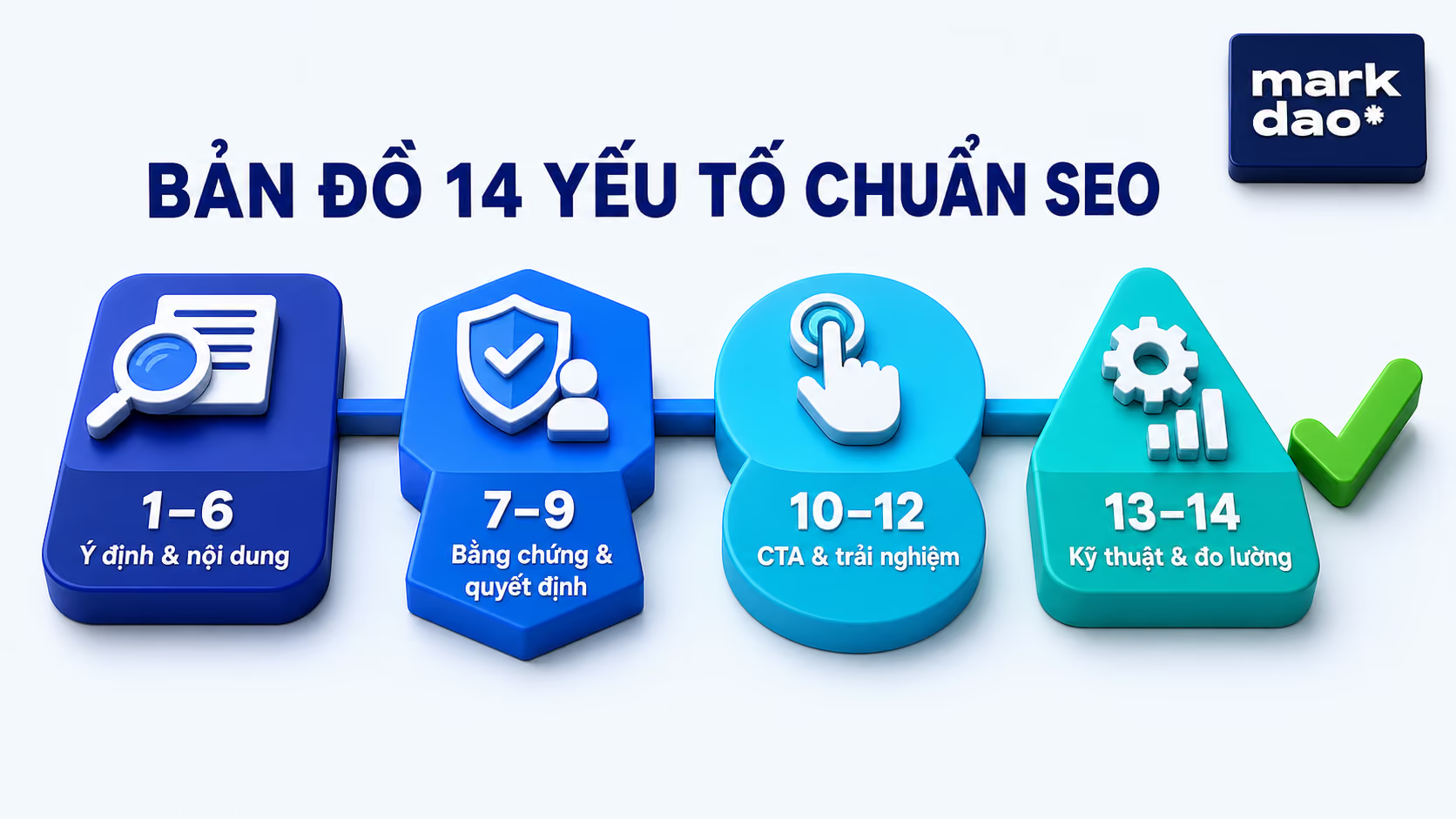
1. Match search intent before writing
Goal: The page must address exactly what the user is trying to accomplish, not just contain keywords.
Implementation:
- Categorize queries into informational, comparison, transactional, or navigational.
- Analyze current search results to determine the type of content Google is prioritizing: tutorials, service pages, tools, or comparison lists.
- Clearly define the reader's "job to be done," such as auditing a current landing page, self-implementation, or selecting a service provider.
- Identify the questions that must be answered before a user feels confident enough to take action on the CTA.
- Do not force a single page to serve too many conflicting intents at once.
Success criteria: Readers immediately understand what question the page answers and who it is for upon seeing the title, H1, and introduction.
2. Synchronize SEO title, H1, and ad messaging
The title is a critical signal for Google and users to understand the topic. The H1 is the main headline on the page. They don't need to be identical, but they must share the same promise. When traffic comes from ads, the on-page headline must also match the ad copy to avoid the feeling of having "landed in the wrong place."
- Place the main topic cluster in a natural position, preferably near the beginning of the title.
- Write unique titles for each page and avoid using a repetitive formula across the entire website.
- Do not list keywords separated by commas or repeat the brand name excessively.
- Maintain a single main heading that is visually and structurally prominent.
- Check for message match between ads, titles, H1s, hero copy, and CTAs.
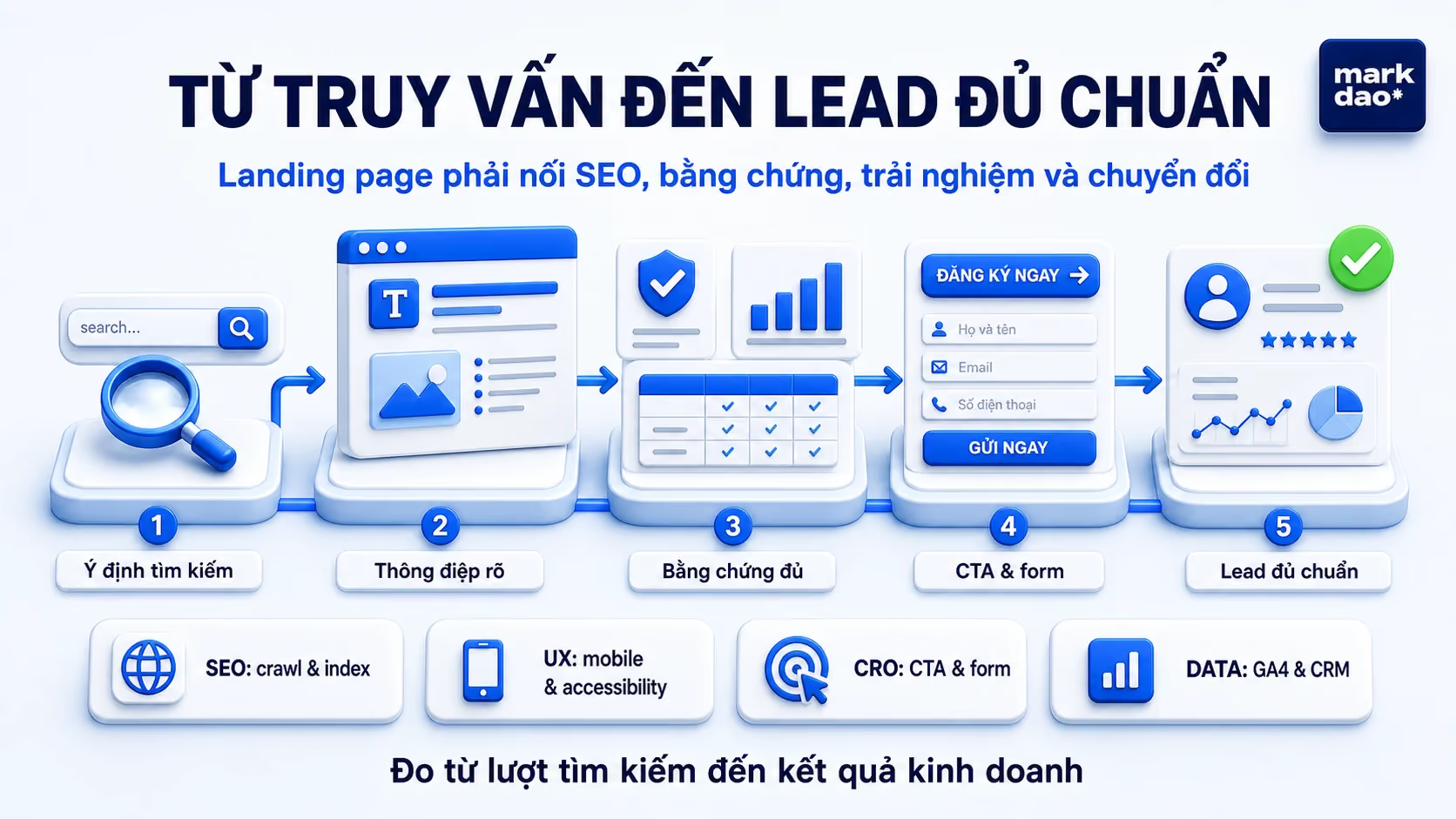
3. Start with the answer-first principle
The opening paragraph should directly state what the page helps the reader achieve before moving into detailed explanations. This editorial principle helps both readers and search engines understand the content faster; it is not a strict word count requirement.
A good opening usually contains three components: the main problem, the result the reader will gain, and the scope of the content. For example: “An SEO-optimized landing page must simultaneously satisfy search intent, be crawlable and indexable, and lead users to a clear action. The framework below helps you check 14 factors ranging from content to technical and conversion elements.”
4. Structure information for easy scanning and clear decision paths
Readers rarely go from start to finish in a straight line. They scan headings, tables, numbers, cases, and FAQs first. Therefore, the page structure needs to support both quick scanning and deep reading.
- Use H2s for major questions and H3s for implementation steps or criteria.
- Add a table of contents with anchor links for long articles.
- Use tables when readers need to compare information; use bullet points for actionable steps.
- Do not turn every heading into a keyword variation.
- Place evidence close to the claim it supports.
- Place CTAs at the right moment, after the reader has understood the problem or seen the evidence.
5. Content must provide hard-to-replicate value
An article that only summarizes common best practices is unlikely to stand out. Google emphasizes helpful, reliable, and user-centric content. Markdao should include at least one proprietary asset:
- A landing page audit scoring framework.
- Aggregated data from real projects has been properly anonymized.
- Before-and-after photos, heatmaps, funnels, or real-world error examples.
- Expert perspectives explaining when not to apply a best practice.
- Checklists with acceptance criteria instead of generic lists.
- Templates or calculators to help readers complete a specific step.
Acceptance criteria: The article must include at least one insight, framework, data point, or tool that is difficult to find in other roundup posts.
6. Clear attribution for authors, reviewers, and sources
Google does not treat E-E-A-T as a direct ranking factor, but signals of experience, expertise, and trustworthiness help readers evaluate content. For Markdao articles, you should display:
- Author name and job title.
- SEO or technical reviewer.
- Author profile page with experience and related articles.
- Publication date, last updated date, and a summary of changes.
- Primary sources placed directly next to key figures or conclusions.
- Research methodology if the article contains significant data.
Do not use the phrase "Markdao research" unless Markdao has personally collected and analyzed the data according to the described methodology.
7. The problem section must highlight the cost of inaction
The problem section should not just describe general pain points. Connect the problem to measurable consequences: traffic failing to generate leads, abandoned forms, rising CPL, sales receiving low-quality leads, or content failing to index.
Suggested structure:
- Visible symptoms.
- Verifiable causes.
- Opportunity costs for marketing and sales.
- How to audit for confirmation before drawing conclusions.
For example, saying a “page gets high traffic but low conversion” is not enough to conclude that the CTA is weak. You need to break it down by device, source, query, speed, form initiation rate, and lead quality to pinpoint the actual bottleneck.
8. Solutions and evidence must go hand in hand
Don't just say Markdao provides “comprehensive optimization.” Present solutions based on outcomes and attach corresponding evidence.
If you don't have a real case study, clearly state that it is an illustrative example. Do not create fake client names, testimonials, or hypothetical figures presented as real results.
9. Comparison tables should help the reader make a decision
Comparison tables are useful when clients are considering multiple approaches: DIY, using templates, hiring a freelancer, or working with an agency. Each criterion should reflect real decision-making factors such as implementation speed, customization capabilities, tracking, maintenance, and total cost of ownership.
Do not create tables intended to disparage competitors. Clearly state the scenarios where each option is suitable and the conditions required to achieve results.
10. One primary conversion goal, context-driven CTAs
A landing page should have one priority action to reduce distraction, for example, “Sign up for a landing page audit.” You can repeat the CTA in multiple places, but the message and outcome must be consistent.
- The top-of-page CTA is for those who already have a clear need.
- The CTA after the evidence section is for those who need to be convinced.
- The bottom-of-page CTA summarizes the value and the next steps.
- Secondary CTAs like “View case study” can exist but must not compete visually with the primary CTA.
Write button text based on action and value: “Get audit,” “View scope of work,” or “Book a consultation” are clearer than “Submit” or “Learn more.”
11. Forms must balance lead quantity and lead quality
There is no optimal number of fields for every business. A single-field form might increase sign-ups but won't provide enough data for sales; a long form helps with qualification but increases friction. For B2B, start with the minimum data needed to take the next step, then collect more gradually.
- Only ask for information that sales will actually use.
- Explain why sensitive data or business information is required.
- Use a multi-step form if you need to ask for multiple categories of information.
- Keep labels clearly visible; do not use placeholders as a complete replacement for labels.
- Provide specific error messages, retain entered data, and ensure keyboard support.
- Include a notification about response times and the next steps after submission.
- Measure form start rates, field-level errors, completion rates, and lead qualification.
Starting point suggestions for B2B: full name, email or phone number, company, and primary needs. This is an initial hypothesis to be tested, not a universal formula.
12. Mobile-first and accessibility must be designed from the start
Since the majority of landing page traffic comes from mobile, the mobile version cannot simply be a shrunken desktop version. Prioritize content hierarchy, touch targets, readability, and speed on actual devices.
- Place your core value proposition, social proof, and key CTA early on.
- Do not make the hero section so tall that it pushes the main content below the fold.
- Design buttons and touch targets to be large enough according to internal UX standards.
- Ensure proper contrast, focus states, labels, alt text, and captions.
- Do not use color as the sole indicator for errors or status.
- Maintain equivalent core content between mobile and desktop.
- Test using actual devices, keyboards, and accessibility support tools.
Acceptance criteria: Users can understand the offer, read the social proof, and complete the CTA and form on small screens without zooming or horizontal scrolling.
13. Crawl, index, canonical, and internal links must be correct
Even high-quality content won't rank if Google cannot access it or chooses a different URL as the canonical.
- The main page returns an HTTP 200 status code and is not unintentionally set to noindex.
- robots.txt, CDN, and security layers allow Googlebot to access content that needs to be indexed.
- Use self-referencing canonicals for the main URL; handle UTMs and URL variations with proper configuration.
- Include the canonical URL in your XML sitemap.
- Create crawlable internal links using <a href> tags from service pages, related articles, and content hubs.
- Important content must exist as text within the DOM, not just within images or canvas elements.
- Check the URL Inspection tool after publishing.
Do not use robots.txt to request that Google remove a page from its index. Use noindex when you need to remove a page while still allowing Google to crawl it to see the directive.
14. Core Web Vitals, structured data, and measurement
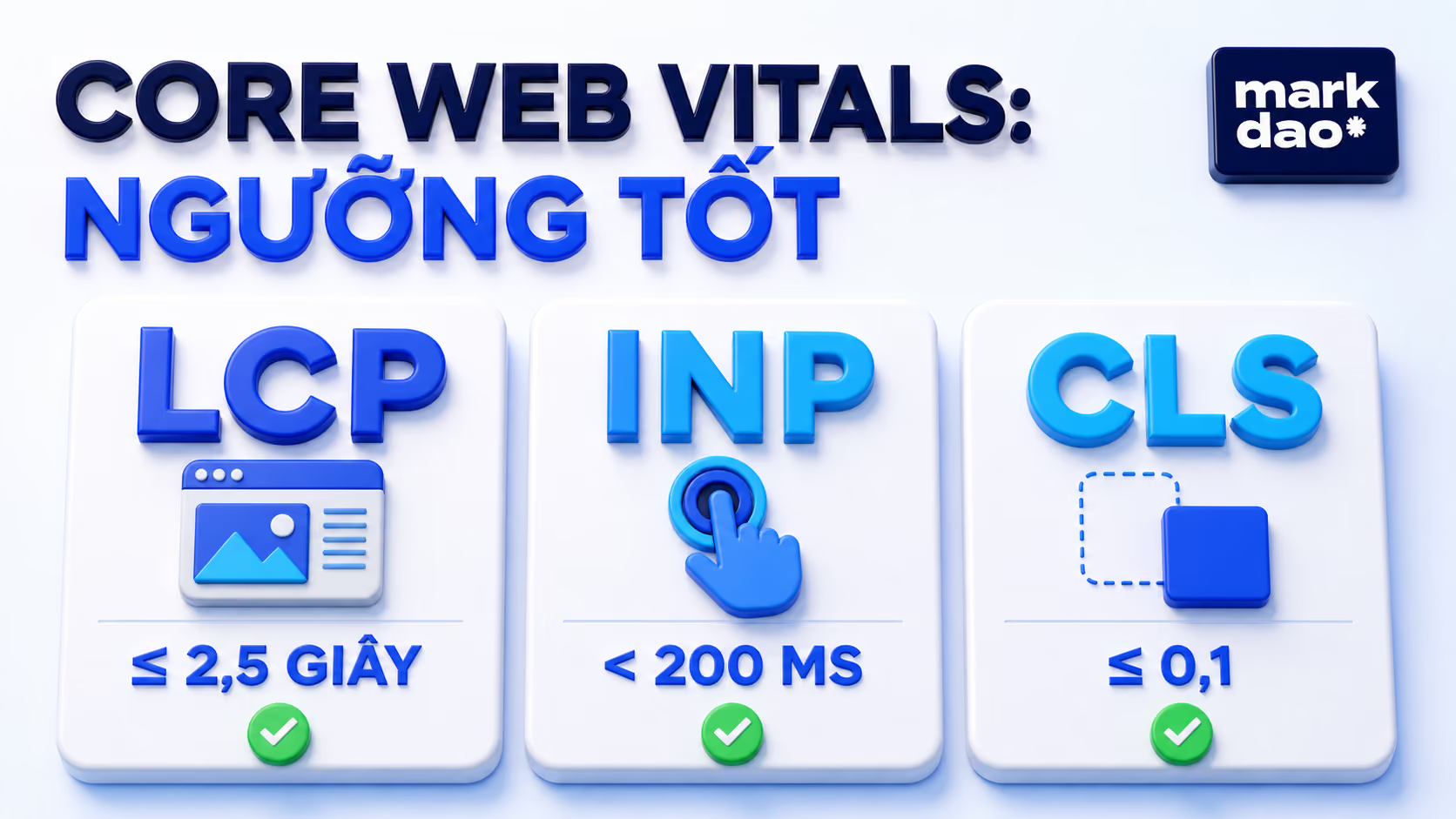
Core Web Vitals are part of the page experience assessment system, but achieving a good score does not guarantee a high ranking if the content is not relevant. Current "good" thresholds:
Evaluate using real-user data at the 75th percentile, not just a single Lighthouse run. In a case study compiled by web.dev, Vodafone Italy improved LCP by 31% and saw an 8% increase in sales during an A/B test. This is evidence of the testing methodology, not a default increase for every website.
Regarding structured data, this guide should use BlogPosting or Article, combined with BreadcrumbList; Organization should be managed consistently at the website level. Structured data must match the displayed content and does not guarantee rich results or rankings.
How to optimize landing pages for AI Overviews and AI Mode?
Google currently maintains that existing SEO foundations still apply to AI Overviews and AI Mode. Pages must be indexed and eligible to appear as snippets; there are no specific technical requirements to become a supporting link in AI features.
Best practices
- Publish content that is genuinely useful, trustworthy, and unique rather than just aggregating what is already everywhere.
- Allow crawling, build internal links, and keep important content in text format.
- Answer the question directly at the beginning of each section, then provide conditions, evidence, and limitations.
- Use high-quality images or videos when they add factual information.
- Ensure structured data matches the visible content.
- Keep brand information, services, addresses, and author profiles consistent.
- Measure AI Search traffic in the Web report of Search Console along with conversions in GA4.
Things that do not need to be considered ranking factors
- There is no need for "AI-specific" schema.org.
- There is no need for llms.txt to increase visibility on Google Search; Google states that this file has no positive or negative impact on visibility and ranking.
- There is no rule that every answer must be exactly 40 to 60 words long.
- Do not add FAQ schema with the expectation of FAQ rich results; this feature has been discontinued.
- Do not break content into a series of extremely short paragraphs just for machine extraction if it makes the article difficult to read or lacks context.
Industry insights and landing page playbooks for 8 sectors
This section moves from general illustrative examples to actionable playbooks for briefing, writing, designing, developing, and measuring landing pages by industry. International benchmarks should only be used as a guide; Markdao must cross-reference them with each client's device usage, traffic sources, CTA types, sales cycle length, and lead quality before setting KPIs.
How to read each playbook
Search intent: what the user is trying to accomplish.
Decision bottlenecks: what is preventing them from taking action.
Above the fold: content that must appear before scrolling.
Evidence blocks: data, documentation, or experiences that need to be proven.
CTA and forms: the primary action and the minimum data required to collect.
SEO and AI Search: how to help Google crawl, understand, and evaluate the page.
KPI: measured from on-page behavior to business results.
Markdao reference project: only include scope with existing internal documentation; do not create outcomes from scratch.
Source: source code explained in the “Source Library and Evidence Map”.
1. Banking, finance, fintech, and investment

Core insights
In the financial sector, landing pages should not begin with emotional slogans or offers detached from their conditions. Users need to understand who the product is for, its practical benefits, costs, requirements, risks, processes, and data protection measures before they are ready to sign up. Since this content can impact a reader's financial stability, Google recommends a higher level of trust, expertise, authority, and transparency regarding the author compared to standard topics.
Search intent segmentation
Learn: what the product is, how it works, and who it is for.
Compare: interest rates, fees, terms, benefits, limits, and conditions.
Check eligibility: income, documentation, age, location, and collateral.
Transact: open an account, apply for a card, take out a loan, or schedule a consultation.
Support: fee schedules, payment methods, settlement, security, and complaints.
Recommended hero section structure
Product name and target customer segment.
A verifiable key benefit; avoid absolute terms like “best” unless supported by evidence.
Key conditions or limitations placed near the promise, not hidden in fine print.
CTA prioritized by commitment level: “Check Eligibility,” “View Fee Schedule,” “Request Consultation,” or “Start Application.”
Links to fee schedules, terms and conditions, data policies, and legal documentation.
Mandatory content blocks
What problem does the product solve, and in which cases is it not suitable?
Benefits along with applicable terms and conditions.
Fee schedules, interest rates, calculation methods, and examples with clearly stated assumptions.
Step-by-step process, estimated processing time, and required documentation.
Risks, exclusions, termination conditions, or reasons for application rejection.
Data security, authentication mechanisms, and official support channels.
Real questions from sales, contact centers, Search Console, and internal site searches.
Recommended evidence blocks
Legal entity name, licenses, contact information, and privacy policy.
Fee schedules or product documents with effective dates.
Calculation examples with assumptions and methodologies.
Experts or reviewers with verified professional titles.
Authorized case studies; do not use hypothetical figures as actual results.
CTA and forms
Top-of-funnel pages: "View terms," "Download fee schedule," "Compare options."
Consideration pages: "Get consultation," "Check eligibility."
Transaction pages: "Start application" or "Open account."
Forms should only request data necessary for the next step. Do not ask for sensitive information without first explaining the purpose, security measures, and obtaining consent.
After submission, clearly state the response time, contact channels, and next steps for documentation.
SEO and AI Search
Each product requires a canonical URL and a primary intent; avoid creating multiple near-identical pages that only differ by offer.
Important content must be in crawlable text format, not just embedded within infographics or PDFs.
Use Article/BlogPosting for guides and BreadcrumbList for navigation; the structured data type must accurately reflect the actual content.
No specific schema can guarantee inclusion in AI Overviews.
For financial claims, place sources and effective dates near the content, and include an author or reviewer.
Tiered KPIs
SEO: non-brand impressions and clicks, rankings by intent group, and indexed pages.
Behavior: fee schedule views, calculator usage, CTA clicks, form starts, and form errors.
Business: qualified applications, successful contact rate, approvals, activations, or traded assets.
Quality: rate of mismatched applications, reasons for rejection, and processing time.
2. Education, Schools, and Courses
Core Insights
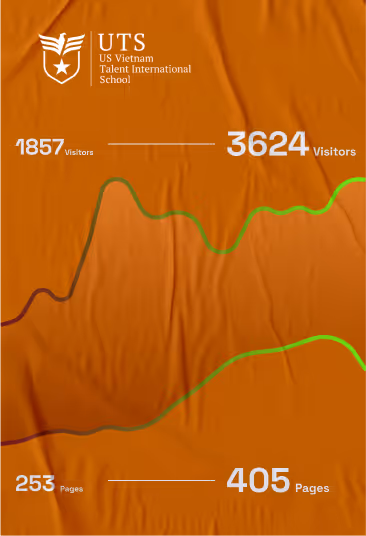
An education landing page does more than sell a "program"; it must alleviate the uncertainty parents or students feel regarding suitability, outcomes, environment, faculty, schedules, tuition, and next steps. Decision cycles vary significantly between short courses, K-12 schools, universities, and corporate training, so avoid using a one-size-fits-all structure or benchmark.
Benchmarks for Guidance
The 2024 Unbounce report notes a median conversion rate of approximately 8.4% for the education sector, though online courses can be significantly higher, while higher education, primary education, and tutoring tend to be lower. About 85% of education landing page traffic in the sample came from mobile, yet desktop converted better. The insight is not to "set an 8.4% KPI," but to segment by program type, device, traffic source, and CTA commitment level before making comparisons.
Segmenting Search Intent
Awareness: what the school or course teaches and who it is for.
Comparison: curriculum, tuition, degrees, faculty, and facilities.
Suitability Check: age requirements, prerequisites, schedule, location, and language.
Proof: outcomes, student work, university destinations, and certifications.
Actions: download brochure, register for open day, book a tour, submit application.
Suggested hero section structure
Program name, target audience, and specific outcomes.
Time, location, or learning format.
A key proof point: accreditation, faculty, graduation rates, or student projects, if sources are available.
CTA aligned with commitment level: "Download brochure," "View tuition," "Book a tour," "Request consultation."
Do not place long forms at the top when readers lack sufficient information to decide.
Mandatory content blocks
What is learned, who it is for, and entry requirements.
Observable or measurable learning outcomes.
Modular program structure, duration, and schedule.
Faculty profiles, methodology, and facilities.
Tuition, inclusions, refund/cancellation policies, and financial aid.
The journey from consultation request to enrollment.
FAQs based on admissions and parent inquiries; do not write them just to stuff keywords.
Recommended proof blocks
Verifiable accreditation or partnerships.
Faculty profiles and relevant experience.
Student work, classroom photos, open days, and campus tours.
Clearly defined results with cohorts or measurement periods.
Testimonials with verified identities and usage rights.
CTA and forms
Top of funnel: download a brochure or check for suitable programs.
Consideration: book a campus tour or attend an open day.
Bottom of funnel: submit an application or schedule an interview.
School forms should prioritize parent information, student age/grade, campus, and preferred timing; avoid asking overly detailed questions before the consultation.
Track brochure downloads, open-day registrations, show-ups, applications, and enrollments separately.
SEO and AI Search
Build hubs based on programs, age groups, campuses, admissions, tuition fees, and parent FAQs.
Keep program names, tuition fees, admission dates, and addresses consistent.
Use Course or EducationalOccupationalProgram schema when the content truly qualifies; do not add markup just to "boost SEO."
Content must have an author/reviewer and a last-updated date.
Each section should answer the question directly, then provide conditions, evidence, and limitations.
KPIs by funnel stage
SEO: non-brand clicks by program and campus; share of voice in comparison groups.
Behavior: viewing tuition, downloading brochures, viewing campuses, and starting forms.
Admissions: qualified consultations, open-day attendance, applications, offers, and enrollments.
Quality: disqualification rates due to tuition, age, location, or entry requirements.
3. Automotive, dealerships, and auto finance
Core insights
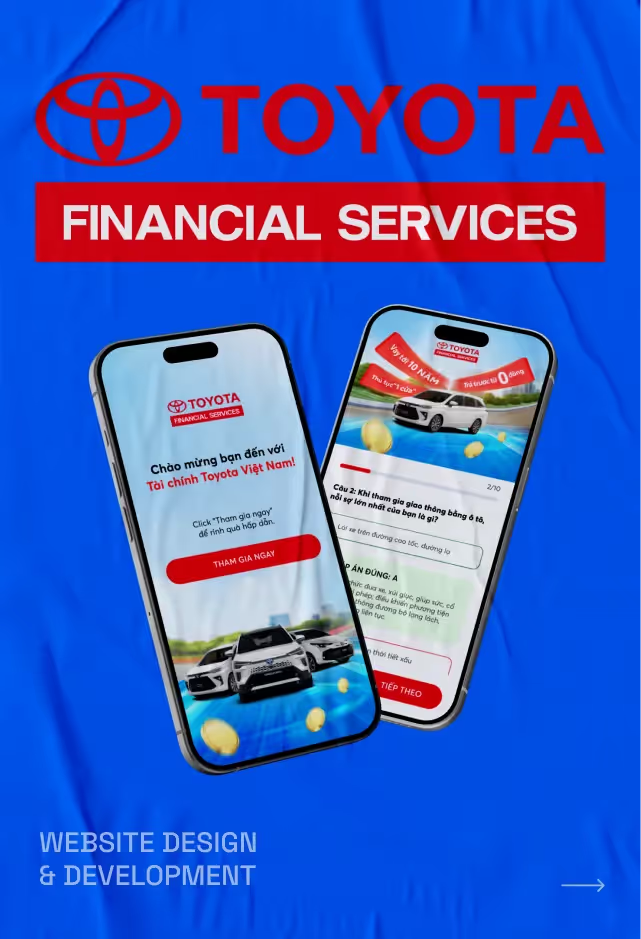
Car buyers don't make decisions based on generic offers. They need a combination of model/trim, pricing and on-road costs, inventory, delivery timelines, financing, trade-ins, warranties, and test drive locations. An effective landing page must connect product data with local actions and avoid outdated pricing or offers that erode trust.
Search intent must be segmented
Model: specifications, trims, colors, pricing.
Comparison: model A vs. B, trims, new vs. used vehicles.
Costs: on-road price, down payment, monthly installments.
Local: dealerships near me, test drives, maintenance.
Inventory: available vehicles, delivery timelines.
Transactions: get a quote, schedule a test drive, trade-in valuation.
Recommended hero section structure
Model, trim, location, and price/inventory status.
A primary benefit: savings, early delivery, warranty, or financing packages.
Dual CTAs with one priority: "Get a Quote" as primary; "Schedule a Test Drive" or "Calculate Payments" as secondary.
Clearly state the date when prices or offers were last updated.
Avoid heavy, auto-playing hero videos on mobile.
Mandatory content blocks
Table of trims, prices, specifications, and differences.
On-road costs or a calculator with assumptions.
Inventory/colors and delivery timelines, if the system has reliable data.
Financing packages: down payment, term, monthly payments, and terms and conditions.
Trade-ins, warranty, maintenance, and dealership locations.
Real photos/videos; 360-degree interior views load only upon interaction.
FAQs regarding registration, insurance, vehicle delivery, and loan documentation.
Recommended trust signals
Pricing with effective dates and terms.
Photos matching the specific trim, color, and market.
Address, opening hours, hotline, and map.
Verified reviews or documented vehicle deliveries with customer consent.
Official technical documentation.
CTA and forms
Get a quote: model, trim, region, name, and contact channel.
Test drive: model, dealership, preferred date, and contact information.
Finance: vehicle price, down payment, and term; only collect credit data via secure channels.
Trade-in: old model, year, mileage, condition, and photos in subsequent steps.
Track leads by model/region, call connection rates, showroom visits, test drives, bookings, and sales.
SEO and AI Search
Separate URLs for models, trims, offers, and dealerships based on intent; avoid creating thin, location-based pages in bulk.
Use Product/Offer schema when pricing and availability are accurate; use LocalBusiness/AutoDealer for dealerships if real-world data is consistent.
Google's vehicle listings have market limitations; do not treat this as a default feature for dealerships in Vietnam.
Synchronize pricing, trim names, addresses, and opening hours between the website and business profiles.
Comparison content must clearly state the version and date.
Tiered KPIs
SEO: non-brand clicks by model, "price," "drive-away price," and "dealership + location."
Behavior: viewing price lists, calculators, inventory, and CTA clicks.
Sales: leads by model/region, test drives, showroom visits, bookings, and sales.
Operations: response time, reasons for unqualified leads, and outdated pricing data.
4. Real Estate, Interior Design, and Architecture
Core Insight
Customers must trust both the asset and the information. Photos, maps, floor plans, and virtual tours help with visualization, but decisions also depend on price, legal status, progress, developer reputation, ownership costs, and scheduling availability. NAR notes that photos are among the most useful features for online home seekers; virtual tours are effective when they accurately represent the space. Therefore, visuals must be paired with transparency—avoid "over-beautifying" to the point of creating false expectations.
Search intent must be segmented
Discovery: project/area/property type.
Verification: price, legal status, progress, and handover.
Comparison: location, amenities, developer, and financial plans.
Visualization: photos, floor plans, virtual tours, and views.
Action: requesting price lists, scheduling viewings, and checking unit availability.

Recommended hero section structure
Project/asset name, location, and type.
"Starting from" price only with clear conditions; include the update date.
Verifiable legal status/progress.
Real photos or labeled renders.
Primary CTA: "Get pricing and availability" or "Book a viewing".
Mandatory content blocks
Location, connectivity, map, and estimated travel times.
Unit type, area, floor plan, orientation, and status.
Pricing, fees, payment policies, and loan estimates.
Legal status, construction progress, developer details, and documentation.
Gallery with labeled photos, renders, videos, or virtual tours.
Risks/conditions: design changes, handover details, and additional costs.
Process from registration to viewing, reservation, or signing.
Recommended proof blocks
Publicly available legal documents.
Dated photos with captions like "actual," "render," or "show unit."
Accurate map and location.
Progress milestones and sources.
Developer/distributor profile.
CTA and forms
Get pricing/availability: name, phone number, unit type, budget, or purchase timeline.
Book a viewing: date, time slot, number of people, and contact channel.
Forms should not request excessive financial information during the initial contact.
Provide call/Zalo support if data shows customers prefer it, but avoid placing competing CTAs side-by-side.
Track qualified appointments, show-ups, bookings, and transactions, not just form submissions.
SEO and AI Search
Build location, project, and property-type pages based on proprietary data; avoid location-based doorway pages.
Every claim regarding price, progress, and legal status must include an update date.
Convert text within images and floor plans into accessible formats.
Use image sitemaps, alt text, and descriptive filenames for proprietary assets.
Virtual tours or 3D models should load on demand, with static fallbacks and performance budgets.
Tiered KPIs
SEO: non-brand clicks by project, location, price, and legal status.
Behavior: gallery depth, map interaction, floor-plan views, downloads, and CTA engagement.
Sales: qualified leads, appointments, show-ups, bookings, and closed sales.
Quality: mismatch rates for price, legal status, location, and inventory availability.
5. SaaS, software, and B2B services
Core insights
SaaS typically has lower conversion rates than industries with simpler actions because buyers must evaluate use cases, integrations, security, change management, and ROI. Unbounce reported a median SaaS conversion rate of approximately 3.8% in its 2024 dataset; this figure is not a hard KPI but indicates that comparisons must be based on CTA type and sales cycle. Demo, trial, and contact sales pages require distinct structures.
Segment search intent
Problem: which processes the software solves.
Use case/industry: intended for which teams and scenarios.
Comparison: competitors, legacy methods, and build vs. buy.
Technical: integrations, APIs, data, and security.
Purchase: pricing, trial, demo, procurement.
Hero section structure
Target audience + process + outcome; avoid slogans like "all-in-one platform."
Real product photos or videos, not just abstract illustrations.
A sourced proof point: time-to-value, scale of usage, certifications, or case studies.
Motion-based CTA: "Start trial" for self-serve; "Book demo" for sales-led.
Secondary CTAs like "View documentation" or "View integrations" should not compete with the primary CTA.
Mandatory content blocks
Use cases by role and industry.
Before/after workflows and the product data points being processed.
Demo, UI screenshots, or interactive tours.
Integrations, API, security, and data permissions.
Pricing or pricing model; if not public, explain the quoting process.
Case studies including baseline, changes, measurement period, and outcomes.
Implementation, onboarding, support, and time-to-value.
Recommended proof blocks
Real UI, documentation, and status/security pages.
Case studies by industry and role.
Valid certifications or audits.
Sourced reviews; avoid logo walls without authorization.
The ROI calculator has clear assumptions.
CTA and form
Self-serve: work email, password/SSO, workspace; reduce activation friction.
Sales-led: name, work email, company, role, needs; capture budget and timeline after establishing value.
Enterprise: demo + security/procurement resources.
Measure activation, PQL/MQL, demo held, opportunity, pipeline, and revenue.
SEO and AI Search
Build pages for use cases, industries, integrations, comparisons, and a knowledge base.
Avoid thin programmatic pages that only swap out competitor or industry names.
Technical content must be reviewed by experts and updated with new versions.
Internal links from problem-focused articles to use cases, integrations, and demos.
Structured data only helps with content understanding; it does not replace evidence or crawlability.
KPIs by layer
SEO: non-brand clicks on pain points, use cases, comparisons, and integrations.
Behavior: demo video, docs, pricing, integration views, CTA.
Funnel: signup, activation, PQL/MQL, demo held, SQL, pipeline.
Quality: ICP fit, use case fit, sales cycle, and win rate.
6. E-commerce and retail
Core insights
For e-commerce, a "landing page" can be a category, product detail, campaign collection, or checkout page. Bottlenecks are not just about copy and CTAs, but also product data, shipping, returns, pricing, inventory, variants, and checkout. Baymard notes that complex checkout is a leading cause of cart abandonment; therefore, do not optimize a campaign page while neglecting the subsequent purchasing steps.
Search intent segmentation
Explore categories and needs.
Compare products/variants.
Check price, stock, delivery, and returns.
Purchase immediately or claim offers.
After-sales support, warranty, and guides.
Recommended hero section structure
Product/category name, price, variants, and stock status.
Real photos, key benefits, and social proof.
Shipping costs/delivery times or how to check them.
Clear "Add to Cart"/"Buy Now" CTAs; avoid content-blocking popups.
Review summary when verified data is available.
Essential content blocks
Specifications, dimensions, materials, and usage instructions.
Variants, stock, delivery, returns, and warranty.
Contextual photos/videos; use 3D/AR only if it aids decision-making.
Reviews, Q&A, and moderated user-generated content.
Related products based on needs, not just profit margins.
Streamlined checkout, guest checkout, and clear form error messaging.
Social proof elements
Verified reviews, review count, and rating distribution.
Real photos, sizing guides, or fit information.
Easily accessible return and shipping policies.
Product certifications, if applicable.
Consistent pricing and availability across HTML, structured data, and feeds.
CTA and forms
Product pages should prioritize add-to-cart or buy-now actions.
Lead forms are only suitable for high-ticket items, pre-orders, or consultations.
Checkout should only request necessary data; Baymard notes that the average number of fields is still higher than what is typically required.
Retain entered data, provide specific error messages, and support autofill.
Track add-to-cart, checkout start, field errors, purchases, AOV, and refunds.
SEO and AI Search
Product structured data must match the displayed price and inventory.
Integrate structured data with Merchant Center/feeds where appropriate.
Manage canonical tags for variants, filters, and campaign URLs.
Category content should assist with product selection rather than including generic SEO filler text.
High-quality images, meaningful filenames/alt text, and crawlable URLs.
Tiered KPIs
SEO: non-brand category/product clicks, rich-result eligibility, and index coverage.
Behavior: product view, variant select, add-to-cart, checkout start.
Business: conversion, AOV, revenue, margin, refund, and repeat.
Operations: inventory errors, shipping, and payment.
7. Healthcare, wellness, and professional services with constraints
Core insight
Industries such as health, wellness, legal, and other sensitive professional fields must balance conversion with the need to avoid misleading claims. Users need to know who is providing the service, the limitations, the process, the costs, the evidence, and when they need to see a specialist. Do not use absolute outcome promises, out-of-context before/after photos, or testimonials as a substitute for professional evidence.
Search intent must be segmented
Researching symptoms/problems or needs.
Exploring methods/services and their suitability.
Checking specialists, facilities, pricing, and schedules.
Booking an appointment or requesting a consultation.
Post-service: instructions, follow-up, and emergency contact.
Recommended hero section structure
Service name and target audience.
Who is performing the service, and the expertise or facility responsible.
Outcomes described with conditions, not guarantees.
CTA: “Check suitability”, “Book appointment”, “Talk to a specialist”.
Emergency information or limitations of online consultations if applicable.
Mandatory content blocks
What the service is, and who it is or is not suitable for.
Procedure, timeline, preparation, and aftercare.
Risks, contraindications, or limitations.
Specialists, licenses/certifications, and facilities.
Pricing, insurance, or how to request a quote.
Medical/legal/professional sources and last updated date.
Sensitive data privacy policy.
Required evidence blocks
Authors and reviewers with verified professional credentials.
Relevant primary sources/guidelines.
Valid licenses and certifications.
Testimonials with consent and no overgeneralization of results.
Real photos of the facility, procedures, and team.
CTA and forms
Only request minimal information for scheduling/initial triage.
Do not collect sensitive health data via unsecured marketing forms.
Explain consent, data storage locations, and access permissions.
Appointment confirmation, preparation, and support channels.
Measure bookings, show-ups, qualified appointments, and retention, not just leads.
SEO and AI Search
YMYL content requires authors, reviewers, sources, and an update date.
Separate educational content from service pages; use contextual linking.
Do not mass-produce generic symptom articles using AI.
Structured data must match the actual service type or facility.
Accessibility, mobile-friendliness, and page experience are foundational requirements.
Tiered KPIs
SEO: non-brand clicks based on problems, services, and locations.
Behavior: viewing expert profiles, costs, processes, and CTAs.
Business: qualified bookings, show-ups, and treatment/program starts.
Quality: mismatches, cancellations, complaints, and privacy issues.
8. Local services, F&B, and hospitality
Core insights
Local users often need to make quick decisions: where to go, opening hours, availability, price range, directions, and how to call or book. Landing pages should prioritize immediate action rather than forcing users to read a long brand story. Google Business Profile, location data, and the website must be consistent.
Search intent must be segmented
Near me/specific location.
Menu/services/rooms and pricing.
Opening hours, parking, and amenities.
Reviews, photos, and experiences.
Booking, reservations, calling, or getting directions.
Recommended hero section structure
Location name, area, and opening status/hours.
Actual photos, pricing, or conditional offers.
Priority CTAs based on the model: "Book a Table," "Book a Room," "Call Now," "Get Directions."
Address, map, and click-to-call phone number.
Do not obscure content with popups before users see the essential information.
Mandatory content blocks
Menu/services/rooms, pricing, and availability.
Address, hours, map, parking, and accessibility.
Location-specific actual photos.
Booking/cancellation policies and fees.
Reviews, events, and suitable guest profiles.
FAQs regarding children, pets, dietary restrictions, check-in/out, or service areas.
Recommended proof blocks
- Actual photos and update dates.
- Credible reviews with sources.
- Official menu/pricing.
- Health/safety certifications where applicable.
- Consistent contact information and legal entity details.
CTAs and forms
- Prioritize click-to-call, booking engines, or maps based on actual user behavior.
- Booking/reservation forms should only request date, time, number of guests/rooms, name, and contact details.
- Display confirmation, policies, and change/cancellation channels.
- Track calls, directions, booking starts, booking completions, and no-shows.
SEO and AI Search
- Each location must have unique, authentic content rather than just swapping location names.
- Sync name, address, phone number, hours, and URL with Google Business Profile.
- Use appropriate LocalBusiness subtypes and display accurate data.
- Build content based on service areas, menus/services, and local FAQs.
- Local ranking depends on relevance, distance, and prominence; there is no way to pay directly for organic local rankings.
Tiered KPIs
- SEO: local non-brand clicks, calls, direction requests, and location-page traffic.
- Behavior: menu/room views, map interactions, calls, and booking starts.
- Business: confirmed bookings, show-ups, revenue, and repeat customers.
- Quality: no-shows, cancellations, and incorrect location information.
Markdao Suggestions
For multi-location clients, it is necessary to have professional website design services based on location templates with unique data, clear ownership, and processes for updating hours/pricing. Do not create bulk location pages without authentic content, evidence, and the actual capacity to serve those areas.
Industry-specific quick decision matrix
- Finance: prioritize trust, terms, calculators, and security; use CTAs for eligibility checks or registration; KPIs include profile completion and activation.
- Education: prioritize programs, outcomes, tuition, and campus details; use CTAs for brochures, open days, or consultations; KPIs include applications and enrollment.
- Automotive: prioritize model, price, inventory, financing, and location; CTA for quotes/test drives; KPIs for showroom visits, test drives, and sales.
- Real Estate: prioritize price, legal status, progress, and imagery; CTA for price lists/viewing schedules; KPIs for show-ups, bookings, and sales.
- SaaS B2B: prioritize use cases, product proof, security, and integrations; CTA for trials/demos; KPIs for activations, SQLs, and pipeline.
- Ecommerce: prioritize product data, delivery, returns, and checkout; CTA for add-to-cart/buy; KPIs for purchases, AOV, and margins.
- Healthcare/Wellness: prioritize experts, limitations, sources, and privacy; CTA for eligibility checks/appointments; KPIs for qualified bookings and show-ups.
- Local/F&B/Hospitality: prioritize location, hours, pricing, and bookings; CTA for calls/directions/reservations; KPIs for bookings, show-ups, and revenue.
30, 60, and 90-day optimization roadmap for landing page design services at Markdao
Technical checklist before publishing an SEO-friendly landing page
Crawlability and indexability
- Primary URL returns HTTP 200.
- No unintended noindex tags.
- Robots.txt and CDN do not block Googlebot.
- Canonical tags point to the correct primary URL.
- URL is included in the XML sitemap.
- At least 2 to 5 contextual internal links from already indexed pages.
- Rendered HTML contains primary content and links.
- URL Inspection reports no errors blocking critical resources.
Metadata and content
- Unique SEO title, accurate page description, no keyword stuffing.
- Unique and compelling meta description.
- One main H1; H2 and H3 reflect the actual structure.
- Author, reviewer, and update date are clearly displayed.
- Data sources are cited immediately adjacent to the relevant content.
- No unverifiable claims or testimonials.
- Content does not significantly overlap with service pages or other articles.
- Primary CTA aligns with user intent and is clearly described.
Mobile, accessibility, and performance
- Main content and structured data are consistent between mobile and desktop.
- Hero section is not lazy-loaded if it is the LCP element.
- Images include width, height, and are in WebP or AVIF format where appropriate.
- LCP is under 2.5 seconds; INP is under 200 ms; CLS is no more than 0.1 at p75.
- Forms include labels, focus states, clear error messages, and are keyboard accessible.
- Contrast and font size are readable on mobile.
- Popups do not cover the majority of the content immediately upon page load.
- No unintended horizontal scrolling across major breakpoints.
Tracking and conversion
- GA4 and Search Console are functional.
- Events for CTA clicks, form starts, form errors, and form successes are defined.
- Distinction between general leads and qualified leads is maintained in the CRM.
- UTMs are preserved, but canonical tags are not fragmented by UTM parameters.
- Establish a baseline before making changes.
- If A/B testing with different URLs, use appropriate canonical tags and 302 temporary redirects when necessary.
- Ensure consent and data policies comply with the target market.
Conclusion
An effective landing page doesn't start with flashy effects or keyword density. It must help Google accurately understand the topic, help readers quickly grasp the value, and build enough trust to encourage the next step. When these 14 factors are implemented in the right order, businesses have a stronger foundation to increase organic visibility, improve lead quality, and continue optimizing based on real data.
Want to know where your current landing page is missing opportunities? Sign up for a landing page audit with Markdao.
See more website design services and comprehensive SEO services to choose the right scope for your project.
FAQ

They don't necessarily need to be separate pages. A single page can satisfy both search intent and conversion goals if the content is deep enough, the technical foundation is sound, and there is a clear primary call to action. However, landing pages for paid ads may be shorter and more focused than those targeting organic traffic.
No. Google does not require specific schema to appear in AI Overviews or AI Mode. FAQ rich results were also discontinued in May 2026. Keep FAQs if they genuinely answer user questions, but do not view this markup as a ranking hack.
There is no universal number. Only collect the data necessary for the next step and measure both lead volume and lead quality. When you need to ask for a lot of information, consider using multi-step forms, progressive profiling, or collecting additional details after the initial contact.
There is no fixed timeframe. Google may crawl and re-evaluate within a few days to several months, depending on website quality, internal linking, crawl frequency, competition levels, and the changes made. Monitor progress using URL Inspection and Performance reports rather than committing to an absolute deadline.
Costs depend on the scope of content, level of custom design, number of forms and integrations, tracking requirements, SEO technicalities, speed, and maintenance plans. A useful quote should clearly outline deliverables, the number of revision rounds, handover data, and acceptance criteria, rather than just providing a flat fee.